
Wu Guanzhong: Professor of the China Artists Association, renowned contemporary Chinese painter
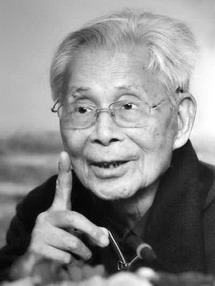
Wu Guanzhong Professor of the China Artists Association, renowned contemporary Chinese painter, art educator and essayist. Wu Guanzhong was born in July 1919 in Yixing County, Jiangsu Province. In 1942, he graduated from the National Hangzhou Art College. Later he served as an assistant teacher in the Department of Architecture at Chongqing University. In 1943, he held his first solo exhibition at the Youth Palace in Shapingba, Chongqing, Sichuan. In 1946, he married Zhu Biqin, a teacher at the primary school affiliated with Chongqing University. He passed the Ministry of Education examination for studying in Europe. In 1947, he entered
Wu Guanzhong, professor of the China Artists Association, is a renowned contemporary Chinese painter, art educator, and essayist.
Wu Guanzhong was born in July 1919 in Yixing County, Jiangsu Province. In 1942, he graduated from the National Hangzhou Art College. He later served as an assistant teacher in the Department of Architecture at Chongqing University. In 1943, he held his first solo exhibition at the Youth Palace in Shapingba, Chongqing, Sichuan. In 1946, he married Zhu Biqin, a teacher at the affiliated primary school of Chongqing University. He passed the Ministry of Education examination for studying in Europe. In 1947, he entered the École Nationale Supérieure des Beaux-Arts in Paris, France, to study oil painting under Professor Souffrin. In 1948, his works were exhibited at the Paris Spring Salon and Autumn Salon. In 1950, he resolutely returned to China to seek his roots. In 1951, he taught at the Central Academy of Fine Arts. In 1953, due to differing teaching views, he was transferred to the Department of Architecture at Tsinghua University, and from then on focused on landscape painting. In 1956, he taught at the Beijing Art Academy. In 1964, he taught at the Central Academy of Arts and Crafts. In 1970, during the Cultural Revolution, he was sent to the countryside in Hebei for labor. In 1973, he was transferred back to Beijing to participate in hotel painting creation. In 1978, the Central Academy of Arts and Crafts hosted the "Wu Guanzhong Works Exhibition," which toured Beijing and various parts of the country. In 1979, the National Art Museum of China hosted the "Wu Guanzhong Painting Exhibition." He was elected as an executive director of the China Artists Association. In 1981, he visited three West African countries and went to Paris to visit old friends. In 1985, the China Artists Association hosted the "Wu Guanzhong New Works Exhibition." He served as a member of the National Committee of the Chinese People's Political Consultative Conference. He participated in the Hong Kong Arts Festival "Understanding Modern Chinese Painting" exhibition and seminar. In 1987, the Hong Kong Arts Centre hosted the "Wu Guanzhong Retrospective," and all works were sold within 40 minutes of the opening. In 1988, he attended the opening ceremonies of "Wu Guanzhong Painting Exhibitions" hosted by Singapore, Japan, and Macau and gave lectures. In 1989, he went to Paris for sketching and held the "Wu Guanzhong Paints Paris" exhibition in Tokyo. He held a touring exhibition of his works in the United States. His ink and color work "Gaochang Ruins" set a record for the highest international auction price for a living Chinese painter's traditional Chinese painting at 1.87 million Hong Kong dollars. In 1990, he went to Hong Kong, Singapore, and Thailand to exhibit, lecture, and sketch. His oil painting "Montmartre, Paris" set a record for the highest international auction price for a living Chinese painter's oil painting at 1.04 million Hong Kong dollars. In 1991, he received the "Highest French Order of Arts and Letters." The "Wu Guanzhong Teacher and Students Exhibition" was held in Beijing. His ink and color work "Jiaohe Ancient City" was sold for 2.25 million Hong Kong dollars. In 1992, the British Museum made an exception by hosting the "Wu Guanzhong - A Chinese Painter of the 20th Century" exhibition. In 1993, the Cernuschi Museum in Paris hosted the "Toward the World - Wu Guanzhong Oil Painting, Ink, and Sketch Exhibition." He received the "Paris Gold Medal." In 1994, he was elected as a member of the Standing Committee of the National Committee of the Chinese People's Political Consultative Conference. He visited five Nordic countries. He visited Indonesia and sketched. In 1995, he received the French Hennessy Company's ". In 1996, he participated in the "Science and Art" seminar chaired by Dr. Li Zhengdao and created abstract paintings. In 1997, the Taiwan History Museum hosted the "Wu Guanzhong Painting Exhibition," which toured the Kaohsiung Museum of Fine Arts. In 1999, the Ministry of Culture hosted the "Wu Guanzhong Art Exhibition." In 2000, he was awarded the title of "Corresponding Member of the Académie des Beaux-Arts."
Artist Biography
After graduating from the junior high school department of Wuxi Normal School, Wu Guanzhong was admitted to the Provincial Advanced Industrial Vocational School run by Zhejiang University. In 1936, he transferred to the Hangzhou Art College, where he studied Chinese and Western painting under Li Chaoshi, Chang Shuhong, and Pan Tianshou. He graduated in 1942 and served as an assistant teacher at National Chongqing University. In 1946, he passed the government-funded examination to study in France. From 1947 to 1950, he studied oil painting in the studio of Professor J. Souffrin at the École des Beaux-Arts in Paris; at the same time, he studied in the A. Lhote studio and studied art history at the École du Louvre, achieving excellent results in all areas.
Wu Guanzhong returned to China in the autumn of 1950. He successively taught at the Central Academy of Fine Arts, the Department of Architecture of Tsinghua University, the Beijing Academy of Art, and the Central Academy of Arts and Crafts. He is currently a professor at the Central Academy of Arts and Crafts, an executive director of the Chinese Artists Association, and a member of the National Committee of the Chinese People's Political Consultative Conference.
In the 1950s to 1970s, Wu Guanzhong devoted himself to oil landscape painting and explored the nationalization of oil painting. He strove to integrate the intuitive vividness of European oil painting in depicting nature, the rich delicacy of oil painting colors, and the spirit and aesthetic ideals of traditional Chinese art. He was skilled at depicting scenes of the Jiangnan water towns, such as the fresh green of early spring, thin mist, waterside cottages, and black tiles with white walls. The harmonious, fresh tones and the tranquil, understated beauty give the pictures a lyrical, poetic appeal.
From the 1970s onward, Wu Guanzhong gradually also engaged in Chinese painting creation. He strove to use traditional Chinese materials and tools to express the modern spirit and explored innovation in Chinese painting. His ink paintings are novel in conception and distinctive in composition, and he was good at expressing poetic sentiment and pictorial imagery through the interweaving of dots, lines, and planes. He liked to simplify subjects and use semi-abstract forms to express the musical rhythm of nature and the corresponding psychological feelings. They are rich in traditional Eastern charm while also possessing contemporary characteristics, refreshing viewers' eyes and ears.
As an art educator, Wu Guanzhong emphasized the cultivation of students' artistic individuality. As a thinking artist, he was also diligent in writing, with unique arguments and vivid, fluent prose. Among them, views such as abstract beauty, formal beauty, form determining content, and life and art needing to be like a kite that never breaks its string once aroused debate in the art world.
Wu Guanzhong occupies an important place in the history of contemporary art and is an artist deeply respected by the people. In 1979, after a sketching trip to Zhangjiajie, Wu Guanzhong wrote the article "Raised in Deep Boudoirs, Unrecognized" (with the subtitle "Zhangjiajie Is a Bright Pearl of Scenery"), published in the supplement of the Hunan Daily. Like a thunderclap out of a clear sky, it shook the tourism world, aroused eager attention from all sectors of society, and produced a strong response. Many artists came because of his fame, and after touring they all praised Zhangjiajie's peerless beauty. In the earliest guidebook to Zhangjiajie, Wu Guanzhong's article was placed at the beginning, playing an important promotional role in Zhangjiajie's early development. His painting "My Own Axe Stroke—Zhangjiajie" was collected by the Musée Cernuschi in France.
His representative oil paintings include "The Three Gorges of the Yangtze River" and "Lu Xun's Hometown." His representative Chinese paintings include "Spring Snow," "Lion Grove Garden," and "The Great Wall." Published works include "Wu Guanzhong Painting Collection," "Selected Paintings of Wu Guanzhong," "Wu Guanzhong's Oil Painting Sketches," "Selected Chinese Paintings of Wu Guanzhong" (1–4), as well as "Seeking East and Searching West," "The Kite Never Breaks Its String," "South and North, East and West," "Whose Powdered Draft," "Selected Sketches and Color Paintings of Wu Guanzhong," "Selected Chinese Paintings of Wu Guanzhong, Volume One," and "Selected Prose of Wu Guanzhong."
Some of the above images are from the Internet, with unknown sources. Authors are requested to contact this site.