
Li Junsheng: President of Junsheng Art Academy, founder of sandstone painting
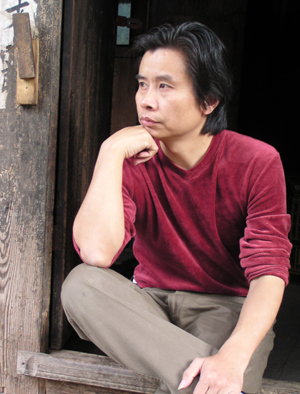
Li Junsheng, male, 45 years old, founder of sandstone painting, president of the Junsheng Sandstone Painting Research Institute of Zhangjiajie City, member of the China Arts and Crafts Society, member of the Hunan Artists Association, creative committee member and researcher of the China Academy of Art and the Culture and Art Market Research Center, member of the China Ethnic and Folk Arts and Crafts Committee. Born in 1963 in Zhangjiajie City, Hunan Province, the sandstone painting he created after years of research is made by pasting together natural colored stones, plants and other non-fading natural materials
Li Junsheng, male, 45 years old, founder of sand-and-stone painting, president of the Zhangjiajie Junsheng Sand-and-Stone Painting Research Institute, member of the China Arts and Crafts Society, member of the Hunan Artists Association, creative committee member and researcher of the China Art Research Institute and the Culture and Art Market Research Center, and member of the China Ethnic and Folk Arts and Crafts Committee. Born in 1963 in Zhangjiajie City, Hunan Province, he created the sand-and-stone painting after years of research. It is a new type of painting made by pasting natural colored stones, plants, and other non-fading natural materials. This painting combines the composition of Chinese painting and the techniques of Western painting, and integrates printmaking, carving, and bonsai art into one, with a strong sense of three-dimensionality and realism. Because its painting materials come from nature and are free of any pollution, it enjoys the reputation of a “green painting” and an “environmentally friendly painting.”
Li Junsheng is a middle-aged Tujia man, and his profession is to “point out rivers and mountains”——using natural colored stones, plants, and other non-fading natural materials to turn Zhangjiajie's green mountains and clear waters into charming landscape paintings. From this, Li Junsheng created the new painting type of “sand-and-stone painting,” which combines the composition of Chinese painting and the techniques of Western painting, and integrates printmaking, carving, and bonsai art into one. It has a strong sense of three-dimensionality and realism, and because the painting materials come from nature and are pollution-free, it enjoys the reputation of a “green painting” and an “environmentally friendly painting.” With the development of Zhangjiajie's tourism industry, Li Junsheng's sand-and-stone paintings have become increasingly renowned and are purchased and collected by tourists from all over the world.
Born poor, Li Junsheng dropped out of school at the age of fourteen, then herded cattle, worked as a painter, and served as a tile mason. In the 1980s, Li Junsheng carried simple luggage to the provincial capital Changsha to study painting.
He first made paste paintings in 1986.
In the winter of that year, in the art building of Hunan Normal University, Li Junsheng and Kong Jingping met and fell in love. After their love went through continuous trials, Kong Jingping's parents also inwardly accepted this prospective son-in-law from the mountains of Zhangjiajie. At that time, Kong Jingping's family was renovating their house. Li Junsheng, who was staying at Kong Jingping's home, helped pass bricks and tiles and carry water and sand whenever he had time. Sometimes he and Kong Jingping also painted a few pictures and took them to the city to sell to earn a little living expenses.
After the new house entered its final stage, one afternoon Li Junsheng saw as soon as he entered the door that a mason was casually sprinkling some small colored stone grains on the wall in front of the house. They were colorful, some resembling mountains, some resembling roads, and were very beautiful. Li Junsheng was stunned. He could not wait to say to Kong Jingping: These sands look so good when sprinkled on the wall, so why can't they be used to make paintings? This idea excited them greatly. They set to work. After careful arrangement, the pasted paintings were lifelike and had a unique charm. Whether in composition or in painting and production techniques, these paintings were only the embryonic stage of sand-and-stone painting. This experience laid the foundation for the later creation of sand-and-stone paintings.
In the late 1980s, Zhangjiajie's tourism began to flourish. After graduation, Li Junsheng brought his beloved Kong Jingping back to Zhangjiajie. After Zhangjiajie was listed by the United Nations as a “World Natural Heritage Protection Area,” developing tourism became an important direction for Zhangjiajie's economic development. Therefore, Li Junsheng pondered how to combine his profession with Zhangjiajie's tourism to create a future career, and he turned his gaze to these great mountains with which he was familiar.
In the autumn of 1988, Li Junsheng and Kong Jingping came with a friend who worked in bonsai and root carving to Zhangjiajie's Wohu Cave, because the stones in Wohu Cave are rich and varied and full of strange shapes, and with a little processing they closely resemble various animals and are vividly lifelike. On the mountain outside Wohu Cave, Li Junsheng discovered a lush grove of fir trees. From the peeled-off bark, he saw natural patterns that looked extremely like Zhangjiajie's peak forest. Then he remembered the “paintings” made with stones on the wall of Kong Jingping's home, and remembered those richly colored stones in Wohu Cave. If they were all combined and, according to painting techniques, each was used for its strengths, would that not make the picture even more beautiful?
Back home, Li Junsheng and his wife began to work: composing, laying out, washing stones, grinding stones, drying, cutting, and gluing. Soon they created a strange painting. No one had ever seen such a painting before. What should it be called? After some thought, Li Junsheng named it "Sand and Stone Plant Collage Painting."
Thus, sand and stone painting was born.
By 2008, Zhangjiajie had been a city for twenty years. Over those two decades, what changed was not only the city, but also Li Junsheng and his sand and stone paintings, which grew and changed along with the city.
"True art requires not only the approval of experts, but also the approval of society." The sand and stone painting art created by Li Junsheng has been accepted, noticed, and loved by the art world and society.
In 1994, Li Junsheng successfully held a solo art exhibition at the National Art Museum of China in Beijing. More than ten news media outlets including CCTV, People's Daily, and Chinese and Foreign Cultural Exchange Book Series gave special coverage. At the same time, he was included in the "World Who's Who" Expo, where the sand-and-stone painting "Wuling Scenery Is the Finest Under Heaven" was presented by Hunan Province as a precious gift to the expo and has since been permanently displayed in the China Pavilion. In 1999, at the Chinese Genre Painting Exhibition held in Kunming by the China Artists Association, Yunnan Artists Association, and other organizations, his work "Ancient Town" was selected and collected by the organizing unit. In 1999, at the Shanghai National Arts and Crafts Master Fine Works Exhibition, his two works "Companions" and "Tujia Mountain Village" both won Excellence Awards. In 2000, at the arts and crafts competition jointly held by the Ministry of Culture, the Culture and Art Talent Center, the China Federation of Literary and Art Circles, the Art Command Center, and the People's Pictorial Society, "Golden Autumn" won the Silver Award. In 1998, at the Sanxiang Customs Painting and Calligraphy Competition held in Hunan Province, his works won the second prize. Volume Three of the National Scroll, "Twentieth Century Famous Chinese Painters and Calligraphers," "Exhibition of Famous Chinese Calligraphy and Ink Masters' Works," and more than ten other classic volumes. Tourist friends visiting Zhangjiajie, if you can see Tujia paste paintings, it is truly a feast for the eyes. If you can purchase and collect them, they will become artistic treasures in the future, priceless. Li Junsheng's paste paintings have obtained a national patent, patent number: 932349358
1986: Created a new painting genre——sand-and-stone painting and obtained a national utility model patent;
1994: Held a solo exhibition of sand-and-stone paintings at the National Art Museum of China in Beijing;
1997: Founded the Junsheng Sand-and-Stone Painting Research Institute;
1999: The sand-and-stone painting "Wuling Scenery Is the Finest Under Heaven" was selected by the Hunan Provincial Government for the '99 Kunming World Horticultural Exposition and treasured in the China Pavilion;
2000: The sand-and-stone painting "Ancient City" won the Gold Award at the Third China Arts and Crafts Fine Works Expo, and this work won the "Five One" Project Award in 2003;
2001: Presented the paper "Pursuing the Aesthetic Conception of Sand-and-Stone Painting" at the 16th Annual Meeting of the Folk Arts and Crafts Professional Committee of the China Arts and Crafts Society;
2002: The sand-and-stone painting "Early Dawn" participated in the Hunan exhibition area celebrating "Mao Zedong's Speech at Yan'an" held by the China Artists Association, won the Bronze Award, and was selected for the National Art Exhibition;
2003: The first sand-and-stone painting collection, "Junsheng Sand-and-Stone Painting Collection," was published and distributed by the China Federation of Literary and Art Circles Publishing House
Yes;
2003: Awarded the Outstanding Contribution Award by the China National Arts and Crafts Society;
2003: The sand-and-stone painting "Landscape" was selected for the 17th New Artists New Works Exhibition organized by the China Artists Association;
2004: Sand-and-stone painting was granted four more national patents (colorful sand-and-stone painting, hidden painting, door-and-window painting, portable painting)
2004: The sand-and-stone painting "Landscape" was collected by Zhongnanhai;
2004: The oil painting "Lingering Charm of the Tribe" won the Excellence Award at the 10th National Art Exhibition —— Hunan Exhibition Area;
2004: The sand-and-stone painting "Reappearance of the Landscape" went to France to participate in the “Paris? Chinese Painting and Calligraphy Exhibition”;
2004: The sand-and-stone painting "Tianmen Mountain, Soul of Wuling" was selected by the China Council for the Promotion of International Trade to be the only painting exhibited and collected in the reception hall of the China Pavilion at the 2005 World Expo in Aichi, Japan;
2004: The sand-and-stone painting "Tujia Stilted House" was selected by the China Council for the Promotion of International Trade for BIE (Bureau International des Expositions);
2004: The oil painting "Clouds Drifting into the Cloth" won the Excellence Award at the 2nd National Ethnic Minority Art Exhibition;
2005: Junsheng Painting Academy successfully held an international exchange exhibition —— the First China-Korea Painting and Calligraphy Exchange Exhibition;
2005: Listed as a senior expert directly under the contact of the Hunan Provincial Party Committee;
2005: From November 6 to 12, the Macao Foundation held a solo exhibition for Li Junsheng at the Macao Civic and Municipal Affairs Bureau;
2006: The sand-and-stone painting "Majestic Tianmen" was collected by the Great Hall of the People.
2006: The oil painting "Spring and Autumn in a Small Town" was exhibited at the 7th Dalian Art Expo held by the China Artists Association and won an Excellence Award.
2007: The sand-and-stone painting "Lingering Style" won the "China Craft and Cultural Creativity Gold Award" at the 3rd Shenzhen International Cultural Industry Fair.
2007: The sand-and-stone painting "Strolling Along a Path Through the Blue Clouds" was collected by the State Bureau of Letters and Calls.
CCTV, Taiwan TV, Hong Kong TV, People's Daily, Chinese and Foreign Cultural Exchange journals, and other domestic and international news media have produced numerous feature reports on Li Junsheng and his sand-and-stone paintings. At the same time, Li Junsheng and his sand-and-stone paintings have been selected for inclusion in many professional volumes, including "Chinese Oil Painting," "Selected Works of Chinese Art," "Contemporary Art," and "Decoration Magazine."
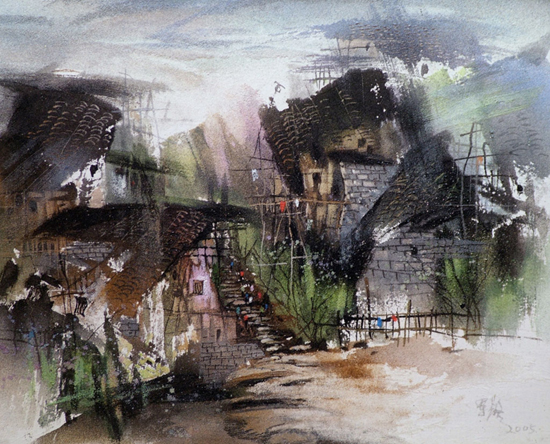
Some of the above images are from the Internet, and their sources are unknown. Authors, please contact this website.