
Xie Fangyi: A legendary master of banter
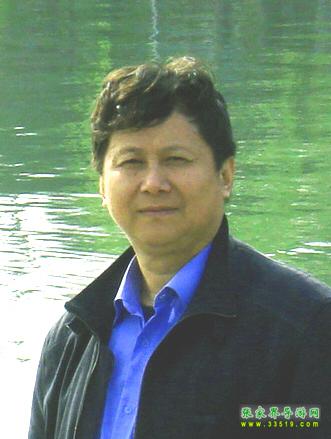
Character profile: Xie Fangyi, 57 years old, graduated from the Chinese Department of Jishou University in 1981. He worked successively as a reporter for the Hunan Provincial Federation of Trade Unions' magazine "The Master," Hunan TV, Shenzhen TV, and Hainan TV. In the late 1980s, he left the news field to go into business, and after several years of adventures returned to Changsha. For the past 10 years, he has traveled between Changsha and western Hunan, conducting documentary research on "the Hunan Army and Taiwan." After disappearing for many years, this once-famous reporter suddenly reappeared, now in a non-reporter capacity, using an extremely special
Biography:
Xie Fangyi, 57 years old, graduated from the Chinese Department of Jishou University in 1981. He worked as a reporter successively for the Hunan Provincial Federation of Trade Unions' magazine Master, Hunan TV, Shenzhen TV, and Hainan TV. In the late 1980s he left journalism for business, and after several years of ventures returned to Changsha. For the past 10 years he has traveled between Changsha and Xiangxi, conducting documentary research on "the Xiang Army and Taiwan." After the once-famous reporter disappeared for many years, he has now suddenly reemerged, and in a non-journalist capacity, in a highly unusual form, has released the epic report The Gateway to Western Hunan.
The Years of Chrysalis Transformation and the Dream of the Rainbow
In the autumn of 1987, at the filming location of the TV drama Suppressing Bandits in Wulong Mountain, after Xie Fangyi finished shooting a set of evening news feature clips, he handed the remaining interview tasks to two interns from Hunan TV and took a train from Xiangxi straight to Guangdong. The following year, he left journalism for business. Overnight, the reporter who had once been renowned throughout the three Xiangs became a self-employed entrepreneur riding the business wave of the late 1980s. Because he was the earliest among the reporters of that time to go into business, the writer Han Shaogong jokingly called him the "Gypsy" of Hunan's journalism circles. That he left the TV station to plunge into the business world was less about chasing wealth than about chasing personal freedom.
Having gone into business, he had to support himself and make a living. Xie Fangyi organized the 1989 Hainan-Taiwan "Cross-Strait Talks" event, planned the 1993 entry and expansion of Hainan's "Yedao Luguijiu" in the Hunan market, undertook the 1993 share-offering publicity for "Hainan Expressway," and participated in the 1995 corporate culture development of the "Guhan Group"... until the launch of the 2005 Zhangjiajie "Gateway to Western Hunan" project—nearly 20 years, working as an individual, this veteran reporter's record of riding the business wave could not be called anything but brilliant, yet when it came to the word "profit," his failures outnumbered his successes.
In 1994, five years after going into business, Xie Fangyi's title was general manager of the Hunan market department of Hainan Yedao Company. Although the "Normandy landing" of Luguijiu in the mainland market began with Xie Fangyi, and the manufacturer awarded him the title "Star of Yedao," he lost over a million due to product cross-region dumping in the market, so he decided to pull out. Years later, when Yedao Company traced the history of Luguijiu's entry into the national market, it always mentioned Hunan first. Of course, Xie Fangyi, the first to sell Luguijiu, became a revolutionary martyr of that "Normandy landing." Enthusiastic but naive cultural figures often end up as defeated generals in disorderly commercial warfare, and the market transformation a cultural figure must undergo in business is more difficult than for ordinary people. From then on, he "buried himself alive" in a pile of old papers. Ten years later, when Xie Fangyi emerged from that pile of old papers, he joked that these 10 years were his "years of chrysalis transformation."
Unlike ordinary self-employed entrepreneurs, Xie Fangyi's plunge into business began with no preparation—driven by impulse, he walked out of the system and into self-employment; after experiencing 10 years of "chrysalis transformation," he began anew to seize the kind of market opportunity he could control, and after locking onto a project, established an operating mechanism around the project in advance. He particularly valued the issue of the "socialization of productive forces," and in this sense he began to move beyond the individual. Xie Fangyi said that the New China economy began to enter a turning point in the late 1970s; when many people were still unable to define the value and direction of life amid the throes of the transformation of the "all-people" enterprise system, and when some newly emerging self-employed bosses and family companies were still bewildered and at a loss over the issue of succession and unable to escape the maze of wealth, he had already emerged from such bewilderment and such a maze. He said that an enterprise, like a person, cannot survive and develop without a scientific worldview and methodology.
"How can you see a rainbow without going through wind and rain? No one can succeed casually." — When the reporter interviewed Xie Fangyi, he recounted the hardships he had endured since going into business. Interestingly, he said he has always lived in a state where wind and rain come together with rainbows. For such a person, he seems to be in a rainbow-like dream every day. He said that he and the project are still in the "going through wind and rain" second-startup stage, in a process approaching "phased success."
This is an optimistic sea-roamer by nature, and his enthusiasm infects those around him. Unafraid of wind and rain, he tenaciously pursues the rainbow dream in his heart.
A Zhang surname research expert and the "West Hunan Gate"
Ten years ago, not long after Xie Fangyi returned to Changsha from Hainan, he took his wife to visit Zhangjiajie. Unexpectedly, this trip triggered the West Hunan complex he had always treasured in his heart.
Before 1978, Xie Fangyi had been a carpenter at Changsha Yali Middle School repairing desks and chairs. After the "Cultural Revolution," when the college entrance examination was restored, at the age of 30 his luck turned and he was admitted to Jishou University as an older student. While reading outside class, he was unintentionally drawn to a story in Selected Stories of Shen Congwen, so he began publishing related papers in the university journal and wrote to Mr. Shen requesting to adapt his stories "A Jin," "The Husband," and "Gui Sheng" into films. Mr. Shen replied twice to discuss the film adaptations with him and received his visits several times at his home in Beijing, but many years later Xie Fangyi's films were still not written. That year, having lost money selling deer and turtle wine, the couple toured Zhangjiajie. Talking about Mr. Shen's stories, they decided to go all in, rented a jeep, and set out to explore the greater West Hunan depicted in Shen Congwen's fiction.
Xie Fangyi's trip in 1994 did not complete the film adaptation of Shen Congwen's fiction, but it did complete a textual study of Zhangjiajie place names and gave rise to the creative topic for the film and television drama "West Hunan Gate."
Xie Fangyi collected ancient legends and the genealogies of two Zhang surname branches since the Ming Dynasty, and wrote an article introducing the historical origins of Zhangjiajie's name-based mountain naming. Place names are living fossils of archaeology. Before the Yuan Dynasty, Zhangjiajie had no local records to verify; extant Ming and Qing historical materials were compiled from separate records of the various prefectures of Yuan and Li. Tracing the local Zhang surname, after the blood ancestor the Yellow Emperor, the surname-founding ancestor Zhang Hui, and the settlement-founding ancestor Zhang Liang, the Zhang surname that entered Hunan from Jiangxi in the late Yuan and early Ming all originated from the lineage of the Marquis of Liu, with two branches, "Jinjian Tang" and "Bairen Tang." Not long after returning from the investigation, Xie Fangyi's article "Peaks and Zhang: A Dual Composite Concept for Identifying the Zhangjiajie Scenic Area" was published in the 8th issue of China Planning magazine in 2000. And the story of "Zhang Family Old House" throwing down its staff to open wasteland was adapted by Xie Fangyi into a scenic feature of the later Zhangjiajie "West Hunan Gate" project.
After returning from the trip, Xie Fangyi stayed in the Zhangjiajie Scenic Area. He delved into local ethnic and folk historical materials, hoping to use the existing tourism market to create a cultural attraction. He planned and operated projects such as "Zhang Ancestral Hall Book Society," "Zhang Ancestral Hall Folk Customs Park," and "Baizhang Gorge Tourism Agricultural Ecological Town." The process lasted eight years in total, but due to reasons such as the threshold limits of scenic area planning and protection, the investment failed again.
In 2002, Provincial Highway S306 was rerouted. A newly built road passed through the Wulingyuan Scenic Area, exited the eastern end of the protected area, and entered a river valley section in Sanguansi Tujia Township, Cili County, Zhangjiajie City. The keen Xie Fangyi quickly seized this opportunity and, carrying many years of ideas, walked into this river valley. "Eight years to find a gate" — today, Xie Fangyi says that the project he operates is the reception hall of Zhangjiajie National Geopark, the east gate of Wulingyuan, and the gateway to the entire greater West Hunan.
In the "grand geographical concept" explained by Xie Fangyi, the plain plate formed by the middle and lower reaches of the two major river systems of the Yellow River and the Yangtze River collides with the mountainous plate of the great southwest of the motherland, and the "Xiangxi Gate" formed thereby as a gateway has a very unique function. In ancient times, transportation mostly relied on waterways, going out along the Yuan and Li rivers; the "Xiangxi Gate" is one of the most convenient gateways in the grand geographical concept for entering and exiting the plain area from the mountainous region. This geopolitical factor has caused the ethnic minorities of Xiangxi and the Wuling Mountain area to play a rather special role in the great drama of civil governance and military prowess throughout successive dynasties of China. Generally speaking, in prosperous times used for "civil governance," this gate was mostly guarded and locked; in troubled times requiring "military prowess," this gate was mostly opened again. Yet whether this gate was open or closed, the mountain people always had to go out and make their way in the world. Therefore, along the Yuan and Li river valleys, countless heroes and stalwarts once walked out through this gate. Xie Fangyi took "Xiangxi Gate" as the title of a full-length television drama, using more distant historical research to prove that "great Xiangxi is a place where heroes emerge in large numbers." Thereby, the connotation of the "Xiangxi Gate" project overturned the once-demonizing "bandit" concept of Xiangxi regional culture; the establishment of the "Xiangxi Gate" project was tantamount to launching a modern heroic epic of Xiangxi.
Documents Create Value
The rise of the tourism economy often initially relies heavily on ready-made scenic resources. The local "resource competition fever" has already triggered the phenomenon of "seven caves and eight rafting spots competing for one customer," and some investors in tourism projects in Zhangjiajie have successively fallen into the trap of the "resource faction." Having suffered enough in early business affairs from blind impulsiveness, Xie Fangyi, now well past the age of fifty, is this time shrewd and calculating, and he insists on being a steady "market faction."
In 2001, the cultural relics department of Zhangjiajie City invited Xie Fangyi to plan a project. This project was to investigate the Zhangjiajie stone tomb cluster and uncover the story of Liu Mingdeng, the Qing dynasty commander-in-chief of Taiwan, thereby creating a "Liu Mingdeng Hometown Garden."
Accepting the invitation, Xie Fangyi participated in the project investigation. But after the project materials were compiled, he began to question the project's entry into the market, feeling that the story of only the Taiwan commander-in-chief Liu Mingdeng alone was really too thin. So he linked the three phrase concepts of "Xiang Army, Xiangxi, Taiwan" and carried out documentary investigation and on-site fieldwork on a larger scale. Through three years of studying the past and examining history, he discovered a large group of people with lofty ideals who in the late Qing period walked out of Xiangxi, traveled far to Taiwan, resisted foreign aggression, defended their homes and country, and established brilliant merits. He was excited by these figures, and so the images of A Jin and Gui Sheng in Shen Congwen's novels from many years earlier surfaced once again. Twenty years ago, when he was still studying at university in Jishou, Xie Fangyi had once wanted to learn to write plays. For twenty years, he was worn out by rushing about and could not fulfill that wish. Twenty years later, now he really was going to sit down and begin writing a play, and this play was "Xiangxi Gate."
The topic of “Xiangxi Gate” was not only used to write a multi-episode TV drama series, but also used to write a 90-minute film. From the perspective of film and television drama genres, the TV drama “Xiangxi Gate” is a historical tragic drama that views the 1895 Yiwei anti-cession-of-Taiwan war from the perspective of “common folk” and depicts cross-strait relations between the mainland and Taiwan, while the film “Life and Death Rock” is a modern tourism scenery film that entertains a major subject. Just as the filming of the film “Hibiscus Town” boosted tourism in the ancient town of Wangcun, from the perspective of extending the cultural industry chain, “Xiangxi Gate” as a “post-film and television industry” cultural landscape project, Xie Fangyi's main idea was to forge a moving story into a shocking long scroll of cliff inscriptions epic. To this end, he selected a site in the Suoshui River Valley on the outskirts of Wulingyuan Scenic Area, favoring a nearly 4-kilometer-long stone wall, and prepared to go all out. Regarding Xie Fangyi's bold idea, many people were astonished and doubtful, but even more people applauded it. In October 2004, Xie Fangyi reported his plans to the leaders of his alma mater and the leaders of Xiangxi Autonomous Prefecture. Jishou University specially issued a “President's Office Meeting Minutes” for this, and the Autonomous Prefecture Tourism Bureau specially signed a “Letter of Intent for Cooperation” with Xie Fangyi. The start of the “Xiangxi Gate” project received support from greater Xiangxi.
Documents create value. The topic of the film and television drama “Xiangxi Gate” and the creative concept of the cultural landscape “Xiangxi Gate” project spread, and soon won praise and support from all sides. Because “Xiangxi Gate” recounts a contribution of the Xiang Army in the history of modern China's defense of Taiwan and the nation, it first attracted attention on the other side of the strait.
Whether as a film and television drama topic or a cultural landscape project, “Xiangxi Gate” is like a magnet, attracting support from all sides. And the textual and historical research has also emerged from a situation of scarce resources and entered a relatively solid research level. The near view of the story is that in the late Qing Dynasty, Zuo Zongtang, as Governor-General of Fujian and Zhejiang, planned the establishment of Taiwan as a province and recommended Liu Mingdeng and others to go to Taiwan to guard the frontier. The medium and long-range historical materials gradually concentrated on the 1884 Sino-French Jia Shen War and the 1895 Sino-Japanese Yiwei Taiwan War, as well as the retrieval of various historical documents showing Japan's long-term schemes to plunder Taiwan. In January 2005, the Culture and History Committee of the Hunan Provincial Committee of the Chinese People's Political Consultative Conference held a “Symposium on the Topic of the Main Melody Epic Drama 'Xiangxi Gate'”, and the modern history scholars and experts present unanimously gave high praise to this topic. At this year's third session of the ninth Hunan Provincial Committee of the Chinese People's Political Consultative Conference, 10 provincial CPPCC members jointly submitted a proposal demanding that the “Xiangxi Gate” project be made into a patriotism and hometown-loving education base for our province. After the topic was announced, leaders of Zhangjiajie City and Xiangxi Autonomous Prefecture also expressed support. Former Deputy Secretary of the Provincial Party Committee and Executive Vice Governor Yu Youjun believed that “writing about Xiang Army leaders against the background of the anti-cession-of-Taiwan war can bring out the historical glory and contemporary value of the Xiang Army”; five members of the Standing Committee of the CPC Hunan Provincial Committee successively gave instructions to film the TV drama “Xiangxi Gate” well. At present, the TV drama series “Xiangxi Gate” has been included in the State Administration of Radio, Film and Television's list of planned TV drama titles for the second quarter of this year. The 90-minute film script “Life and Death Rock”, written using the same topic, is also favored by Xiaoxiang Film Group and has been determined as a film to begin shooting this year.
Xie Fangyi's work on “Xiangxi Gate” can be described as sharpening a sword for ten years.
A sword sharpened over ten years. Mr. Xia Jiajun, Standing Committee member of the National Committee of the Chinese People's Political Consultative Conference and a famous Tujia scholar, predicted: what is driven by the documentary value of “Xiangxi Gate” is not just a series of cultural industry chains; this thing that Xie Fangyi has chosen to do will be an immortal undertaking.
Bound to Jishou University, Tied to a Lifetime
In 1978, when Xie Fangyi, having just endured the years of educated youth, entered Jishou University at the age of thirty, his feelings were complicated. This complexity was brought not only by the disappointment caused by the rugged mountain roads and desolate scenery along the way, but even more by fear, fear of whether he would again have to endure the situation of being sent to the countryside. At that time, Jishou University was another unknown in his life, and who could have imagined that this unknown would ultimately bring him a lifetime of lingering Xiangxi sentiment.
Now, recalling his years studying in Xiangxi, Xie Fangyi says his alma mater was the turning point in his life. By a chance opportunity, Xie Fangyi came across "Selected Stories of Shen Congwen" at school; not long after, in the inaugural issue of the Jida journal published after the "Cultural Revolution," this old student's article "Also a Literature of Struggle — Reading Notes on Shen Congwen's Fiction" appeared, making him the earliest student at the time to publish a work in the journal. Elder Shen read the journal and wrote back to Xie Fangyi, saying: "Your article is written with great propriety." That one sentence, like an awl pricking his thigh, ensured that from then on he never again dared to be the slightest bit careless when writing.
After many years of "chrysalis transformation," the enterprise Xie Fangyi ultimately founded was named Xiangximen Tourism Culture Development Co., Ltd. From the company's name it can be seen that striving in the market by drawing on Xiangxi's cultural resources would become the lifelong pleasure of this Jida alumnus.
Just like a student handing in homework, at the end of 2004 Xie Fangyi came to his alma mater to report to its leaders on the launch of the "Xiangximen" project. For this, Jida issued a "Minutes of the President's Office Meeting" expressing support for Xie Fangyi, including plans to establish a Jida art college at the "Xiangximen" project site in Zhangjiajie. Clearly, although his early years studying at Jida were brief, they gave Xie Fangyi a Xiangxi complex that he could never shake off. Xie Fangyi says that if his dream can come true, he will be the kind of student Jida hopes to cultivate — the kind cultivated by Xiangxi who can be retained by Xiangxi and put to use by Xiangxi. Having benefited from Xiangxi, one should repay Xiangxi and be worthy of Xiangxi. Xie Fangyi believes that "Xiangximen," as a project undertaken by an old Jida alumnus, if successful, would make it very meaningful to bring some alumni on board.
At the end of the interview, the reporter asked him to write a few words for his alma mater. Xie Fangyi said: "In 1981, after graduation, I started working, and no matter where I worked, I was never inferior to students from other schools. I remember when I was editing copy in the news department of Hunan TV, my writing was very strict and meticulous. Some reporters who wrote carelessly, even though they had graduated from famous schools, often could not get their pieces published because of it. So they asked which school I had graduated from. I said with full confidence, Jishou University!" The meaning of Xie Fangyi's recounting of this passage is very clear: in the 1980s, Jida was not yet so highly regarded, but as a Jida student he had always taken pride in his alma mater. For this reason he unhesitatingly wrote in the reporter's notebook: "Take pride in our alma mater, win glory for our alma mater."
"Xiangximen" Business Plan
I. Project Origin and Progress
Because I went to study at Jishou University in Hunan 30 years ago, this created an indissoluble bond between me and Xiangxi, and for many years afterward, the Xiangxi complex in my heart lingered. After graduating from university, whether as a journalist or a freelance cultural worker, this place always attracted me, and I kept running into these mountains. So much so that in the 1990s, for tourism projects, I stayed in Zhangjiajie for a full 10 years. During that time, I made several special trips around the border areas of several provinces—Hunan, Hubei, Sichuan, Chongqing, and Guizhou—seeing the scenery in the mountains through the eyes of an outsider.
Over time, local friends had forgotten that I was a busybody from outside, so I called myself “Xiangxi Mountain Guest”.——《Xiangxi Gate》 is the harvest of “being a guest”.
In the summer-autumn transition of 2001, at the invitation of the Zhangjiajie Cultural Relics Management Office, I accompanied them to the Erjiahe area of Yongding District in that city to conduct a cultural relic protection survey of the late Qing Dynasty Taiwan Commander Liu Mingdeng's stone tomb complex.
Investigating Liu Mingdeng, his tomb, and his deeds made me feel that Xiangxi's martial culture has a long history. That was a tragic and heroic epic of a special era and a special group of people, and I decided to use a TV drama series to encompass this topic.
In sync with the development of China's tourism industry starting in the late 1970s, I accumulated some experience points in “tourism project investment”. This is the lesson from my participation in the failures of several project operations and the insights from observing and analyzing the “cultural bubbles” and “economic tumors” left by a large number of crazy investments.
I have seen too many friends lacking practical experience in tourism project operations. Their enthusiastic investment often excites themselves, but after a brief excitement, the “cash flow waterfall” they imagined does not appear.
Departing from the principles of landscape science, satisfying the boss's vanity and catering to the bustle of “investment promotion”, a wealthy but brainless owner follows up on a fantastical “good project”, and afterward often loses everything. However, now I want to say that the story of 《Xiangxi Gate》 is a cultural attraction planning software very suitable for tourism projects. The scarcity of the theme and the scarcity of resources belong to the same concept. If the project is done well, its high cultural barrier determines a monopoly on business opportunities. For those who truly grasp the necessary conditions for investment and can operate this project, 《Xiangxi Gate》 is not a small business opportunity!
In the years since, I first invested in scriptwriting, then wrote the 《Xiangxi Gate Project Planning Proposal》. The initial entrepreneurial plan was: to link filming and project operation, positioned as “film and television industry + post-film and television industry”. Relying on the existing market platform of Zhangjiajie World Geopark, supplementing natural scenery with cultural elements, selecting the Suoshui River Valley at the eastern end of the periphery of Wulingyuan Scenic Area, and using cliffs and precipices to carve the TV drama story into a long scroll of cliff carvings epic. Using this as a tourism attraction, it would provide long-term complementary operation for Zhangjiajie's “strange mountains and exotic waters” type products, segment regional market share, and generate revenue and profit.
As time went on, absorbing domestic and international experience, I made appropriate adjustments to the entrepreneurial plan. The core concept is: “Xiangxi Gate” is not a scenic area construction project, but a leisure and sightseeing agricultural project done by a road-type village on the periphery of the scenic area through layout adjustment, environmental improvement, and implanting cultural creative genes. At the same time, the “Xiangxi Gate” project is differentiated and positioned as “supplementing natural scenery with cultural elements”, and should serve as a regional engine project to segment the market share of leisure vacations, independent travel, self-driving tours, and outdoor activities in the greater Xiangxi market. Within 3 years, relying on the connection of rural tourism projects, it will lead “Cultural Xiangxi” out of the traditional old routine of single-resource attraction operation, using the Zhangjiajie tourism market as an engine, and through the Xiangxi Gate International Youth Hostel as the main station for the entire greater Xiangxi gateway, realize the “Xiangxi Tourism One-Card Pass”.
In July 2004, a project company was founded through share fundraising, and within 3 months, project site selection and land surveying were completed. In October, a contract was signed with the Xiangxi Tujia and Miao Autonomous Prefecture Tourism Bureau for the “One-Card Pass”, and the first-phase market layout plan for the “Xiangxi Gate International Youth Hostel” chain operation project in the Xiangxi region was completed.
In 2005, a cooperation agreement for script filming project initiation was signed with units such as Xiaoxiang Film Group, and the Hunan Provincial Committee of the Chinese People's Political Consultative Conference Cultural and Historical Committee took the lead in completing the topic demonstration for the mainstream TV drama 《Xiangxi Gate》. 10 provincial CPPCC members jointly proposed a proposal suggesting “to make the epic drama 《Xiang
West Gate》was included in our province's patriotic education projects”, and three main leaders of the CPC Hunan Provincial Committee and the Provincial Government respectively gave instructions and expressed support for the topic selection of the TV drama "West Gate of Hunan".
In 2006, the Design and Research Institute of Hunan University completed the overall village layout plan and the village renovation and construction plan for the project area. In Sanguansi Tujia Township, Cili County, a provincial-level impoverished county, the "Zhangjiajie West Gate of Hunan Tourism Cultural and Creative Industry Park" was established. According to the park plan, it entered the stage of sub-item investment promotion.
II. Project Location Advantages and Market Background
The project site is located in Sanguansi Tujia Township, Cili County, Zhangjiajie City—a provincial-level poverty-stricken county in Hunan Province—adjacent to the peripheral area of the Zhangjiajie Scenic Area, involving 5 administrative villages and 12 village groups in this township, with a planned area of 3,000 mu. As an option, the "Xiangximen" land parcel has good controllability. The entire project lies within a complete river valley stretching 4 kilometers, flanked by mountains on both sides with a stream flowing through the middle, forming an independent geographical unit. In 2002, Provincial Highway S306 ran through the entire river valley, and with the opening of the Changsha–Zhangjiajie Expressway at the end of 2005, unprecedented changes in transportation brought first-class accessibility to this land parcel. The "Xiangximen" land parcel is adjacent to the Wulingyuan Scenic and Historic Interest Area, a UNESCO World Natural Heritage site, so this project can be called the reception hall of Zhangjiajie, a World Geopark and National Forest Park, with extremely obvious market location advantages.
In 2005, Zhangjiajie's annual tourist reception volume had already reached 1.7 million. According to the latest planning analysis of the Wulingyuan Scenic and Historic Interest Area, Zhangjiajie's tourist reception volume will reach over 5 million by 2010. With reference to the revenue of the nearby attraction Huanglong Cave, this project will enter its mature period after 2008–2010, with an annual tourist reception volume of approximately 3 million.
III. Current Status of the Park
1) Concept of Peripheral Protection Zone
This park is adjacent to Zhangjiajie World Geopark and Wulingyuan Scenic Area, in the eastern peripheral zone of the World Natural Heritage protection area. The Wulingyuan scenic resources feature a dual special landform of quartz sandstone peak forest and karst topography, located at the core edge of the Tianzishan–Sanguansi short-axis syncline at the northeastern plunging end of the Wuling Mountain uplift belt, along the direction of the "Jinbian Stream–Suoxi–Suoshui River Valley," with quartz sandstone peak forest landform in the east and karst topography in the west. From southeast to northwest, from the quartz sandstone peak forest landscape area to the karst topography landscape area, from Jinbian Stream to Suoshui River, "Sanguansi" is precisely the marginal boundary of this special landform scenic area, belonging to the frontier zone where the Wulingyuan core scenic area extends outward to the "World Heritage protection area" and penetrates into rural areas. Starting from the eastern boundary marker of the Wulingyuan Scenic Area, the Suoshui River valley running north along Provincial Highway S306 within Cili County is the continuation of the Zhangjiajie karst topography geological belt. The nearly 4 km complete karst geological landform belt of the Suoshui River valley within the park should be regarded as a peripheral protection zone of the National Geopark.
2) Concept of Poverty Alleviation
The "Hunan Province Rural Poverty Alleviation and Development Plan (2001–2010)" (Xiang Zheng Fa [2002] No. 07) (hereinafter referred to as "Document No. 7") promulgated by the Hunan Provincial People's Government on March 1, 2003, states: "Conditions should be created to guide non-governmental organizations to participate in and implement government poverty alleviation and development projects." "In industrial development projects, support should be given to the development of tourism and sightseeing agriculture, and in response to landscape resources with development value in poverty-stricken areas, tourism projects and special tourism products should be developed and built in accordance with the characteristics of regional tourism."
Cili County is a "provincial-level poverty alleviation" target specified in Document No. 7, and is one of the 18 "key counties (cities, districts) for the first round of provincial poverty alleviation and development work in the new stage." Sanguansi Tujia Township in this county is an ethnic township with slow economic development, and this township is also a place that overseas tourists must pass through when entering and exiting Zhangjiajie from the east. Leveraging the geographical advantage of being adjacent to the Zhangjiajie tourism market, breaking away from the traditional agricultural production model, realizing the reasonable transfer and scientific utilization of land management rights, and ultimately escaping poverty have become urgent matters for rural economic development.
3) Township and Village Conditions
The total area of Sanguansi Tujia Township is 114 square kilometers, with 21,700 mu of cultivated land, including 12,700 mu of paddy fields and 9,000 mu of dry land. The forest coverage rate is 57%. Within the township there are four ethnic groups: Tujia, Han, Bai, and Miao, governing 26 administrative villages, 1 forest farm, and 259 villager groups, with a total population of 22,970, including 1,140 non-agricultural residents. At the end of 2003, the per capita income was 1,420 yuan, falling short of the 2,000 yuan poverty alleviation baseline for 2005 set by Document No. 7.
There is no complete administrative village within the park area; it is divided among 5 administrative villages and 12 natural village groups, distributed from south to north as Shequan Village Group 7, Luotan Village Group 7, Qinglong Village Groups 1, 2, and 3, Zhumu Village Group 2, and Hujiaping Village Groups 1, 2, 3, 4, 5, and 10. The planned area has 936 mu of cultivated land, including 226 mu of paddy fields and 710 mu of dry land, 3,784 mu of mountain forest, and 507 mu of riverbank. Within the planned protection area there are currently 321 farming households with an agricultural population of 1,159; the per capita net income is close to the township average and they have not yet escaped poverty.
The park area is mountainous, high in the south and low in the north. In 2002, the national second-class highway——Zhangqing Highway (Provincial Road S306) was rerouted, connecting Cili to the north and Wulingyuan to the south, running along Suoxi through the entire Sanguansi Tujia Township. As a result, the transportation conditions of the 5 administrative villages and 12 village groups in the park area have improved.
The Suoshui River, a tributary of the Lishui River originating in Wulingyuan, runs parallel to the highway, flows through Sanguansi Tujia Township, and joins the Loushui River from south to north. The section of the Suoshui River flowing through Sanguansi Tujia Township has a valley about 4 km long featuring typical karst topography, with steep cliffs on both banks, scattered caves on the cliffs, and numerous ancient human cave dwelling sites visible.
Within Sanguansi Tujia Township there is currently 1 SMG base station and 1 China Unicom base station. Of the township's 26 administrative villages, 22 have cable television and 24 have program-controlled telephones. The television and telephone services in the 5 administrative villages and 12 village groups within the planned area are also basically connected, though mobile communication signals are weak in some sections. The township also has a 220,000-volt transit line, one 35,000-volt substation, and one small hydropower station with an annual generating capacity of 1 million kWh; currently every village has electricity.
IV. Purpose of Park Establishment and Main Projects
This project is a beautification project for the east gate of the World Geopark and National Forest Park, and a road-corridor village layout improvement and poverty alleviation project for a provincial-level impoverished township. In terms of construction content, it takes the form of “one line and three clusters.” The “one line” refers to the overall layout and coordinated development and operation along the Yansuo River valley and the north-south Zhangqing Highway, with the main construction project being the carving of the long scroll cliff inscription epic “Song of the Expedition.” The “three clusters” refer to three clusters arranged along the river valley, from south to north: Zhangdiping Cluster, Qinglong Lake Cluster, and Hujiaping Cluster. Their main construction projects are: the Zhangdiping Cluster is the restoration of the “Thousand-Year Ancient Village—Suokou Village”; the Qinglong Lake Cluster is the leading enterprise in agricultural industrialization and the sightseeing agriculture project “Lüzhuang Science and Technology Park”; the Hujiaping Cluster is a base for independent travel, self-driving tours, and outdoor activities, with the main construction project being an international youth hostel.
V. Business Model and Profit Model
1) Business Model:
Overall planning, overall layout, phased advancement.
Unified investment promotion, goal decomposition, itemized investment, itemized benefits, and functional interaction;
Among these, the “one line” (Suoshui River valley) is retained, the “two clusters” (Zhangdiping and Hujiaping) are also managed, and the Qinglong Lake Cluster is opened up to introduce leading enterprises in agricultural industrialization, with the aim of driving original farming households to join the “New Rural Economic Development Movement.”
The nature of this company is positioned as: planning investor, park investment promotion agency, and operating company for the “retained one line” tourism projects.
2) Profit model:
In planning, programming, and investment promotion operations, reflect a public-welfare character while also taking into account “public services” as the consumption and sale of the product's commercial attributes;
Based on controlling the “front-line” project cluster, link the Zhangdiping cluster's “Millennium Ancient Village” and the Hujiaping cluster's “self-guided travel, self-driving travel, and outdoor activity base” projects, integrate operations, and form settlement rights for tourism routes.
Using international youth hostels as the carrier, from “Xiangxi Gate” to “Xiangxi Gate,” through the linking of rural tourism attractions, develop an electronic tour guide map and establish a regional tourism supermarket, and operate the “Xiangxi Travel” all-in-one card.
VI. Project execution
The original project company is Hunan Xiangxi Gate Tourism Culture Industry Development Co., Ltd., retained in Changsha, the capital of Hunan Province, and responsible for the park's external investment promotion.
Project management is coordinated by “Xiangxi Gate Tourism Culture Creative Industry Park Co., Ltd.,” located in Sanguansi Tujia Township, Cili County, Zhangjiajie City, and as an agency investment promotion institution is responsible for handling the park-entry procedures and overall management of incubated projects by sub-item.
According to the plan, each sub-project operates independently.
VII. 5-year investment plan
2004 investment plan: raise RMB 3 million, complete preliminary market research, planning, and script creation for the plan (already completed).
2005 investment plan: with the original funding amount, complete the village layout plan and renovation and construction plan, and complete the script topic demonstration and project initiation.
2006 investment plan: increase capital by RMB 10-20 million, and start project operation.
2007 investment plan: invest by sub-item, complete Phase I construction, with the focus on the Zhangdiping cluster's “Millennium Ancient Village” project. At the same time, begin filming the movie at low cost.
2008 investment plan: introduce investment for the Hujiaping cluster, and complete the construction of projects such as the international youth hostel.
VIII. Revenue
In 2007, the park's revenue in its first year after completion was RMB 30 million.
From 2008 to 2010, the park's revenue in its second, third, and fourth years after completion was RMB 50 million per year.
From the park's full completion to the termination of the contract, annual revenue: average annual revenue of no less than RMB 300 million.
IX. Project progress
The preparatory period is basically over, and it has entered the start-up period.
X. Project evaluation and conclusion
Policy-compliant. Approved by the government, supported by farmers, supported by shareholders, and initial success in industry operations.
Social support. Strengthen external investment promotion, and accelerate project implementation and project construction progress.
Some of the images above are from the Internet, with unknown sources. Authors are requested to contact this website.