This attraction introduction is compiled from historical materials in the "Zhangjiajie Tour Guide Network" (33519.com · Scenic Spots section). Ticket prices, opening hours, transportation, and contact information mentioned in the text may be outdated. Please refer to the latest official announcements from the scenic area before traveling; some content consists of historical background/cultural introductions and is for reference only.
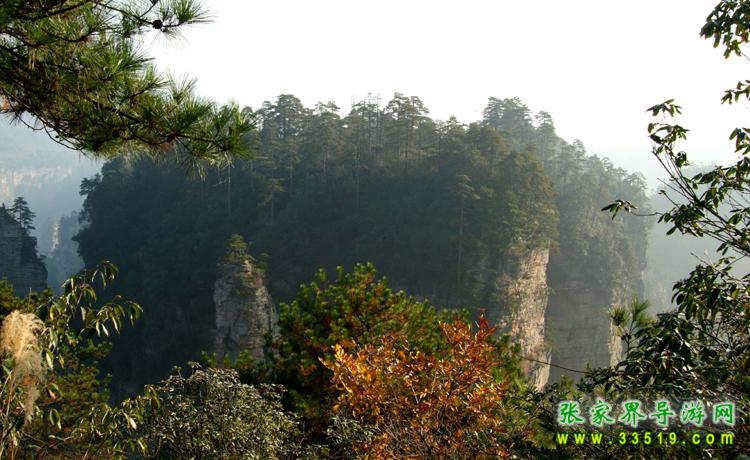
Heicongnao is located in Zhangjiajie National Forest Park, at the northern end of the plateau atop Huangshizhai, with an absolute height of over 300 meters. Its summit covers about 60 mu, and it gets its name from a large, dense stand of dark fir trees on it. This scenic spot can be seen but not reached, standing in a deep, secluded canyon, with the plateau steep and sheer on all sides like a cut. It is covered with tall, lush pine forests and many miscellaneous trees, forming a vast, dark primeval forest. This primeval forest has been untouched since ancient times, with only macaques and various wild animals roaming within it.
Heicongnao preserves a complete primeval forest. The trees within the forest are characterized by being "ancient, large, rare, exotic, and numerous." According to preliminary surveys, there are over 3,000 species of higher plants in the forest, and many key protected seed plants are among the first batch listed in the "List of Rare and Endangered Protected Plants in China." For tree species alone, there are as many as 107 species, 250 genera, and 700 species. The forest is mostly composed of Huangshan pine, spiny pine, masson pine, and fir trees, with the most famous species being camphor, nanmu, and tung. Many trees have a diameter at breast height of over two meters, requiring several people to encircle them. These ancient and famous trees, having weathered many vicissitudes, hold important value for studying historical ecological changes.
In the 1970s, three people including Gong Baocai, a former forestry worker, using ancient climbing tools: hooks (hung on tree forks), ropes (tied around waists), and old copper coins (half inserted into rock crevices, with toes stepping on the other half), carrying machetes and dry rations, braved the perilous climb for a whole day. As darkness fell, they finally reached the summit. They saw ancient trees, ancient vines, birds, and the shed skin of a python hanging among the branches. The humus layer on the ground was waist-deep, about a meter or more thick. Above it were dense ancient trees, the largest requiring several people to encircle. At the edge of the rock wall, they also saw "jigan fir," a type of fir that had died on the rock, hard as ox horn and incorruptible for a thousand years. Although all its leaves had fallen, it seemed alive in death, neither falling nor rotting, hard as iron.
The three thought that having finally made it up, they wanted to go in and explore, but unexpectedly a great storm arose. Fearing that the rocks would be slippery from the rain and they would not be able to get down, they hurriedly descended the cliff. Although they broke out in cold sweats several times, no accident occurred. Not long after, unwilling to give up, the three prepared to explore again. It was originally a clear, cloudless day, but just as they climbed halfway up the rock wall, suddenly thunder and lightning struck, and a violent storm raged. One of them slipped and nearly fell into the abyss. From then on, no one dared to explore Heicongnao again, and to this day it remains a mysterious forbidden place.