This attraction introduction is compiled from historical materials in the "Zhangjiajie Tour Guide Network" (33519.com · Scenic Spots section). Ticket prices, opening hours, transportation, and contact information mentioned in the text may be outdated. Please refer to the latest official announcements from the scenic area before traveling; some content consists of historical background/cultural introductions and is for reference only.
Hongshaxi, known as Sangzhi's "Little Tibet," is a fairyland on earth kept hidden in the deep boudoir, unknown to the world.
Hongshaxi is located on the edge of Zhangjiajie's core scenic area. To the east it connects with the World Natural Heritage site — Wulingyuan; to the south it borders Yangjiajie Scenic Area; to the west it is eight kilometers from Sangzhi county town; to the north the Zhanggu Mountain Range is the natural barrier of Ruitapu Town; and in the middle lies a grand canyon more than ten kilometers long.
When you reach "Zhanggu Bridge," what greets you is Hongshaxi's natural gateway — Baoxikou. A deep, secluded grand canyon splits through the mountains, giving out the "rumble" of waterfalls. On both banks, green trees are dense and stone peaks stand tall. Cool, shady breezes carry wave after wave of floral fragrance, refreshing the heart. The summer heat is swept away at once, leaving you feeling completely relaxed. On the cliffs, bamboo partridges, spotted partridges, pheasants, and chattering sparrows dart about and sing melodiously. Groups of mischievous little macaques play about and may rush past before your eyes through the thickets...
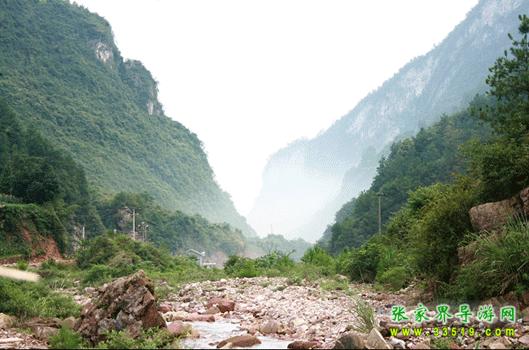
On both banks of the canyon, two giant rocks like mighty lions hold up the sky on their heads and stand in Baoxi beneath their feet, glaring at the mountain gate with awe-inspiring majesty. People call them "Two Lions Guarding the Pass." The valley's vegetation is lush and the stream winds along. Farther ahead is "Fairy Descending to the Pool." Beside the pool is a small flat platform about ten meters square. Do not underestimate it; it is also a treasured geomantic spot of Hongshaxi. In summer, pine waves rustle and the stream murmurs. In winter, clouds and rosy mists rise, warm as spring — it is a natural oxygen bar. On the bank are three large blood vines, each requiring two people to encircle, blocking out the sky and sun. Originally, they were three wandering Daoists who, because they secretly watched a fairy bathing, were punished and fixed here by Guanyin. Here, it is said, a female corpse three hundred years old was once dug up; when unearthed, her face was rosy and her skin delicate, astonishing everyone.
Along the simple road by the riverbank, after going forward several dozen steps, there is a large cliff inscription on the mountain cliff: "The sky joins the five ridges as silver hoes fall; the earth shakes the three rivers as iron arms wave." This was left in the 1960s when Rui City built an irrigation canal here. Seeing those vigorous, powerful incised grooves seems to carry our memories back to the last century, to that fiery era of battling heaven and earth. "One stretch of mountains and waters nurtures one group of people." Hongshaxi lies deep in the mountains and is extremely rich in water resources; it is one of the sources of the Youshui, a tributary of the Lishui. In the 1980s, Ruitapu Town invested here in building a large-scale drinking water project, benefiting thousands of households and irrigating ten thousand mu of fertile farmland.
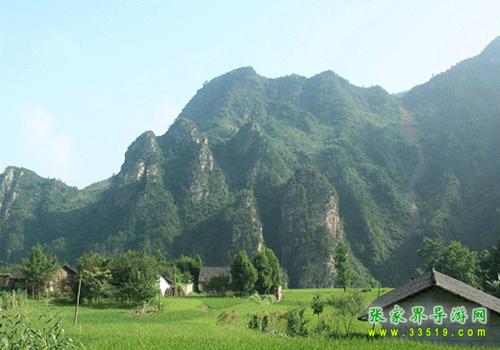
Crossing the mountain gate, you arrive at Hongshaxi Village Headquarters, and the terrain suddenly opens up. Looking into the distance, the peaks are towering, as if Mount Tian stood there; looking nearby, the mountains encircle the area, rolling and continuous, just like a fence. In the mountain bends, streams crisscross, cooking smoke curls upward, kingfishers call again and again, and shepherd's flutes are melodious. On the riverbank to the east, amid the screening of green pines and cypresses, tile-roofed houses of blue brick appear faintly, just like immortal mountain pavilions. If you want to trace the history of Hongshaxi's "opening wasteland and cutting grass," you must begin in the Southern Song period. Legend says that in the Southern Song, three brothers surnamed Qiu from Huaihua discovered that Hongshaxi had beautiful scenery and rich minerals, so they brought a great amount of gold, silver, and treasures to settle in this area. At first they settled at Hongbao in Rui City, but because they were not acclimatized, they moved into Hongshaxi. Later, people surnamed Zhou, Li, and Chen also moved into Hongshaxi in an endless stream, making this place lively and prosperous. Mineral resources here were very rich. By the Yuan and Ming periods, forty-eight iron-smelting towers, more than one hundred lime kilns, and more than ten small coal pits had been built. On both banks of the stream, Tujia stilted houses stood row upon row. The lane street, several hundred meters long, was paved entirely with pig iron plates. Passersby did not wet their shoes on rainy days or pick up dust on sunny days. The gold and silver of wealthy families had to be carried in bamboo baskets and dried on bamboo mats. The old people here say proudly that at that time this place was not called Hongshaxi, but "Xinglong Street." Its prosperity at its height can thus be seen.
A good song is sung, and a good song comes back,
A hospitable host drinks, and a hospitable guest accompanies,
The military official was accompanied by Yang Liulang,
The civil official was accompanied by Chancellor Bao.
Three Chinese fir trees grow side by side,
And in the middle there is also a cool-water well,
Cupping water in my palms to give my love to drink,
My love has a little sister to cherish him.
……
Folk songs are the lifeblood of the people of Hongshaxi. They use folk songs to express the wonder of love, pour out the hardships of labor, and depict the beauty of life. Those songs flow out from mountain springs, steeped in the hot kisses of Tujia girls; those songs burst forth from the canyon, releasing the wild, rough nature of Tujia men. An old farmer here, Qiu, often takes his stance in the Huilongtan area, sets up a song stage, and holds antiphonal singing. Some voices are high and resounding, some are tactfully "cai-colored," fully displaying the superb skill of Hongshaxi folk songs. This is a "kingdom of folk songs." There are nearly one thousand folk songs and minor tunes. If collected, the folk songs here could be compiled into a "Collection of Hongshaxi Folk Songs."
"Four hundred and eighty temples of the Southern Dynasties, how many towers in mist and rain." On both banks of the Hongshaxi river valley, ancient trees reach the sky, temples are densely distributed, evening drums and morning bells sound, and incense is flourishing. This confirms that Hongshaxi at that time was indeed a Buddhist holy site in western Hunan. The Thousand Buddha Temple at Liangfengjie, 1,080 meters above sea level, has a long history of over a thousand years. In the temple were enshrined the Long Live Tablet, Lord Guan, the Patriarch, the Kitchen God Bodhisattva, Skanda Bodhisattva, Jinsi Chuan'er, Dig-Out-Heart-to-See-Buddha, Thunder God and Lightning Flash, the Eighteen Arhats, and one thousand Buddha images in all. In the meditation room hung a large temple bell two meters tall that four people could encircle, and beneath the Long Live Tablet there was also a small bell covering a monk who had stolen dog meat to eat. Although the temple buildings collapsed long ago due to their great age, broken walls and ruins remain, and the site still exists. Believers from Sangzhi, Yongshun, Cili, and other places still come in an endless stream to burn incense, worship Buddha, and make vows. In Hongshaxi, famous temples include the Nun's Hut on Boji Mountain, Taiping Temple on Puti Mountain, Wugong Temple on Qiujia Slope, Jigong Temple on Liujia Slope, and more than ten others such as Miaolinggang, Conglongbao, and the Great Earth God Temple on Zhoujia Slope. With the passage of time and changes of the times, most of these temples are now damaged, though traces can still be vaguely seen.
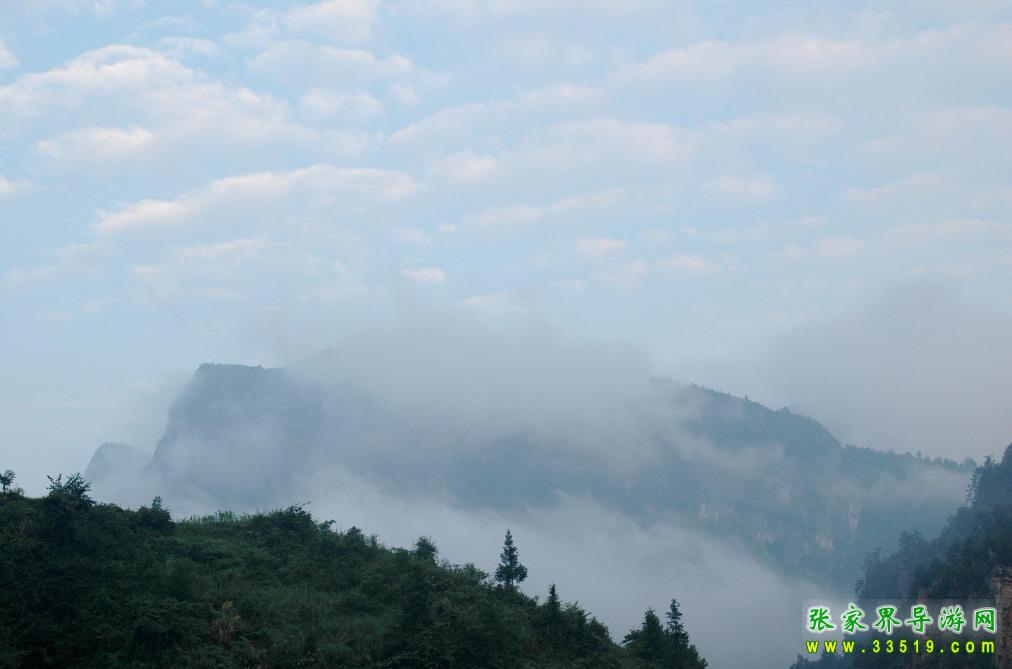
The mountain countryside in May is a season of burning passion. In the streams and on the cliffs, China roses and azaleas have burst into brilliant smiles. Walking in here is like walking into an incomparably wonderful world. Here every step offers a beautiful scene, and every scene has a wonderful legend.
Look! On the opposite bank of the canyon stands a tall stone pillar, remarkably like an upright "beehive barrel." That is "Beehive Rock." Legend says that countless gold cups and silver goblets, gold basins and jade dishes were hidden there. In the local Tujia mountain villages, whenever any household had a wedding or funeral, they could simply go there to borrow them. No one knows in what year or month, but a "greedy person" borrowed many gold cups and silver goblets from "Beehive Rock" yet could not bear to return them. From then on, the stone door of "Beehive Rock" shut tightly, and the locals could no longer borrow these gold cups and silver goblets for major or minor affairs. To this day, the mountain people here detest those "greedy people" and have always maintained the fine customs of simplicity, kindness, warmth, and generosity. Since the beginning of recorded history, there have been no armed fights and no disputes here; people accompany one another morning and evening and live in harmony.
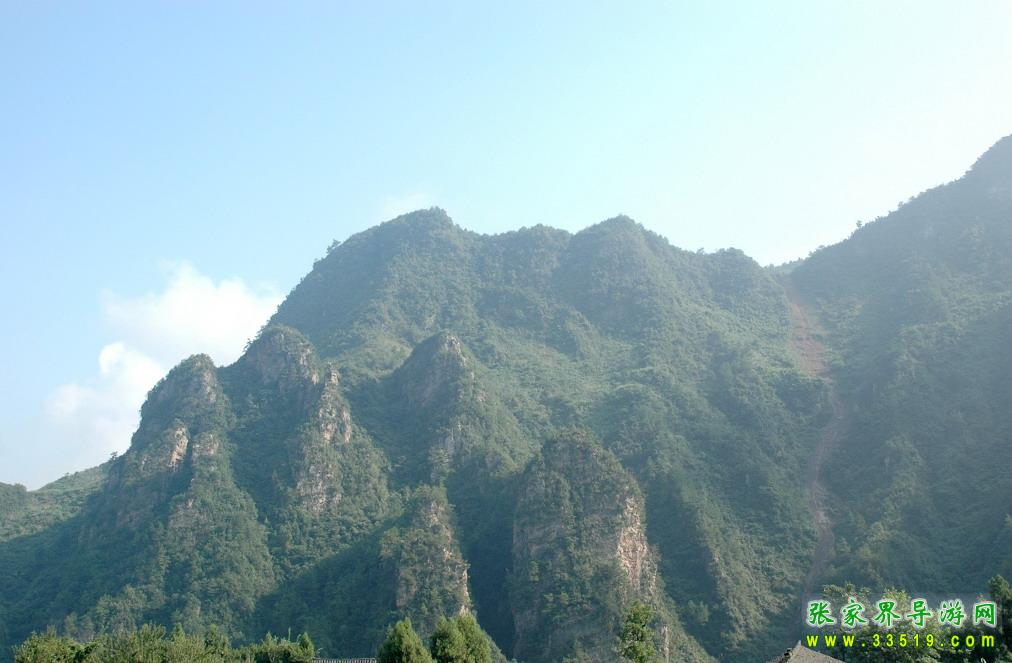
There is also a General Rock here! That majestic body, that plume on the head, that protective armor — there is no aspect in which it does not resemble the Forty-Eight Generals of Tianzi Mountain. That's right, the locals here will tell you that he is precisely one of the Forty-Eight Generals of Tianzi Mountain. In those years, when the general's troops passed through Hongshaxi, one general went into the thicket to relieve himself, became lost because the mountains were high and the forest dense, and thus was transformed into this General Rock. However, people gave him an inelegant name: "Pooping General."
After wading through several small streams and crossing a mountain bend, people will suddenly hear the "hua hua" sound of flowing water, and burst after burst of clear breeze rushes to their faces, instantly making them feel carefree and joyful. From the high mountain peaks, echoes come again and again; this is the middle-aged men and women here singing antiphonally again. Their songs add infinite charm to this quiet mountain wilderness. The "hua hua" sound of water, the primitive folk songs, the children's playful romping, and the empty-mountain bird calls in the wilds together form the most wonderful movement in the world. You may temporarily cast aside the troubles of the mundane world, seal yourself away in this secluded, cool world, and drink great gulps of milk-like sweet spring water. You will sincerely feel: so refreshing, truly so refreshing!
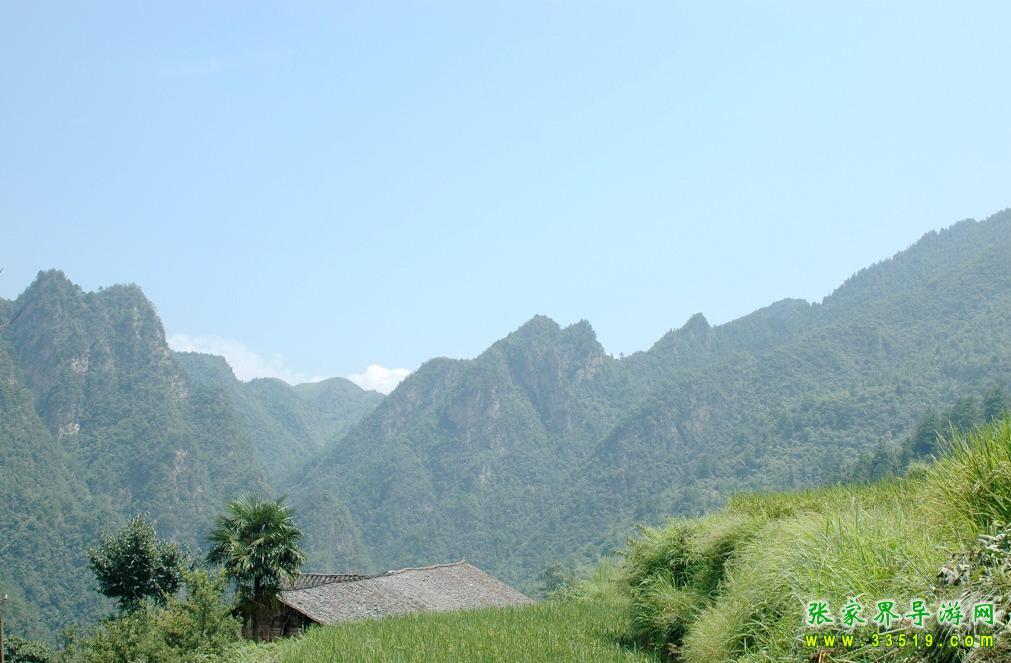
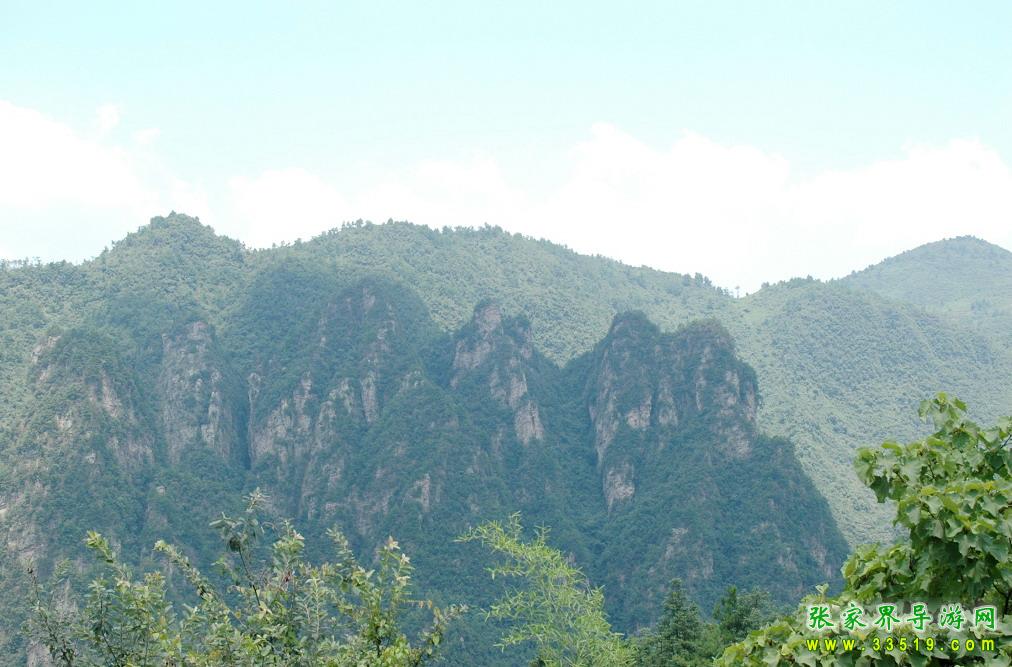
Farther ahead, the peaks on both banks look even more like human figures, or some kind of object. In this area there are "Golden Monkey Gazing at the Moon," "Immortals Gathering for a Meeting," "Jar-Tip Mountain," and "Immortal Cave." There is also "Chessboard Rock," a stone peak towering into the clouds with a flat giant stone on top; "Three-Tip Rock," jutting out abruptly from the thicket; "Ox-Nose Peak," with two large holes grown on a sheer cliff of ten thousand zhang; "Two-Cave Spring," where two waterfalls fall from the cliff as if from the sky; "Human-Shaped Peak," guarded by a host of peaks; and "Guanyin Mountain," facing south from the north, with a shawl over its head and hands joined in prayer. The old people will tell you: "This stream, for more than ten li, has dozens of scenic spots and hundreds of legends."
This is a place rich in stories. The story of "Shooting the Beam Arrow" is truly known to every household and everyone. Legend says that toward the end of the Song dynasty, Qin Hou rose to become the Tusi King of Maogang. After Qin Hou's mother died, she appeared to him in a dream, telling him to shut the door and practice martial arts for three years and six months. When the chickens flew and the dogs climbed onto the roof, he was to open the great door, bend the bow and shoot an arrow, kill the emperor, and seize the throne. Qin Hou followed the plan, hid in Hongshaxi, shut the door, and practiced, with his sister-in-law serving his three meals a day. Unexpectedly, just when three years had passed, his sister-in-law grew impatient. She put the dog on the roof ridge, drove the chickens flying all over the sky, and hurriedly told Qin Hou to shoot. Qin Hou thought the time had come, hastily opened the great door, drew the bow, and shot three arrows toward the direction of the imperial palace. Instantly, all the nan bamboo in the back courtyard exploded, and from each node burst a bamboo man and bamboo horse, plus three thousand crow soldiers. But because six months were still lacking, the soldiers' and horses' eyes had not yet opened, and as soon as they rushed out they all died on the ground. As for the three arrows Qin Hou shot, one struck the palace beam, one struck the dragon throne, and one flew over the emperor's head. The emperor was greatly shocked, and then sent troops to Jiangnan, captured Qin Hou, and ordered him to be executed by slow slicing on "June 6." When Qin Hou's skin was peeled open, three golden dragons on his back turned into three beams of golden light and shot into the sky. For a time, the palace was dark as pitch, thunder roared and lightning flashed, sand and stones flew, and sun and moon lost their light. The emperor knew he had wrongly killed the true Son of Heaven, and hurriedly knelt down, making a vow to Heaven: every year on the sixth, sixteenth, and twenty-sixth of the sixth month, let Qin Hou sit on the throne for three days. The emperor personally performed the ritual of three bows and nine kowtows. To commemorate the hero Qin Hou, the locals every year on the sixth day of the sixth month take out their clothes to sun for three days, commonly called "Qin Hou Sunning His Skin."
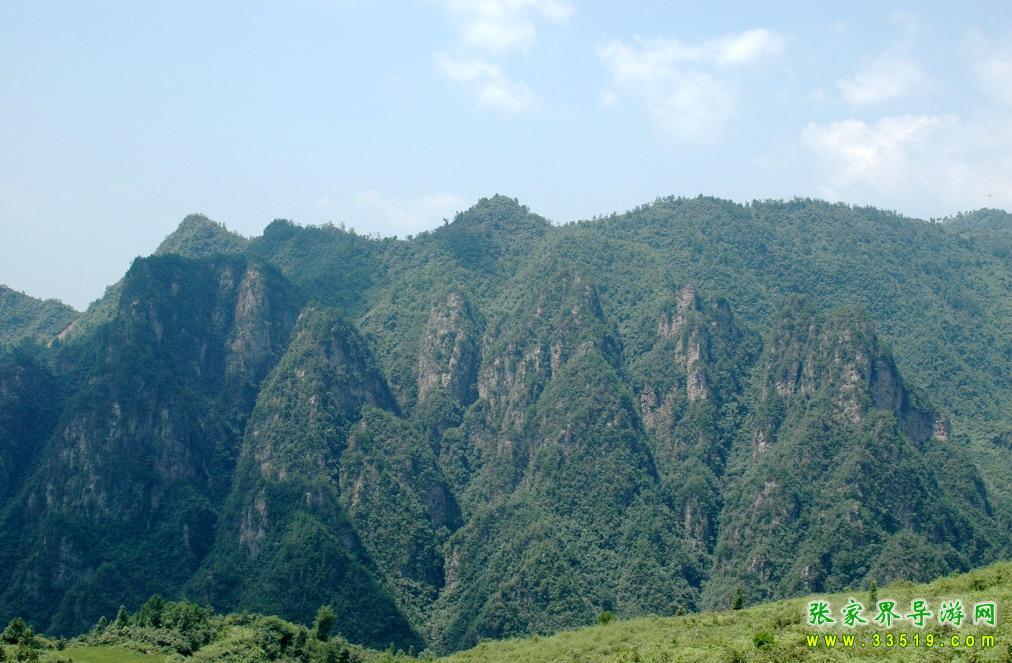
The story of the "Cross-Mountain Dragon" is also circulated here. On the day Qin Hou was born, phoenixes sang in harmony, a hundred birds sang joyfully, and auspicious clouds circled the beams for seven days without cease. Suddenly, a long dragon knelt before Qin Hou's father and said: the son you have borne is an evil dragon; if he is not eliminated, there will surely be endless trouble later. But Qin Hou's father said: the realm is yours, the son is mine; let us leave everything to fate. The true dragon had no words to answer, and overwhelmed with shame, rushed wildly about in Heiyu, carving the once fine Hongshaxi into a thousand cliffs and ten thousand gullies, seven ditches and eight ridges. It was just leaving westward toward Maziling when at "Dragon King Gully" it encountered a young woman washing a child's diaper in the river. The long dragon had no choice but to turn in place, leaving behind a bend of flat plain (where the village headquarters is located today), and then plunged north, actually splitting the tall and majestic Zhanggu Mountain in two, and fled in panic. Even today, an old poem still circulates here: "Zhanggu for no reason startles Heiyu; why does the true dragon sweep Hongsha?"
Today, Hongshaxi has become a fine place for leisure tourism that people yearn for, and an endless stream of people come one after another to explore and seek the extraordinary and to engage in outdoor activities. In recent years, the Party Committee and Government of Ruitapu Town have proposed building the two brands of "important industrial town and famous cultural town" and implemented a new strategy of folk-custom ecological leisure tourism. They have introduced more than 37 million yuan in foreign investment and built thirty-seven industrial and mining enterprises centered on Hongshaxi. At Baoxikou, a macaque garden viewing area has been built; at Fengya, a high-mountain "cloud and mist tea" base of more than 200 mu has been built; and on Boji Mountain, a 500-mu dried-fruit demonstration base has been built. With the building of Zhangjiajie's back garden and the Er'ya Industrial Park, Hongshaxi will face an even brighter development prospect.
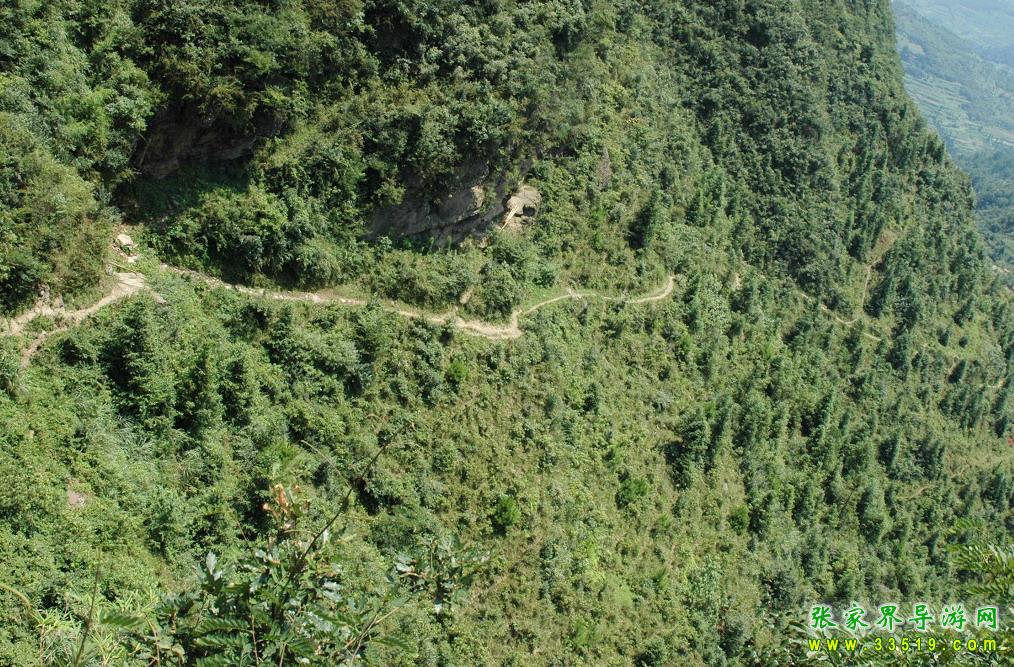
The Hongshaxi Original Ecological Tourism and Sightseeing Park is a back garden created around Zhangjiajie tourism, promoting the culture of Sangzhi folk songs, opening up a new scenic area for Sangzhi tourism, and bringing Hongshaxi's rich tourism resources—its fantastic mountains and beautiful waters, ancient temples deep in the mountains, Tujia mountain songs, folk customs, and historical legends—to the world. Hongshaxi! A long-sealed, weighty historical tome, a "dazzling pearl" buried deep in the mountains!