This attraction introduction is compiled from historical materials in the "Zhangjiajie Tour Guide Network" (33519.com · Scenic Spots section). Ticket prices, opening hours, transportation, and contact information mentioned in the text may be outdated. Please refer to the latest official announcements from the scenic area before traveling; some content consists of historical background/cultural introductions and is for reference only.
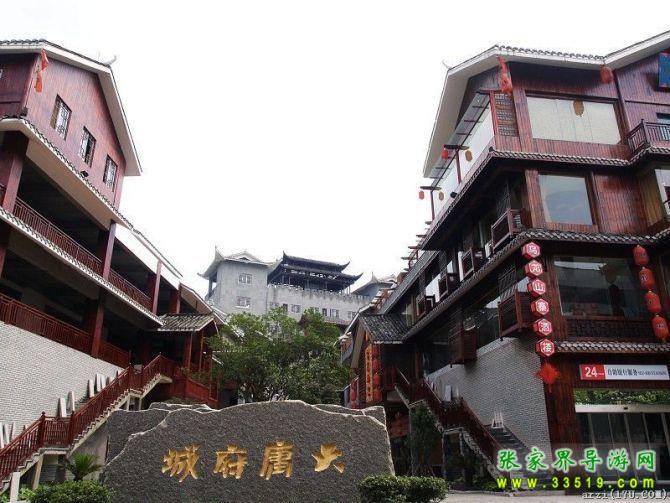
Dayong Prefecture City was built on the site of Zhangjiajie's old prefectural government office more than 600 years old. It is a cultural scenic spot mainly displaying Zhangjiajie's thousands of years of history and the intangible cultural heritage of the five major ethnic minorities: Tujia, Bai, Miao, Yao, and Dong. Within the scenic area are China's first multi-ethnic intangible cultural heritage exhibition hall and the Zhangjiajie Museum.
Walking along the stone-slab streets inside Dayong Prefecture City, one can feel the profound history and culture here.
Dayong Prefecture City is composed of eight building groups, with architecture in the styles of ethnic minorities such as the Tujia, Miao, Bai, Yao, and Dong of the Ming and Qing periods—the rustic grandeur of Tujia stilted houses, the magical beauty of Miao villages, the romantic charm of Dong wind-and-rain bridges, the mysterious majesty of the Yao Panwang Hall, and the tranquil splendor of the Bai three-bay-one-screen-wall style... The horse-head walls with flying eaves, the exquisite carved doors and windows, artistically and vividly connect past and present, bringing the simple and delicate artistic style of the folk to its extreme. Viewers cannot help but marvel at the breadth and depth of Chinese culture. Ascending along the stone steps, one sees in turn the 'Dayong Prefecture City' stone tablet, Tiger Stream, the Tiger Nursing Bronze Sculpture, the prefecture city memorial archway... Arriving here, one cannot help but recall the beautiful legend of a tiger nursing and saving a child that a local friend told me two days ago:
In ancient times, foreign tribes invaded the ancient Yong State. The leader of the Yong tribe led his people in a bloody battle, but was finally defeated by superior numbers and fled west.
The leader's wife was highly skilled in martial arts and capable in battle. During the breakout, carrying on her back an infant only a few months old, she resolutely stayed behind to cover the retreat and died in battle with all the soldiers she led, but the infant on her back miraculously survived. The baby's crying and the smell of blood in the air attracted a male and a female fierce tiger from the mountains. In a flash, two years passed. The Yong tribe, having broken out of the encirclement, wandered back to the banks of the Li River below Tianmen Mountain and reestablished the Yong State. The Tujia king had always been concerned about his wife and child, whose fate was unknown. One day, he happened upon a group of tigers playing in the stream, so he shot and killed the father and mother tigers, and found a small creature that seemed half human and half tiger living with the tigers.
The Tujia king recognized it as his own son through a birthmark, and realized he had wrongly killed a pair of chivalrous and righteous father and mother tigers, and regretted it endlessly. So he buried the two tigers together and asked stonemasons to carve statues of the father and mother tigers at the cave mouth according to the shape of the rock. At the same time, he named the stream 'Tiger Stream.' He broke two crossbow arrows and swore to Heaven: all our Tujia tribal people shall never shoot tigers again! This son of the Tujia king was called by everyone 'Tiger Boy.'
This story of gratitude to tigers in the ancient Yong State has been passed down from generation to generation and has endured. The Tujia people revere tigers; the tiger is the totem of the Tujia people. People admire the benevolent tiger that bestows love upon the world, so a statue was made and placed in the prefecture city to spread love and proclaim peace. It is said that this Tiger Nursing Bronze Sculpture is currently the tallest bronze tiger in China (this tiger has a net weight of about 4 tons) and is cast in bronze. Beneath the tiger are a child and a small tiger nursing. It seems this tiger should be the symbol of Zhangjiajie, just as the lion is the symbol of Singapore.
I could never put down thoughts of that Tiger Nursing Bronze Sculpture and that beautiful legend about a tiger nursing and saving a child. In the following days in Zhangjiajie, whenever I met local people I asked about the legends of Zhangjiajie and the stories of Dayong Prefecture, and I really heard quite a few more, such as the understanding and charming 'Tiger Nursing Divine Whip,' the heroic and steadfast 'Tiger Worshipping the Dragon Court,' the ever-changing 'Blood Bath of the Guard City,' and so on. Each story was magical, and each story seemed to interpret the true meaning of human destiny and exhale the fragrance of the thoughts of the ancestors...
Indeed, the location of Dayong Prefecture City is a multi-ethnic settlement area. Since ancient farming times, many ethnic minorities such as the Tujia, Bai, Miao, Dong, and Yao have lived together on this land, coexisting in harmony, endlessly struggling tenaciously against nature and fighting to the death against foreign enemies, building happy homes with the wisdom of life and creating a better life. Among them are too many beautiful legends and too many peaceful customs; any one story or any one custom is enough to move us later generations.
Standing in Dayong Prefecture City is like walking into the splendid spiritual world of the ancestors, like walking into the colorful ideological kingdom of the five major ethnic groups. A local friend explained that the Tianjie of Dayong Prefecture City was built along the slope, connecting above with the majestic gate of the prefecture city, implying that those who dare to climb can approach the source of happiness, gather a lifetime of good fortune, and enjoy a lifetime of wealth and honor. So I deliberately climbed that Tianjie to bring myself closer to the source of happiness. In Dayong Prefecture City, ascending step by step, I felt the culture of wealth and honor everywhere there, and the uniquely styled prefecture city architecture, memorial archways and screen walls of various shapes, fascinating pavilions and singing stages, and exquisite brocade and embroidery were all deeply stamped with the mark of this culture. Who would refuse wealth and honor?
Zhangjiajie, Dayong Prefecture City—the vicissitudes of human affairs over thousands of years have created a paradise on earth as poetic as song.