This attraction introduction is compiled from historical materials in the "Zhangjiajie Tour Guide Network" (33519.com · Scenic Spots section). Ticket prices, opening hours, transportation, and contact information mentioned in the text may be outdated. Please refer to the latest official announcements from the scenic area before traveling; some content consists of historical background/cultural introductions and is for reference only.
Wulong Village is a newly developed scenic spot in Yangjiajie; currently only 20% of Yangjiajie has been developed. Wulong Village was originally called "Heilong Village" and was formerly a place where bandits lived. It is remote and strategically dangerous, surrounded by cliffs on all sides, with only one route up and down. The terrain is so perilous that, as the saying goes, one man guarding the pass can hold off ten thousand.
To attract tourists' attention, the local tourism bureau specially changed the name to match the bandit den in the film "Story of Suppressing Bandits in Wulong Mountain." Since ancient times, Xiangxi has had a fierce folk character and produced many bandits. To trace it truly, one must go back to the late Ming Dynasty. Wu Sangui brought Qing troops through the pass and drove out the Chuang King. To make a comeback, the Chuang King hid treasure at Wulong Village, and the soldiers guarding the treasure changed from civilian bandits into mountain bandits. Afterward, with China beset by internal and external troubles and the people living in misery, bands of bandits gathered on the mountain strongholds and passed down from generation to generation. During the Republic of China period, a fierce battle between Kuomintang bandit-suppression troops and the bandits holding Wulong Village left the corpses of three battalions. The entire village was built along the mountain, easy to defend and hard to attack.
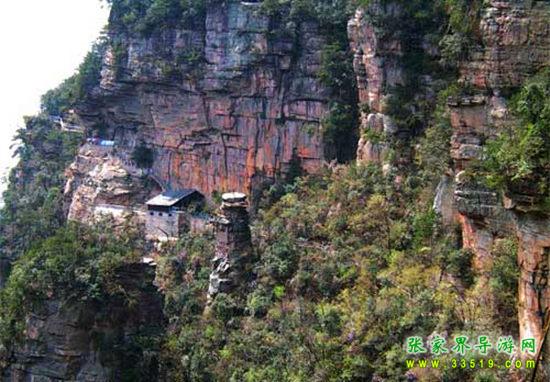
Many people have been to Wulingyuan, but few know about Wulong Village.
Heading west from Xihai for several dozen kilometers, there is a small mountain path, with dense woods blocking out the sky and sun, and few traces of people.
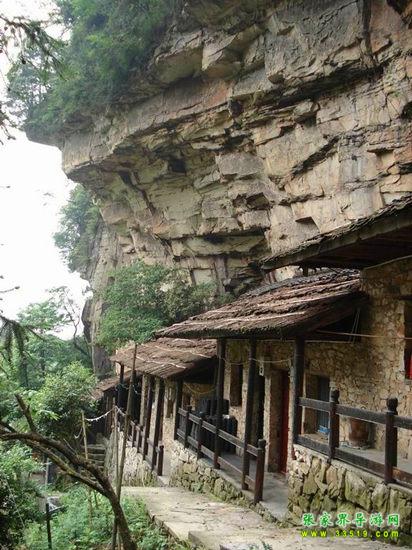
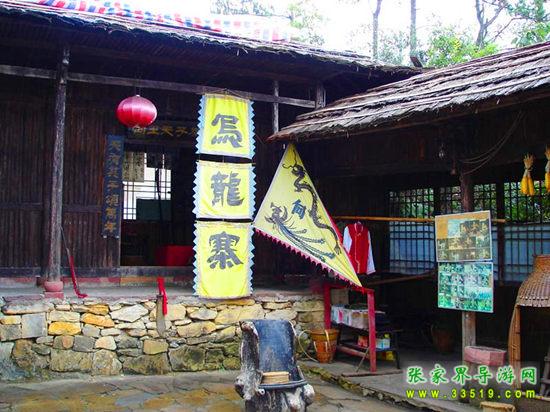
After going forward a few hundred meters, one slips onto a small path in a quiet, secluded spot, where the shrubs are thick and strange rocks stand in profusion. In the gloom, one feels a chill. After turning a few bends, a two-story wooden house appears in the mountains, seemingly exquisite. Someone told me this was originally a bandit stronghold. The environment of the stronghold is quite good, but since it sits in a valley, how could it protect itself? The people in the stronghold laughed and said: This is where they stayed in leisure time; the real stronghold is on the mountain opposite!
To the right of the wooden building is a cliff and deep valley. A narrow stone path snakes along the cliff edge, and a stronghold gate blocks the path, with the three characters "Wulong Village" on it.
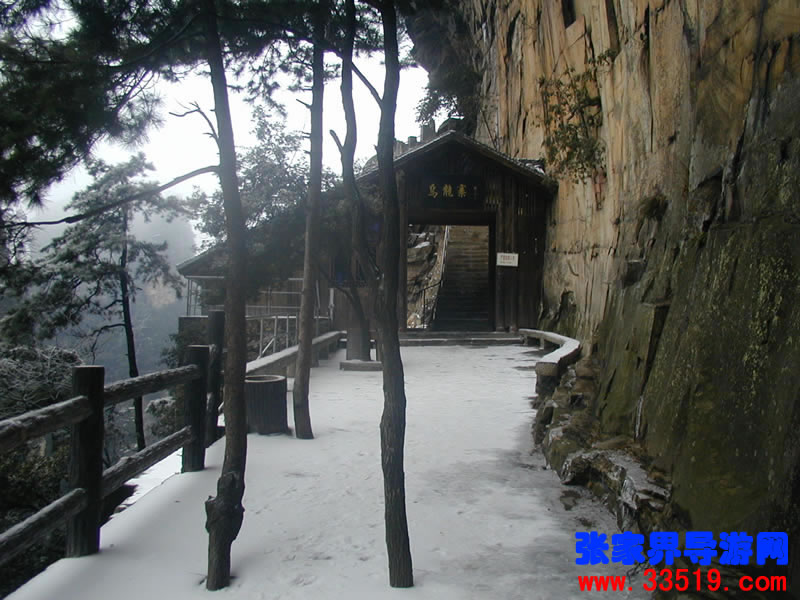
From the stronghold gate upward is a rather steep slope. Several dozen meters away there is a cliffside platform, which could be held with just two or three guns and was easy to defend but hard to attack. A few meters away is Wulong Village's first gate of death, "One Step Is Hard to Walk." The path turns sharply to the right, and a rock juts out abruptly. A person must cling tightly to the rock wall and slowly edge around; one careless move and one would fall into the mountain cliff. As long as one person is stationed there with a knife, no matter how many people come, it makes no difference.
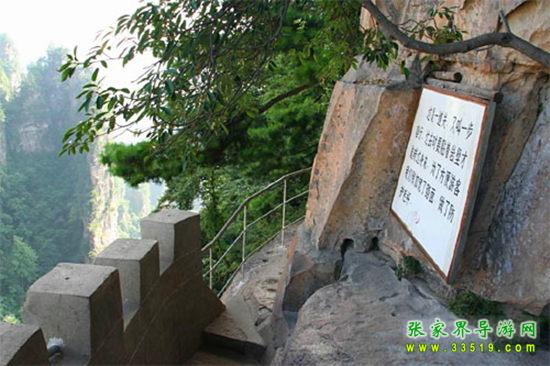
The road to continue forward quietly becomes no longer so distinct. One drills through holes and winds around rocks; it seems like a path yet not a path. A few meters away, people can hardly be seen. The hundred-meter stretch of road is difficult and twisting, and one must bend down to go up. The second gate of death, "Who Can Not Bow the Head," blocks the way here. The nearly hundred-meter steep slope is almost vertical, and the stone path passes between two huge rocks. A person must turn sideways to slowly go up. One man guarding the pass can hold off ten thousand. "One Man Pass" is the third gate of death. Wulong Village could stand firm for many years, and not merely in name.
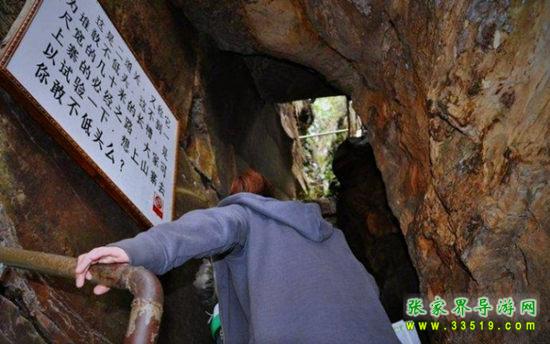
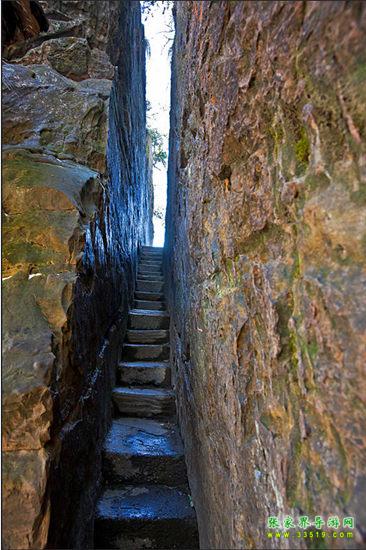
After passing through several dozen meters of relatively gentle stone path, there is another stretch of slope, and a stronghold stands high. Behind the stronghold, all four sides are broken cliffs and deep ravines. Not far away, a solitary rock stands like a crane among the mountains—this is the hidden wonder of Tianbo Mansion. Walking across the swaying rope bridge and climbing to the top of Tianbo Mansion, all the scenery is taken in at a glance. It is said that one branch of the descendants of the Yang family generals drifted here, and therefore many scenic spots have inextricable ties with the Yang family generals in their names.
The distant mountains and nearby ravines are spectacular and spiritually beautiful, with vast openness in every direction and an incomparable breadth. Fantastic peaks and strange rocks form natural masterpieces. Unlike other landscapes in Zhangjiajie, the stone forest here is arranged in orderly fashion, row upon row, patch upon patch, like battle formations, like ranks of soldiers, extremely imposing.
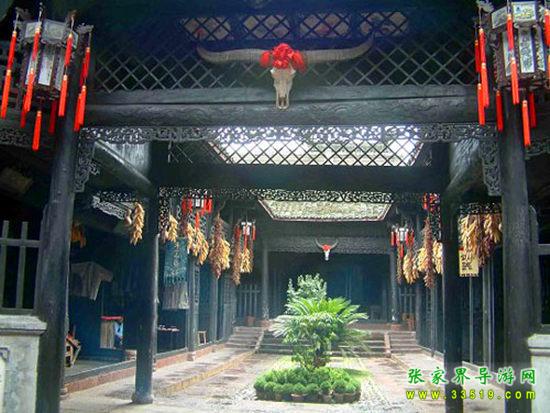
Blazing a new trail and advancing layer by layer, touring Wulong Village allows one to appreciate nature, culture, history, and legend. Experiencing the stronghold firsthand gives a deeper understanding of Xiangxi's bandit troubles and the history of bandit suppression, while the enchanting scenery especially makes one linger and forget to return.