This attraction introduction is compiled from historical materials in the "Zhangjiajie Tour Guide Network" (33519.com · Scenic Spots section). Ticket prices, opening hours, transportation, and contact information mentioned in the text may be outdated. Please refer to the latest official announcements from the scenic area before traveling; some content consists of historical background/cultural introductions and is for reference only.
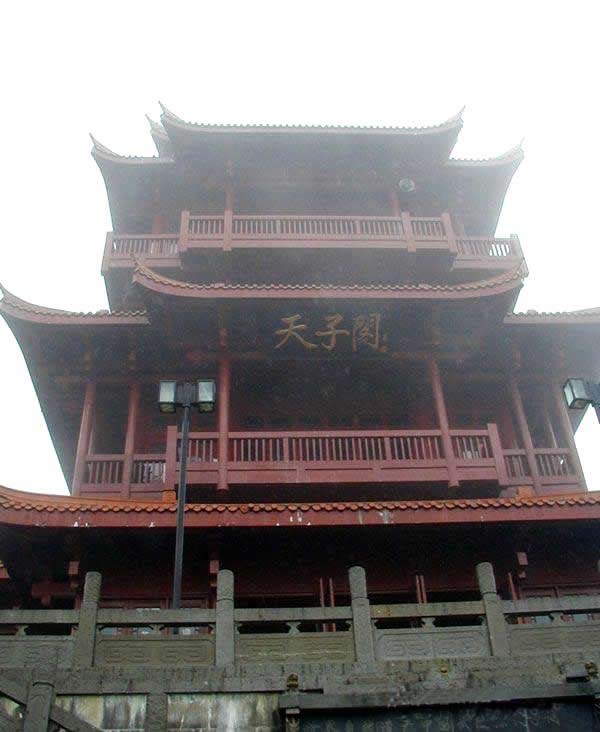
Shangtianzi TempleProperly named "Xiangwang Palace," it is located at Xiangtian Bay on the east side of Tianzi Mountain, facing south with its back to the north. It was first built in the 22nd year of the Hongwu reign of the Ming Dynasty (1389) and expanded during the Qianlong reign of the Qing Dynasty. The temple has a brick, stone, and wood structure covered with grey tiles, with an area of 150 square meters. Inside are three main halls, enshrining wooden statues of King Xiang and his consort. The temple gate is a memorial-arch-style brick and stone structure, with the three characters "Xiangwang Palace" written vertically in the center of the upper section. Below it is a horizontal couplet reading "Protecting the Virtuous," flanked by a pair of vertical couplets reading: "Eliminating disasters and warding off misfortune, all receive the grace of King Xiang; grateful and admiring, everyone draws near the light of the Son of Heaven." Embedded within these are the four characters "Xiang Wang Tian Zi" (King Xiang, Son of Heaven). During the Qing Dynasty restoration, a wooden tablet was added in front of the statues of King Xiang and his consort, inscribed vertically with seven characters: "Long live the reigning emperor." The entire temple, while inheriting the traditional architectural models of ancient China, places emphasis on highlighting Tujia ethnic style and form.