This attraction introduction is compiled from historical materials in the "Zhangjiajie Tour Guide Network" (33519.com · Scenic Spots section). Ticket prices, opening hours, transportation, and contact information mentioned in the text may be outdated. Please refer to the latest official announcements from the scenic area before traveling; some content consists of historical background/cultural introductions and is for reference only.
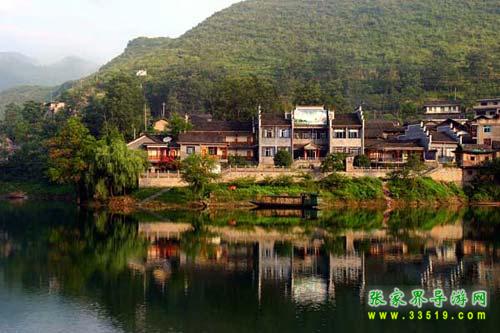
"Kuzhu" means "high mountains on both sides" in the Tujia language, and "Kuzhuhe Town" thus means "a riverside town with high mountains on both sides." Kuzhu Village is 19.5 km from Sangzhi County seat, a 35-minute drive; 91.5 km from Zhangjiajie city center, a 2-hour 20-minute drive; 121.5 km from the Zhangjiajie Wulingyuan core scenic area, a 2-hour 50-minute drive; 2.5 km from Jiutian Cave; 39 km from Maoyan River rafting, a 1-hour drive; 40 km from He Long's Former Residence, a 50-minute drive; and 99 km from Badagongshan, a 2-hour drive.
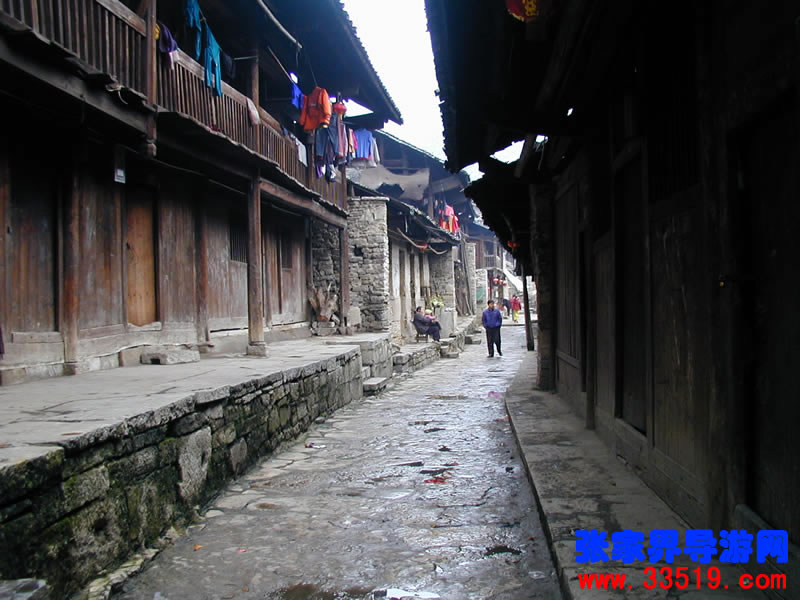
The ancient village was founded in the Tang and Song dynasties and flourished in the Ming and Qing dynasties. It was once known as the upper reaches of the Lishui River's "old wharf with a forest of a thousand sails, ancient market fair teeming with merchants, pleasure den where boatmen lost their souls, and a kaleidoscope of Ming and Qing society." The ancient fire walls and low stilted houses showcase the wisdom of the Tujia people to visitors, while the bluestone slabs and the sound of the dongdongkui flute tell of the village's past glory. Along the banks of the Lishui River, traces of human activity have been found dating back over 300 million years to the Paleolithic era, and Sangzhi has a history of over 2,200 years since its establishment as a county. According to expert verification, this ancient town was first built in the Tang and Song dynasties and prospered in the Ming and Qing dynasties, with a history of nearly 2,000 years. Because it connects to the county seat upstream and overlooks steep gorges downstream, and is situated between mountains and water with a strategically important terrain, it has always been called the throat of Sangzhi.
Kuzhu Village Scenery: In ancient times, when water transport was the only channel connecting to the outside world, Kuzhuhe Town was a commercial wharf, bustling with people and boats, extremely prosperous. The small town had shops, inns, brothels, embroidery houses, workshops, pawnshops, theaters, and temples all in one, making it truly a kaleidoscope of Ming and Qing society.
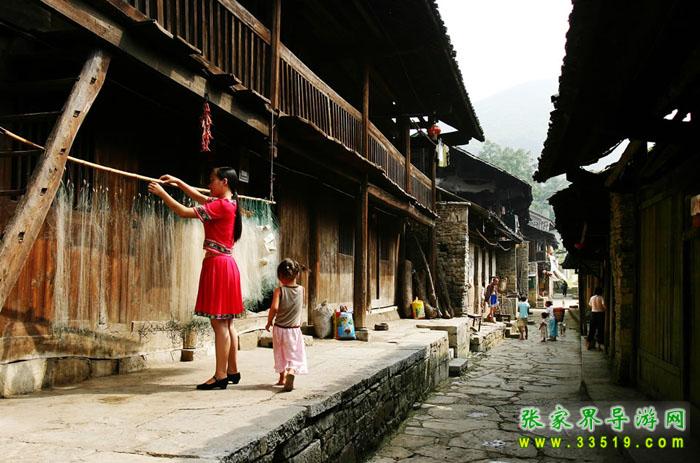
The river flows on, and human affairs change with the vicissitudes of time. In modern times, due to the rapid rise of land transportation, water transport gradually declined, and the small town was slowly forgotten in the gorge. The town, having lost its former prosperity, has not lost much of its original antique appearance, allowing us today to feel its bygone elegance through the remaining streets, buildings, and shops.
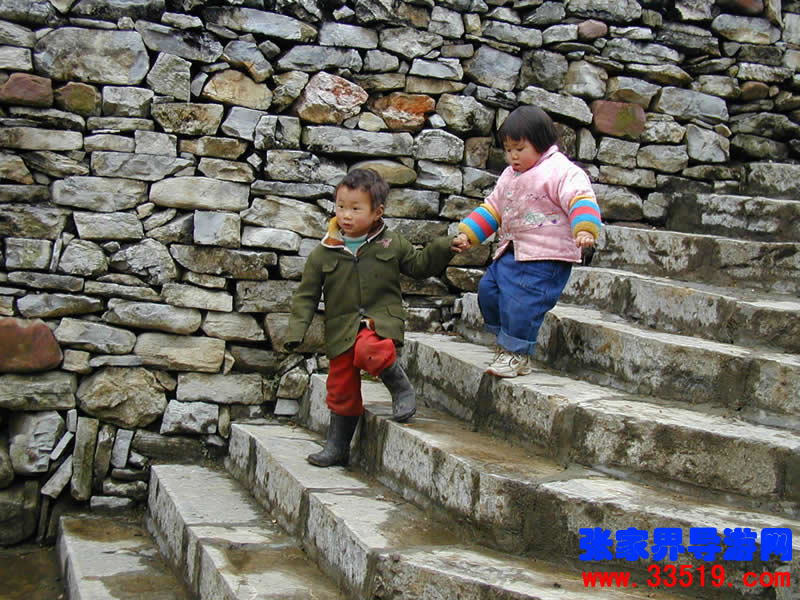
During the revolutionary period in Sangzhi, He Long traversed almost every mountain, river, village, and hamlet on both banks of the Lishui River. Kuzhu Village is a village of mixed ethnic minorities by the Lishui River, retaining the architectural features of the Ming and Qing dynasties, with simple folk customs, and villagers who can sing and dance well. Many Sangzhi folk songs have been passed down through the singers of Kuzhu Village. At nightfall, Kuzhu Village lights up with red lanterns, a tradition in the village. When the Red Army marched through Kuzhu Village at night, an old woman in the village, fearing the Red Army would have difficulty walking in the dark, hung a red lantern at her doorstep, and other villagers followed suit, turning Kuzhu Village into a world of lights. This story of military-civilian camaraderie was written into a song that is still sung today, called "Hanging a Lantern at the Door." Tianping Mountain is a primitive forest on the border of Hunan and Hubei. When He Long drove mules to sell salt and led guerrilla warfare, he often frequented this deep mountain forest. Even now, bullet casings and Red Army straw sandals can occasionally be found among the fallen leaves deep in the forest.