This attraction introduction is compiled from historical materials in the "Zhangjiajie Tour Guide Network" (33519.com · Scenic Spots section). Ticket prices, opening hours, transportation, and contact information mentioned in the text may be outdated. Please refer to the latest official announcements from the scenic area before traveling; some content consists of historical background/cultural introductions and is for reference only.
Tianmen Mountain, with its profound historical and cultural heritage, has always been revered by the local people as a sacred mountain and holy mountain, and is even hailed as the "First Sacred Mountain of Xiangxi" and the "Soul of Wuling."
Six Great Ancient Mysteries of Tianmen Mountain
The Mystery of the Wild Monk's Hidden Treasure
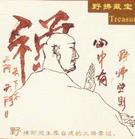
Yefu, namely Li Guo, a great general of the rebel leader Li Zicheng, took the dharma name "Yefu" after becoming a monk. The Guangxu-era "Yongding County Annals" of the Qing Dynasty records: "In the late Ming, Yefu flew his staff to this mountain from Jiashan Temple. Yefu was a remnant partisan of the rebel thief; when his cause failed, he actually escaped heaven's punishment." As is well known, when Li Zicheng retreated from Beijing after his defeat, he swept the national treasury's gold and silver treasures clean, intending to make a comeback later. Yefu's ascent to Tianmen Mountain must have been to transfer the treasure. For hundreds of years, countless people have searched for the treasure here, all returning empty-handed. Where exactly the treasure is remains an unsolved mystery.
The Mystery of Guiguzi's Apparition
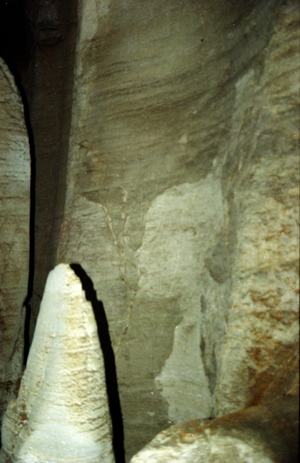
An explorer who bravely ventured into Guigu Cave once accidentally captured with a camera a profile portrait of Master Guigu on the stone wall inside the cave. On several later return visits to reshoot, nothing was captured. Was this sole apparition of Guigu a coincidence or a chance occurrence, or perhaps a deliberate arrangement by heaven?
The Mystery of Tianmen's Rotation
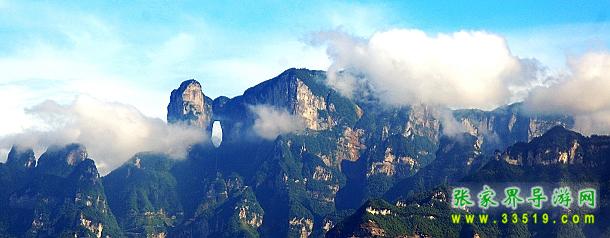
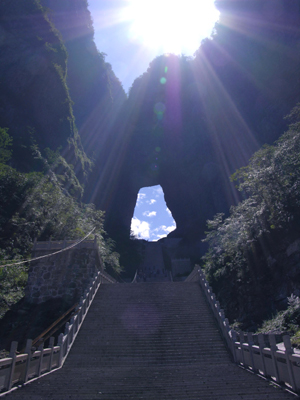
Seventy or eighty years ago, standing at the South Pier by the river in Zhangjiajie's urban area, one could clearly see the majestic and spectacular Tianmen Cave. Today, from the same spot, one can only see the mountain but no longer the cave. To view this magnificent sight, one must go to Dayongqiao Park, four kilometers away. Moreover, in recent years, residents of Guanping Town, more than ten kilometers from Dayongqiao Park, have been surprised to find that the angle at which Tianmen Cave reveals itself is growing ever larger. Could it be that Tianmen Cave is really quietly rotating from north to northwest? Regarding this phenomenon, opinions vary widely and it is difficult to explain.
The Mystery of Tianmen's Water Reversal
Tianmen's water reversal occurs on the sheer cliff to the left of Tianmen Cave at an altitude of 1,500 meters, where during the dry season a spectacle of raging floodwaters pouring down appears, followed by sudden outbreaks of social upheaval, human catastrophe, and natural disasters in China. Is this truly a warning from heaven? Chronology of water reversals: 1949, 1965, 1976, 1989, 1998. Tianmen Cave, this masterpiece of nature's creation, is embedded in a thousand-meter sheer cliff, like a bright mirror hung high, like a heavenly gate opening alone, exhaling and inhaling clouds, mist, thunder, and lightning throughout the four seasons, full of the mystery of heavenly palaces and imperial pavilions. Its true cause of formation still has no convincing scientific explanation.
The Mystery of Tianmen Cave's Opening
Tianmen's water reversal occurs on the sheer cliff to the left of Tianmen Cave at an altitude of 1,500 meters, where during the dry season a spectacle of raging floodwaters pouring down appears, followed by sudden outbreaks of social upheaval, human catastrophe, and natural disasters in China. Is this truly a warning from heaven?
The Mystery of Tianmen's Auspicious Beast
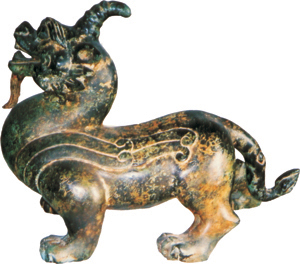
According to records, someone once happened to see a one-horned beast in the primeval forest of Tianmen Mountain. This beast closely resembles the images of auspicious beasts handed down from ancient China: its body is like a tiger's, entirely crimson red, with an arc-shaped single horn at the very center of the top of its head. When anyone approaches, it quickly vanishes from sight.