This attraction introduction is compiled from historical materials in the "Zhangjiajie Tour Guide Network" (33519.com · Scenic Spots section). Ticket prices, opening hours, transportation, and contact information mentioned in the text may be outdated. Please refer to the latest official announcements from the scenic area before traveling; some content consists of historical background/cultural introductions and is for reference only.
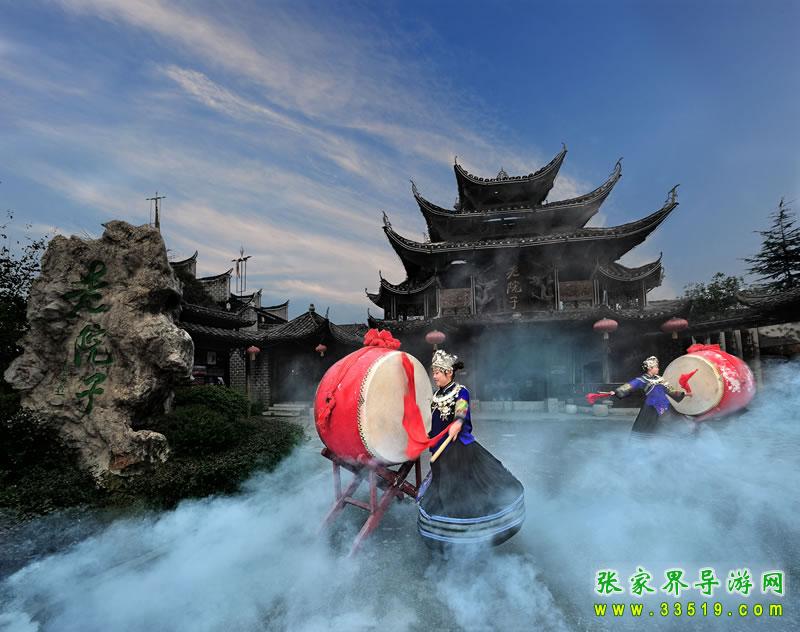
The Thousand-Year Tusi Prince's Mansion · Tian Family Old Courtyard is located east of the Lusiwang Bridge in Zhangjiajie's urban area. First built in the fifth year of the Qingli era of the Northern Song Dynasty (1045), it has a history of 965 years to date. It is a Tujia-style courtyard building with skywells and fire-sealing walls. More than one hundred ancient rooms remain, covering an area of over 10,000 square meters, and it has long been known as the "Little Forbidden City of the Southwest." Before the replacement of native chieftains with appointed officials, this was the seat of the hereditary pacification commissioner enfeoffed by the imperial court and the Tian family Tusi, with functions including government office, garrisoning troops, teaching, sacrificial rites, and residence. It is the best-preserved thousand-year Tusi prince's mansion in the entire Xiangxi region.
After the replacement of native chieftains with appointed officials (1728), the Thousand-Year Tusi Prince's Mansion gradually became a private residence, but its family precept of "leaving poetry and books to posterity, transmitting filial piety and fraternal duty through the family" remained unchanged, and its academic tradition of "cultivating both civil and martial arts, letting a hundred flowers bloom" did not change. The academy, martial arts hall, theater, and shamanistic Nuo guild hall still flourished. The Thousand-Year Tusi Prince's Mansion became a cradle of talent in Xiangxi and a family of scholars for generations. The famous general Liu Mingdeng, who fought against the French and defended Taiwan; the Republic-era premier Xiong Xiling; the great north-south knight-errant Du Xinwu; the geology expert Tian Qijun; and former Premier Zhu Rongji all once practiced literature and martial arts here.
After Liberation, because the Thousand-Year Tusi Prince's Mansion · Tian Family Old Courtyard was continuously used as a home for honored veterans, it was preserved intact. It has now been listed as a key cultural relic protection unit and a famous film and television shooting base in Hunan Province. Television dramas such as "Tales of Suppressing Bandits in Wulong Mountain," "Bloody Xiangxi," "Young Du Xinwu," "Marshal He Long," "Saving the Female Soldier Situ Hui," "Past Events of Xiangxi," and "Where Are the Heroes" were successfully filmed here.
1. Step into the nationally protected key cultural relic site—the Thousand-Year Tusi Prince's Mansion · Tian Family Old Courtyard—and explore eight hundred years of Tusi culture and a thousand years of a prominent family's legend; feel Premier Zhu Rongji's attachment to his hometown; get up close to the filming locations of TV dramas such as "Tales of Suppressing Bandits in Wulong Mountain," "Bloody Xiangxi," "Marshal He Long," "Saving the Female Soldier Situ Hui," and "Where Are the Heroes"; and personally experience the time-traveling "Ancient Music of Xiangxi"!
2. (Four Golden Signboards): A nationally protected key cultural relic site; a Tusi prince's mansion with 965 years of history; a famous film and television shooting base in Hunan Province; and the thousand-year academy where Premier Zhu Rongji studied—Tianmen Academy.