This attraction introduction is compiled from historical materials in the "Zhangjiajie Tour Guide Network" (33519.com · Scenic Spots section). Ticket prices, opening hours, transportation, and contact information mentioned in the text may be outdated. Please refer to the latest official announcements from the scenic area before traveling; some content consists of historical background/cultural introductions and is for reference only.
Huanglong Cave Ecological Plaza
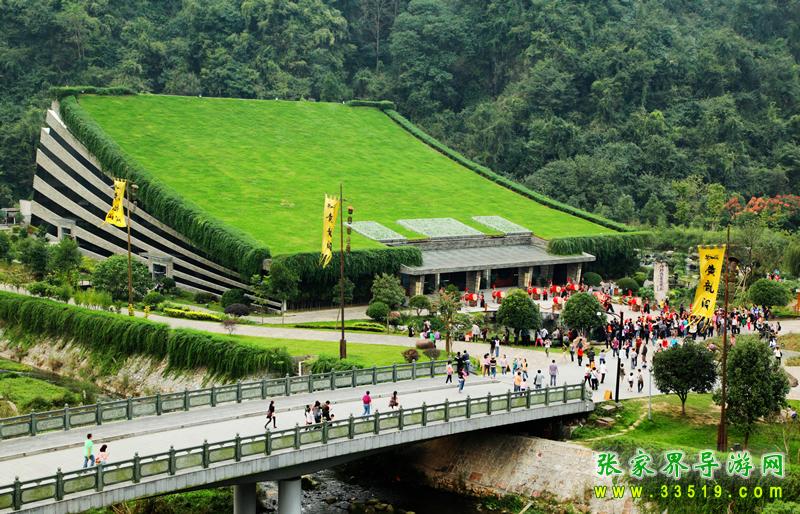
Huanglong Cave Ecological Plaza is located at the entrance of the Huanglong Cave Scenic Area, covering 138 mu with a total investment of 200 million yuan. It was designed by Yu Kongjian, dean of the School of Architecture and Landscape Architecture at Peking University and a professor at Harvard University.
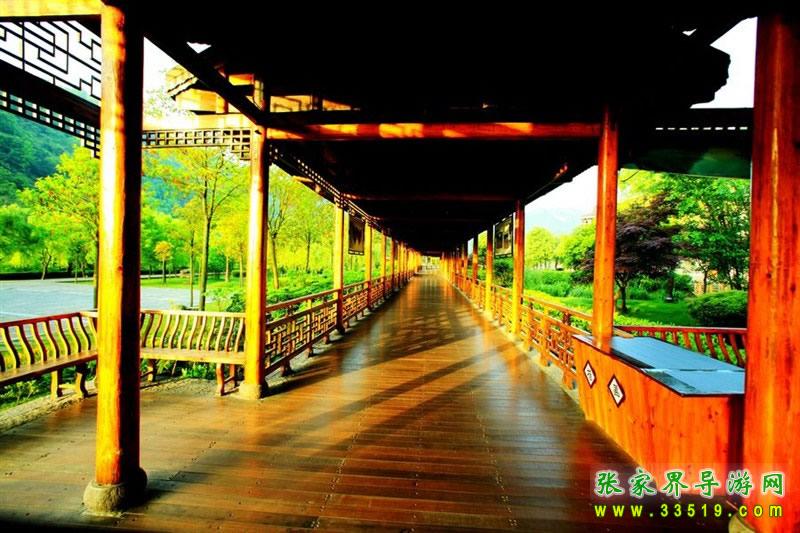
The ecological plaza integrates tourism services, pastoral scenery, folk performances, and office management. Its design concept is elegance, simplicity, and tranquility. The greatest feature of Huanglong Cave Ecological Plaza is the integration of tradition into modernity and humanity into nature. It adheres to the three basic principles of "ecological harmony, people-oriented, and local characteristics," highlights the architectural style of "ethnicization, quality, and ecologicalization," emphasizes the integration of regional landscape with Zhangjiajie's overall environment, and highlights the closeness between human culture and natural landscape, allowing people to gain an experience of tranquility, seclusion, purification, and joy. In 2008, Huanglong Cave Ecological Plaza won the China Environmental Art Award.
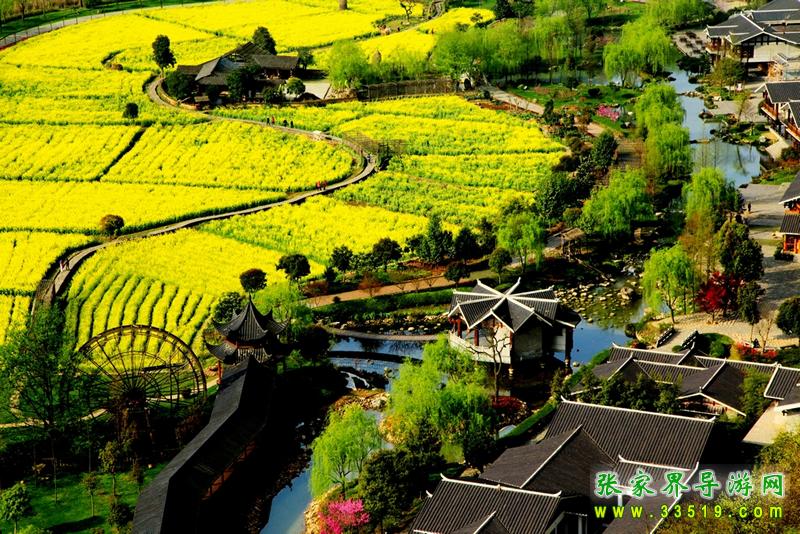
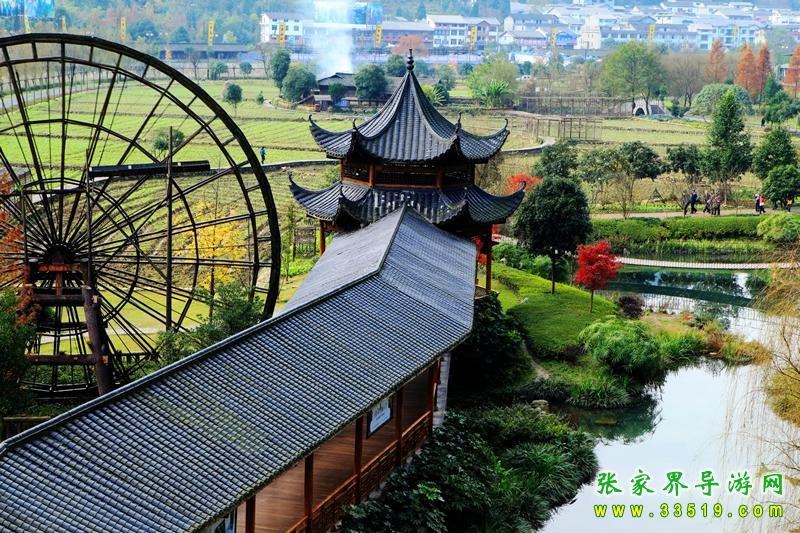
The ecological plaza has planted nearly 1,600 trees and shrubs in total, and the lawn and greening project covers nearly 30,000 square meters, 61% of the plaza's total area. Evergreen trees such as camphor, osmanthus, and crape myrtle compete in fragrance and beauty, serving as green companions for people at leisure. Pastoral scenery and greening landscape enhance each other. Across the tour path, nearly 20,000 square meters of farmland is concentrated in the southeast part of the plaza. The integration of rice, corn, and various fruits and vegetables with farmhouses, poultry, and peace doves, connected by country paths, brings the rustic charm to its extreme. Waterwheels, stone mills, and vigorous fengshui trees seem to transport people into an ancient world. Stone arch bridges and iron-chain bridges blend seamlessly with bracket-set buildings, possessing both the soft beauty of Jiangnan water towns and the distinctive features of the Tujia people.
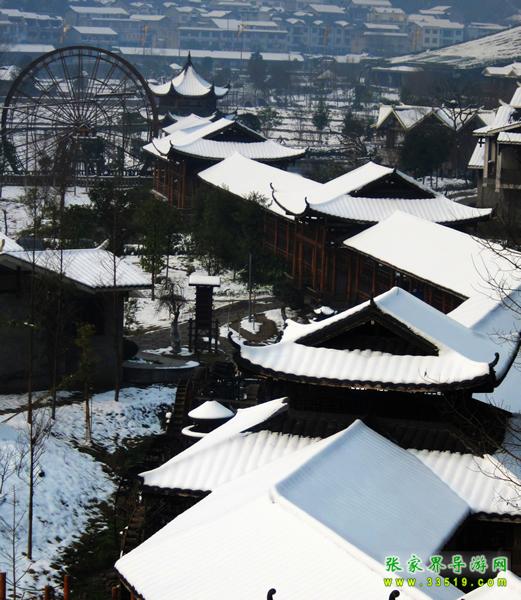
The Tujia courtyard built against the mountain and by the water has a total area of 10,826.7 square meters, forming a Tujia architectural complex that includes shops, teahouses, restaurants, and office areas. The Hallelujah Concert Hall is the largest building in the plaza. It adopts a nationwide-unique sloped-roof greening, has dual functions of performance and exhibition, and its exterior wall is decorated with a streamlined artistic beauty. The roof greening blends with nature, dotted with multicolored plants and trees, forming the natural impression of a "hanging garden."
Walking in the ecological plaza, one can see white doves dancing gracefully; in the fields, one can hear the melodious pastoral songs of harvest; in the water, one can play with fish swimming freely; under the trees, one can smell the fragrance of fresh flowers and feel the comfort of time flowing quietly.