Ticket prices, opening hours, and other details for this attraction may be adjusted according to season and policy. Before traveling, please refer to the latest official announcements from the scenic area.
Huanglong Cave, a natural labyrinth formed 380 million years ago, was discovered by 8 young militiamen in 1983 and officially opened to the public in 1984. After nearly 30 years of development and construction, Huanglong Cave has become a World Natural Heritage site, a World Geopark, and one of China's first batch of 5A-level tourist areas.
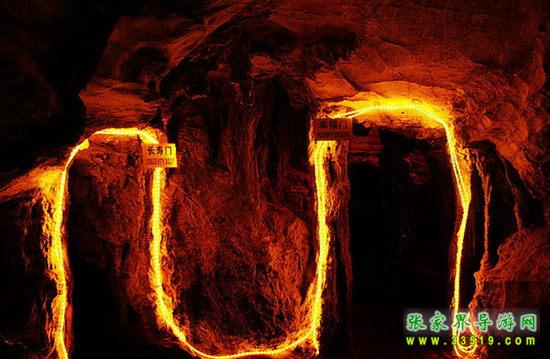
'Without seeing Huanglong Cave, all other caves in the world are visited in vain.' Huanglong Cave has now been surveyed to have a total area of 100,000 square meters, a total length of 11.7 kilometers, and a vertical height of 140 meters. It is divided into two levels of dry caves and two levels of water caves. The entire karst cave spreads out like an ancient tree with gnarled roots and twisted branches — caves within caves, rivers within caves, mountains within caves.
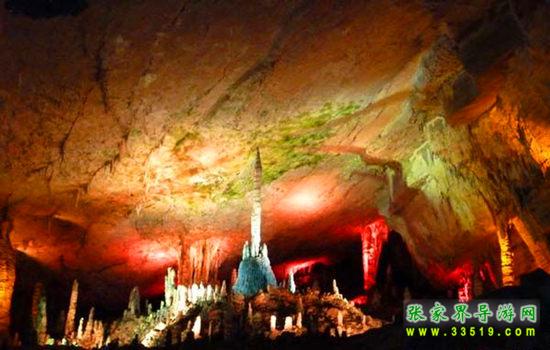
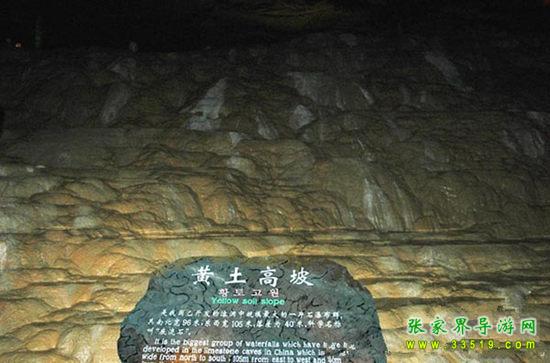
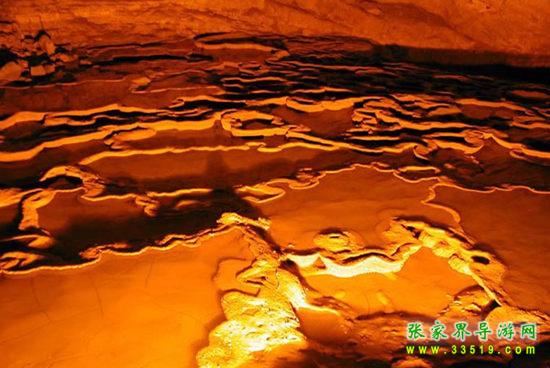
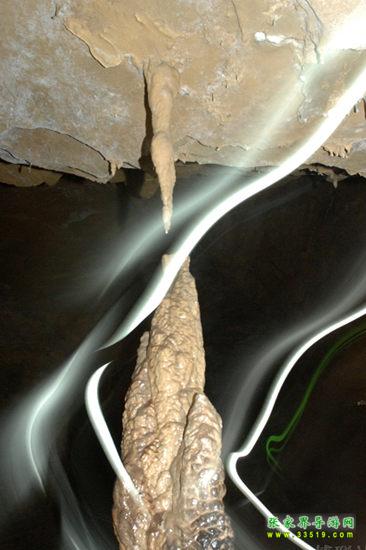
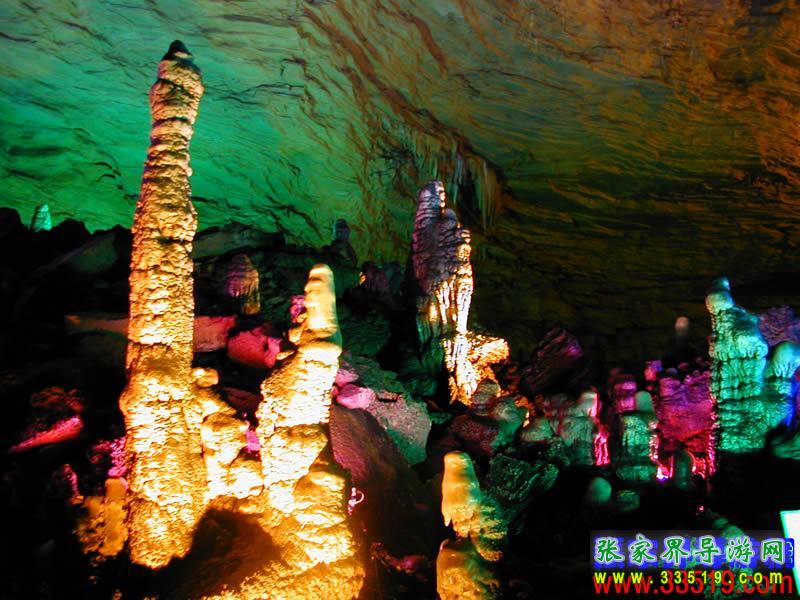
Inside the cave, six major tour areas are now open — Dragon Dance Hall, Xiangshui River, Heavenly Fairy Water, Heavenly Pillar Street, Dragon Palace, and the Maze — all closely connected yet each with its own characteristics. Stalactites, stalagmites, stone columns, stone flowers, stone curtains, stone branches, stone tubes, stone pearls, stone corals, and various other cave formations created by the condensation of calcareous solutions are found throughout, as if it were a magical underground 'demon palace.' After investigation, Chinese and foreign geological experts unanimously agreed: Huanglong Cave contains the entire content of speleology and is the 'all-around champion' of the world's karst caves.
The 'Pillar Stabilizing the Sea,' formed 200,000 years ago, is pure white throughout, uniquely shaped, growing on a slope, thick at both ends and thin in the middle, with the thinnest part only 10 centimeters in diameter. It is the landmark scenic spot of Huanglong Cave. In April 1998, to strengthen protection of this 'treasure of the cave,' Huanglong Cave took out one hundred million yuan in insurance for this divine pillar, creating a precedent in human history for insuring resource assets, and shocking the domestic and international tourism, insurance, and news industries.
In the nearly 30 years since Huanglong Cave opened, it has received over 15 million domestic and international tourists. It has successfully received Party and state leaders including Hu Yaobang, Hua Guofeng, Qiao Shi, Li Ruihuan, Li Lanqing, and Jia Qinglin, as well as over three thousand notable figures such as master of traditional Chinese painting Guan Shanyue and famous writer Cao Yu. In 1998, it also successfully received the first foreign head of state — President M. Kapa of Tanzania.
After visiting Huanglong Cave, the famous literary critic Feng Mu praised it as 'jade towers and jeweled palaces, a wonderland opened by heaven.' After visiting Huanglong Cave, playwright Cao Yu highly praised it as 'a separate cave heaven, a wonder of the world.' After inspecting Huanglong Cave, Tung Chee-hwa, the first Chief Executive of the Hong Kong Special Administrative Region, praised: 'Huanglong's wondrous cave, breathtaking beyond words.' After touring Huanglong Cave, Princess Sirindhorn of Thailand happily wrote an inscription: 'A world of dreams.' After inspecting Huanglong Cave, former Foreign Minister Li Zhaoxing wrote impromptu: 'Huanglong of the Three Xiang, pride of China.'
'Beautiful regardless of wind or rain, day or night.' The air inside Huanglong Cave circulates well, warm in winter and cool in summer, making it suitable for sightseeing all year round, day and night.
Huanglong Cave is the ace scenic spot of Zhangjiajie, a World Natural Heritage site. It has been listed as one of China's first batch of 4A-level tourist areas (sites) and enjoys the reputation of 'China's best cave mansion, a wonder of the world's karst caves.'
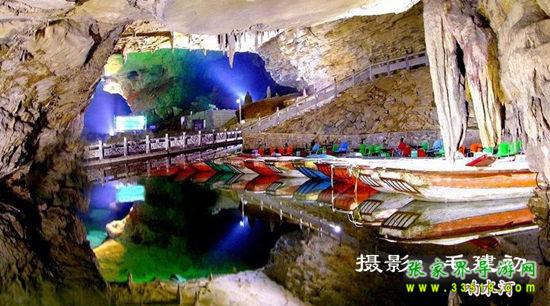
Huanglong Cave belongs to typical karst landforms. In the formation of limestone karst caves, the role of water is crucial. Water flows through rock crevices, continuously dissolving limestone, thereby forming karst caves. Huanglong Cave has a total area of 48 hectares, a total length of 15 kilometers, and a vertical height of 140 meters. It is divided into two levels of dry caves and two levels of water caves, with a total of one reservoir, 2 rivers, 3 pools, 4 waterfalls, 13 large halls, 96 corridors, and tens of thousands of stalagmites, stone columns, and stalactites. The entire cave is like an ancient tree with gnarled roots — caves within caves, mountains within caves, rivers within caves. Mountains repeat and waters wind around, peaks turn and paths curve, too beautiful to take in all at once. Stalagmites, stone columns, stalactites, stone flowers, stone curtains, stone branches, stone tubes, stone pearls, stone corals, and more are found throughout, a dazzling array, with nothing that is not wondrous and no wonder that is not present, as if it were a magical underground demon palace. Famous scenic spots such as Dragon Dance Hall, Xiangshui River, Heavenly Fairy Water, Heavenly Pillar Street, and Dragon Palace have now been developed.
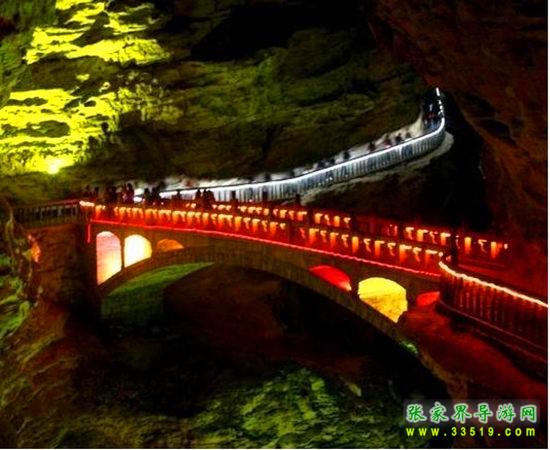
When touring Huanglong Cave, there is no need to backtrack (except for a short section at the entrance). The tour route includes both land and water — 2,400 meters of dry path and 800 meters of water route. The tour takes about 2 hours.