This attraction introduction is compiled from historical materials in the "Zhangjiajie Tour Guide Network" (33519.com · Scenic Spots section). Ticket prices, opening hours, transportation, and contact information mentioned in the text may be outdated. Please refer to the latest official announcements from the scenic area before traveling; some content consists of historical background/cultural introductions and is for reference only.
[Ticket Price Information Update · 2026-09-14]
- Single ticket 165 yuan (valid for 4 consecutive days); discounted single ticket 83 yuan
- Scenic area + shuttle combo ticket (including eco-bus) 236 yuan; discounted scenic area + shuttle combo ticket 119 yuan
- Annual pass (including eco-bus) 310 yuan/year; 3 yuan insurance is optional
Source: Hunan Provincial Development and Reform Commission, Xiang Fa Gai Jia Fei Gui [2024] No. 977 (effective from 2025-01-01) (compiled on 2026-09-14). Prices/times may be adjusted; before traveling, please refer to the scenic area's latest official announcements.
If old ticket prices/opening hours appear in the main text, they are historical materials and may be outdated, for reference only.
Overview
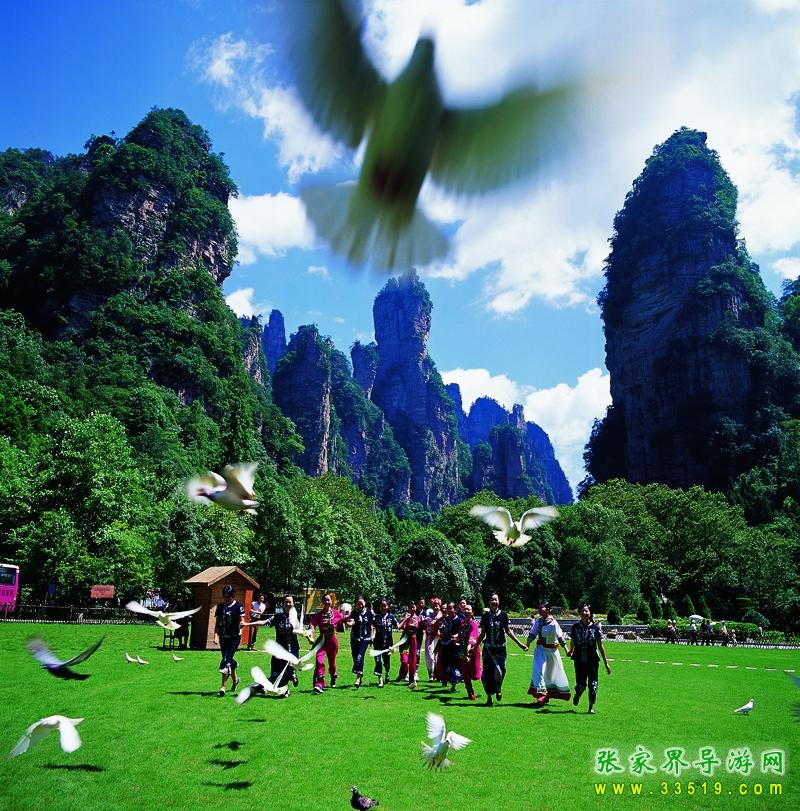
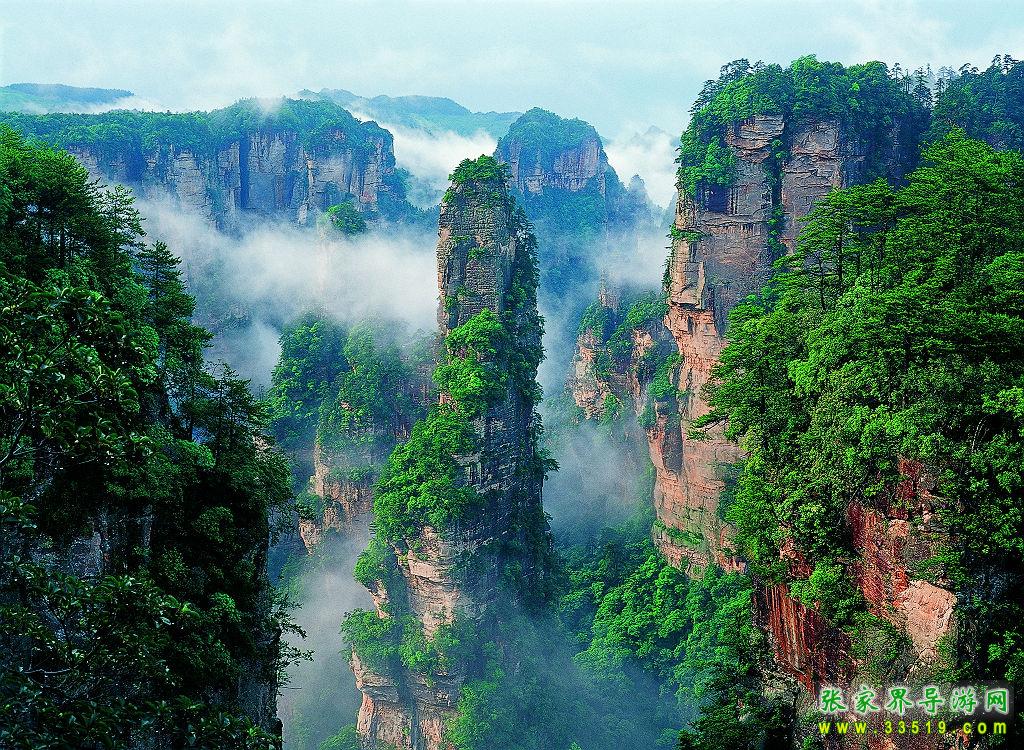
Zhangjiajie National Forest Park is located in Zhangjiajie City in the northwest of Hunan Province. It is China's first national forest park, established in 1982 with the approval of the State Planning Commission under the authorization of the State Council. In December 1992, it was inscribed on the UNESCO World Natural Heritage List for its unique quartz sandstone peak forest, and in February 2004 it was listed as a World Geopark. The park's natural scenery is remarkable for its peaks, secluded for its valleys, and elegant for its forests. Within it are more than 3,000 extraordinary peaks; these stone peaks resemble people and beasts, vessels and objects, vividly lifelike and magnificent in momentum. Between the peaks are canyons, murmuring streams, and dense shade blocking the sun. It has the reputation of "three thousand extraordinary peaks, eight hundred beautiful waters." The park not only has natural scenery of peerless magnificence, but is also extremely rich in forest plants and wildlife resources, with a forest coverage rate of 98%. It is a vast treasure house of living things and a natural oxygen bar, known as a "natural museum and natural botanical garden." Plants, trees, birds, and beasts flourish together with the extraordinary mountains and waters, forming a perfect natural ecosystem.
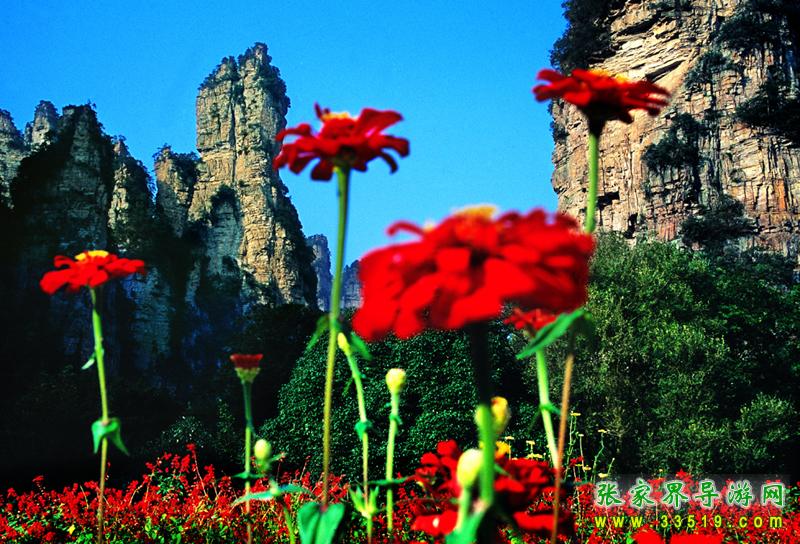
The park belongs to the mid-subtropical climate zone. Its high mountains and deep valleys and dense forests give the park a unique forest microclimate — warm in winter and cool in summer, with an average annual temperature of 12.8°C, an average maximum summer temperature of 16.8°C, and an average minimum winter temperature of 9.6°C. The park's air is fresh and rich in negative oxygen ions; being in it makes the body feel especially comfortable, making it an ideal place for leisure and summer retreat.
The park is very conveniently accessible, only 28 kilometers from the city urban area, the airport, and the railway station. Within the scenic area, 58 kilometers of international-standard touring paths, safe and comfortable cable cars, and eco-buses have been built and put into operation.
There are eco-buses inside Zhangjiajie National Forest Park. The eco-buses are Coaster models powered by diesel, causing little environmental pollution, which is conducive to the environmental protection of Zhangjiajie National Forest Park.
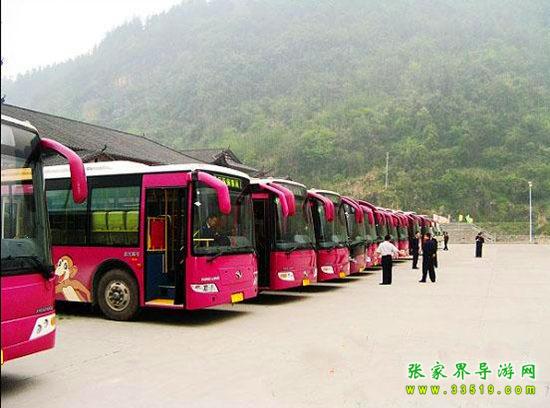
The sections and routes of the scenic area's eco-buses are:
1. Between Laomowan in the Forest Park and the lower station of the Huangshizhai cable car,
2. Wulingyuan ticket station — lower station of the Tianzi Mountain cable car — Ten-Mile Gallery — Shuiraosimen,
3. Shuiraosimen — lower station of the Bailong Elevator,
4. Upper station of the Bailong Elevator — Back Garden of Yuanjiajie; Yuanjiajie parking lot — Tianzi Mountain parking lot,
5. From the He Long Park parking lot at Tianzi Mountain to the upper station of the Tianzi Mountain cable car,
6. From the mountain gate of Zhangjiajie Tianmen Mountain National Forest Park — middle station of the cable car — Tianmen Cave.
Operating pattern: The above routes run on a continuous departure basis; basically they leave as soon as they are full, and the frequency is very fast.
Zhangjiajie's forest resources are exceptionally rich. The forest coverage rate reaches 97.7%. For woody plants alone, there are 93 families and 517 species, more than double that of all of Europe. In terms of precious tree species, those under first-class national protection such as gongtong, also known by foreigners as "China's dove flower," and those under second- and third-class national protection such as zhong'emu, ginkgo, xiangguoshu, as well as eyangjiu, xiangyenan, duzhong, jinqianliu, mao'ershi, a Tertiary relict tree species, yinque, southern yew, and many others are all found here, and in great numbers, making it a true treasure house of forests. In terms of plant classification, the world's five major famous plant families, such as Asteraceae, Orchidaceae, Fabaceae, Rosaceae, and Poaceae, are all present in Zhangjiajie National Forest Park. In terms of local tree species, Zhangjiajie Park accounts for 27.67% of Hunan Province's total tree species. In terms of affiliated families, it also accounts for 81.78% of Hunan Province's total families, which fully demonstrates its richness. Here, among the local native tree species are cichu of the Simaroubaceae family, dayeyang and chuanyeyang of the Salicaceae family; xuanchangnan, runnan, xuanchangmutjiangzi, and houzhang of the Lauraceae family; jianyeqi and fangxianqi of the Aceraceae family; pangguangguo of the Staphyleaceae family; shanbaiguo of the Corylaceae family; honghuamulan, baihuamunan, badongmulian, and dipipa of the Magnoliaceae family; fangli and chazhu of the Elaeocarpaceae family; wuxuteng of the Rubiaceae family; shuangdunmu of the Caprifoliaceae family; jialishu of the Flacourtiaceae family, and so on. In addition, among gymnosperms there is also bizisanjiancai of the Cephalotaxaceae family.
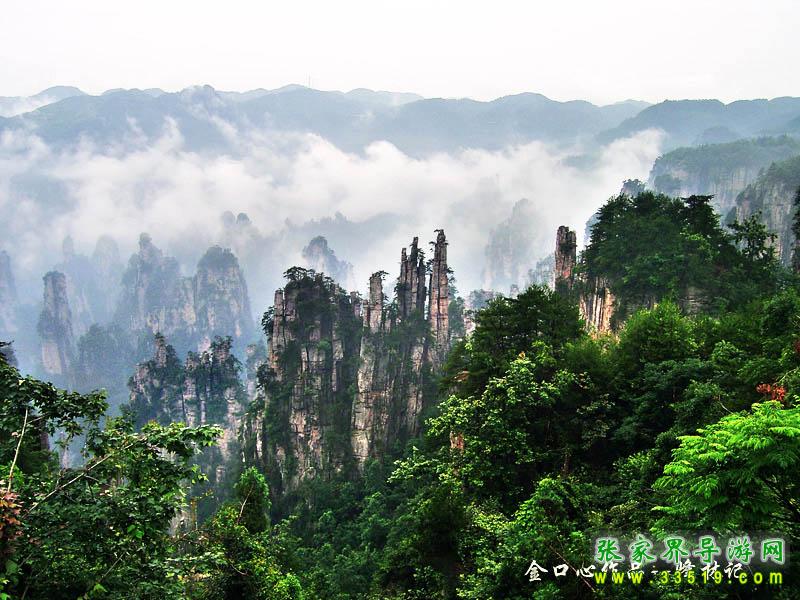
Most of these precious trees are national treasures, rare and unique. They have wide uses and great value. For example, the dove tree (China's dove flower) is called a living fossil; seeing it tells you the geological age here. It is also an "only child," because apart from a few places in China where this relict tree species survives, it was frozen to death and became extinct elsewhere in the world during the Quaternary Ice Age. The fragrant fruit tree not only has good wood but also gives off a fragrance. Cut one down, and the surrounding area will smell fresh and sweet. The ginkgo tree is also called a "living fossil"; its wood is good, its grain beautiful, and its fruit can be eaten and used as medicine—it has many uses. The large false chestnut (also known as "monkey's delight") also has good wood and is a highly valuable oil plant: 50 kilograms of its seeds can yield 29 kilograms of oil, higher than the oil yield of rapeseed and camellia seeds, and the oil is of good quality, white in color, like lard, so monkeys especially love to eat it. The Chinese tulip tree (commonly called "mandarin jacket tree") is an excellent landscape forest tree. The giant redbud tree has red flowers that can cover its branches, making it a very beautiful ornamental plant. Red torreya wood is flesh-red in color, resistant to rot and spoilage; rice steamed in a steamer made of it will not spoil for several days in the heat of summer—truly a wonder and a treasure of the mountains. Catalpa wood is especially rot-resistant; coffins made from it do not decay after long burial underground. The large coffin of the female corpse from Mawangdui in Changsha was made of catalpa wood, and it has not rotted after more than two thousand years. The yew is as hard as iron; after the trunk dries, even steel nails can hardly be driven into it. Mao red toon (commonly called "peach-heart rosewood") is a superior material for carving. The fragrant birch not only has beautiful grain but is also light and soft, with excellent toughness and resistance to breaking, making it a superior aviation material. Badong manglietia is evergreen all year round; the alpine wintersweet blooms in the cold; the plum-yew is a good cancer medicine; the eucommia tree provides both rubber and medicine; and there are also the widely used camphor, catalpa, nanmu, and zhou trees, pine, fir, tung, tea, palm, bamboo, mulberry, and fruit trees—too numerous to count.
The plants in Zhangjiajie National Forest Park can be roughly divided into seven major categories: oil plants, medicinal plants, fiber plants, aromatic plants, starch and sugar plants, tanning plants, and ornamental plants. Oil plants include oil tea, fangli, tanli, guangpishu, wild walnut, shuiqinggang, guangye shuiqinggang, and others. In addition to the edible portion, oil plants also include industrial oil sources such as tongyou, wujiu, wild maple, mashanshu, yanfumu, mujiangzi, shancangzi, houzhang, and others. Medicinal plants include tianma, duzhong, huangbai, houpo (shanhehua), huanglian, qiyeyizhihua, ezhenjinxing, and hundreds of other species. Fiber plants include poplar, wutong, maoruixiang, mufurong, xiaogoushu, huaxiang, fengyang, wild walnut, qingzhangmu, shanyouma, geteng, chuanguoteng, mutong, dabaiteng, and various types of bamboo. Sugar and starch plants mainly include ge, jue, kiwifruit, wild grape, sizhaohua, chestnut, fangli, jianli, oak species, shanbaiguo, chuanbang, elm, mulberry, jinyingzi, and others. Tanning plants mainly include yanfumu, hongfuyang, huaxiangshu, shuanpili, huanglianmu, and others. Ornamental plants include wusehua, azalea, jujinghua, houpo (shanhehua), qingfuhua, white magnolia and red magnolia, lobster flower, camellia, chrysanthemum, peach blossom, plum blossom, and many unnamed wildflowers competing in splendor, too numerous to list completely.
Since its establishment more than twenty years ago, the park has consistently adhered to the policy of "protection first, rational development, sustainable use," strengthening the protection and construction of the scenic area. It has now opened five major scenic areas—Huangshizhai, Golden Whip Stream Grand Canyon, Yaozizhai, Yuanjiajie, and Yangjiajie—with six tour routes and 468 viewing platforms (points). Tourism service facilities are complete, with more than thirty four-star, three-star, and two-star hotels, over four thousand beds, and three large shopping and entertainment venues. The park is a place where ethnic minorities live in compact communities and is also an old revolutionary base area. The folk customs here are simple and honest, and the authentic folk art and ethnic customs will give people a fresh new experience.
Since the park's establishment, forest tourism has flourished, with annual visitor numbers exceeding 3 million; its fame and reputation have continued to rise. In 2001, the Huangshizhai Party Branch was named a National Advanced Party Branch; in 2003, the park management office was awarded the National "May 1st" Labor Certificate; in March 2004, the Golden Whip Stream Women's Cleaning Team was named a National "March 8th" Red Banner Unit. China's party, government, and military leaders, as well as some foreign heads of state and celebrities, have visited and toured the park. On March 27, 1995, Comrade Jiang Zemin inspected the park and wrote the inscription "Build Zhangjiajie into a world-famous tourist destination."
Zhangjiajie National Forest Park is magical, beautiful, and endlessly charming. It is advancing with vigorous strides toward becoming "China's Number One Park" and a "world-class scenic area."
Zhangjiajie National Forest Park is located in Zhangjiajie City, Hunan Province. It is China's first national forest park (on August 31, 1982, approved by the State Forestry Administration, Zhangjiajie became one of the first national forest parks authorized to use the special emblem of China National Forest Parks), covering an area of about 130 square kilometers. It is a component part of the Wulingyuan Scenic and Historic Interest Area.
"Three thousand peaks, eight hundred waters." Here more than three thousand fantastic peaks rise straight from the ground in varied forms, resembling people or objects, with both spirit and form, leaving viewers awestruck. Streams, springs, and waterfalls are scattered among them, with dense forests and flowers and grasses everywhere. Zhangjiajie is like a giant landscape painting.
Zhangjiajie's sandstone peak forest landform is a unique geomorphic form and physical geographical feature, developed in the Devonian Yuntaiguan Formation and Huangjiadeng Formation, with the concentrated distribution area of peak forest covering 86 square kilometers. It is a rare and unique landform in the world formed under specific geological structural positions, specific neotectonic movements, and external forces. Within the park there are more than 3,000 stone cliffs rising from the ground, of which more than 1,000 exceed 200 meters in height; Golden Whip Rock is as high as 350 meters. Individual forms include mesa, platform, peak wall, peak cluster, peak forest, stone gate, natural bridge, as well as gorges and barrier gorges. The park takes the world's unique sandstone peak forest landform landscape as its core, with karst landform landscapes as a foil, and also has large numbers of geological relics such as formed geological sections and special fossil sites, constituting a uniquely characteristic combined landscape of sandstone peak forest landforms.
Within its borders, peaks are fantastic and rocks precipitous, valleys deep and ravines secluded, waters beautiful and forests green, with clouds and mist swirling. It combines majesty, wonder, seclusion, wildness, and elegance in one, and gathers peaks, valleys, ravines, forests, and waters into a single scene. There are more than 90 named scenic spots and 6 standard stone-slab tour paths with a total length of 42 kilometers. After the forest park opened to the public, transportation and touring facilities such as the Huangshizhai Cableway and Bailong Elevator were built. Since 1991, Zhangjiajie National Forest Park has held the International Forest Protection Festival, attracting large numbers of tourists. Fantastic peak forests are a major feature of Zhangjiajie's landscape, including six small scenic-area tour routes: the majesty of Huangshizhai, the seclusion of Golden Whip Stream, the wonder of Yuanjiajie, the peril of Yaozizhai, the elegance of Pipa Stream, and the wildness of Shadao Valley.
Huangshizhai
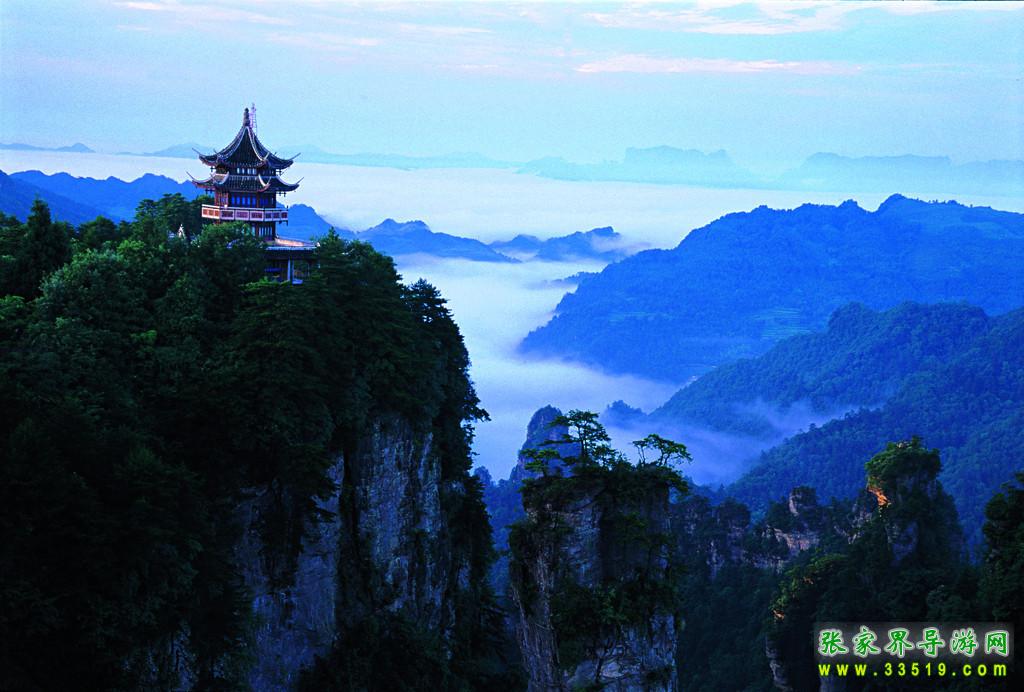
As the saying goes, "If you don't go up Huangshizhai, your trip to Zhangjiajie is in vain," which shows Huangshizhai's standing in Zhangjiajie's scenery. Legend has it that Zhang Liang of the Han Dynasty saw through the world of mortals, resigned from office, and lived in seclusion. While traveling here, he was besieged by government troops. Later, with the help of his master Huang Shigong, he escaped danger, and so this place was called Huangshizhai.
Someone once evaluated Zhangjiajie's Huangshizhai this way: marvelous every five steps, superb every seven steps; beyond ten steps, you are left dumbstruck. Every rock peak here at Huangshizhai is an ancient work of art—like swords, like needles, like dragon heads, like turtle heads, like the skyscrapers of a modern metropolis... In May 1992, two blue-eyed officials sent by the United Nations World Heritage Committee, facing the majestic momentum of Huangshizhai, exclaimed again and again, marveling at the sight.
Golden Whip Stream
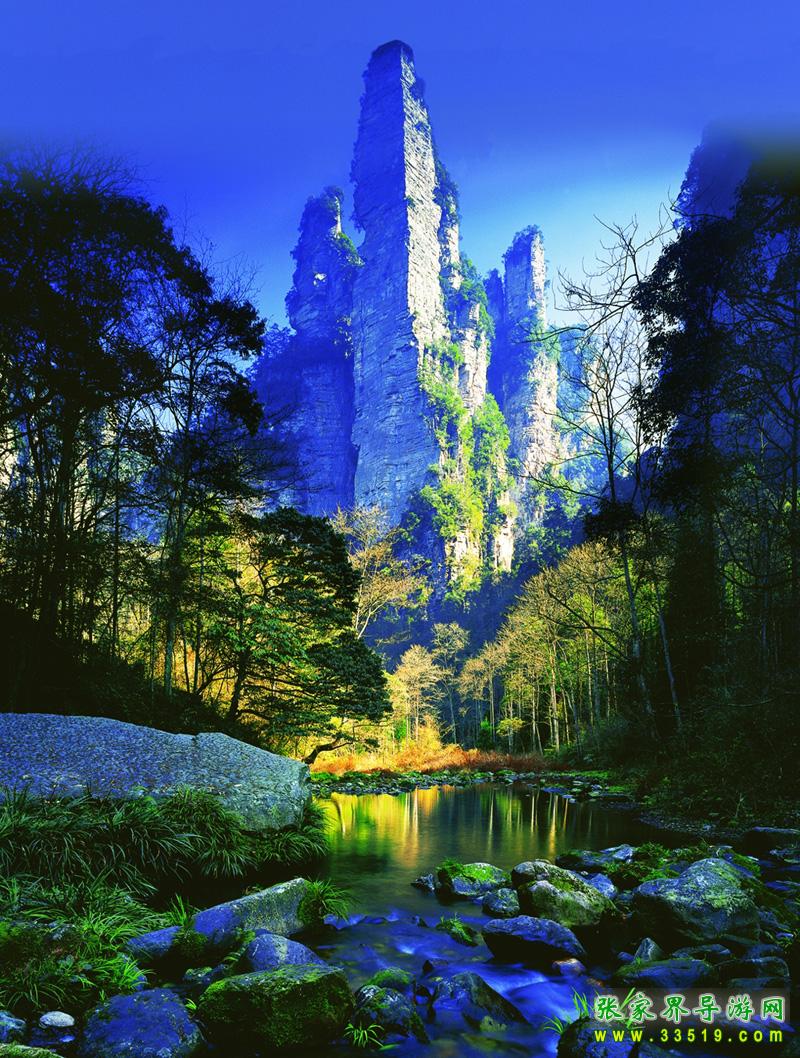
Golden Whip Stream is a core scenic spot of Zhangjiajie National Forest Park. It is named because it flows past Golden Whip Rock, with a total length of 5,710 meters. The area along Golden Whip Stream is the most beautiful part of Wulingyuan. After entering from the gate of Zhangjiajie Forest Park, walk forward about 300 meters to reach the entrance of Golden Whip Stream. The main sights include Drunken Arhat, Divine Eagle Guarding the Whip, Golden Whip Rock, Flower and Fruit Mountain, Water Curtain Cave, Cleaving the Mountain to Save the Mother, Meeting After a Thousand Miles, Nanmu Flat, and Water Winding Around Four Gates.
Yaozizhai
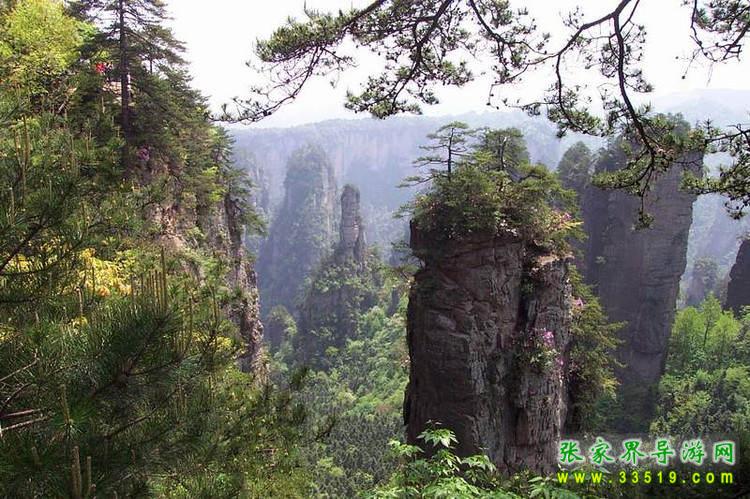
Yaozizhai Scenic Area covers 12 square kilometers, with a total tour route length of 13.5 kilometers. A full hike takes about 5 hours, while touring only the summit route takes 2.5 hours. It has nearly a hundred essential scenic spots. It is the creation area of the Hunan Photographers Association Zhangjiajie Creation Base, a national-level youth outdoor sports camp, and the preferred route for European and American groups and independent travelers. In the mountains there are small wooden cabins where visitors can eat and stay, as well as several scenic-area duty staff and 5 duty points providing services to visitors. There is a saying: climb Yaozizhai and see all of Zhangjiajie.
Also known as Jiegong Mountain. Located southeast of the forest park, 5 kilometers from Laomowan, it is named for its resemblance to a kidney. Its elevation is 1,050 meters. The summit is a narrow ridge about 1,400 meters long and about 100 meters wide, a flat viewing platform standing in the clouds with cliffs more than 300 meters deep on the west, north, and east sides, famous for its peril. Main scenic spots include the Heavenly Bridge and Layer upon Layer of Rocks Surging Like Pagodas.
Yuanjiajie
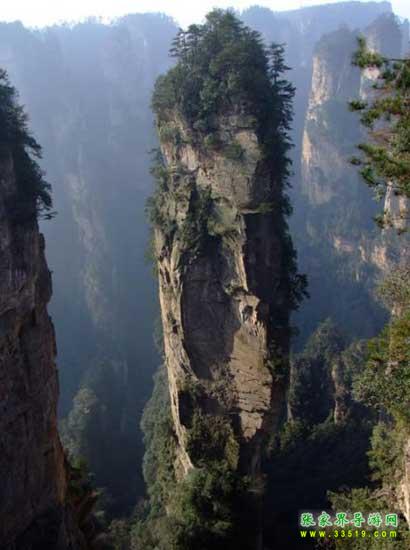
Yuanjiajie is located north of Zhangjiajie National Forest Park and lies at the core of the Zhangjiajie Wulingyuan Scenic and Historic Interest Area; riding the world's number one elevator—the Bailong Elevator—takes only 1 minute and 58 seconds. The main scenic spots include the Number One Bridge Under Heaven, the Qiankun Pillar, the "Hallelujah Floating Mountain" location used for the exterior scenes of Avatar, the Back Garden, the Soul-Enchanting Terrace, Yangzhai, the China-Korea Friendship Pavilion, and the Heavenly Suspended White Silk. Standing on the viewing platform of Yuanjiajie Scenic Area, three thousand fantastic peaks fill your eyes, majestic, perilous, elegant, and wild, each with a different appearance. Deep in the canyon, hundreds of stone peaks and stone pillars stand out wondrously. The steep rocks are like brave generals; the towering peaks are like valiant warriors. Full of sound and color, seeming still yet moving, vividly lifelike, as if about to come forth.
Yangjiajie
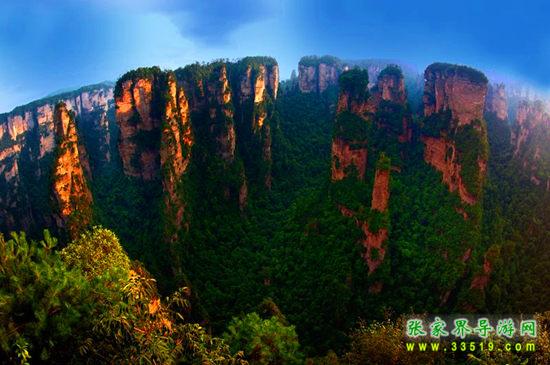
Yangjiajie Scenic Area is located in the northwest of Wulingyuan Scenic and Historic Interest Area, bordering Zhangjiajie to the east and Tianzi Mountain to the north, with a total area of 3,400 hectares. It has three tour areas—Xiangzhi Stream, Longquan Gorge, and Hundred Monkeys Valley—with more than 200 scenic spots. The scenic area management office is stationed in Zhonghu Village, 43 kilometers from Zhangjiajie city proper, connected by road. The scenic area belongs to quartz sandstone peak forest gorge landform, with landscapes that are majestic, perilous, clear and elegant, secluded, and primeval. The highest peak, One Step to Heaven, is 1,130 meters above sea level. Within its borders, ravines crisscross, streams stay clear all year, and vegetation is dense, with a forest coverage rate of 95%. In the two developed small scenic areas, Xiangzhi Stream and Longquan Gorge, there are 2.5 kilometers of vehicle tour roads. Yangjiajie has clear mountains and beautiful waters, picturesque scenery, and more than 200 essential scenic spots, with Longquan Waterfall, the "Number One Fantastic Waterfall Under Heaven," being the most famous; Xiangzhi Stream has high peaks and distant skies, deep ravines and clear waters, an ancient road in the slanting sun, birdsong and cicada chirps, like a paradise beyond the world; Longquan Gorge has rows of sheer cliffs, a natural barrier like a spectacular ancient city wall; Hundred Monkeys Valley is the home of macaques and egrets, with troops of macaques appearing among cliffs and valleys and flocks of egrets resting among green branches and leaves... Here there is also the "King of Cliff Vines," praised as "China's Number One Vine"; the strange five-color flower... Legend has it that when the Yang family generals of the Northern Song Dynasty suppressed the Xiang King's son, they once set up camp at Tianzi Mountain. Later, because the war dragged on, the Yang family multiplied here, making this place "Yangjiajie." Today, Yangjiajie still preserves the Yang Family Genealogy and the Yang family ancestral tombs of the Ming and Qing dynasties, as well as place names such as "Liulang Bay," "Qilang Bay," "Zongbao Bay," and "Tianbo Mansion."
Ticket Prices
Zhangjiajie National Forest Park three-day ticket price: 245 yuan + 3 yuan insurance, valid for 3 days. Discount ticket: 165 + 3 yuan insurance.
Zhangjiajie National Forest Park weekly ticket price: 298 yuan, valid for one week. (Note: Visitors who purchase the "two-day ticket" and need to add more touring days may refer to the "weekly ticket" price, pay the difference, and extend their visit to one week.) Tianzi Mountain Cableway (uphill) 52 yuan, Tianzi Mountain Cableway (downhill) 52 yuan, discount ticket: 28 yuan;
Huangshizhai Cableway (uphill) 50 yuan, Huangshizhai Cableway (downhill) 50 yuan, Huangshizhai Cableway round trip 96 yuan, discount ticket: one way 25 yuan, round trip 47 yuan;
Water Winding Around Four Gates Sightseeing Elevator (uphill) 56 yuan, Water Winding Around Four Gates Sightseeing Elevator (downhill) 56 yuan, discount ticket: 32 yuan; Ten-Mile Gallery Sightseeing Train one way 30 yuan, round trip 40 yuan. Discount ticket: 24 yuan;
Discount Policies
The admission ticket to Zhangjiajie National Forest Park is 248 yuan per person. Discount and free admission conditions for different tourists are as follows:
1. Young children: children under 1.2 meters are free;
2. Minors and students: minors between 1.2 and 1.5 meters and full-time students under 24 years of age with a Student ID can enjoy discount tickets;
3. Military personnel: active-duty military personnel with a Soldier's Certificate or Officer's Certificate can enjoy discount tickets;
4. Elderly people: people aged 70 and above with their valid ID card can enjoy free admission;
5. Journalists: with a Journalist Certificate issued by a publishing department at or above the provincial level, they can enjoy free admission;
6. People with disabilities: with their valid Disability Certificate, they can enjoy free admission.
Transportation
At Zhangjiajie New Bus Station (next to the railway station), there are direct tourist shuttle buses.