This attraction introduction is compiled from historical materials in the "Zhangjiajie Tour Guide Network" (33519.com · Scenic Spots section). Ticket prices, opening hours, transportation, and contact information mentioned in the text may be outdated. Please refer to the latest official announcements from the scenic area before traveling; some content consists of historical background/cultural introductions and is for reference only.
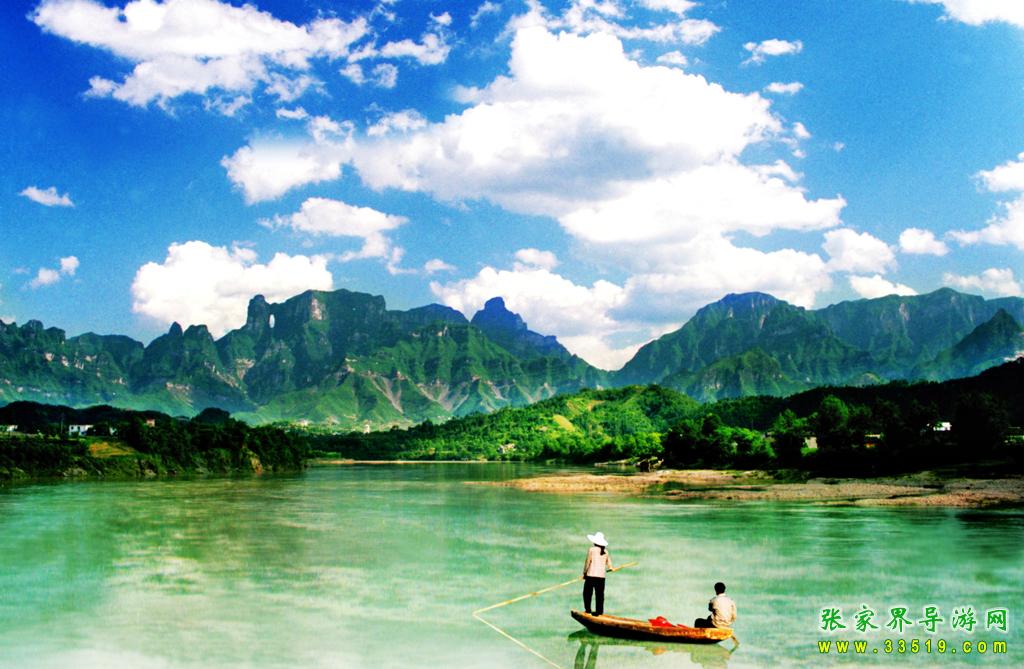
Hunan has four rivers: Xiang, Zi, Yuan, and Li. Regarding the Lishui River, according to the 'Hunan Gazetteer · Geography Section': 'The Lishui River has three sources—east, south, and north—originating respectively from Sangzhi County in Hunan and Hefeng County in Hubei. After converging, it flows east through eight counties and cities including Sangzhi, Yongshun, Dayong, Cili, Shimen, Linli, and Jinshi, finally entering Dongting Lake at Xiaodukou. The main stream from its source to Xiaodukou is 378 kilometers long, with a drainage area of 18,900 square kilometers, accounting for slightly less than nine percent of the province's total area.' 'The beauty of Nanzhou is nowhere better than Li,' praised the great Tang Dynasty writer Liu Zongyuan of the Lishui River's beauty. 'The Yuan has the Li, and the Li has orchids,' the patriotic poet Qu Yuan also praised the Lishui River thus. The Lishui River got its elegant name 'Li' because its upper reaches have 'sixty li of green water, the water becoming indigo-Li colored.'
The Lishui River, according to the 'Commentary on the Water Classic': originates from the Seven-Eye Spring on Dagong Mountain in Sangzhi County (in recent years, some have verified that the northern source of the Lishui River is the great spring in Chajiao Stream). Also according to the 'Hunan Yongding County Local Gazetteer,' the Lishui River originally had the name Jiu Li (Nine Li), and by the time it reached Dongting and entered the Yangtze, the same river was called Dan Li and Cen Li in Lizhou, Xie Li in Shimen, Lou Li in Cili, and Ru Li in Dayong (now renamed Yongding District).
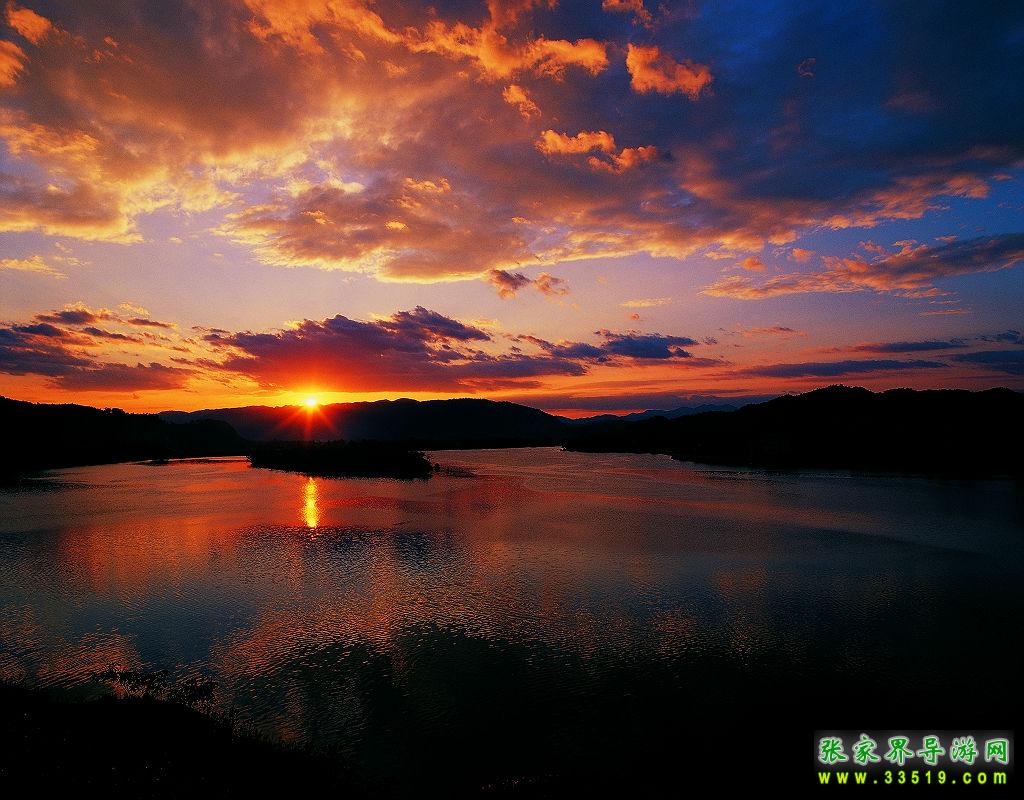
The Natural Wonder of Lishui River: Sanlazi
An old saying goes: Swift water makes a shoal, still water makes a pool. When mentioning dangerous shoals, boatmen will immediately say, the Lishui River has 360 shoals, each one a gate of hell. However, a shoal as thrilling as Sanlazi is probably the most dangerous on the Lishui River. Sanlazi is located in Guanyu Township, Sangzhi County, on the middle source of the Lishui River. It is about 300 meters long, with a large drop and swift currents. Sitting in a boat, one feels as if cleaving through the waves, extremely thrilling. When sightseeing at Sanlazi, besides passing through danger as if it were flat ground, one can also see the wondrous scene of Niubi Spring (Ox-Nose Spring), which consists of an 'ox nose' and an 'ox mouth,' with water flowing out from three openings—the 'ox nostrils' and the 'ox mouth'—called 'Three Dragons Emerging from the Cave.' This is another great wonder of the upper Lishui River.
Wudao Water: The Source of the Lishui River
Wudaoshui is a magical place, and it is also the true source of the Lishui River. Located north of Sangzhi, it was the northern frontier pass of the ancient Tusi chieftains. Wudaoshui is the most remote area of Sangzhi. The small town is surrounded by mountains on all sides, with a town nestled in the middle, three stone bridges, four villages, and thousand-year-old ancient cypress and poplar trees covering half the town, elegant beyond compare in all four seasons. Following the stream upstream from Wudaoshui, there are Seven Springs. The spring water is crystal clear to the bottom, and the area is famous both within and beyond the province for its giant salamanders. In 1966, a mountain villager named Pi Shuanglin caught a giant salamander weighing 39 kilograms at the spring mouth, which became a much-told tale and wonder for a time. While touring here, you can also taste the "Pasi'er" fish (similar to the Wangcigu or Egu fish), whose flavor is incomparably delicious — truly a mountain delicacy and wild game. While touring Wudaoshui, you can also see the true source of the Lishui River. This source is not the Seven Springs written about in the "Commentary on the Water Classic," but rather the karst cave in Chajiao Stream, named "Daquan" (Great Spring).
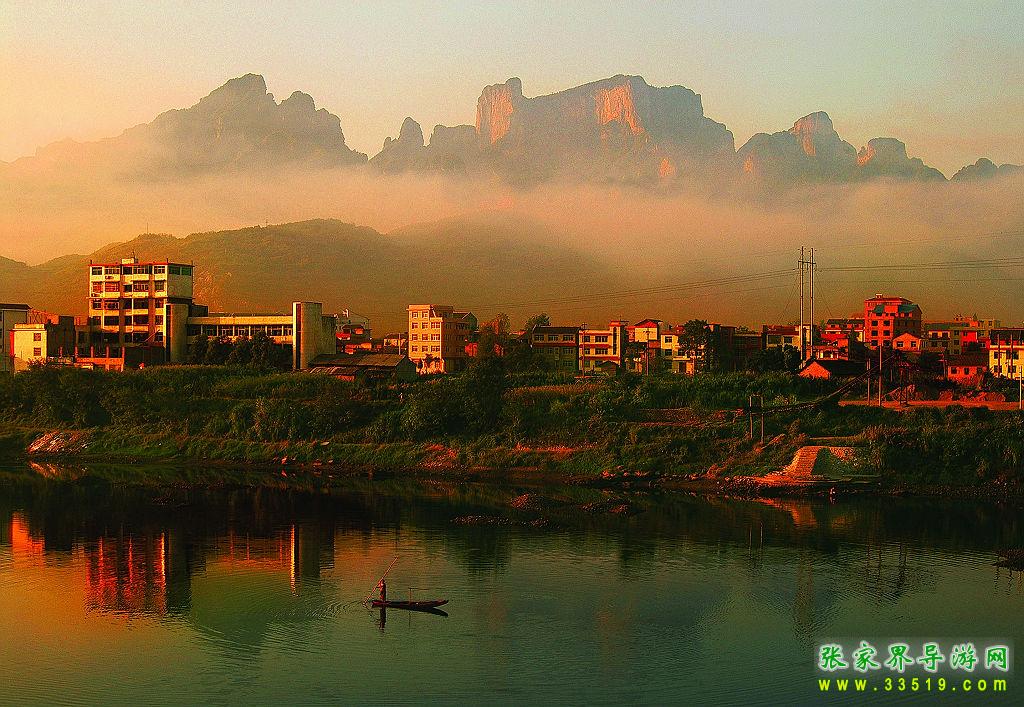
Huluke Hot Spring
Huluke Hot Spring is located on the right bank of the upper reaches of the Lishui River. Because there is a hollow in the cliff face shaped like a gourd (hulu), it is named Huluke (Gourd Shell). On its left side there is a hot spring with a temperature of about 40 degrees Celsius, suitable for bathing year-round. According to reports, this spring water contains various minerals beneficial to the human body, and bathing in it can cure illnesses and has the effect of prolonging life.
Xiaobutou
Xiaobutou is a pearl on the upper reaches of the Lishui River, worthy of being called a waterborne jade pavilion, and known as a Jiangnan-style small town. It sits between Liangjiawan and Helong Dam, and is a small trading port connecting Hunan, Hubei, Sichuan, and Guizhou, as well as a distribution center for goods traveling north and south. This small ancient town of Xiaobutou has a small street paved with bluestone slabs. On both sides of the street are Tujia stilted houses, with flowering trees and swaying green bamboo in front of the eaves and behind the houses, and restaurants and shops packed closely together. A few peddlers hawk their wares along the street — what a fine "Along the River During the Qingming Festival" of the upper Lishui River! In the future, with the construction of the Helong Power Station and the raising of the dam, Xiaobutou will become an inland lake as beautiful as the Jiangnan water towns.