This attraction introduction is compiled from historical materials in the "Zhangjiajie Tour Guide Network" (33519.com · Scenic Spots section). Ticket prices, opening hours, transportation, and contact information mentioned in the text may be outdated. Please refer to the latest official announcements from the scenic area before traveling; some content consists of historical background/cultural introductions and is for reference only.
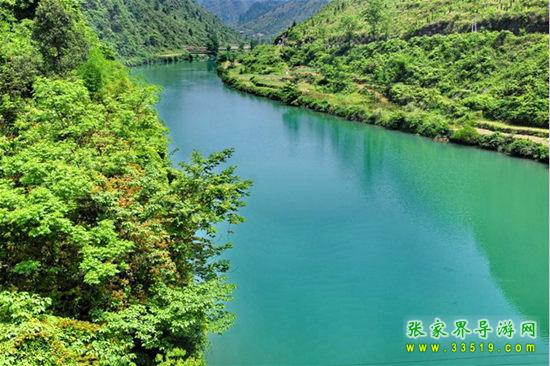
Badagongshan Nature Reserve is located within Sangzhi County in northwestern Hunan, at longitude 109°41'–110°10' E and latitude 29°38'–29°49' N. It borders Xuan'en of Hubei to the west and Hefeng of Hubei to the north, and is 85 kilometers east of Sangzhi County seat, connected by road. Before the Qing Dynasty, eight major landowners demarcated boundaries here to determine ownership; after they later moved away, the ownership became public mountain land, hence the name ("Eight Lords Public Mountain"). In 1986 it was designated a national-level nature reserve. The total area is 250 square kilometers. The main peak, Doupeng Mountain, has an elevation of 1,890 meters. The average annual temperature is 11°C. Forest stock volume is 1.063 million cubic meters, with a forest coverage rate of 90%. It nurtures and preserves a complete primary subtropical evergreen broad-leaved forest, and has been hailed as a "world-rare species gene bank." In 1984 it was designated by the Hunan Provincial People's Government as one of the province's first 23 nature reserves. In 1986, with the approval of the State Council, it was listed as one of China's first 20 national-level nature reserves. In July 1993, it was listed as one of the first 45 network members of the United Nations' "Man and the Biosphere" program. It has also been opened to outside tourism.
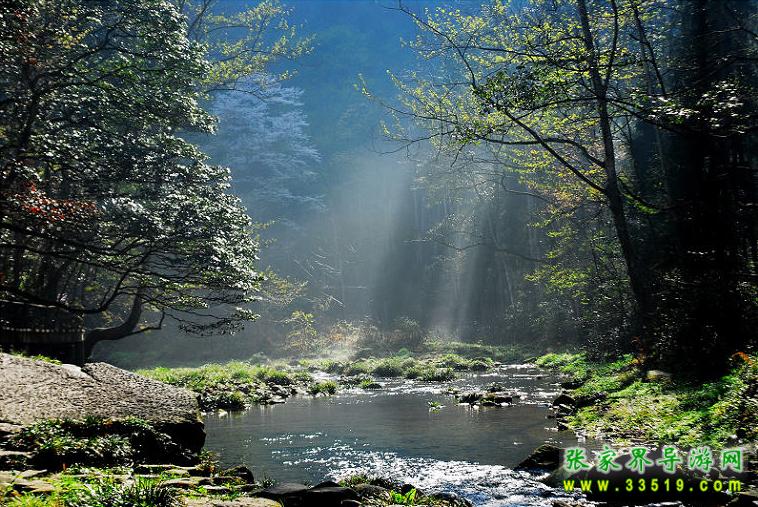
Badagongshan Nature Reserve is 85 kilometers from the Sangzhi County seat of Zhangjiajie City, with elevations ranging from 346 meters to 2,003 meters. It is composed of three major forest areas: Doupeng Mountain, Shanlinjie, and Tianping Mountain, with a total area of 45,000 hectares. In 1986, Badagongshan was designated by the State Council as one of China's first batch of 20 national reserves, of the forest and wildlife type. In 1993 it was included in the "China Man and the Biosphere" conservation network, and in 1998 it was listed by the World Wildlife Fund as one of the world's 200 most important ecoregions.
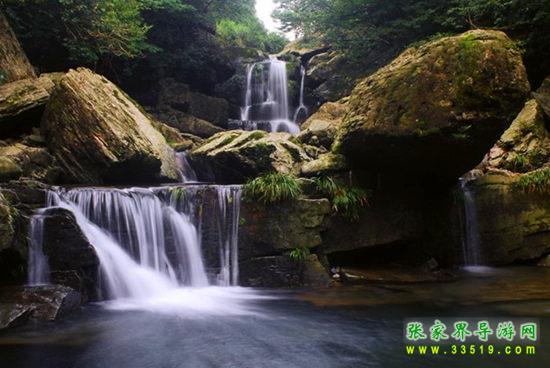
Badagongshan Nature Reserve possesses the most complete and largest primary evergreen broad-leaved forest currently preserved in the subtropical region. The forest vegetation is well preserved, with rich and diverse rare plant species. There are 216 plant families and 2,876 species, including 51 endangered plant species and their endemic species. The monodominant community-type mixed forest composed of dove trees (Davidia involucrata) is of great research value. Among the rare plants, those under national first-class protection include: dove tree, smooth-leaved dove tree, dawn redwood, southern yew, Chinese yew, white yew, ginkgo, Bashan Torreya, and Chinese dipelta — 9 species in total. Those under national second-class protection include: katsura tree, tetracentron, tulip tree, eucommia, and others — 18 species in total.
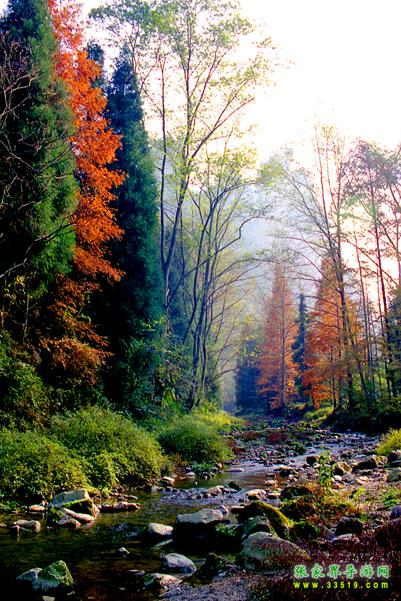
Badagongshan Nature Reserve has complex terrain, a humid climate, and good vegetation coverage, providing excellent conditions for wildlife to thrive and reproduce. The reserve has 146 species of vertebrates, among which 86 species in 28 families and 15 orders are nationally protected rare and endangered animals, such as: leopard, clouded leopard, macaque, tufted deer, serow, lesser deer, white-crowned long-tailed pheasant, Temminck's tragopan, giant salamander, and others. In 1991, after an expert survey by the United Nations Wildlife Fund, it was concluded that the reserve is home to the South China tiger. Badagongshan is rich in insect resources, with 4,175 species in 77 families and 22 orders, of which 34 species were newly discovered. The number of black bears here exceeds 2,000.
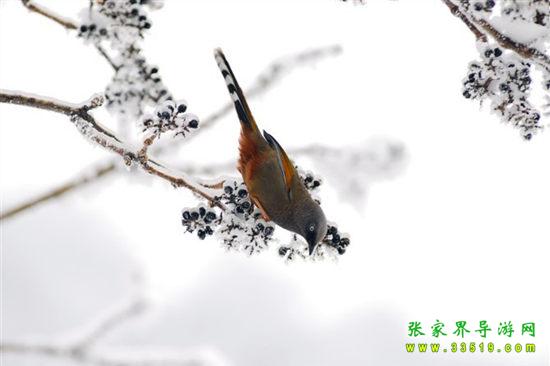
Badagongshan – Bamaoxi
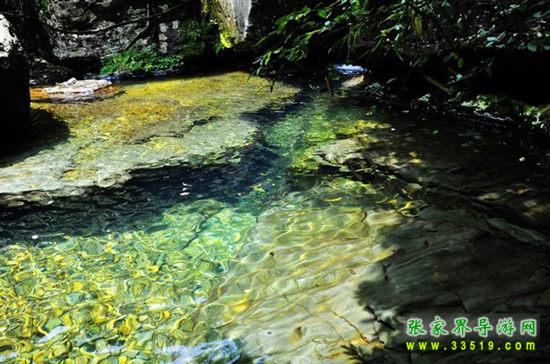
Bamaoxi is named for its abundant silvergrass (bamao), and is also famous because He Long and twelve other brave men once hacked apart the salt bureau here with cleavers. That was on the 28th day of the 12th lunar month in 1916, when the young He Long, responding to Cai E's call to defend the Republic and oppose Yuan Shikai, joined with 12 poor brothers to first strike at the Bamaoxi Salt Bureau that had been extorting the people's wealth. After wiping out the salt bureau in one stroke, they returned to Hongjiaguan and raised the banner of uprising. Because He Long's weapons were two kitchen cleavers, "starting a revolution with two cleavers" became synonymous with Marshal He Long's early revolutionary days. The origin of "starting a revolution with two cleavers" is right here at Bamaoxi. Walking 2 kilometers to the left from here will bring you to the site of the salt bureau raid.
Badagongshan – The Mystery of Rain from Tree Groves
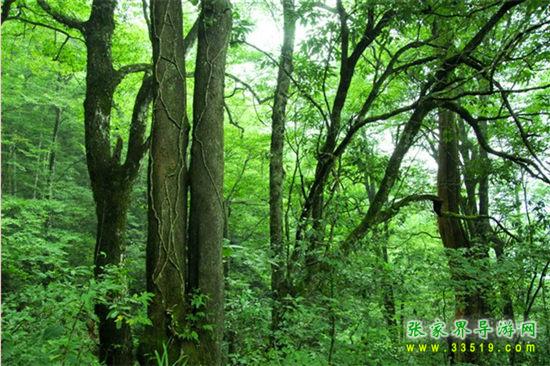
Badagongshan has many mysteries. In the reserve known as a "species gene bank," there are over 400,000 ancient trees with a diameter at breast height of 50 centimeters and an age of over 800 years — arguably the most in all of China. This is one of Hunan's three major rainstorm centers, with extremely abundant rainfall. Within a single day, it can be sunny one moment and rainy the next, with very pronounced microclimate characteristics. Of course, in the dry season, there can also be stretches of ten days to half a month without rain. At such times, certain tree communities produce their own rain. A tourist once passed through a grove when the leaves began pattering down rain, soaking their clothes through. Yet above the grove, the sun was shining brightly with not a cloud in the sky. The scientific explanation is: during the dry season, there is a large temperature difference between below the canopy and the air above — hot above, cool below. When ground vapor rises and encounters a small-scale updraft, i.e., a whirlwind, it concentrates the vapor in one spot, producing this phenomenon of rain from tree groves.
Badagongshan – The Dove Tree King
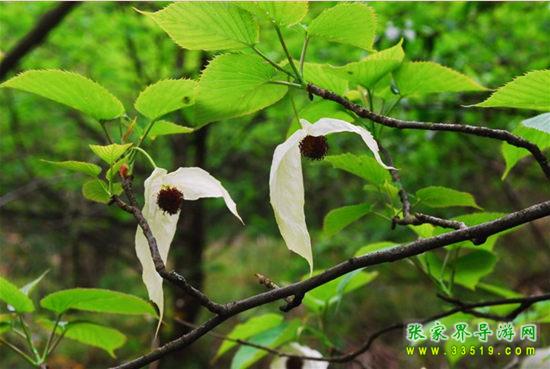
At Dove Tree Bay in Badagongshan, dove trees cover an area of 4.5 hectares. This dove tree forest has a history of over 1,200 years. The tree body reaches 28.5 meters in height, with a diameter at breast height of 1.2 meters and a crown spread of 18 meters — the "greatest in the world." Dove Tree Bay is renowned far and wide for its large distribution of dove trees that survived the Quaternary glaciation. It is not only an important base for rare species, but also suitable for developing ecological sightseeing tourism. When the flowers bloom in May, they look like white doves spreading their wings to fly, reminding one of peace, joy, the blossoming spring, and moving songs that ring out like dove whistles brightening the clear sky. This dove tree species has long been extinct throughout the world — why could it survive only here? Is this not also a miracle, a wonder?
Badagongshan – The Mystery of the Divine Dogs
In the reserve there is an animal called the divine dog, similar in size and appearance to a dog, skilled at organizing group attacks. Their main targets are wild boars and wild oxen. They often first gouge out the eyeballs of their prey, then pull out the intestines through the anus, and finally put it to death. A villager once noticed the leaves on the opposite slope rustling, grabbed his hunting rifle and ran over to see a pack of divine dogs surrounding a wild ox, having just gouged out both of its eyeballs. After the villager drove off the divine dogs, he hooked his fingers through the wild ox's nose and led the enraged, pain-crazed animal all the way home, only then killing it with an axe. What is strange is that the divine dogs fear nothing, yet never harm people, and do not even harm the livestock and poultry raised by mountain villagers. So the mountain people affectionately call them divine dogs. But why the divine dogs do not harm people or livestock remains an unsolved mystery to this day.
Badagongshan – The Observation Tower
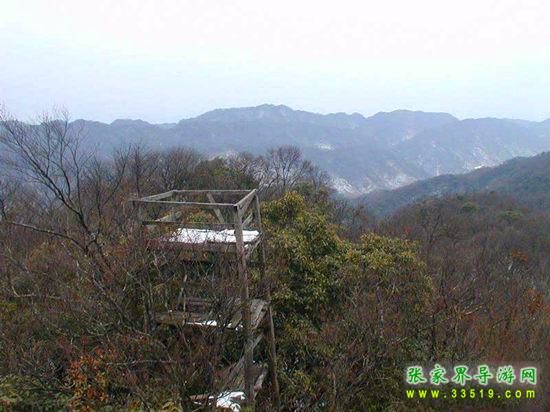
This observation tower is built on a mountain at an elevation of 1,600 meters. The tower is constructed entirely of catalpa wood. The wooden tower is used by forest fire prevention personnel for monitoring and observation. The sea of forest within our field of vision accounts for only one-fifteenth of the entire reserve. The three major forest areas stretch 100 kilometers from west to east and 40 kilometers wide. The deeper you go, the more you enter truly primeval forest. When the mist clears and the forest waves surge, standing here is the only way you will truly feel the vastness and magnificence of the word "sea of forest"!
Badagongshan – The Mystery of the Heavenly Pools
Throughout the Badagongshan Nature Reserve, there are nine heavenly pools — the large ones the size of a house, the small ones the size of a bed — and from time to time fish spout out with the spring water. Even more wondrous are the several heavenly pools hidden in the primary secondary forest that are reluctant to reveal themselves. Once, a villager from Hefeng, Hubei, on the other side of the mountain, suddenly discovered a heavenly pool in the dense forest and found countless fish gushing out with the pool water. He hurriedly left markers along the way, returned to the village to gather people, prepared lime and fishing gear, and excitedly returned to the dense forest. But no matter how they searched, the markers they had left were gone, and when they later went to look for that heavenly pool, they could never find it again. Hearing this, you might find it quite mysterious. As I see it, humanity's plundering of nature has already been excessive. Having barely managed to preserve this largest remaining patch of subtropical primary secondary forest from destruction, I truly hope there will be more mysterious things to block those greedy eyes.
Badagongshan – The Mystery of Longevity
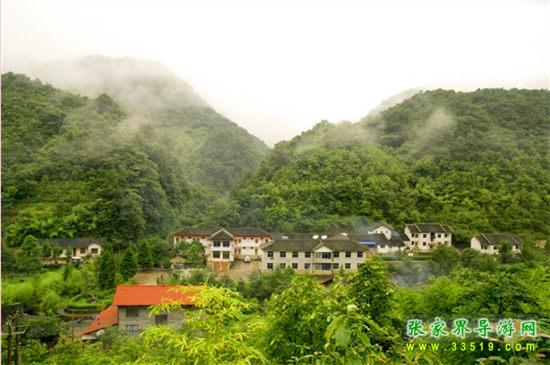
Precisely because the mountains, water, air, and climate here are all excellent, there are especially many long-lived people. According to a rough count by some, there are more than ten people over a hundred years old, and a large number of people in their eighties and nineties. Chen Guangtong of the Simenyan forest area grew new teeth at the age of one hundred. He passed away at 111, and before his death could drink four liang of strong corn liquor and eat seven liang of fatty meat per meal. A retired teacher from Hefeng, Hubei, named Li Yuanlin, kept bees in the reserve year-round. A few years ago, his mother fell ill and was hospitalized in the county. When treatment proved ineffective, the doctor advised him to take her home and prepare for the funeral arrangements. Li Yuanlin tried bringing his mother, then over eighty, up to Tianping Mountain, and as a result her illness improved day by day. Now she can bite through corn kernels and chew crusty rice. Li Yuanlin attributes the credit to the honey, saying the wild pollen here is several times higher in quality than that of Shennongjia. With his mother taking honey year-round, how could she not enjoy longevity? At Xiaozhuangping, next to the management office, there are currently 23 households with 123 people. Since moving up the mountain in 1967, over more than 30 years, apart from those who drowned or fell to their deaths, not a single person has died of illness. This shows that this is a genuine land of longevity!
Transportation
There are only buses to Badagongshan in summer, and only one trip per day. First take a bus from Zhangjiajie city to the Sangzhi County bus station, then take a bus from the bus station to Badagongshan.