This attraction introduction is compiled from historical materials in the "Zhangjiajie Tour Guide Network" (33519.com · Scenic Spots section). Ticket prices, opening hours, transportation, and contact information mentioned in the text may be outdated. Please refer to the latest official announcements from the scenic area before traveling; some content consists of historical background/cultural introductions and is for reference only.
Overview
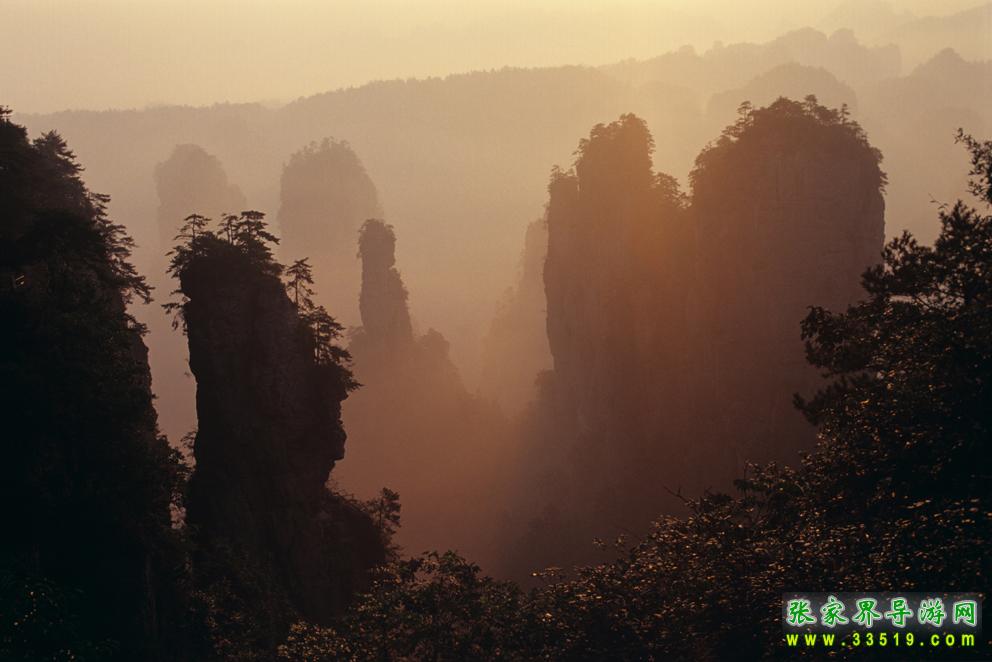
"If you don't go up Huangshizhai, you've wasted your trip to Zhangjiajie." Huangshizhai is a huge viewing platform suspended in mid-air, with an average elevation of over 1,100 meters, a relative height of over 800 meters, and a summit area of about 250 mu. Its main scenic features are the high stockade and flat platform, fantastic rocks and beautiful peaks, and it is called "an enlarged potted landscape, a miniature fairyland."
Huangshizhai is also known as Huangshizhai, Huangsizhai, Huangshizhai, and so on. There are many explanations for the origin of the name Huangshizhai, and the most popular "version" at present is this: Legend has it that Zhang Liang, the Marquis of Liu of the Han Dynasty, once lived in seclusion on Qingyan Mountain (the original name of Zhangjiajie), refining elixirs and cultivating immortality at the summit in order to avoid endless court disputes. Unexpectedly, one day he was discovered by government troops, who quickly surrounded the entire mountain stronghold. The situation was extremely critical, and he was saved only thanks to his master, the Daoist Huangshi. Because this was the place where Daoist Huangshi manifested his divine power, it is called "Huangshizhai."
"Walk around the summit, and you'll stay active till ninety-nine; climb around the summit, and you'll live to ninety-eight." The air at the top of the stronghold is fresh, and it not only lets you "wash your lungs" but also "beautify yourself"—it brings many benefits to the body. A full circuit around the stronghold covers more than 3,000 meters and takes about 2 hours, with breathtaking scenery that leaves you dazzled. Liuqi Pavilion, Star-Picking Terrace, Five-Finger Peak, Front Garden, Echo Wall, Heicongnao, Tianqiao Yidun, Feiyun Cave, Golden Turtle in the Sea of Mist, and so on truly make it a place where "every five steps brings wonder, every seven steps brings marvel; beyond ten steps, you're left dumbstruck."
Liuqi Pavilion
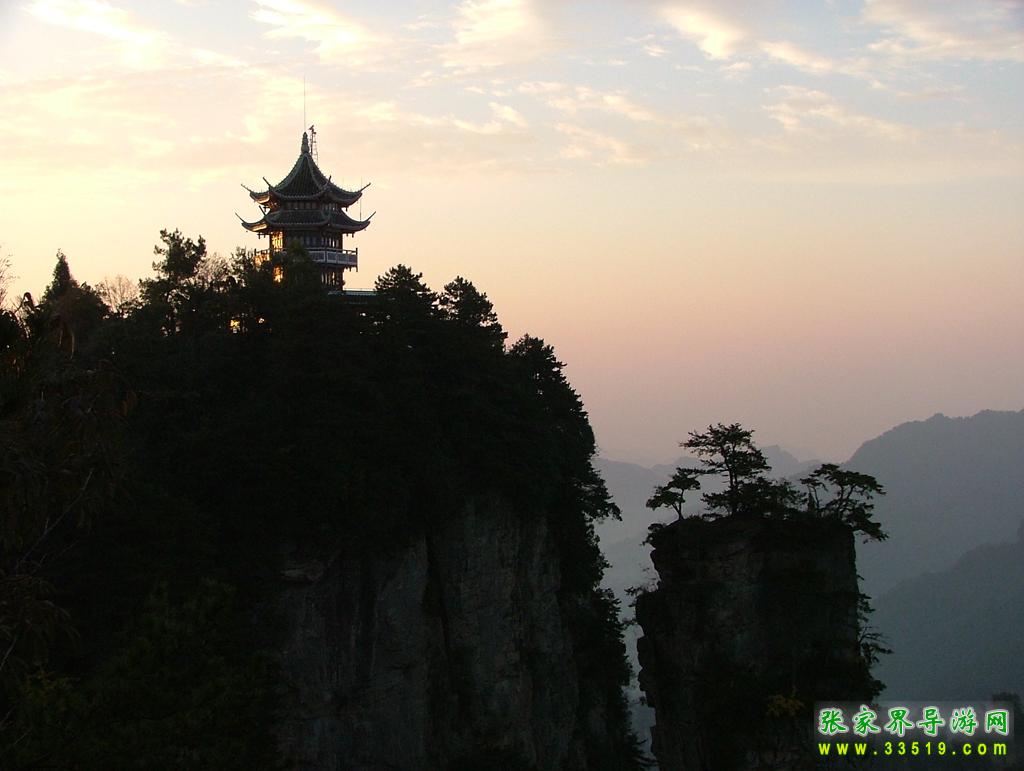
"You cannot tell the true face of Mount Lu, only because you are within the mountain." So that you do not lose your way in these deep mountains and old forests, before touring around the stronghold, let us first climb the only cultural landscape at the top of Huangshizhai—Liuqi Pavilion—and take a look into the distance.
The ancients sought the artistic conception of "an ancient temple hidden deep in the mountains," while modern people pursue the beauty of harmony between humanity and nature. Whenever we visit famous mountains and great rivers, we can easily see all kinds of pavilions and towers. The pavilion before us is just such a one.
Why is it called Liuqi Pavilion? Some say the six wonders are wonderful mountains, wonderful waters, wonderful rocks, wonderful clouds, wonderful animals, and wonderful plants—in short, everything is wonderful. The "six" in Liuqi Pavilion also implies "liuhe," which refers to up and down plus the four directions of east, south, west, and north, generally meaning a relatively complete space. After visiting this pavilion, the famous professor Yang Chunqiu once wrote this celebrated couplet: "Its fame stirs the world; arriving here truly merits three rounds of applause. Its momentum overtops the Five Sacred Mountains; once you return, there is no need to look at other mountains again."
"To see a thousand miles farther, climb one more story higher." Ascending Liuqi Pavilion and looking south, the densely packed peaks and the bottomless canyon are Jinyuan Stream. Looking north, there is Huangshizhai, a huge elevated platform surrounded by deep canyons, in which stone peaks rise straight from the ground in all different forms. These peaks all belong to one family—quartz sandstone—and this landform is called in geology quartz sandstone peak forest landform. How were they formed? The famous geologist Professor Chen Guoda once wrote: "Once a shallow-sea shore of a platform, sinking sand congealed into stone and spread wide. Mountain-building exposed the geodepression belt, folding and faulting gave birth to dense joints. The uplifted rock layers were eroded by water, split into cliffs and pillars along the cracks. Through ten thousand years of carving, the work gradually was done, embroidering a picture—a rare treasure of the world."
Facing this utterly natural and boundless scenery, one cannot help but sigh with deep feeling: how hard it was for these strange peaks and bizarre rocks to take shape. "Year after year the 'mountains' look alike, but year after year people are different." "Life is limited, while worldly affairs are endless." A hundred years of life pass in a snap of the fingers; compared with mountains hundreds of millions of years old, we are merely hurried travelers in the vast universe. "Land and sea are never still; wind and clouds have flowed and changed since ancient times." In fact, people are changing, and mountains are changing too. Every year, every day, even every minute and every second, these peaks are not the same.
Star-Picking Terrace
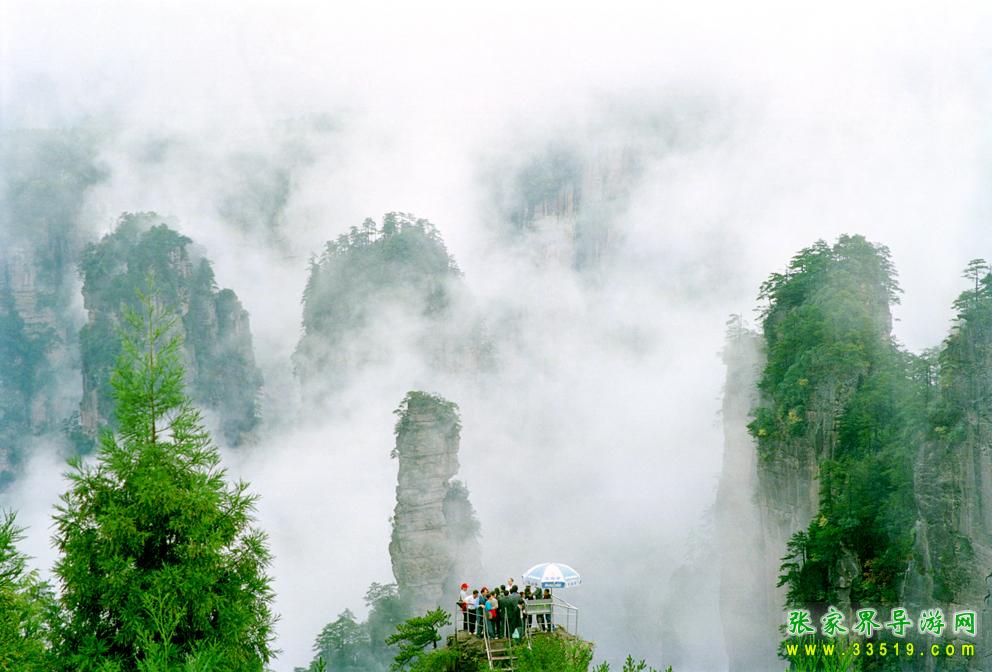
On November 28, 1983, when State Councilor Zhang Jinfu visited here, he named this viewing platform Star-Picking Terrace and casually recited a poem: "A thousand peaks vie in beauty, ten thousand trees lush and green; a dazzling array fills the eyes, too much beauty to take in. Though not heaven, it hardly seems the human world; to use this as a comparison is no exaggeration." An old poem says: "The towering tower rises a hundred feet high; one can pluck the stars with a hand. I dare not speak loudly, for fear of startling the people in heaven." This place has just such an atmosphere. When stars fill the sky and a clear breeze blows gently, standing on the platform, you cannot help but want to reach out and pick the shining stars overhead, or sing a few lines of "Picking All the Stars in the Sky" or some other song related to stars. If it rains, although there are no stars to pick, standing alone on the platform with mist and clouds swirling below and wind and clouds changing unpredictably, it feels as if you are riding the clouds and driving the mist. On a clear day, the strange peaks and bizarre rocks, green pines and cypresses in the canyon all come into view—truly, "When I reach the summit, all other mountains look small."
Five-Finger Peak
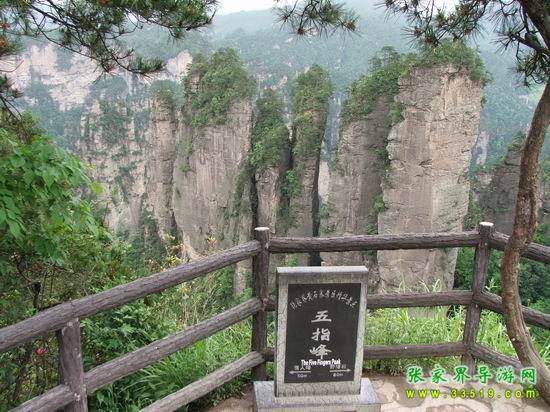
"From the side it is a ridge, from the front a peak." Look at that stretch of peaks seen from Star-Picking Terrace from another angle. Among them, five stone peaks line up in a row, shaped like fingers. Local people say these are the fingers of the Buddha—but actually they are more like our own fingers, the fingers in our imagination, the "fingers" of nature—for these beautiful and wondrous sights originally come from the hand of nature.
Echo Wall
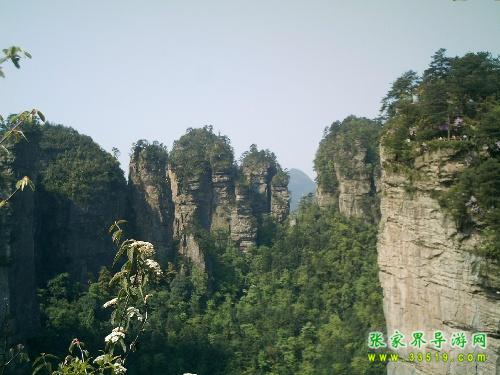
This stone peak before you is like a natural screen, its smooth stone wall seeming as if it had been split by a giant axe and pared by a sharp sword. When sound strikes the stone wall, it produces a very large echo. Don't believe it? Try it. If you greet her with a call of "Hey," she will greet you back with "Hey." If you shout at her, "I—love—you," she will certainly answer loudly, "I—love—you."
Front Garden
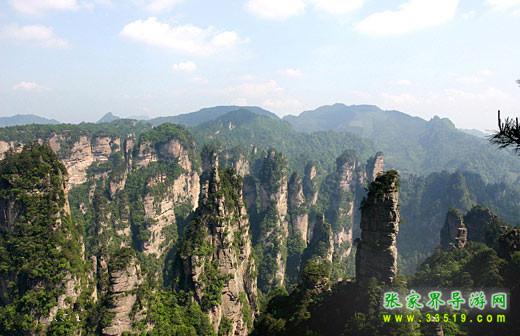
In this bottomless canyon, countless stone peaks and pillars are densely spread and thrusting upward, forming a vast peak forest. They look like people, beasts, needles, threads, knives, spears, bottles, pagodas, and all things in the world, either rolling in succession or jagged and upright, in a thousand postures and ten thousand forms, as if all the strange peaks and bizarre rocks under heaven had come to this canyon to hold a grand party. Facing this "enlarged bonsai, reduced fairyland," a feeling of joy and ease rises spontaneously. Do you want to shout, cry out, take photos, or leap down? Shouting, crying out, or taking photos is no problem at all—just don't think of jumping, for one "jump" becomes eternal regret, and no one has ever gone down there. Legend says this was the Queen Mother of the West's imperial garden—there may not really be a Queen Mother of the West, but calling this place a garden is entirely fitting. Zhangjiajie has abundant sunshine and rainfall, so "flowers bloom in all four seasons, and spring is always here." Especially in the third month of spring, mountain flowers bloom in profusion, in all colors, too beautiful to take in.
After inspecting this place, Premier Zhu Rongji once wrote a poem, one line of which is "There are immortals at the top of Zhangjiajie." Are there really immortals in Zhangjiajie? If there are, perhaps they are us—those fortunate enough to enjoy such a "fairyland"—for "such 'scenery' should exist only in heaven, and is rarely 'seen' in the human world." No wonder some people also have this thought: "Life is like a great dream, vast and distant is the heavenly realm. I wish to build a thatched hut and delight here, unwilling to return."
Heicongnao
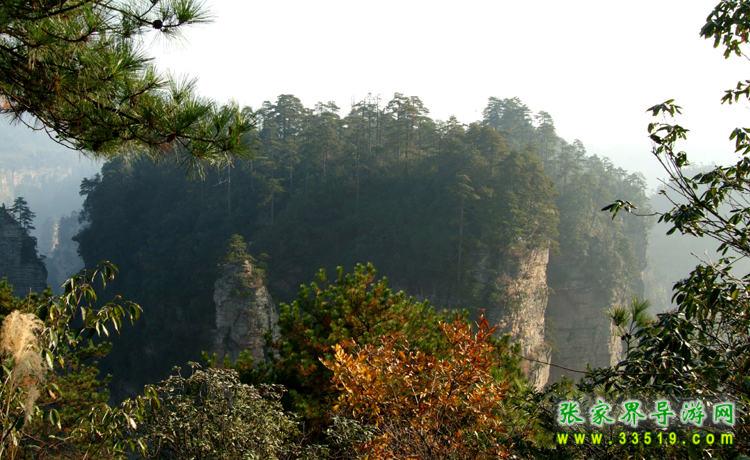
This huge peak rises more than 300 meters straight up, with sheer cliffs on all four sides and a summit area of about 4 hectares, covered by a large dark stretch of primeval forest. In the 1970s, forestry workers once tried to climb up to investigate, but because of rain and slippery rocks, they returned without success. With binoculars, one can clearly see the Wuling pines growing on top—speaking of Wuling pines (also called rock pines), they may not be as famous as Huangshan pines, but their features are in no way inferior to Huangshan pines and can be called one of Zhangjiajie's unique wonders. Someone said: "What intoxicates people in Guilin is the clear Li River; what gives Emei its elegance is the cloud on the golden summit; what makes Huashan dangerous is looking up at the sky; what makes Lushan beautiful is listening among the springs—none compare with Wulingyuan in western Hunan, where thousands of strange peaks wrap around green clouds, and forests grow on the rocks." "Forests grow on the rocks" refers to the Wuling pine. It "does not grow large in a thousand years, nor grow old in ten thousand years," growing on sheer summits or in sheer cliffs. No matter wind or rain, severe cold or scorching heat, it is always full of vigor. At the sight of these slender yet vigorous Wuling pines, one cannot help but feel a sudden respect for life.
If there were no Wuling pines on the summits of Zhangjiajie, it would be like a peerless beauty without a head of glossy black hair—inevitably a great pity. Ordinarily, even when we plant trees in fertile soil, it is hard to guarantee a hundred percent survival. Yet the forests on the rocks of Zhangjiajie are so lush and green that it can be said: "Pines stand on the summits, pines hang on the cliffs, pines nestle in the crevices; pine branches sway across three thousand peaks."
Water is the source of life. Without water, there is no life to speak of. The stone cliffs where Wuling pines live are open to the air on all sides and do not have conditions for storing water. So how is their problem of "drinking water" solved? Zhangjiajie has abundant rainfall all year round and humid air. The peak forest grows in the middle of canyons, and the outer surroundings of the peak forest are all high mountain areas. With the high mountains as a rim, they form a very large "basin." The high mountains around the "basin" play an extremely important role: they can block outside strong winds, so that the mist inside the "basin" does not easily disperse, always maintaining sufficient air humidity. In addition, Wuling pines are coniferous plants, so water does not evaporate easily, and they do not like to "drink" too much water.
The "drinking water" problem is no longer an issue, but what about "eating"? The place where it is born is very "poor"; on the stone cliffs there is almost no soil, and in the soil there is almost no nourishment. What to do? It sets its sights on a kind of fungus in the air and finds a way to absorb it, letting it attach to itself. Over time, this fungus continuously gathers under the pine tree and transforms the pine's root system into a special kind of "mycorrhiza." This "mycorrhiza" can turn inorganic matter in the rock into nutrients and store them for balanced use. In addition, Wuling pines can also directly absorb a small amount of nitrogen from the air from time to time, so the "eating" problem is basically solved.
Having solved the problems of "drinking water" and "eating," how can it "settle down" on such smooth and hard rock? This mainly depends on its well-developed roots. The roots are always searching for cracks in the stone; once one root takes hold, another root searches for an even larger crack. This is exactly why its roots always "crawl" outward in all directions in a radial pattern.
The way Wuling pines "continue the family line" is also very interesting. They mainly rely on birds and mountain winds to spread their seeds onto cliff faces and sheer precipices. This unintentional "behavior" has actually enabled the Wuling pines to have "a hundred sons and a thousand grandsons" and to be "flourishing in population."
Tianqiao Yidun
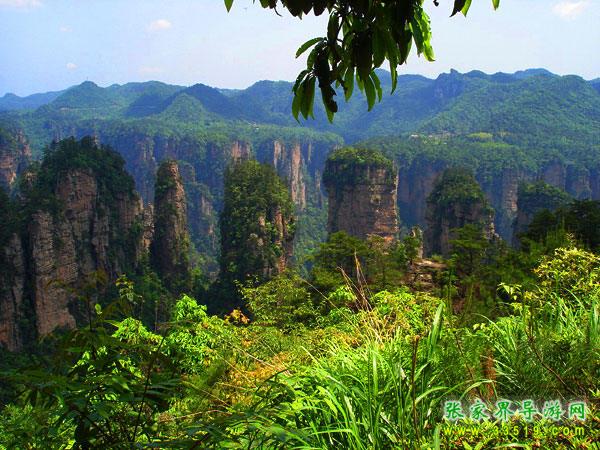
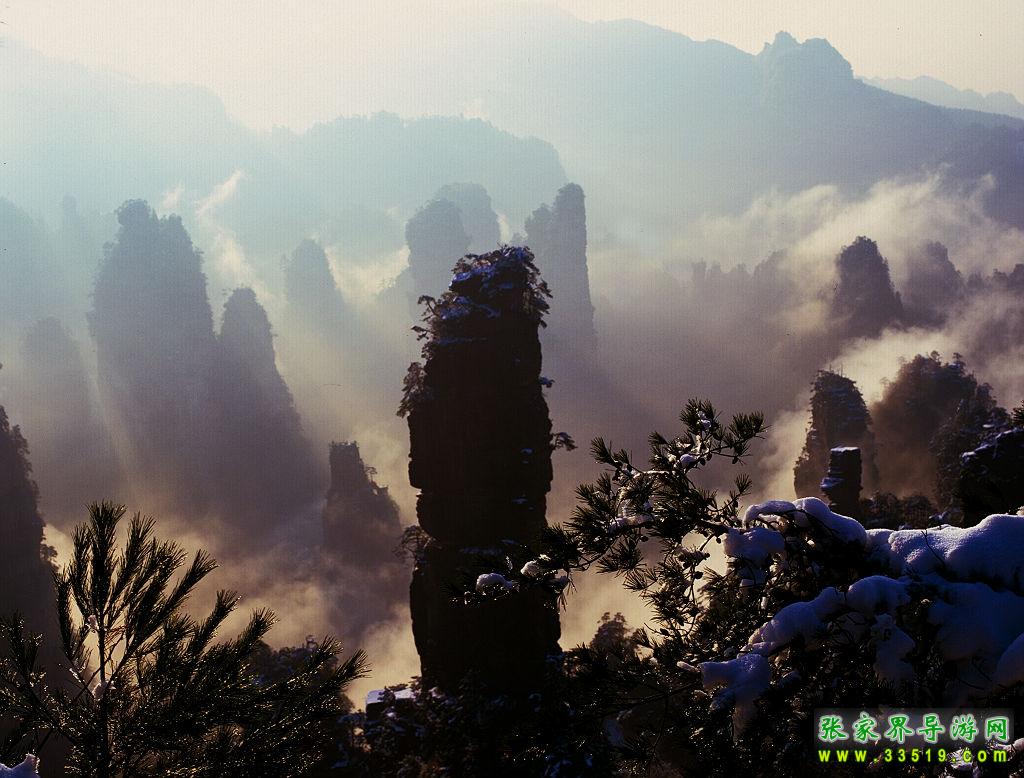
"Who says the heavenly palace has the best scenery? The human world here surpasses the heavenly palace." In the canyon between Huangshizhai and Yuanjiajie, stone peaks in a thousand postures and ten thousand forms stand in rows, line after line, layer after layer, like a sea of mountains. Stirred by the mountain wind, the breath of the mountains rushes toward your face. Here there are six oval stone pillars more than 200 meters high, arranged in a row. The two stone peaks in the middle are taller, while the two on each side gradually decrease in height, forming a slight arc. Just after rain clears, a rainbow becomes the bridge and the green mountains become the piers. The "remaining piers" remain, but the "heavenly bridge" does not always appear, so people call this scene Tianqiao Yidun. Someone wrote of it: "The immortal bridge and jade pillars still remain as before, all thrusting into the blue clouds and azure sky. If only a long rainbow bridge could be obtained, then the fair maiden could descend from the Guanghan Palace."
Feiyun Cave
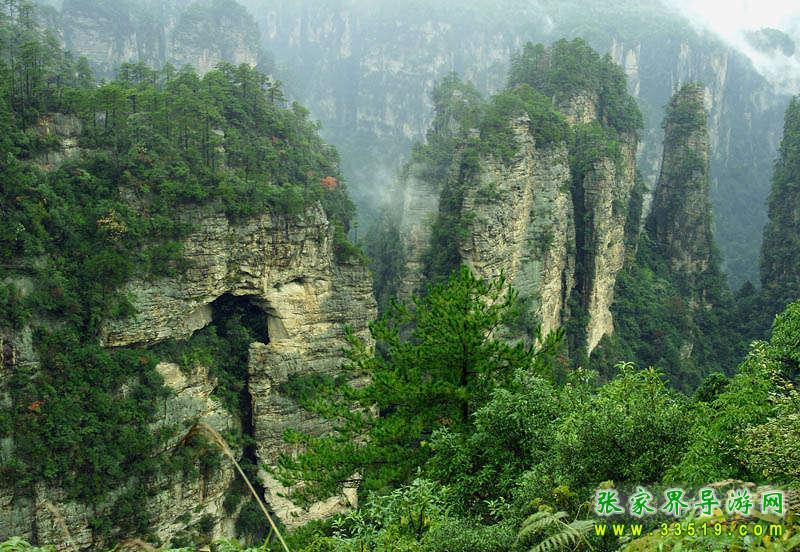
"People walk on the cliff, clouds drift beneath their feet." In the middle of that huge, thick stone wall opposite is a large rock cave, more than 10 meters deep and about 5 meters wide. How was it formed? When a hard rock layer lies on top of a stone peak, if the lower part is a weak rock layer, it will be eroded faster under weathering and water erosion, thus forming a cave. Feiyun Cave is just as its name suggests: clouds and mist often drift in and out of the cave. Sometimes the mist gently, slowly, and "lingeringly" drifts out from the cave, spreading in all directions, spreading upward, rising and spreading, rising and spreading until it reaches the tops of every stone peak, draping the green valley in a pure, thin veil—more beautiful than the wedding veil of any bride in the world. At this moment, gazing at the valley is like looking at flowers through mist or gazing at the moon in water, full of boundless hazy beauty and mystery. Then the clouds and mist at the bottom of the valley become thicker and thicker; wind rises and clouds surge, and it is hard to tell whether this is cloud or mist. It seems that what rushes toward your face is mist, and what rolls away is cloud. Clouds and mist drift with the wind, changing in an instant. Sometimes they are like crashing waves striking the shore, sometimes like ten thousand horses galloping. The clouds and mist flow rapidly and dance freely. Before long, the thick fog gradually fades, and the green valley slowly becomes clear again. Yet in the distance there is still a blur of thin mist, with clouds and mist spread flat beneath each stone peak, like a great sea. Each stone peak reveals only a pointed top, like small islands in the ocean. This strange spectacle is probably what the ancients called a "sea of clouds." At this time, looking out, you can no longer see where the cave is, nor tell east from west or south from north, and in the indistinct haze there is a floating, drifting feeling. Is it the clouds moving, the wind moving, the mist moving, the mountains moving, or the heart moving?
Golden Turtle in the Sea of Mist
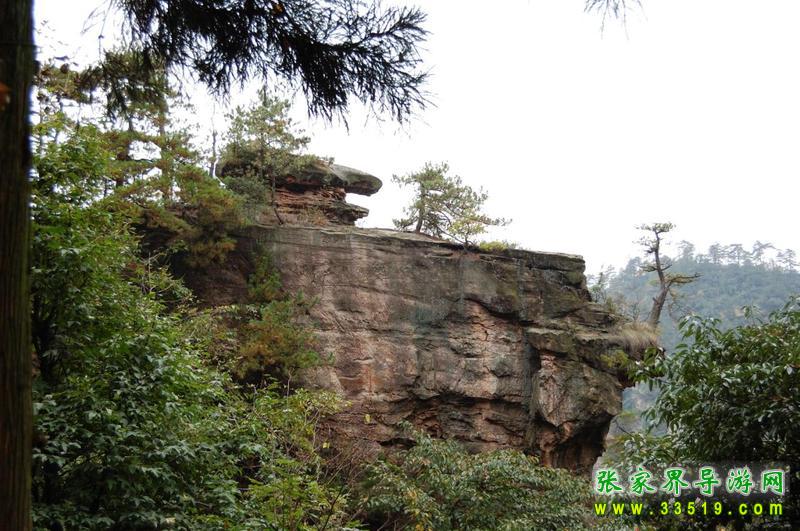
On the flat top of this stone peak lies an oval rock. The slightly raised part in the middle closely resembles a turtle shell, and the protruding part in front closely resembles a turtle's head. Geologically speaking, this vivid resemblance is mainly caused by gently sloping rock layers of similar hardness and softness. The softer layer below is relatively quickly weathered and eroded by water, becoming recessed. Sometimes, after gravitational collapse, the rock layer above it appears to protrude, forming a platform suspended in midair and creating a wondrous sight. If it is a rainy day, viewed amid the wreathing clouds and mist, this turtle seems to be cautiously poking its head around, carrying its shell on its back, climbing step by step into the sea of fog. If it is a sunny day, the afterglow of the setting sun shines on the rock, glittering and golden, and she, full of vigor, seems to be admiring the dusk of "the setting sun is infinitely beautiful" with a sense of transcendence unmatched in the mortal world. People often say, "turtles and cranes live for a thousand years," yet this turtle has existed for far more than ten million years. For how many years, amid countless clouds and mists, under countless setting suns, she has climbed and climbed, from ancient times to the present, climbing to our side, climbing toward the distant future. Someone once wrote: "Traveling a thousand mountains, crossing ten thousand waters, it is hard to forget the beauty of Zhangjiajie's scenery. The beauty lies in the laughter among the mountains, the beauty lies in the flying clouds and mist. Strange flowers bloom in brilliant colors one after another, a hundred birds perch on the branches and hold a singing gathering. The Heavenly Bridge spans the sky, and the setting sun waits for the golden turtle.
Overview of the Front Mountain Hiking Route
Friends who enjoy hiking and have good stamina can go up via the front mountain and down via the back mountain. This offers a different kind of scenery and a unique charm. Going up from the front mountain involves over 3,800 steps and generally takes more than 3 hours. The main scenic spots along the way include: the Secluded Path Through the Fir Forest, the Arhat Welcoming Guests, the Overseas Visitor, the Precious Casket of Heavenly Books, and the Southern Pillar of Heaven.
Secluded Path Through the Fir Forest
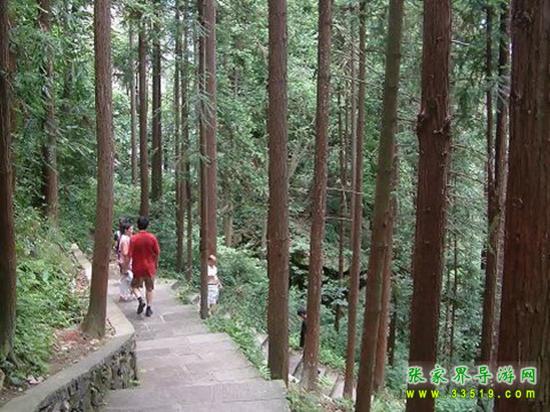
This vast fir forest was planted by workers of the Zhangjiajie State-owned Forest Farm (the predecessor of Zhangjiajie National Forest Park). In the past, the "Great Leap Forward" movement nearly turned all the hills of Zhangjiajie into bald peaks. Later, some forest farm workers, with the determination to "let their hair turn white in Zhangjiajie, let their teeth fall out in Zhangjiajie, and be buried in Zhangjiajie when they die," and to "dedicate their youth, dedicate their lives, and dedicate their descendants," vowed to plant trees and reforest Zhangjiajie. Decades have passed, and many have greened the mountains while their hair turned white. Their wish has finally become the reality before our eyes. The winding yet smooth and level walking path beneath our feet was built in the 1980s. Strolling along it, with mountain breezes blowing, birds singing, and wondrous flowers blooming, the peaks appear and disappear among the trees, offering the tranquility of "cicadas chirping make the forest seem quieter, birds singing make the mountain seem more secluded" and the leisure of "picking chrysanthemums by the eastern fence, leisurely gazing at the southern mountain."
Arhat Welcoming Guests
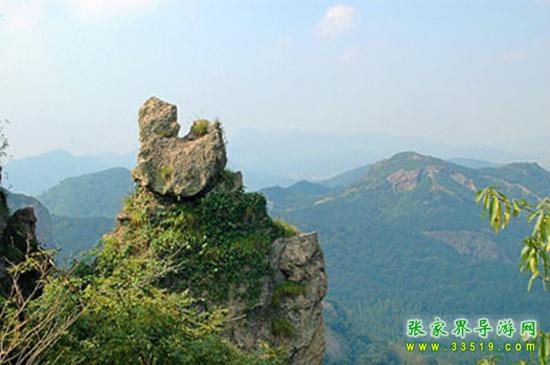
In the fir forest stands a peak that closely resembles an arhat—bald head, round face, bulging belly, beaming with joy, exactly like the description: "Open your mouth and laugh, laugh at the laughable people in the world; with a big belly you can tolerate, tolerate the intolerable things in the world." Especially, he seems to be muttering something, as if saying: "Welcome to Zhangjiajie!"
The Great Rock House and the Immortal's Elixir Gourd
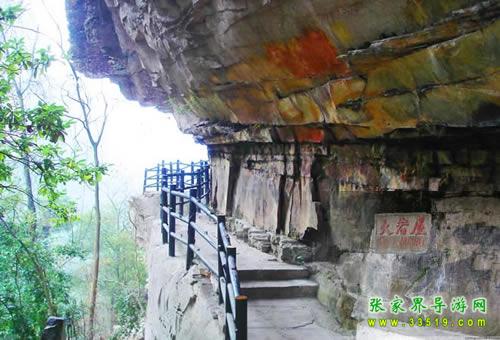
On this rock face before us, a large rock canopy protrudes in the middle, forming a rock house 3 meters high, 1–3 meters deep, and over 20 meters wide, known as the Great Rock House. This house was once inhabited by poor people, and in those years forest farm workers also camped here. Now it serves both as a resting place and a viewpoint. Twenty meters below the rock house, there is a peak that closely resembles a gourd, named the Immortal's Elixir Gourd. Some say it looks a bit like the liquor bottle of Xiangquan Group's "Jiugui Liquor," while others say it resembles the Queen Mother of the West's flower vase. Natural landscapes are often like this—three parts resemblance, seven parts imagination; without description it doesn't look like anything, but the more you describe it, the more it resembles.
Overseas Visitor
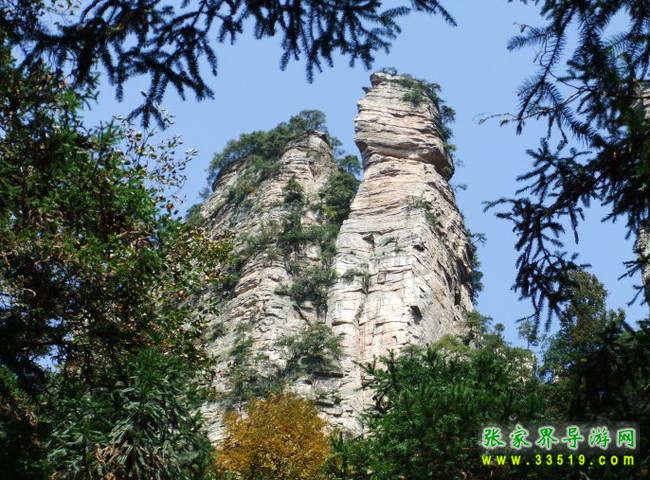
This stone peak standing face to face with us closely resembles a foreigner. He is tall and big, and his nose, mouth, eyes, eyebrows, and ears can all be seen clearly. The shrubs on top of his head look like his curly hair, and especially his nose is a typical "hooked nose." The locals are quite interesting—they often distinguish whether you are Chinese or a foreigner by the height of your nose bridge. In the past, people here called him "foreign devil," but now with opening up and tourism development, the mountain villagers' thinking has been liberated, and they affectionately call him "Overseas Visitor."
Precious Casket of Heavenly Books
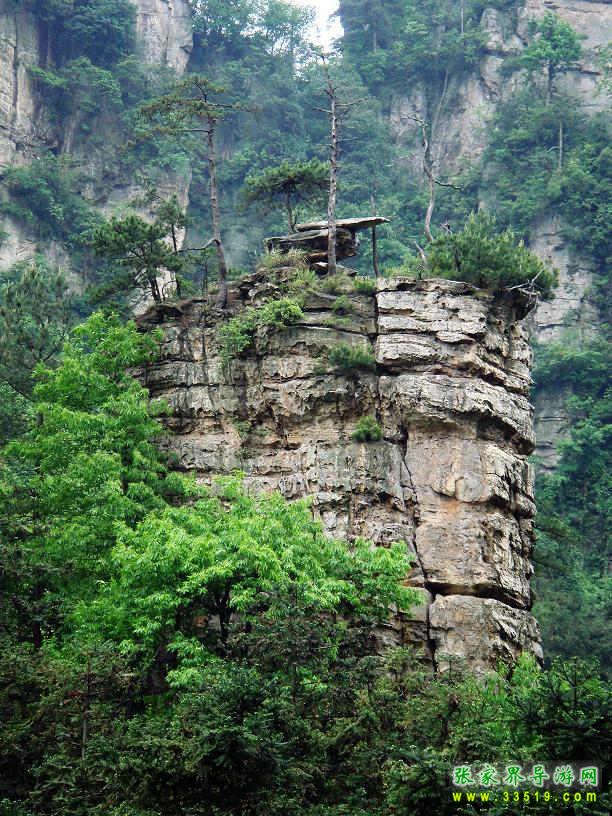
On top of this stone peak before us, five pine trees surround a stone casket. The casket has a lid, half of which covers it and half hangs in the air. The whole thing looks very much like an ancient book casket with its lid half pulled open. "Who knows the secrets within, perhaps there are immortals from primordial times?" A legend goes like this: Long ago, there was a wealthy man named Zhang Deli who never did any physical work and could not tell the five grains apart, yet he harbored the ambition of becoming emperor. Hearing that the casket contained three volumes of heavenly books, and that obtaining them would make one emperor, he schemed in every way to get them. But because he was too greedy and too foolish, while trying to take the heavenly books he accidentally fell off the cliff and died. This lid is the one he pulled open back then and never had time to close. Legends are, after all, just legends. Just think—how could such a wondrous treasure casket be pulled open by a greedy and foolish landlord? It was created by nature's uncanny workmanship. If this precious casket really contained heavenly books, surely what is written in them would not be instructions on how to become emperor. Perhaps the heavenly books say: let us love, protect, and enjoy nature, and live in harmony with it.
Southern Heavenly Gate and Southern Pillar of Heaven
Two peaks form a natural small stone gate, possessing the imposing stance of "one man guarding the pass, ten thousand men cannot open it," known as the Southern Heavenly Gate. It is said that passing through this gate leads to heaven. Strangely enough, after passing through the gate, the mountain scenery changes—fantastic peaks and bizarre rocks, verdant pines and emerald cypresses, so beautiful it is beyond description. It is not heaven, yet surpasses heaven. The isolated stone peak over 200 meters tall beside the Southern Heavenly Gate ahead is called the Southern Pillar of Heaven. It differs greatly from ordinary peaks—ordinary peaks are thick at the bottom and thin at the top, while this one is thick at the top and thin at the bottom. When mountain winds blow, this stone pillar seems about to topple. Amid the breathtaking thrill, one can almost faintly hear the rumbling roar from crustal movements hundreds of millions of years ago. For the sake of "safety," let us continue onward.
Overview of the Back Mountain Descent Route
"Going up is easy, coming down is hard"—but actually, that is not necessarily so. The back mountain has over 2,500 steps, and descending generally takes more than 1 hour. The route is shorter, but there are fewer scenic spots, mainly including the Rear Checkpoint Gate and White Sand Well.
Rear Checkpoint Gate
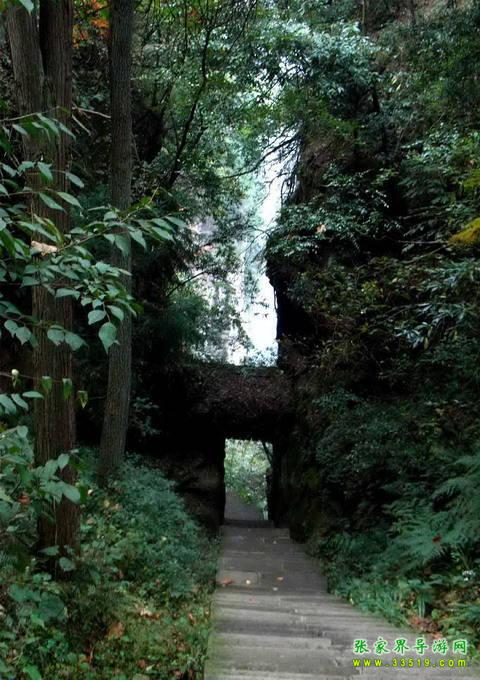
Huangshizhai is surrounded by sheer cliffs on all sides, with only two paths leading to the summit, each passing through a gate—namely the Southern Heavenly Gate on the front mountain and the Rear Checkpoint Gate on the back mountain. The Rear Checkpoint Gate is narrow on both sides with a steep middle, easy to defend and hard to attack. It is said that this place was once an important checkpoint of a mountain stronghold, where government troops and bandits often fought. Now there are many tourists, especially during the long holidays of "May Day" and "National Day," when visitors go up and down, just like "going to battle" in the past. The difference is that fighting in the past was bitter—no food, no drink, and one might lose one's life; now "going to battle" is great fun, with talking and laughing. Besides enjoying the mountains, you can also admire beautiful women. There are quite a lot of tourists here—please don't complain. A crowd proves the scenery is good!
Husband and Wife Rock
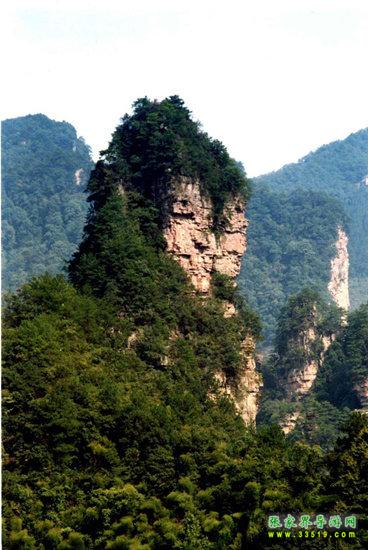
These two side-by-side rock peaks look like a couple with their heads touching and shoulders leaning together, affectionately nestled against each other, beaming with smiles. Gazing intently, you can clearly see their noses, eyes, lips, even teeth and eyebrows, and truly feel their tender, water-like affection for each other. The wonder of nature's creation is truly beyond imagination.
Long ago, people came here to pay homage. Locals say that bowing to this Husband and Wife Rock ensures unmarried young people a happy marriage in the future; newlyweds will become even more inseparable; and old married couples will love each other as in their courtship days and grow old together. The ancients said: "Hold your hand, and grow old with you." Now some people say: "I don't seek forever, only to have once possessed." Which do you think makes more sense? If you can't decide, why not ask "this couple" and hear what they have to say?