
Ticket prices, opening hours, and other details for this attraction may be adjusted according to season and policy. Before traveling, please refer to the latest official announcements from the scenic area.
Fenghuang Ancient Town is a famous historical and cultural city of China, one of the first batch of China's top tourism counties, and a national 4A-level scenic area. It was once praised by the famous New Zealand writer Rewi Alley as the most beautiful small town in China. Its geographical location can be summarized as: "resting on Yunnan and Guizhou to the west, controlling Chenyuan to the east, commanding Sichuan and Hubei to the north, and guarding the Guangxi border to the south." It is adjacent to Dehang Miao Village in Jishou, Mengdong River in Yongshun, and Mount Fanjing in Guizhou, and is a necessary route between Huaihua, Jishou, and Tongren in Guizhou. As a national historical and cultural city, Fenghuang's scenery organically blends natural and cultural qualities into one; the sense of weight revealed upon deeper perspective may be precisely the essence of its charm that attracts visitors from all directions. The ancient town was built during the Kangxi period of the Qing Dynasty. This "Pearl of Xiangxi" is truly "small" — so small that within the town there is only one decent east-west main street, yet it is a green corridor.
Legend has it that the divine bird "Phoenix" of Arabia (ancient India) lived five hundred years, then gathered fragrant wood and burned itself. From the ashes it was reborn, more beautiful than ever, and would never die again. This bird is the phoenix, king of all birds in China.
Southwest of Fenghuang, there is a mountain that closely resembles a phoenix spreading its wings to fly, and the ancient town was named after it. The ancient town is located on the southwestern edge of Xiangxi Autonomous Prefecture in Hunan Province. The county has a total area of over 1,700 square kilometers and a population of 440,000. It is a county predominantly inhabited by ethnic minorities, mainly the Miao and Tujia peoples.
In Mr. Shen Congwen's novel Border Town, there is a passage describing Fenghuang: "If one searches on a somewhat older map from a hundred years ago, one may find, in a remote corner of northern Guizhou, eastern Sichuan, and western Hunan, a small dot named 'Zhen'gan.' There, like other small dots, there should in fact be a city, and in that city, a population of three to five thousand settled." This is the ancient town of Fenghuang, veiled in mystery.
Fenghuang County has been a region inhabited by the Miao and Tujia peoples since ancient times. In the Ming Dynasty, the Wuzhai Zhangguan Si (Chief's Office) was first established; in the Qing Dynasty, Fenghuang Ting was established, named after Mount Fenghuang within its territory. In 1913, it was changed to Fenghuang County. In 2001, with special approval from the State Council of the People's Republic of China, it became China's 101st historical and cultural city.
During the Spring and Autumn and Warring States periods, Fenghuang was "the land of the Miao and Man of the Five Streams" and belonged to the territory of the State of Chu. According to cultural relics unearthed in the county, Central Plains culture had already influenced this area at that time. When Qin unified the realm and divided it into 36 commanderies, Fenghuang belonged to Qianzhong Commandery.
In the early Tang Dynasty, it was the territory of Jinzhou. In the third year of Wude under Emperor Gaozu of Tang, Mayang County was established, and Fenghuang belonged to Mayang County. In the third year of Chuigong under Empress Wu of Tang, Fenghuang was separated from Mayang County, and the following year Weiyang County was established, with the county seat at Huangsqiao, which is today's Huangsiqiao Ancient Town. The ancient Weiyang County belonged to Luyang Commandery of Jinzhou.
In the seventh year of Taiping Xingguo under Emperor Taizong of Song, Weiyang County was renamed Zhaoyu County. In the eighth year of Xining under Emperor Shenzong of Song, Zhaoyu County was abolished and Mayang County was re-established, and Weiyang was again placed under Mayang County.
In the Yuan Dynasty, the Wuzhai Si was established, under the Sinan Anfu Si. This was the period of the Tusi (native chieftain) regime, governed by the ruling figures of the county's ethnic minorities. The Wuzhai Si was located in what is now Fenghuang County town.
The Ming Dynasty inherited the Yuan system, establishing the Wuzhai Zhangguan Si and the Ganziping Zhangguan Si, both under the jurisdiction of the Baojing Xuanwei Si. In the third year of Yongle of the Ming, the Ganziping Zhangguan Si was established, still under the jurisdiction of the Baojing Xuanwei Si. In the third year of Longqing of the Ming, Fenghuang Camp was established at Mount Fenghuang.
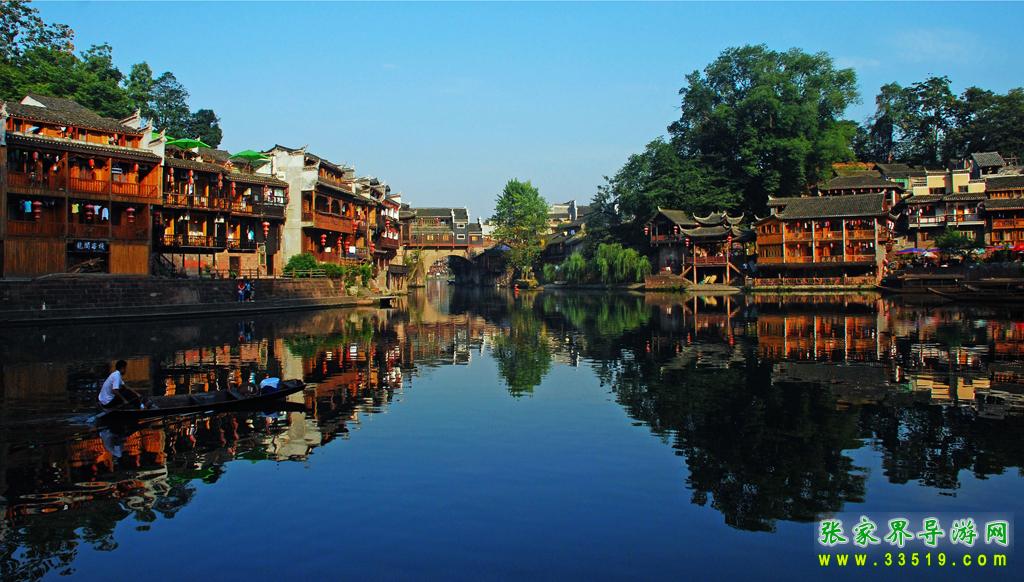
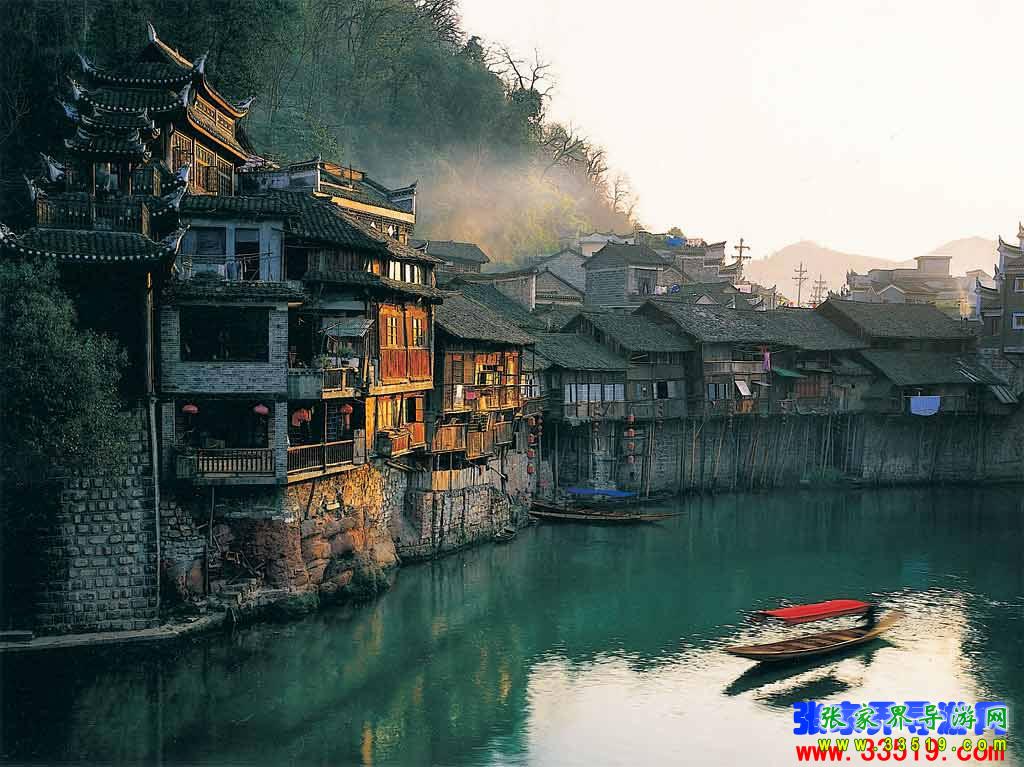
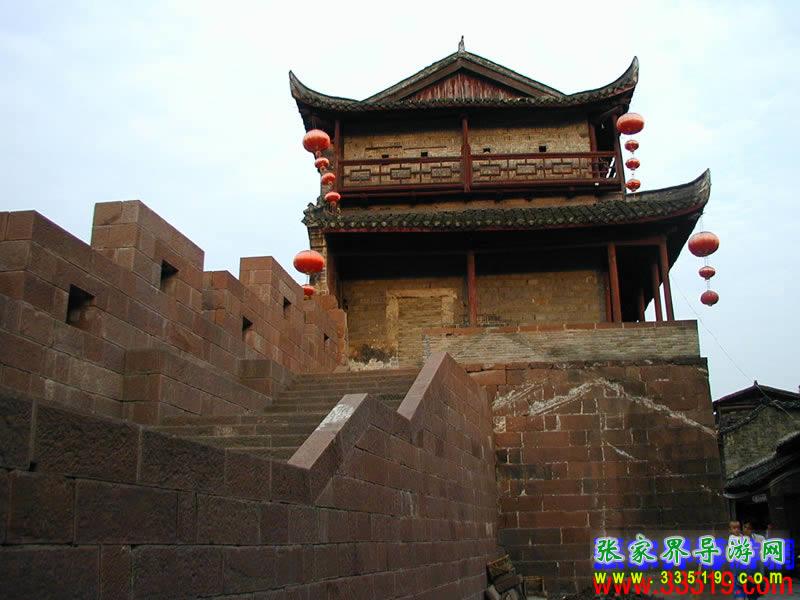
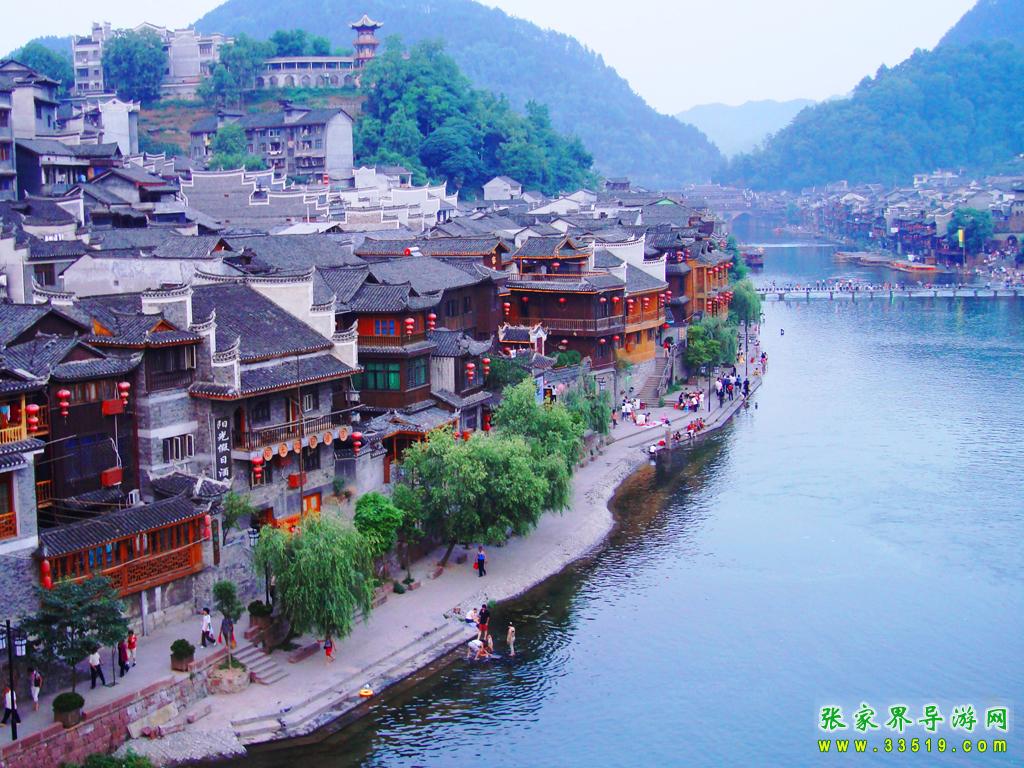
Highlights and Atmosphere
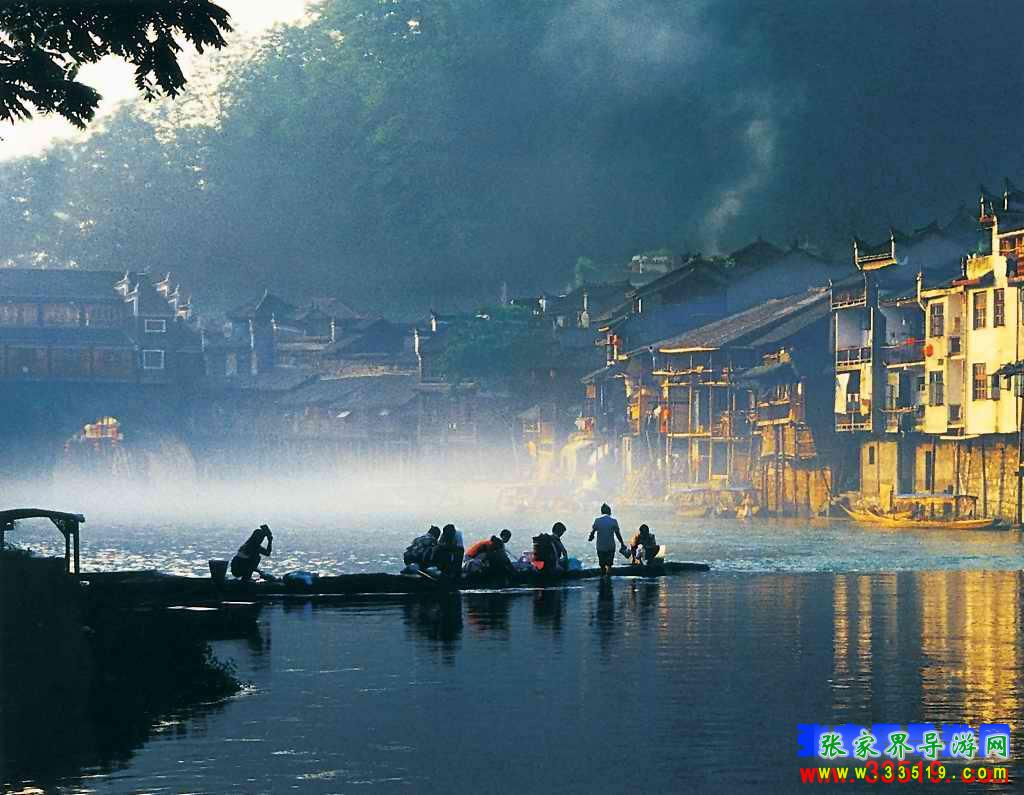
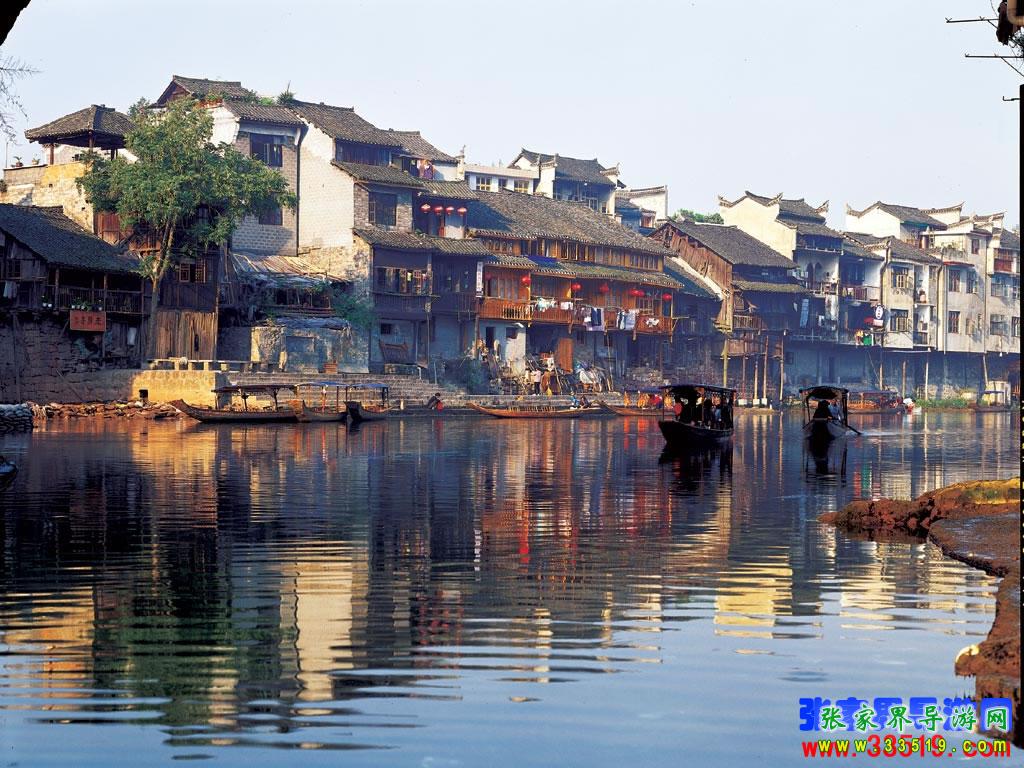
- The Tuo River and Stilted Houses: The stilted houses built along the river are the symbol of Fenghuang. In the early morning, the Tuo River is often shrouded in thin mist, making it the most photogenic moment in the ancient town.
- Ancient Town Nightscape: After nightfall, the Rainbow Bridge, city gate towers, and riverside stilted houses light up, with lights reflecting on the water—another side of Fenghuang.
- Rainbow Bridge and Stone-Slab Streets: Streets paved with bluestone slabs, city gate towers, and ancient bridges weave together the slow life of the ancient town.
- Culture and Heritage: The former residences of Shen Congwen and Xiong Xiling are scattered throughout the town and can be visited in sequence.
The text and images on this page are compiled from publicly available city overviews and travel notes on the original "Zhangjiajie Tour Guide Network" (33519.com). The accompanying photos are publicly available real-scene photos of Fenghuang from the original site. Information such as ticket prices and opening hours is subject to the latest announcements from the scenic area.