Ticket prices, opening hours, and other details for this attraction may be adjusted according to season and policy. Before traveling, please refer to the latest official announcements from the scenic area.
Mengdong River rafting is located in Hibiscus Town, Yongshun County, Xiangxi Autonomous Prefecture, Hunan Province. Its starting point is only 40 kilometers from the famous Xiangxi tourist attraction Hibiscus Town. Mengdong River rafting is one of the earlier-developed and relatively mature tourism projects in Xiangxi.
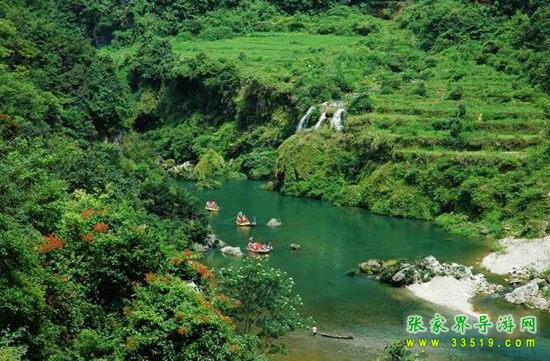
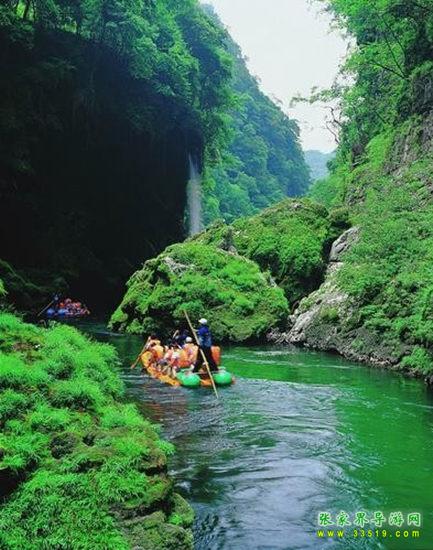
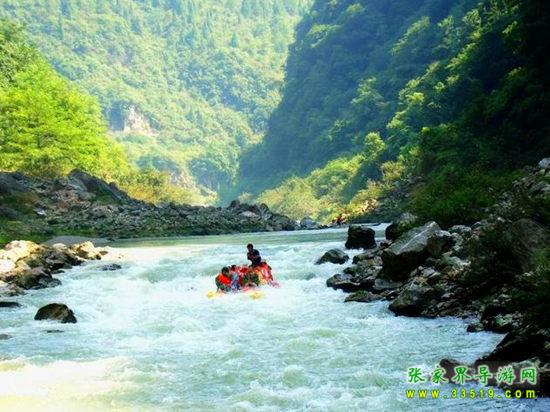
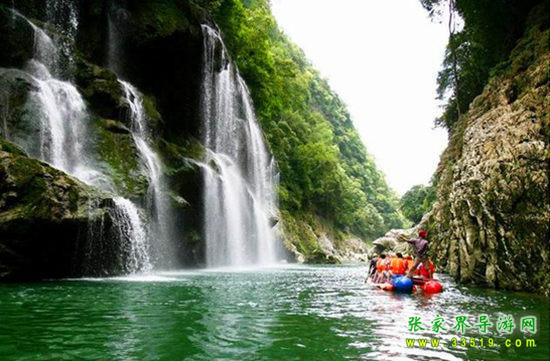
The Mengdong River gets its name because "the mountains are fierce as tigers, the waters swift as dragons, and the caves extraordinarily numerous." "See the mountains at Zhangjiajie, play in the waters of the Mengdong River" has become the essence of tourism in Xiangxi, Hunan. The Mengdong River has abundant water, a steep river gradient, swift currents, many rapids, and spectacular waves. Towering cliffs plunge straight into the water, and the two banks draw close together, forming a deep and secluded canyon landscape. Along both banks, ancient trees reach to the sky, lush and dripping with green, with grotesque rocks scattered about and flowing springs and flying waterfalls seen everywhere. Downstream, the water is emerald and the mountains green all the way, with beautiful scenery, troops of wild monkeys, and extraordinary karst caves. The "Number One Rafting Under Heaven" project on the Mengdong River is located on a tributary of the Mengdong River, with a total length of 47 kilometers. The most exciting section is from Hani Palace to Niulu River, about 17 kilometers long. The scenic area's banks are mostly virgin secondary forest, lush and verdant, with rushing currents, emerald and crystal clear, earning the reputation of ten li of sheer cliffs, ten li of waterfalls and springs, ten li of painted scroll, and ten li of cave heavens. Among them are 108 rapids and dangerous shoals and 20 large and small waterfalls. Rafting — threading through rushing currents, crossing dangerous shoals, braving narrow gorges, catching surging waves — is thrilling but safe, and endlessly memorable. In particular, such scenic spots as Hani Palace, Sanjiao Rock, Jilong Gate, Yuxian Gorge (Nietu), Yama Shoal, Luoshui Pit, Mengsi Gorge, Carp Belly-Slit, and the Three Great Cannons are all absolutely breathtaking.
The Number One Rafting Under Heaven starts at Hani Palace, about 40 kilometers from Wangcun, a one-hour drive, and ends at Niulu River, a 30-minute drive from Wangcun. The rafting route is 17 kilometers long and takes two and a half hours. Setting off downstream from Hani Palace, the entire way is an ancient river channel, with a hundred li of sheer cliffs, jagged grotesque rocks, extraordinary shoals and strange waters, and verdant trees on both banks shrouded in mist and clouds, with flying waterfalls and flowing springs complementing the karst peak forest. Making 155 turns and weaving through 133 shoals and pools, winding and lingering, it is soul-stirring and refreshing.
Going to the Mengdong River is mainly for rafting. The river's banks are lined with towering peaks and beautiful scenery, delighting the eye and gladdening the heart. Rafting generally runs from Hani Palace, more than ten kilometers from Wangcun Ancient Town, to a section called Monkey Jump. Here there are many dangerous shoals and the current is relatively swift. The pressing green, the chirping of birds, and the ethereal sound of water rush at you together with the wild wind of the canyon, soaking into every inch of your skin. Sunlight slips down through ancient vines covered with halberd-shaped leaves, suddenly struck by a jutting cliff rock, twisting and filtering through the dense foliage, leaping like ancient coins on the river that is so green it verges on blue, shimmering with an ancient luster. Sandbanks, pebbles, mugwort, cattails, fishermen's songs, and the wild, untamed flowing water — all remind you in the simplest and most direct way: get on the rubber boat, drift toward mystery, drift toward places your thoughts have not yet reached.
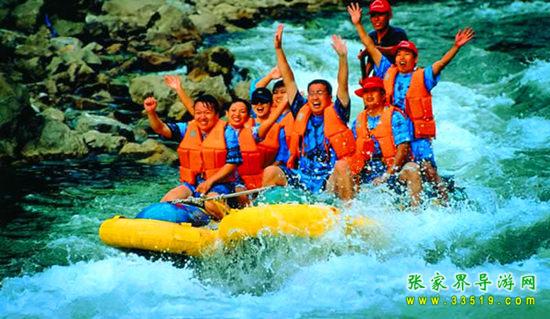
This section of rafting takes about 5 hours in total. You can also raft only half the route, which is from Hani Palace to the Nilu River Bridge, taking three hours. If you raft the full route, upon reaching Monkey Jump, a tour boat will take you to Hibiscus Town, taking about 2 hours. If you start rafting in the morning, you can do the full route and then go sightseeing in Hibiscus Town; if you start in the afternoon, you can only manage the half route. During rafting, generally 6 to 10 people ride one rubber raft, everyone wears a life jacket, and the boat is poled by a local boatman, so it is thrilling but safe.
The Mengdong River basin is an area where Tujia compatriots live in concentrated communities, with unique folk customs and rich and colorful traditional ethnic culture. The Tujia people's Tiaonian Festival, Sheba Festival, Chixin Festival, Double Ninth Festival, and the custom of celebrating the New Year one day early all have their own special charm. And Tujia dances such as the Hand-Waving Dance and Maogusi Dance, as well as songs and instrumental pieces like Daliuzi, Dongdongkui, and Watu Songs, are as intoxicating as aged wine. The Mengdong River belongs to a subtropical humid monsoon climate zone, with an average annual temperature of about 16 degrees Celsius. In spring, flowers bloom everywhere; in summer, it is cool and serene; in autumn, the mountains turn red all over; in winter, ice flowers bloom in splendor. No matter when you come here to travel, you can fully appreciate the beautiful scenery of nature. When the boatman's call, with its long trailing note, rings out, and the long pole gives a push, the rubber raft is wrapped and dragged by the impatient water, drifting toward the depths of the canyon where cliffs face each other and green vines entwine. At this moment, riding on the rubber raft that shuttles through the wave crests is like riding an untamed wild horse, galloping through the great canyon. All distracting thoughts in your mind have been washed clean by the rushing currents. What faces you are shoals higher than the last, and grotesque rocks more perilous than the last. You charge toward the shoals, toward the huge waves, toward the most perilous course in the river of life. In a flash, amid shouts and raised arms, your boat of life suddenly passes through the rapids, and before your eyes egrets wheel low and waterfalls flow with emerald green. At this moment, you have unloaded the stubborn stone of inferiority in life and lit the flame of confidence to illuminate every day of your life.
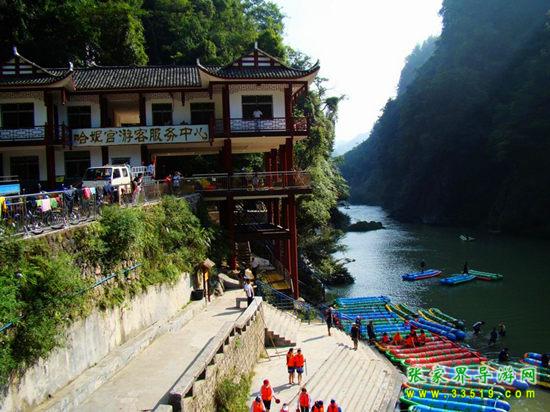
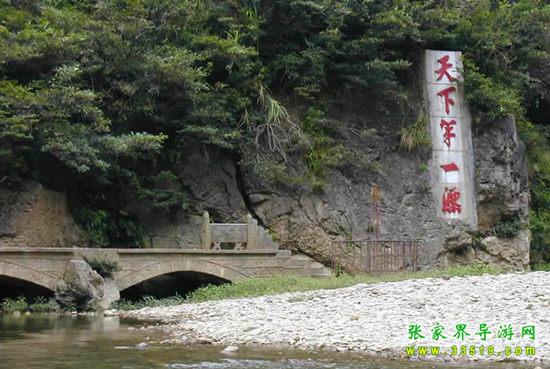
Here the river water is clear and emerald green, with jagged rock cliffs on both banks. Ahead, a small waterfall like white gauze hangs straight down from the top of the cliff, suspended on the verdant slope—that is Hani Palace Waterfall. On the straight rock wall to the left are the words "Number One Drift under Heaven" inscribed by the famous sociologist Mr. Fei Xiaotong. This was written after he drifted down the Mengdong River and was filled with emotion. The name Hani Palace comes from a legend. In ancient times, a Tujia man named "Kedong Maoren" came from Kedong. He had a huge appetite, was incredibly strong, brave and skilled in fighting, and extremely cunning, so he became the "General Who Quells Chaos" under the Tusi King. Maoren had a daughter named Hani, who was lively, nimble, and exceptionally clever. Maoren treasured her like a pearl in his palm. To help his daughter grow into greatness, he built a palace amid these picturesque mountains and beautiful waters, and invited a teacher to teach Hani poetry and painting. People thus called this place Hani Palace. It is said that Hani once left behind a poem describing Hani Palace, which reads: "Green waters cling to blue mountains, bamboo and trees veil the waterfall spring, clear breeze stirs the crisp birdsong, leaping fish rejoice with the water." No traces of Hani Palace's man-made structures remain, but the natural scenery here is in no way inferior to what the poem describes.
The water is bright and the rocks are beautiful, like a natural bonsai in a bay. Piles of lovely stones, water waves swaying shadows—some look like wild horses galloping, some like sheep grazing, some like monkeys scooping the moon, some like jade rabbits floating in the sky. The rocks along the bank here are as dazzling and varied as those in a karst cave. The difference is that the stalactites have long been exposed, all differently covered with the green of moss, with some green grass and shrubs interspersed among them, blending the beauty of natural light with the beauty of the cave. Legend says this was the place where, in ancient times, when Kedong Maoren returned in triumph from battle to the Tusi city, the common people sang mountain songs and danced the Baishou dance to celebrate the victory. Now on festivals, young men and women from nearby gather here, rejoicing together, washing clothes, casting nets, chatting and frolicking, and more often singing antiphonal songs to court each other. Therefore this place is also called Mountain Song Terrace. An ancient mountain song has also been preserved here: "Parrots and swallows dance with love filling the mountain, gongs and drums resound as the sky falls into water, where is the land of ultimate bliss, may I ask the mountain song singer of this place."
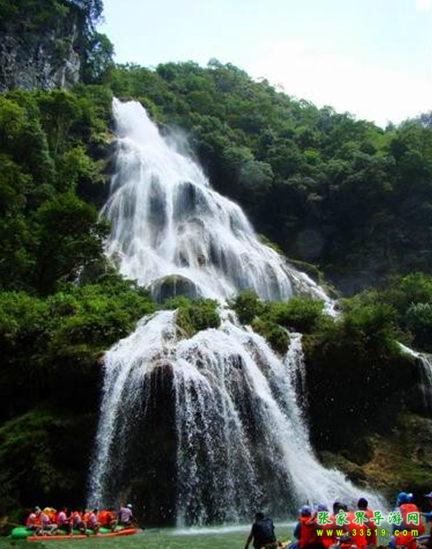
Nietu is a local dialect word meaning "most beautiful." This waterfall is over 30 meters high and more than 50 meters wide. Above the waterfall, clouds fly and mist drifts; below, there is a scene of misty rain, lush green trees, and jagged rocks. The wonder of Nietu lies in the two stones in the pool. These stones are embedded in the water, like a sunken boat, and also like a stone screen. Here is the story of the ship-breaking of King Nulikaba. Originally these two stone screens were one body. Later, it is unknown which mountain immortal inscribed a seven-character regulated verse on the stone screen and said that whoever could read the poem through would be given a golden boat in the river. Strangely enough, countless years passed, and though thousands of boatmen passed by, no one could read it through. One day, King Nukaba was passing by in a boat and also wanted to decipher the stone screen. When he had read out 26 characters, the king saw a golden boat emerge in the distant pool. He was overjoyed, thinking that with just two more characters the golden boat would be in his hands, and the thing in the water would become his exclusive treasure and endless wealth. The king deciphered another character; as the character came out, the boat arrived. Seeing the golden boat before his eyes, the king was wild with joy, and unknowingly misread the last character. As the wrong sound came out, the golden boat suddenly departed and slowly began to sink. Seeing the situation was bad, the king hurriedly drew his sword to lift it, but unexpectedly the golden boat broke into two halves and sank into the pool, turning into two colorful stones. The king could not understand it and left with regret. Later people left another poem: "Do not laugh at the ancients, do not curse heaven, heavenly wealth and earthly treasures are before your eyes. When the time of heaven, earth, and man in harmony arrives, the golden boat will always come to the human world." Now the time of heaven, earth, and man in harmony has indeed arrived, and the golden boat has truly come to the human world (referring to the drift boats).
Now called Yama Rapid. Yama Rapid is narrow and winding, fierce and dangerous—a natural gorge pass that is easy to enter but hard to leave. Boats traveling through it sink and float, veer sharply left and right, with waves splashing at people, thrilling and exciting, making visitors cry out in alarm. It can truly be described as "boats sink and float amid the waves, people sing and laugh in the misty rain." This gorge originally had no dry path and no plank bridge. Those who did not know the river conditions would often gaze at the gorge and sigh, turn the boat around, and return. Legend has it that the Jade Emperor's true scriptures had only three volumes in the world: half a volume in the Beijing Forbidden City, and another volume in the five-colored bridal sedan in the Huangjing Terrace of the Patriarch Hall. One day, a band of robbers stole the true scriptures and fled by boat downstream along the Si River. When the boat reached this place, suddenly wind raged and clouds darkened, shattering heaven and earth, flying sand and stones made ghosts and gods tremble, then thunder and rain poured down, heaven and earth went dark, and the sky-propping stone cliff instantly collapsed, blocking the river valley. The robbers knew heavenly soldiers had come, so they turned back with their swords and returned by land to the Patriarch Hall to return the books and apologize for their punishment. From then on, this place was given the name Huishou Gorge (Turning-Back Gorge).