This attraction introduction is compiled from historical materials in the "Zhangjiajie Tour Guide Network" (33519.com · Scenic Spots section). Ticket prices, opening hours, transportation, and contact information mentioned in the text may be outdated. Please refer to the latest official announcements from the scenic area before traveling; some content consists of historical background/cultural introductions and is for reference only.
It is located in the westernmost part of Xinhuang Dong Autonomous County, bordering the three counties of Sansui, Yuping, and Zhenyuan in Guizhou. It is 75 kilometers from the Xinhuang county seat, and 99% of the village's population is Miao. The Miao village is surrounded by layered mountains, with an average elevation of over 900 meters and uniquely styled natural conditions. It sits in a valley on the mountainside of the Miao Ridge, encircled by mountains and shrouded in mist and clouds year-round. The average annual temperature is 12.4°C, belonging to a subtropical mountainous humid monsoon climate, so there is no severe cold in winter and no extreme heat in summer—cool and pleasant, making it an ideal tourist destination for escaping the summer heat. However, due to inconvenient transportation and economic backwardness, the villagers' income mainly depends on farming, forestry, and working elsewhere. Chaping Miao Village has beautiful scenery, with a 60-li water route where you can enjoy the truly clear and emerald Tuo River. Electricity only arrived here in 2004, and there is still no road access. It is a village designated as extremely impoverished at the provincial, prefectural, and county levels. But it is precisely these conditions that make Chaping more mysterious, more pristine, and more natural. Here you can find China's first-class protected plant—the dawn redwood. This is an ancient village by a cliff, passed down through nine generations, with ancient trees so large that several people can barely encircle them, lingzhi mushrooms as big as straw hats, bandit caves guarding key passes halfway up the mountain, and wondrous scenery of mountains wrapping around waters... The Miao people here are simple and honest: warm and sincere, earning unanimous praise from visitors. Because here you have the natural scenery of Fenghuang plus the Miao village and Miao mountain landscapes. This is a place that everyone seeking a return to simplicity longs for.
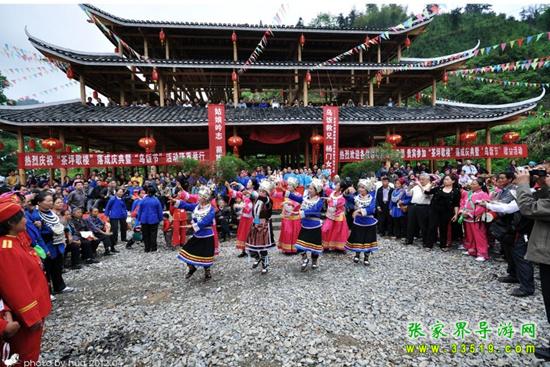
Due to its remote location, Chaping Miao Village has preserved ancient living customs. Their attire carries the style of the Qin and Han dynasties. The Biasha men wear their hair in a topknot, dressed in self-woven collarless bright-cloth jackets with right-side openings and straight-tube bright-cloth trousers with wide legs. Year-round they carry waist knives and shoulder flintlock guns, as if ancient warriors. Women wear bright-cloth dresses and skirts they make themselves, adorned with silver ornaments.
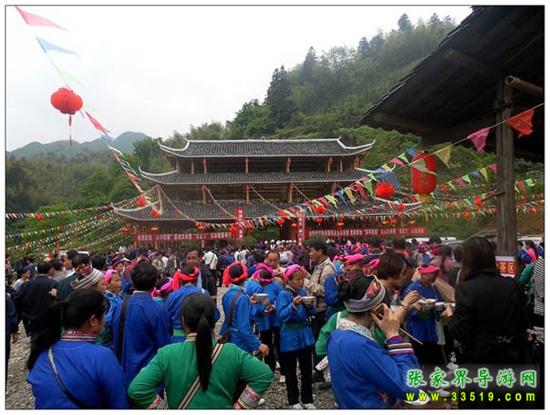
When guests arrive at the Miao village, imposing Biasha men play the lusheng and mangtong at the village gate, while Biasha girls offer gate-blocking rice wine in ox-horn cups. After a tune of the sheng music finishes, three iron blunderbuss shots ring out, flintlock guns are fired into the sky, and the village gate opens to welcome guests inside. Then, following the stone-paved paths through the forest, visitors enter the village where ethnic customs and traditions are performed.
When you come to the mysterious Xiangxi, longing for the long-awaited Fenghuang Ancient Town, does the no-longer-clear Tuo River disappoint you? Has the tranquil, peaceful, and aloof small town in your mind gradually drifted away, leaving you feeling sorrowful? Then you can go to the upper reaches of the Tuo River, see the crystal-clear Tuo River water, and visit the most primitive and peaceful villages. Here, perhaps you can make up for some of your Fenghuang trip and discover another beautiful, little-known side of Fenghuang.
Most leisurely here: a 60-li water route to enjoy the truly clear and emerald Tuo River
Most primitive here: electricity arrived in 2004, still no road access. An extremely impoverished village at the provincial, prefectural, and county levels
Most magical here: China's first-class protected plant—the dawn redwood; an ancient village by a cliff, passed down through nine generations; ancient trees so large that several people can barely encircle them; lingzhi mushrooms as big as straw hats; bandit caves guarding key passes halfway up the mountain; wondrous scenery of mountains wrapping around waters...
Full of legends here: a county town named after someone from an ancient village—supreme honor, how many can achieve it?
The Miao people here are simple and honest: warm and sincere, earning unanimous praise from visitors.
Great value here: Fenghuang's natural scenery plus Miao village and Miao mountain landscapes
1. Crossing Changtan: Take a bus from Fenghuang Ancient Town to Changtangang, cross the iron-chain bridge suspended over the Tuo River, visit China's first-class protected plant—the dawn redwood, and take a boat to the Miao mountain valley entrance. Along the way, vast expanses of emerald waves stretch to the horizon where water and sky merge, jagged rocks pierce the sky, fishing songs drift intermittently, egrets soar, broken walls of ancient fortress ruins stand, and crumbling walls of thousand-household Miao villages line the banks. The scenery on both sides is a feast for the eyes—30 li of water route full of poetic charm.
2. Visiting Miao Mountain: Hike through the gorge to the antiphonal singing platform, climb the hundred-step stone ladder to Dragon Ridge Mountain, view the wondrous feng shui formation "Three Dragons Seizing the Treasure," admire the dragon-scale tree "Nine Dragons Welcoming Guests," experience gate-blocking wine, gate-blocking songs, and gate-blocking drums, visit Miao village homes, cool off in the shade of the "Lovers' Slope" by the cliff, see the "Nine-Generation Ancient Tree" that several people can barely encircle and the straw-hat-sized "lingzhi," and participate in interactive folk performances. After a Miao family lunch (farmhouse meal with welcome wine), tour Shenlong Gorge, walking along country paths with streams and field ridges—a unique delight—then take a boat back to Changtangang.