This attraction introduction is compiled from historical materials in the "Zhangjiajie Tour Guide Network" (33519.com · Scenic Spots section). Ticket prices, opening hours, transportation, and contact information mentioned in the text may be outdated. Please refer to the latest official announcements from the scenic area before traveling; some content consists of historical background/cultural introductions and is for reference only.
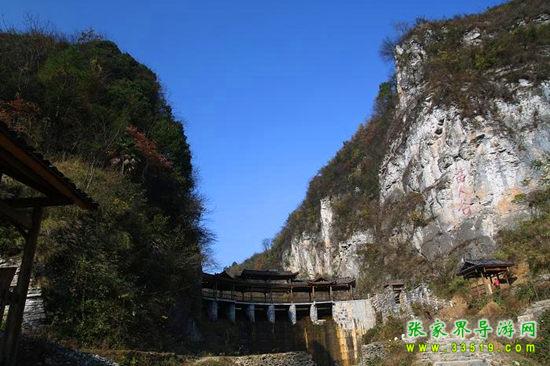
Miaorengu is located in Shanjiang Town, Fenghuang County, Hunan Province, only 2 kilometers from Shanjiang Town. It is 18 kilometers from Fenghuang Ancient Town, covers an area of 4 square kilometers, and is a landmark scenic spot of Fenghuang's pure Miao culture. Shanjiang is a relatively concentrated Miao settlement, and Miaorengu is now one of Fenghuang's tourist attractions.
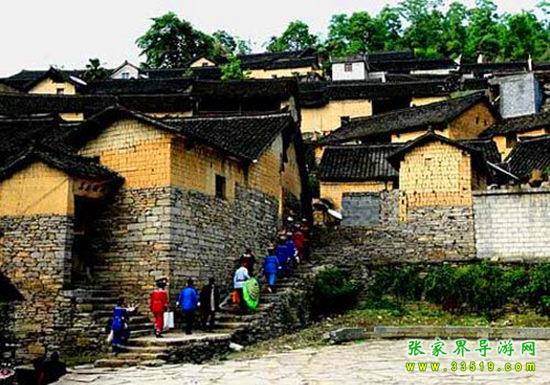
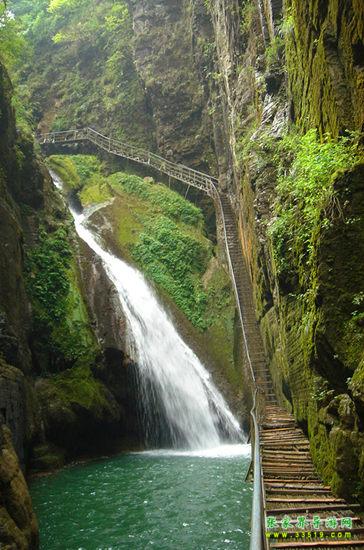
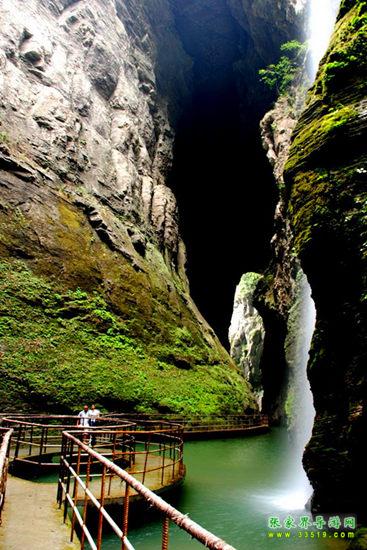
Miaorengu consists of several scenic spots including boating on the calm lake, Miao King Cave, and Zaogang Miao Village. The last generation of Miao kings in Xiangxi once lived here, which is why the cave is named "Miao King Cave." Inside the cave, three waterfalls cascade from above with magnificent momentum. After climbing up to Miao King Cave and passing through a 200-meter tunnel, and taking a boat a second time, visitors can reach Zaogang Miao Village.
Inside Miaorengu, a hundred flowers bloom and a hundred birds sing, a winding stream gurgles, and two ridges of valleys twist and turn in deep seclusion. Two large caves extend in all directions, three waterfalls cascade from the sky, and within the valley hides caves, within caves hide valleys—there is a world beyond the world. Especially notable is the invisible Miao King head that cannot be seen with the naked eye but can be captured by camera, truly worthy of being called "a wonder of the world."
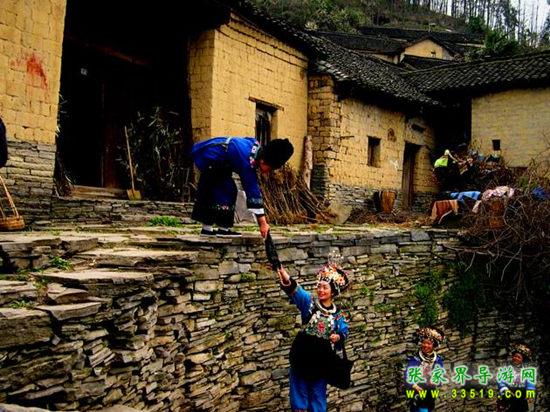
Miaorengu has beautiful natural scenery and rich folk customs. It is a natural painting of green mountains and clear waters, preserving many sites of shamanistic Nuo culture, creating uniquely styled spiritual beliefs and sacrificial rituals. Because of its masterfully crafted natural landscapes and well-preserved ancient Miao village, Miaorengu is recognized by domestic and international experts and scholars as China's "living fossil of the Miao people." Here, visitors can experience the mystery of Xiangxi, feel the various indigenous ethnic and folk cultures preserved by the Miao people, and also enjoy a meal of pure and delicious Miao cuisine.
Miaorengu has beautiful natural scenery. In the long, narrow, secluded valley, caves hide within valleys and valleys hide within caves, like a maze yet more like a fairyland. Inside the valley, mountain flowers bloom in all seasons, a hundred birds sing, streams gurgle, the gorge twists and turns, cave passages are spectacular, and flying waterfalls are exquisitely beautiful. Particularly notable is the invisible Miao King head that cannot be seen with the naked eye but can be captured by camera, truly worthy of being called "a wonder of the world." Standing in the gorge, you can absolutely feel the shock of the earth's crust tearing apart ten thousand years ago.
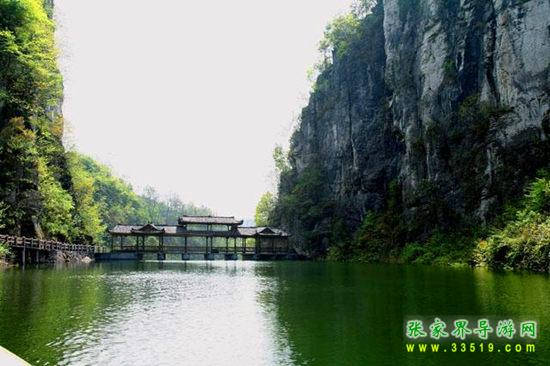
Miaorengu has a rich historical culture. According to research, Miaorengu was a typical raw Miao area of Fenghuang and was once the ruling center of Long Yunfei, the last Miao king of Xiangxi. The Miao are one of the great peoples who earliest developed the Central Plains and earliest expanded into the south. They originated from the "Jiuli" of the Yellow Emperor's era, and since ancient times have been rugged and fierce, advocating freedom and pursuing harmony. Miao history is closely tied to war; Miao culture is intimately connected to migration. Since the Ming and Qing dynasties, in order to compete for living space, the Miao experienced 62 campaigns of suppression and five great migrations. Therefore, Miao people all lived in remote mountain areas like Miaorengu, rarely visited by outsiders. The well-preserved Han dynasty Miao tribal sites, the Miao King Cave bandit castle and trench ruins, and the ancient Zaogang Miao Village—these Miao cultural symbols in Miaorengu silently witness the vicissitudes and tragic heroism of Miao history, and tangibly record the breadth and depth of Miao culture.
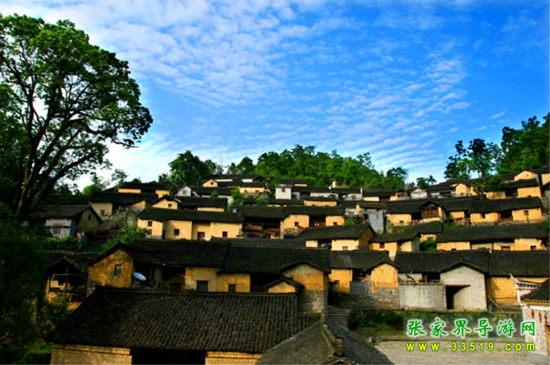
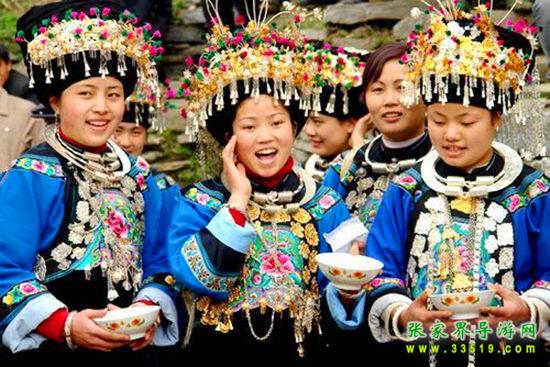
Miaorengu has rich ethnic customs. Miaorengu not only preserves Fenghuang's oldest and last Miao village, but also preserves the most primitive and simple customs of the Fenghuang Miao. Brilliant and eye-catching Miao clothing, uniquely charming gate-blocking wine, distinctive ka drums, road-blocking songs, and bianbianchang (courting markets), the traditional festival "Siyueba" with moon dances and flower dances, and the "Liuyueliu" mountain song antiphonal singing—the scenes are grand and passionate, full of poetic charm, all reflecting the Miao people's ability to sing and dance and their passionate, unrestrained nature. The corpse-driving, gu-poisoning, and cave-falling mysteries, listed among the three great mysteries of Xiangxi, have draped Miaorengu in an even more mysterious and unfathomable veil.
After the Miao people's uprising during the Qianjia period of the Qing dynasty was defeated, the rebels hid here, using Miaorengu's unique mountain and river terrain to carve out their own territory, adapting to local conditions and designing layouts for military attack, concealment, and escape that were easy to defend and hard to attack, like a maze. The Qing army besieged for months but still could not take it. Helpless, they had to withdraw back to Fenghuang City. Later, bandits also used this unique terrain and castle to dominate the area. Inside the cave it is cold and damp, with water dripping year-round. The terrain is precipitous and strategically located, with the advantage of "one man guarding the pass, ten thousand men unable to break through." It seems being a bandit was truly not easy!
Miaorengu is a natural painting of green mountains and clear waters, and a heroic history book of a people's struggle. Miaorengu has too much mystery and magic, awaiting people to sing about it, interpret it, and savor it.
A single visit to Shanjiang Miaorengu, and Fenghuang's Miao culture intoxicates for a thousand years.