This attraction introduction is compiled from historical materials in the "Zhangjiajie Tour Guide Network" (33519.com · Scenic Spots section). Ticket prices, opening hours, transportation, and contact information mentioned in the text may be outdated. Please refer to the latest official announcements from the scenic area before traveling; some content consists of historical background/cultural introductions and is for reference only.
"Xiangxi," with its long history and culture, rich ethnic customs, and extraordinary mountain and water scenery, gives people a sense of "mystery." The famous scholar Yi Zhongtian once said of Xiangxi: "For those who have been there, it is a painting; for those who have not, it is a dream."
So let us first come to the Dehang Grand Canyon, honored as "China's Colorado," to experience this journey of painting and dream.
"Dehang" is a Miao word meaning "beautiful canyon." It is the only national key scenic area in Hunan Province that combines natural mountain and water scenery with Miao ethnic customs. It belongs to the Wuling Mountain Range, is 24 kilometers from Jishou City, and can be reached by car in 30 minutes.
Dehang sits at the critical point where China's terrain rises from the third step to the second step, and geological faults have created a magnificent canyon landscape. Based on these geographical features, over the past 100 years two engineering miracles in road and bridge history have been created here — the "Aizhai Slope Highway Wonder" and the "World's No. 1 Suspension Bridge."
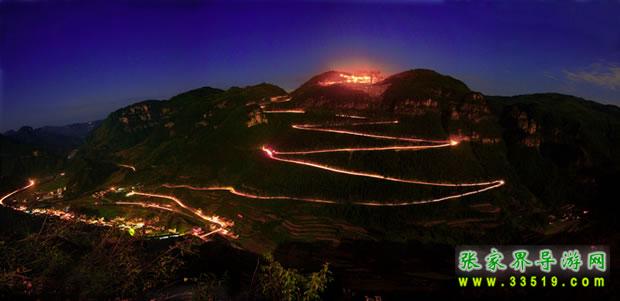
The "Aizhai Slope Highway Wonder" is the Xiangxi section of the Xiangchuan Highway, built during the War of Resistance Against Japan, mainly to facilitate the retreat and transport of military supplies and troops, and completed in 1936. The highway is about six kilometers long, yet it was built on slopes with a horizontal distance of less than 100 meters, a vertical height of 440 meters, and gradients of 70 to 90 degrees. This specific space forced the road to move left and right, turning through thirteen sharp-angle hairpin bends, forming twenty-six nearly parallel, overlapping road surfaces.
Figuratively speaking, the appearance of this stretch of highway is like a long folded ribbon, a compressed spring, a steep multi-level staircase. In fact, it is said that during construction, long strip "steps" were indeed first cut vertically into the mountain slope, and then the two ends of the "steps" were connected; where connection was truly impossible, "sky bridges" were erected or a circular turntable was suspended in the air, allowing cars to make an "∞"-shaped turn.
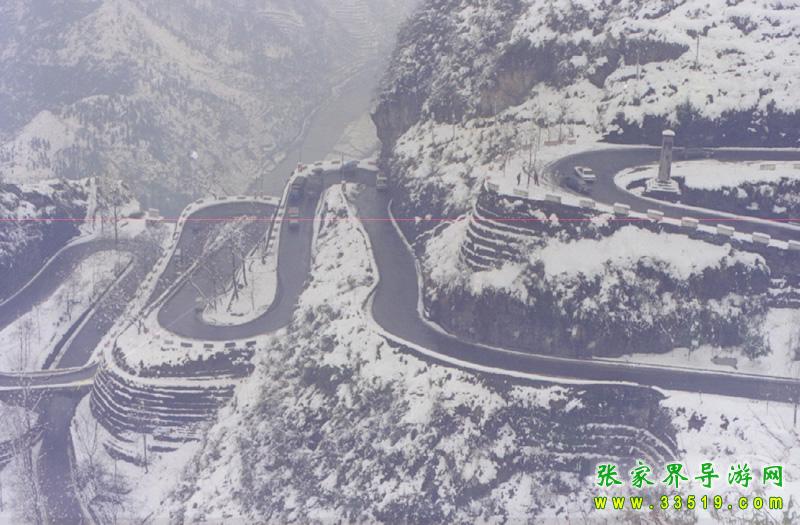
On this very "highway wonder," there is a group of "toughest traffic police" praised by millions of netizens. Their "duty platform" built with wooden planks and poles against the mountain has been called the "coolest traffic police booth." For a time, the Dehang Grand Canyon's "highway wonder" and "toughest traffic police" became an internet sensation. If you are interested, you might as well visit Dehang and have a close encounter with them.
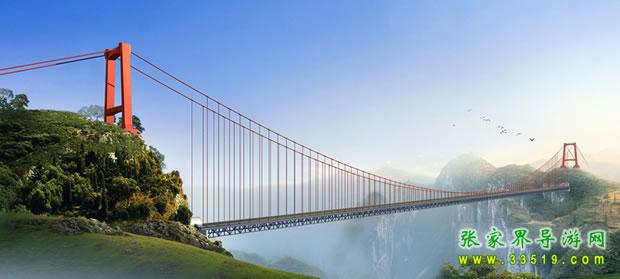
In 2010, the world's No. 1 suspension bridge broke ground. This suspension bridge spans the Dehang Grand Canyon, with a drop of 400 meters and a main span of 1,176 meters, ranking first in the world among bridges of its kind. The completion of the bridge will greatly solve the traffic congestion on the Aizhai Highway. When a car travels on the suspension bridge, the feeling is absolutely breathtaking. Walking on the steel cable bridge also has a distinctive flavor of "strolling among the clouds."
If the highway wonder and the world's No. 1 suspension bridge are the embodiment of our Xiangxi people's wisdom in transforming nature, then the Dehang Canyon scenery, combining mountain and water beauty in one, is the masterwork of nature.
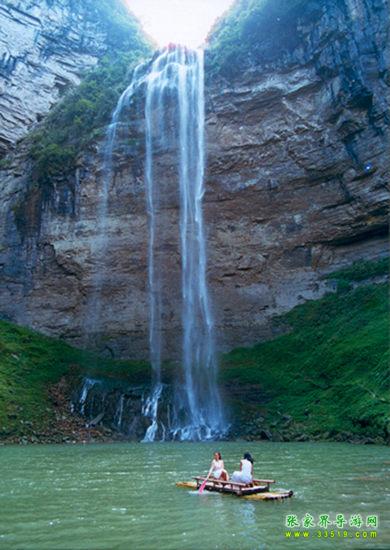
Dehang Canyon is a typical karst canyon landscape in China, including the Yuquan Stream Grand Canyon, the Hangxia Stream Grand Canyon, and the Jiulong Stream Grand Canyon. Here, there is the exquisitely crafted "Tianwen Terrace" suspended within the Yuquan Gate Grand Canyon, where the story of Qu Yuan sorrowfully questioning heaven is said to have taken place. Here, there is the ancient and pristine Duxiu Peak "Pangu Peak," over 700 meters above sea level, surrounded by sheer cliffs and rarely visited. Here, there is the Liusha Waterfall, the highest-drop waterfall in the country and one of the ten most popular waterfalls among Chinese tourists.
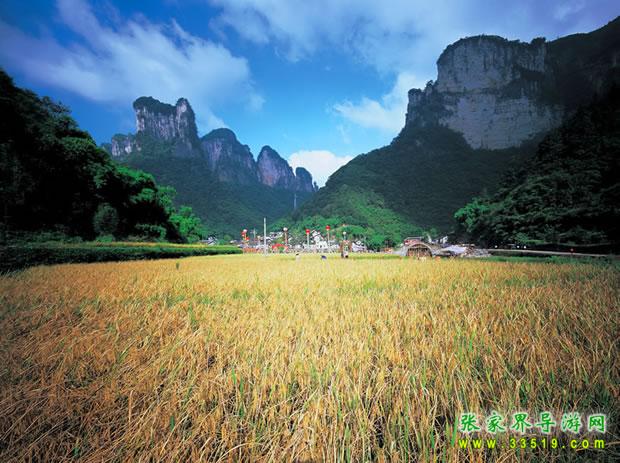
The canyon is deep, the forests dense, and the small river in the valley clear enough to see the fish. On both sides of the river channel, spring brings golden rapeseed flowers, autumn brings the fragrant waves of rice, eagles soar beneath the blue sky and white clouds, waterfalls plunge from cliff faces — a scene of tranquil leisure, aloof from the world.
Among the green mountains and waters, stilted wooden houses with gray tiles and stone foundations, smooth flagstone paths, exquisite stone arch bridges, groups of barefoot Miao women in red washing cloth, and the ancient stone mills and waterwheels creaking tirelessly as they turn — all tell visitors who come to the Dehang Grand Canyon that here still lives China's oldest ethnic group — the Miao.
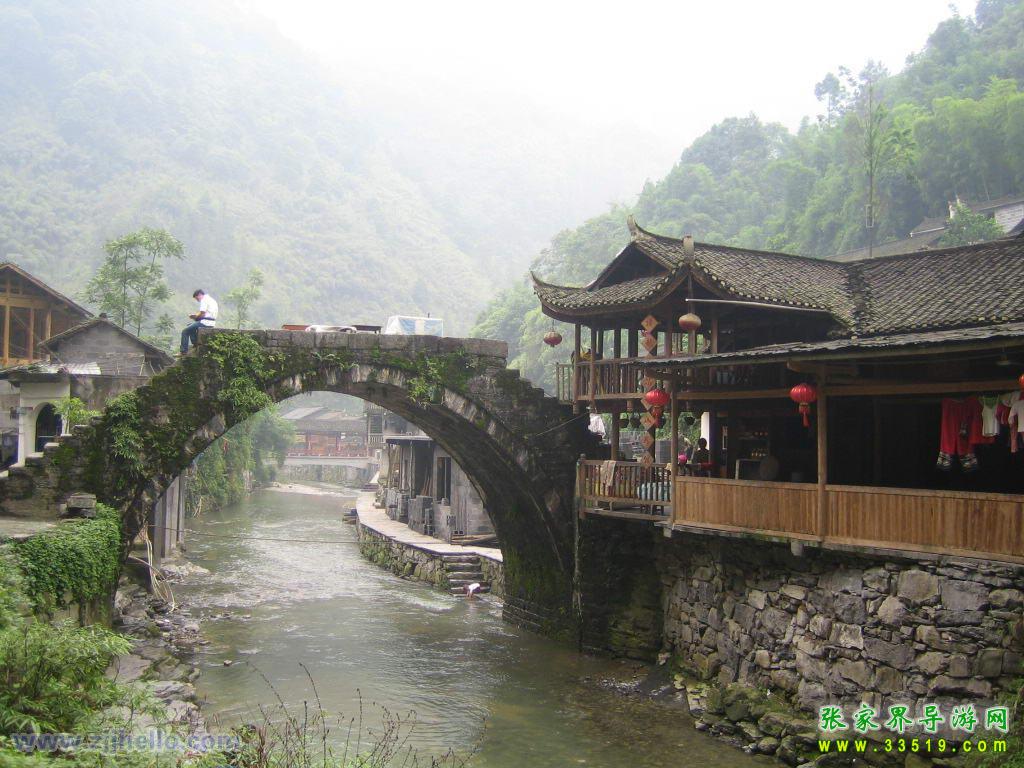
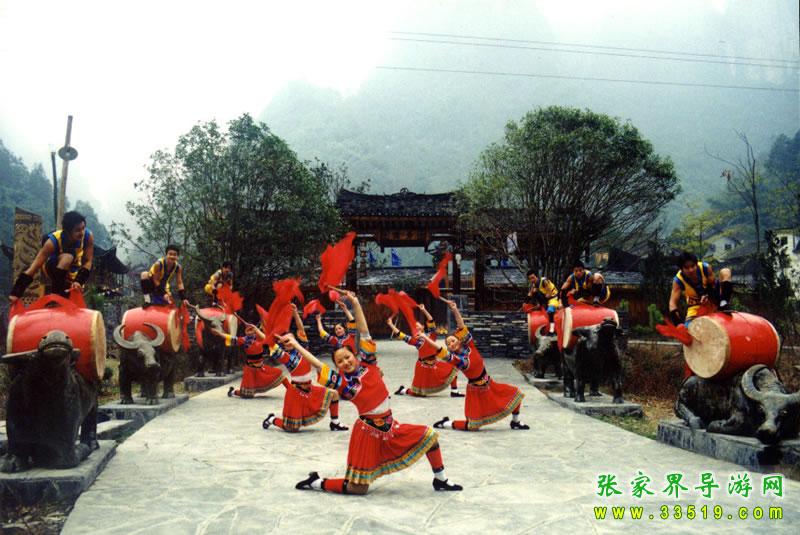
Dehang Miao Village is the world-famous home of the Miao drum. Here men and women, young and old, all love to "dance and sing," and three generations of Miao Drum Kings have emerged. The Miao compatriots who have multiplied here for thousands of years take song as their matchmaker, rise and rest with the dawn and dusk, treat life and death lightly, and revel in song and dance. Every year, Miao folk activities are held here on fixed dates, including the Hundred Lions Festival, Miao New Year, Fourth of the Fourth Month, Third of the Third Month Song Festival, Autumn Catch, Welcoming the Dragon, and Ox Sacrifice; scenes of blowing the sheng and beating drums, gate-blocking toasts, and antiphonal courtship songs across the mountains are found everywhere.
—— Here, you can see the most primal and purest beauty in human nature. Here you can fully experience the ancient and mysterious Miao folk culture.
Let us walk together into Dehang Grand Canyon, admire the century-old wonders of roads and bridges, experience the thousand-year-old Miao customs, travel through the ten-thousand-year-old canyon scenery, and use our most precious memories to "pack up" this journey of paintings and dreams and take it home.
Dehang is located 24 kilometers west of Jishou City, with an area of 580 square kilometers. This is a magical land, a bright pearl of scenery crafted by nature!
Within this self-contained Dehang Scenic Area, streams crisscross, canyons plunge deep, waterfalls cascade, peaks vie in beauty, ancient trees and exotic flowers abound, rare birds and beasts roam, and Miao customs are all contained within. The Tongsha Waterfall over 200 meters high, the Yuquan Gate Canyon 400 meters deep, the Tianxian Pangu Peak over 500 meters high, and the untouched primeval secondary forest, the simple and elegant Miao scenery—all are endlessly varied and magnificent, leaving people awestruck!
"Dehang" is a Miao word meaning "beautiful canyon." Here, there are six or seven massive canyons, and small gorges are everywhere. In geological terms, it is known as a karst canyon, gorge, and cliff valley landscape at the edge of an alpine platform. Therefore, the magical and deep canyons have become the hallmark of Dehang's natural scenery.
Since this is a pure Miao area, the customs and habits of the Miao people have greatly influenced Dehang. The Miao people's April Eighth Festival, drum dances, Third Month Third Song Festival, Autumn Festival, Dragon Welcoming, Bull Sacrifice, and Miao mountain love songs all attract Chinese and foreign tourists alike. Therefore, the simple and elegant Miao customs have also become the hallmark of Dehang's cultural landscape.
Every visitor who comes here is intoxicated by Dehang's magical natural scenery and strong Miao customs, inspiring a poem of praise:
From Pangu's creation to this day, where can one find such a paradise? Ask not the immortals for the way—Dehang in Xiangxi intoxicates every traveler.
I. What to Do in Dehang?
1: Scenic Area Travel Guide (free on-site interpreters provided within the scenic area)
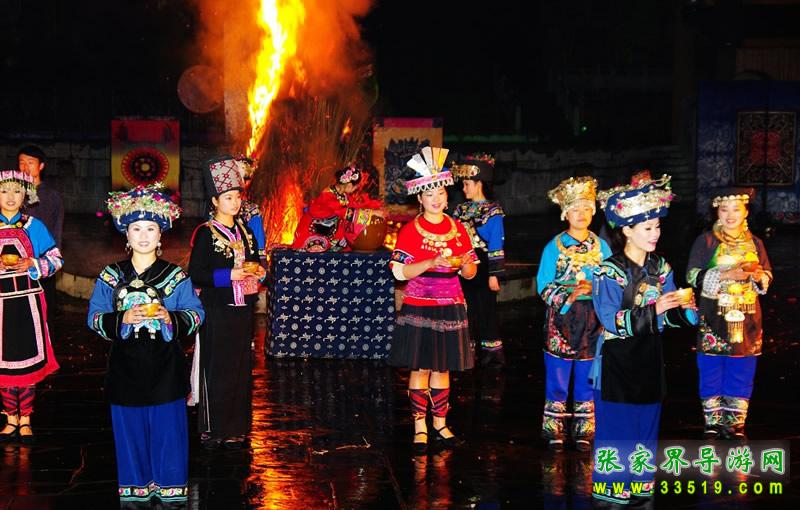
10:00–10:45 AM: Large-scale Chinese Miao Wedding Custom Performance (free).
3:00–3:45 PM: Large-scale Chinese Miao Costume Performance (free).
Participate in learning the Miao language, Miao drums, and playing the lusheng; visit the Folk Custom Garden's Nuotang Hall, Drum Culture Museum, etc. (free). Participate in experiencing the Miao gate-blocking wine ceremony, visiting a Miao home, folk song and dance performances, and the large-scale Miao original ecological bonfire gala "Mountain Wind and Drum Rhyme."
At other times, you can tour the natural landscapes led by the scenic area interpreters: Tianwen Terrace, Yuquan Gate scenery, Aizhai Highway Wonder (the world's No. 1 bridge), Yudai Waterfall, Sister Peaks, Peacock Displaying Its Tail, Sima Peak, Liusha Waterfall, Hangxia Waterfall Group, etc., and experience the folk customs of Dehang Miao Village and Jidou Miao Village.
2. Introduction to Dehang:
Dehang is the only national key scenic area in Hunan Province that combines natural mountain and water scenery with Miao customs. It is located 23 kilometers west of Jishou City, the capital of Xiangxi Prefecture. The 216-meter Liusha Waterfall in the scenic area is called China's greatest. Dehang has primeval secondary forest that blocks out the sky, and is a film and television shooting base beloved by artists. Among them, the Tianwen Terrace hanging alone on the cliff and the Pangu Peak piercing the clouds are the most spectacular of spectacles. The Aizhai Highway Wonder demonstrates the capability and wisdom of our forebears; it has China's first highway cloverleaf interchange and green island in the history of Chinese road and bridge engineering, pioneering China's highway development. Today, the world's No. 1 expressway cable-stayed bridge spans north and south across the canyon, blending the wonders of roads and bridges, turning natural barriers into thoroughfares.
The large-scale Miao original ecological bonfire gala "Mountain Wind and Drum Rhyme," meticulously crafted by the scenic area, gathers the essence of Miao song and dance. This place has produced five generations of Chinese Miao Drum Kings and several generations of master shamans and exorcism performers, who have visited many countries and regions and are renowned far and wide.
Entering Dehang is a magical journey through life and a return to nature.
II. How to Explore Dehang?
Recommended Route One: (Half Day)
Gaze at the Highway Wonder from afar (the world's No. 1 bridge), experience the Miao gate-blocking wine ceremony, watch the large-scale Miao wedding custom performance (participation allowed), visit Dehang Miao Village, participate in learning Miao drums, playing lusheng, playing wooden leaf, husking rice, pounding rice, and other activities, and visit the Drum Culture Museum. Tour the Jiulongxi Canyon, Silver Chain Waterfall, and Liusha Waterfall (China's greatest).
Noon: Visit a Miao home. Afternoon: Depart for Fenghuang, overnight in Fenghuang.
Recommended Route Two: (One Day and One Night)
Morning: Gaze at the Highway Wonder from afar (the world's No. 1 bridge), Yudai Waterfall, Tianwen Terrace, Yuquanxi Canyon, watch the large-scale Miao wedding custom performance (participation allowed), visit Dehang Miao Village, Folk Custom Garden's Nuotang Hall, Chiyou Divine Drum Pavilion, and Drum Culture Museum. At noon, visit a Miao home.
Afternoon: Tour Jiulongxi Canyon, Silver Chain Waterfall, Liusha Waterfall (China's greatest), participate in learning Miao drums, playing lusheng, playing wooden leaf, husking rice, pounding rice, and other activities, and watch the large-scale Chinese Miao costume exhibition (participation allowed). Dinner. In the evening, join the original large-scale Miao song and dance gala (participation allowed), then return or stay overnight in Dehang.
Four Premium Routes in Hunan Province
(1) Changsha—Zhangjiajie—Mengdong River—Dehang—Qianzhou Ancient City—Fenghuang: A Journey of Mountain and Water Scenery and Historical Culture
(2) Changsha—Zhangjiajie—Furong Town—Dehang—Qianzhou Ancient City—Fenghuang: A Journey of Mountain and Water Scenery and Historical Culture
(3) Changsha—Zhangjiajie—Furong Town—Dehang—Qianzhou Ancient City—Fenghuang: A Journey of Folk Customs
(4) Changsha—Jishou—Dehang—Qianzhou Ancient City—Fenghuang: A Journey of Folk Customs
Dehang
▲ First, we will enter the national key scenic area—Dehang.
▲ Dehang is the only national key scenic area in Hunan Province that combines natural mountain and water scenery with Miao customs. It is located 23 kilometers west of Jishou City, the capital of Xiangxi Prefecture.
▲ Here is China's famous road and bridge wonder.
▲ The Aizhai Highway created China's first highway cloverleaf interchange in history.
▲ The Aizhai Suspension Bridge sets world records in height, length, and daring.
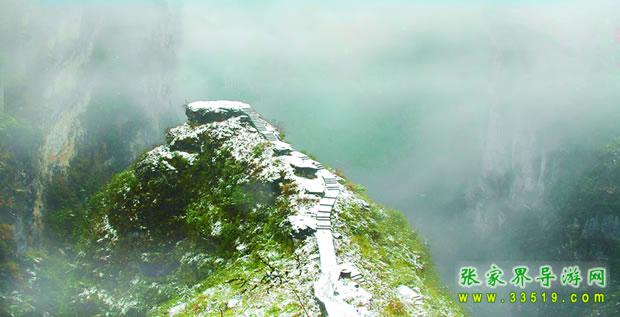
▲ Here stands the exquisitely crafted "Tianwen Terrace" suspended within the canyon, where legend tells of Qu Yuan sorrowfully questioning the heavens.
▲ Here is the Liusha Waterfall descending from the sky, like gossamer silk fluttering over two hundred meters, the greatest in China.
▲ Here four canyons converge, praised by many renowned experts and scholars as China's most beautiful canyon group.
▲ Here a large-scale Miao original ecological bonfire gala "Mountain Wind and Drum Rhyme" has been meticulously crafted for 20 years, watched by nearly a hundred million Chinese and foreign tourists.
▲ This is the famous Home of Drums Under Heaven; the Miao drums here have resounded in Beijing, Hong Kong, Singapore, and beyond; this was the host site of the First China Drum Culture Festival.
▲ This place has produced five generations of Chinese Miao Drum Kings.
The first-generation Miao Drum King was once warmly received by Chairman Mao.
▲ This is a paradise for artists; more than 20 film and television works have gone from here to the world.
▲ This is a paradise for visitors, where you can fully enjoy the beautiful pastoral scenery and the ancient world of waterwheels; here you can fully experience the simple and mysterious Miao folk culture.