This attraction introduction is compiled from historical materials in the "Zhangjiajie Tour Guide Network" (33519.com · Scenic Spots section). Ticket prices, opening hours, transportation, and contact information mentioned in the text may be outdated. Please refer to the latest official announcements from the scenic area before traveling; some content consists of historical background/cultural introductions and is for reference only.
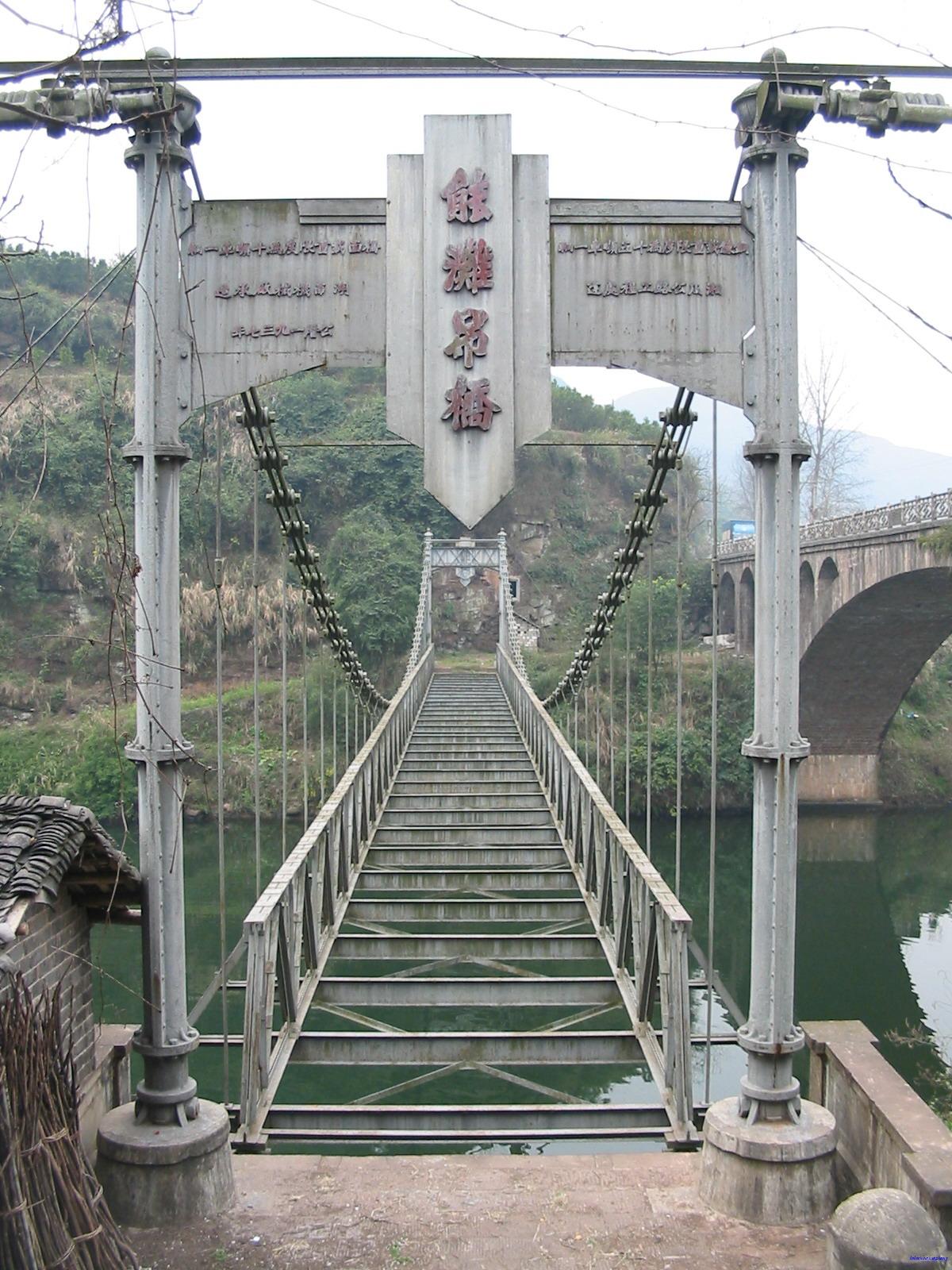
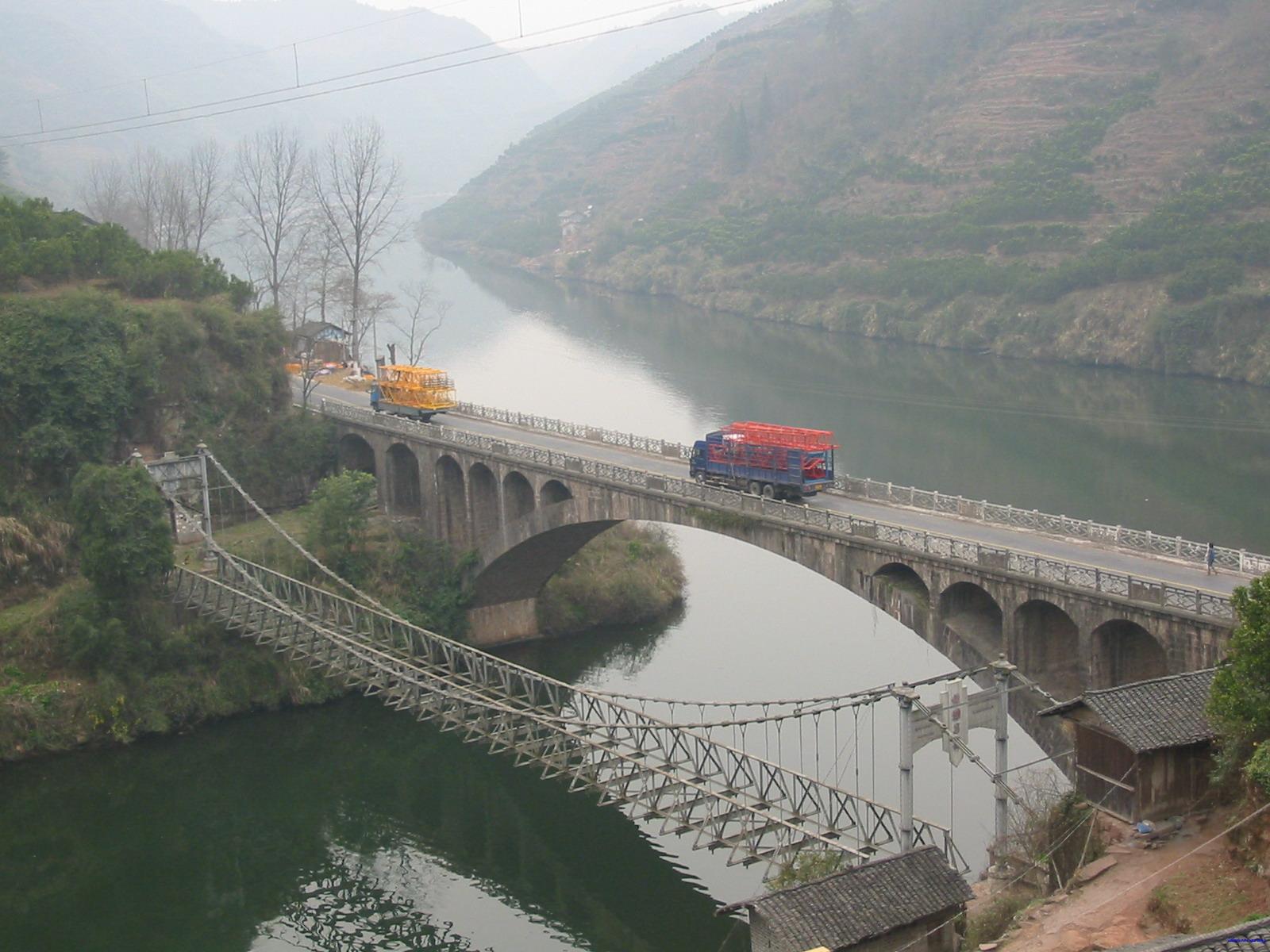
Nengtan Suspension Bridge is located in Luxi County on National Highway 319 of the Sichuan-Hunan Highway, crossing the Nengtan River. The river valley on both banks is steep, with water depth reaching more than 20 meters. The bridge was designed by engineer Zhou Lifu and constructed under the supervision of Ouyang Jian. Construction began in March 1937 and it was completed and opened to traffic in May 1938, costing 69,000 silver dollars. The suspension bridge has a span of 80 meters, a height of 20 meters, a deck width of 4.5 meters, and a load standard of 10 tons. The abutments are stone masonry, and the bridge towers are hollow cylindrical cast steel structures, 9 meters high. The suspension cables are chain-type, composed of 65 cast steel eye bars. The total length of the catenary is 82.08 meters, with a transverse center-to-center distance of 5 meters. The anchorages are frames made of channel steel, embedded with concrete in anchor holes in the rock walls on both banks. There are 32 suspender rods on each side, and on each side of the deck 4 steel round bars serve as wind cables to tighten the deck and prevent horizontal swinging.
Nengtan Suspension Bridge has weathered history and has gone through 67 years of wind, frost, snow, and rain. It once made special contributions to the national liberation and economic and cultural construction of the Xiangxi region. Now it lies quietly to one side at rest. In 1970, the Nengtan Bridge was completed, the suspension bridge ceased to be used, and it has been preserved as cultural heritage.
In late November 1949, the Second Field Army led by Liu Bocheng and Deng Xiaoping advanced into the southwest and passed through here. At the bridgehead there is still a martyrs' tomb. When he stood at the bridgehead guarding the suspension bridge, he was unfortunately shot by the enemy. Now the suspension bridge and this martyr have together been recorded in history, lying silently there. The present suspension bridge, as a provincial key cultural relic protection unit, is painted and maintained every year, and it can still shine with brilliance.
This bridge is the earliest modern steel-chain suspension bridge built on a highway in our country.