This attraction introduction is compiled from historical materials in the "Zhangjiajie Tour Guide Network" (33519.com · Scenic Spots section). Ticket prices, opening hours, transportation, and contact information mentioned in the text may be outdated. Please refer to the latest official announcements from the scenic area before traveling; some content consists of historical background/cultural introductions and is for reference only.
[Ticket Price Information Update · 2026-09-14]
- Chatong Ancient Town itself is free to enter.
- Cuicui Island 20 yuan; Qingjiang cruise 25 yuan; Cuicui Island + cruise combo ticket 40 yuan; Lala Ferry 2 yuan.
If old ticket prices/opening hours appear in the main text, they are historical materials and may be outdated, for reference only.
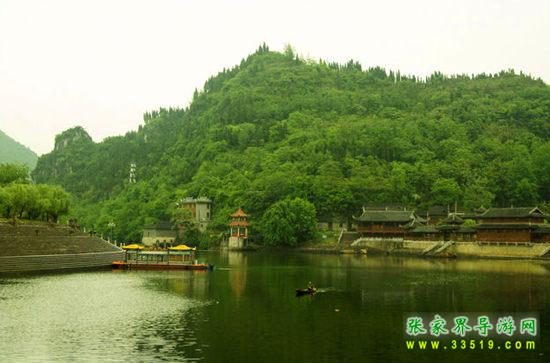
Border Town Chatong is Biancheng Town, Huayuan County, Xiangxi Prefecture, Hunan Province. Originally named Chatong, it is located at the junction of Hunan, Guizhou, and Chongqing, "one foot stepping on three provinces." To the east it borders Xiushan County of Chongqing, and to the south it borders Songtao County of Guizhou, separated by a river. The area is mostly populated by Miao and Han people and has a rich ethnic minority flavor.
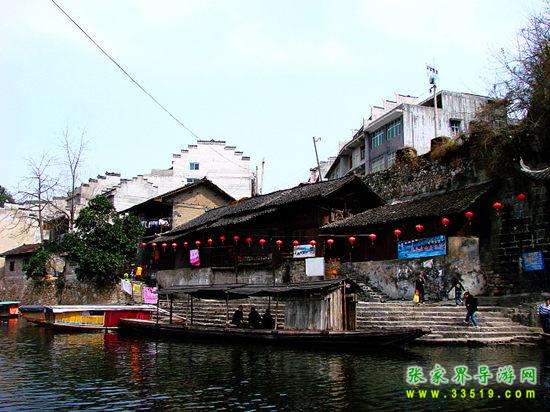
The famous novella Border Town by literary master Shen Congwen blends Chatong's beautiful scenery, kind customs, and simple human feelings into one, sketching a pastoral border-town scene and attracting countless literati and poets from home and abroad to sightsee and gather material, thereby driving local tourism. In Shen Congwen's novel, he wrote the border town as "Chatong," while according to the records of the Huayuan County Gazetteer, the correct written form should be "Chatong." Older maps all mark it as "Chatong." In 2005 Chatong was officially renamed Biancheng Town. To distinguish it from other places in China named Border Town, the media often refers to this place as Border Town Chatong.
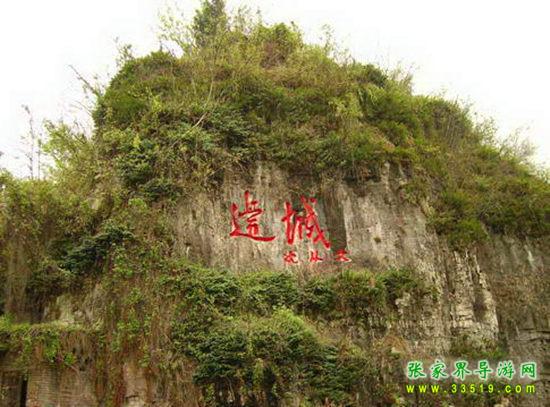
Chatong City was first built in the 8th year of the Jiaqing reign (1803), entirely of bluestone, solid and towering. The city is backed by Tai Mountain, with Jiulong Mountain on the left and Xianglu Mountain on the right, facing Fengming Mountain; the city is surrounded by mountains, with a city in the mountains and mountains in the city; because it is located at the junction of Hunan, Guizhou, and Sichuan, it is known as "one foot stepping on three provinces." The city walls wind along, the river flows gently, the bluestone roads are neat and elegant, the stilted houses are antique, the white pagoda stands tall, and boats are moored at the ancient ferry; on the stone steps under the weeping willows, two or three sisters-in-law pound clothes and wash vegetables, and on the clear river, four or five fishermen are releasing cormorants to catch fish—what a poetic, picturesque, and beautiful scene. The critic Sima Changfeng said: "Border Town is the most unique novel ancient and modern, Chinese and foreign, a fairy in fiction who is elegant and unmatched," and Chatong City is this fairy's incarnation in the human world.
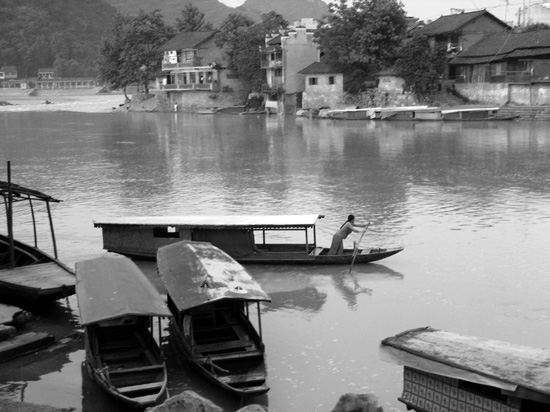
Twenty-five kilometers away from Huayuan County, by the banks of the You River, the small town of Chadong lies quietly. Its appearance, as it emerges in Shen Congwen's memory, is like this: "The town of Chadong is built against the water and nestled by the mountains. On the side close to the mountains, the city wall is like a long snake, climbing along the mountain. On the side facing the water, space is left outside the city by the riverbank for wharves, where small canopied boats are moored... Running through each wharf is a river street, and more than half of the houses rest on land and half on water. Because space is limited, all those houses have stilted structures." Even today, this humanistic and natural environment, which displays such a beautiful artistic conception, still attracts many tourists to come.
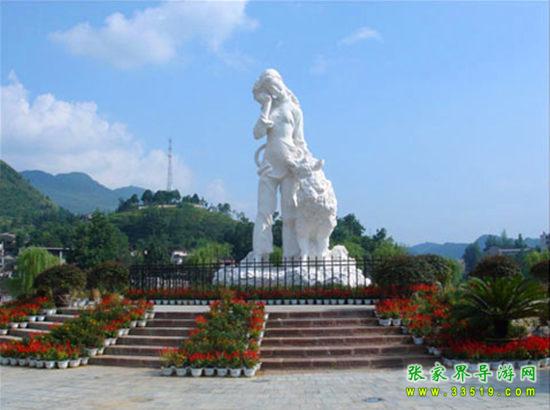
Chatong is surrounded by mountains on all sides, and the Huayuan River flows gently. The whole border town has beautiful scenery. In the town, the bluestone slabs are neat and elegant, the stilted buildings are antique, and crowds in ethnic clothing flow like a tide. Films such as Lianxin Dam and Border Town were both shot in Chatong.
Shen Congwen and Border Town
With Border Town as the representative, in his Xiangxi series Shen Congwen used the beauty of rural life forms to propose his philosophy of "harmonious coexistence" between humans and nature. The healthy and complete humanity that "Xiangxi" can represent, a "beautiful, healthy, natural, and yet not contrary to human nature form of life," is exactly the content his literary creation sought to carry, and Chatong's customs and folkways precisely accord with this philosophy of life.
"From Sichuan to Hunan, there is an official road on the east side. When this official road approached the Xiangxi border and reached a place called Chatong, a small mountain city, there was a small stream. By the stream stood a small white pagoda, and below the pagoda lived a single household. This household had only an old man, a girl, and a yellow dog." This is the opening of Shen Congwen's Border Town. The local customs and people of Chatong thus gradually unfolded in readers' minds, and ultimately, seventy-one years after the publication of Border Town, in 2005, it was renamed "Border Town," which probably was beyond Master Shen's expectations.
Historical Evolution
Due to its strategic geographical location, Chadong in Biancheng has historically been a contested military stronghold.
In the seventh year of the Jiaqing reign of the Qing Dynasty (1802), a stone fortress city was built here, with four gates in the east, west, south, and north, each gate tower having 4 cannon platforms and 420 battlements. During the War of Resistance Against Japan, Chiang Kai-shek's defeated troops fled through here to Sichuan. During the War of Liberation, the Liu-Deng army also advanced into the great southwest from here. After liberation, although the city walls and gates were damaged, Cuicui Island, the stilted houses, and the stone-paved streets remain intact.
In recent years, a nearly 10,000-meter riverside sightseeing belt consisting of 34 stone steps has been built. Today, Chadong has taken on a new look: stilted houses within the town, a river beside the town, an island in the river, a grove on the island, steles in the grove, and inscriptions on the steles, making it a world-famous border town.
Traditional Folk Customs
Today, Chadong still follows the old custom of holding markets on the 2nd and 8th days of each lunar month, called the "Bianbian Market." At eight or nine in the morning, people of all ethnic groups from the borders of the three provinces gather in groups of twos and threes and head toward Chadong. Whether men or women, old or young, most dress up as if visiting relatives during a festival. Young women in particular all wear their finest attire, with silver ornaments on their chests and large earrings on their ears glinting in the sunlight. Of course, there are also many trendy young men and women wearing T-shirts, jeans, and platform shoes. By noon, the market reaches its peak. At this time, the square is crowded with people jostling shoulder to shoulder. Besides stalls selling general merchandise and local products of all kinds, there are itinerant dentists pulling teeth, fortune-tellers, photographers, pot-menders, chicken caponizers, and even the most ancient dye vats. There are also a few burly men in bare chests and shorts, carrying long-barreled muskets on their shoulders and holding up several pheasants with colorful feathers, striding proudly through the crowd. The liveliest place is the cooked food stalls, with firewood stoves sending smoke everywhere and large soup pots boiling and churning. Men and women, old and young, crowd around, holding large bowls and sweating profusely as they eat chili rice noodles. Chadong's "Bianbian Market" is very attractive, preserving a quaint and rich ethnic flavor.
Tourist Attractions
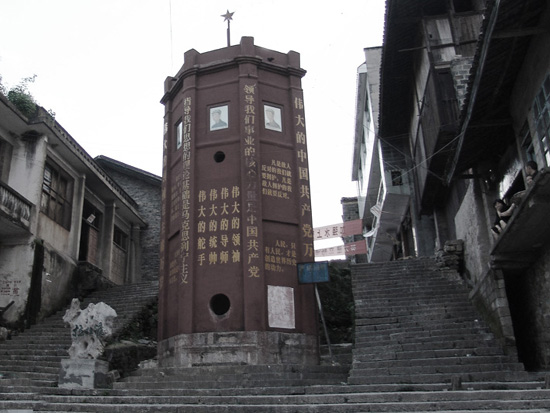
Scenic spots in Chadong of Biancheng also include the well-preserved ancient town city wall, the memorial tablets of the Taiping Heavenly Kingdom's westward expedition soldiers, the camp and command post of the Liu-Deng army during their advance into the great southwest, the Xie Tai and military training grounds established by the Qing government in Biancheng, and the quaint and elegant National Tea Normal School (now Chadong Middle School), among others. In addition, there are eight major scenic wonders, including "Dragon and Phoenix Bringing Auspices," "You River's Returning Waves," "Hundred-Foot Water Curtain," "Silver Spring Gushing Emerald," "Immortal's Stone Chamber," "Turtle and Snake Offering Blessings," "Rainbow Bridge Moon Shadow," and "Stone Furnace Drifting Smoke," all too beautiful to take in at once.
Food Information
At local farmhouse restaurants in Chadong, you can taste all kinds of authentic Chadong dishes, which are delicious and inexpensive. These delicacies include rice tofu, blood cake duck, Miao-style sour fish, Fenghuang pickled radish, Miao-style vegetable tofu, and Miao-style sour vegetable tofu soup. If you happen to visit on the 2nd or 8th day of the lunar month, you can also visit the "Bianbian Market," which is very lively.
Here you can eat deep-fried river crabs, spicy crayfish, mugwort rice cakes, deep-fried water centipedes, blood cake duck, large-pan eel, deep-fried bamboo worms, braised river snails, crispy bee pupae, spicy cicadas, and other authentic Xiangxi dishes, and the prices are not expensive, with each dish costing no more than 20 yuan.
Transportation
Chadong is located on the northwestern border of Huayuan County in Xiangxi Prefecture, 25 kilometers from the county seat, with Zhangjiajie Hehua Airport to the north (147 km away), Tongren Airport to the east (120 km away), Jishou Station on the Zhi-Liu Railway to the south (71 km away), and Xiushan Station on the Yu-Huai Railway to the west (50 km away). In addition, the Ji-Cha and Zhang-Hua expressways and National Highways G209 and G319 intersect at the county seat. Since ancient times, it has been known as the gateway to the southwest and is an important transportation center, commercial center, and materials distribution center in the border area of the three provinces (municipalities) of Hunan, Guizhou, and Chongqing.
By air: You can fly to Changsha, where there are direct buses to Chadong.
By train: This is a relatively convenient option. Take the train to Jishou, then after leaving the station, take a bus to Huayuan, or take a taxi to the West Bus Station to transfer to a bus to Huayuan, get off at Biancheng Park or Liangshuijing, and then transfer to a bus to Chadong.
By bus: Zhangjiajie Bus Station to Huayuan Bus Station. One departure daily, 13:40 to 17:40, fare 47 yuan. After arriving, you can transfer to a minibus to Chadong (Biancheng), with a fare of less than 10 yuan.