This attraction introduction is compiled from historical materials in the "Zhangjiajie Tour Guide Network" (33519.com · Scenic Spots section). Ticket prices, opening hours, transportation, and contact information mentioned in the text may be outdated. Please refer to the latest official announcements from the scenic area before traveling; some content consists of historical background/cultural introductions and is for reference only.
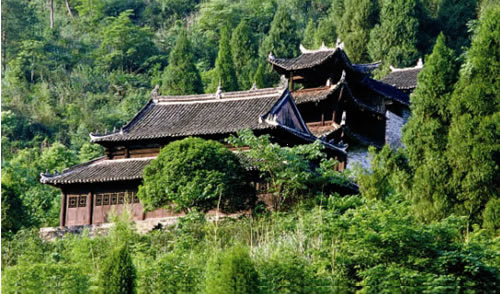
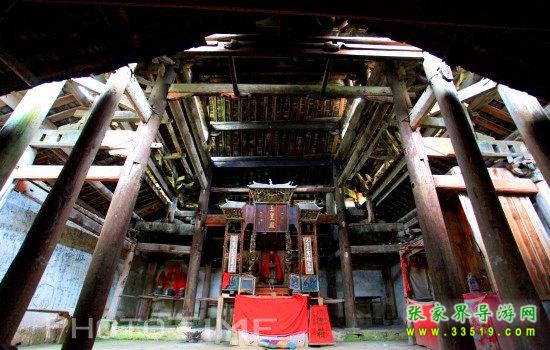
The Tusi Ancestral Master Hall is located at the southern foot of Taiping in the Old Tusi City. It was first built in the second year of Tianfu of the Later Jin (937 AD) and rebuilt in the Ming Dynasty. The main hall's pillars are several arm-spans thick, and the places where the wooden beams are mounted show no traces of axe or chisel; legend says it was built through the miraculous manifestation of Lu Ban. The hall covers more than 580 square meters. The main hall is five bays wide and four bays deep, with a double-eaved hip-and-gable roof, 17.5 meters long, 13 meters wide, and 20 meters high. It is entirely of wooden structure, with 34 large pillars supporting the roof. The pillar bases are in double-layered round drum style, and the roof ridge and eaves are made of finely patterned pottery bricks and tiles. In front of the golden pillars in the hall, a shrine is built, enshrining the statue of the "Ancestral Master." The hall's dougong brackets are majestic and antique, and the beam-frame structure is quite distinctive. It is an architectural work with strong ethnic characteristics in the Tujia region and is a key cultural relic protection unit of Hunan Province.