This attraction introduction is compiled from historical materials in the "Zhangjiajie Tour Guide Network" (33519.com · Scenic Spots section). Ticket prices, opening hours, transportation, and contact information mentioned in the text may be outdated. Please refer to the latest official announcements from the scenic area before traveling; some content consists of historical background/cultural introductions and is for reference only.
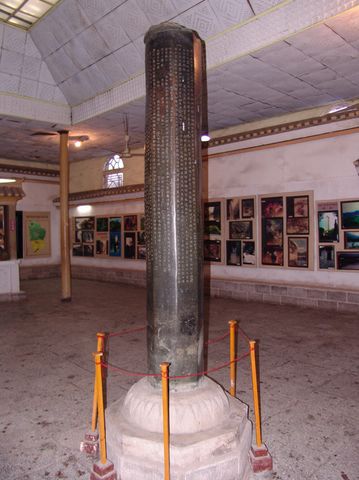
The Xizhou Bronze Pillar is now kept in the Wangcun Folk Customs and Scenery Hall. In 940 AD, Ma Xifan, King of Chu, and Peng Shichou, Prefect of Xizhou, made peace after years of war, concluded an alliance, divided the territory for governance, and cast a 5,000-jin bronze pillar as evidence. According to historical records: "In the fourth year of Tianfu of the Later Jin Dynasty (939 AD), Peng Shichou, Prefect of Xizhou, and Ma Xifan, King of Chu, who then occupied Hunan, fought the Battle of Xizhou.
After his defeat, Peng Shichou made peace with Ma Xifan in the fifth year of Tianfu of the Later Jin Dynasty (940 AD), and had the course of the war and the terms of the peace agreement engraved on the bronze pillar. The pillar weighed five thousand jin and stood one zhang and two chi tall, with six chi buried underground. It was octagonal in shape, hollow inside, filled with large coins, and topped with a bronze cap, with the oath inscribed on the pillar. It was erected at Huixi. When it was re-erected in the second year of Tianxi of the Song Dynasty (1018 AD), some local official titles and names were additionally engraved. In the mid-Qing Dynasty, the bronze cap on the pillar was stolen and sank to the bottom of the river, and the coins inside the pillar were also all but picked out by people using sticky candy. In the eleventh year of Guangxu of the Qing Dynasty (1885 AD), Zhang Zengyang, Prefect of Yongshun, built a pavilion to protect it. During the Republic of China period, the pavilion was destroyed." The bronze of the pillar is fine, pure, and lustrous; the incised characters in the Yan and Liu styles on its eight faces, though washed by a thousand years of wind and rain and worn by frost and snow, remain as clear as ever. The Xizhou Bronze Pillar is an important document for studying the ancient history of the Tujia people. The Tujia people regard the bronze pillar as a sacred object.