This attraction introduction is compiled from historical materials in the "Zhangjiajie Tour Guide Network" (33519.com · Scenic Spots section). Ticket prices, opening hours, transportation, and contact information mentioned in the text may be outdated. Please refer to the latest official announcements from the scenic area before traveling; some content consists of historical background/cultural introductions and is for reference only.
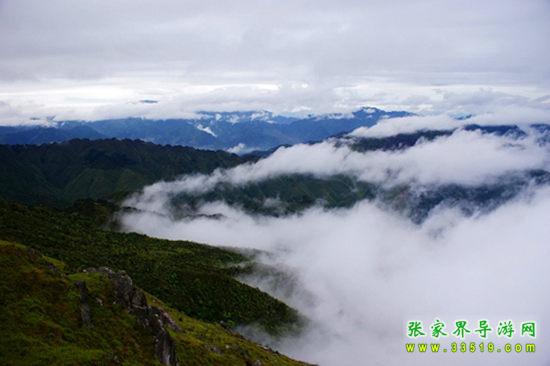
Bamianshan is located in the southern part of Longshan County, bordering Youyang County of Chongqing Municipality on the west. Its terrain resembles both a boat and a bed, towering among lofty mountains and steep ridges. It is about 40 kilometers long from north to south and 7.5 kilometers wide, with the narrowest area only 3 kilometers wide. The terrain on the mountain boundary is relatively flat and appears as small hills. The total area is 51.4 square kilometers. The average elevation is more than 1,000 meters, and the highest peak is 1,414.5 meters.
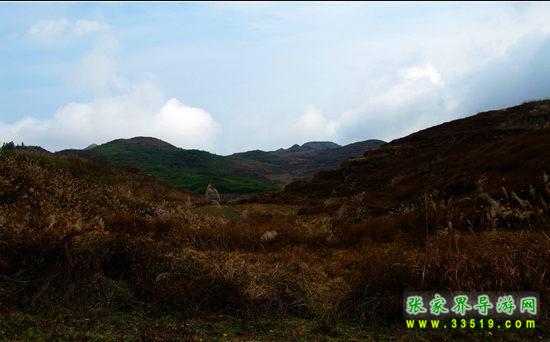
Bamianshan is surrounded by cliffs and precipices, forming a natural barrier from Hunan to eastern Chongqing. The small place names on the mountain include Thirty-Six Knives such as Three Knives, Four Knives, and Six Knives, and Forty-Eight Camps such as Upper Camp, Middle Camp, Lower Camp, Seven-Family Camp, and Eight-Family Camp. From the naming of these natural villages and production areas, it can be seen that Bamianshan has always been a place contested by strategists. The entire mountain boundary stands amid clouds and mist. There are only a few passes for going up the mountain, such as Big Rock Gate, Small Rock Gate, Wangxiang Terrace, and Ximei Gorge, each of which is "guarded by one man and impossible for ten thousand to force open." The plateau scenery on the mountain is unique, especially such scenic spots as Big Rock Gate, Small Rock Gate, Swallow Cave, Self-Grown Bridge, and Cup Rock, which have high tourism value.
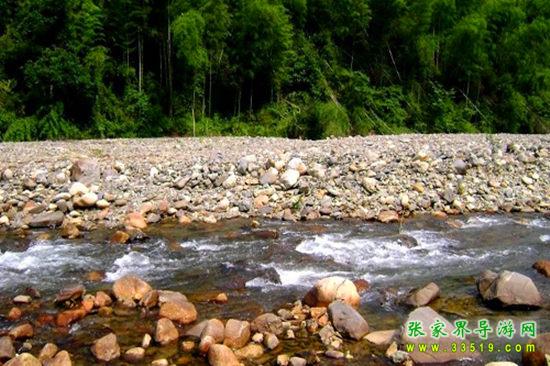
Within the Bamianshan Nature Reserve there are three thousand-year-old ancient roads, upper, middle, and lower. From Sidu via Junyingpu, Xiaowuxi, and Jiangnaoli, one can reach Zixing's Chizhuyuan and Qingshi, with a total length of 40 kilometers. Ancient trees tower along the roadside, grotesque rocks jut out, and the road is rugged and steep, regarded by travelers as a perilous route.
History
Bamianshan is a sacred revolutionary site and an ideal place to receive education in revolutionary tradition. In 1928, after Chairman Mao issued the "Three Main Rules of Discipline and Six Points for Attention" at Wanshou Palace in Shatian, Guidong, he passed through Bamianshan to camp at Sidu, sowing the seeds of revolution. Taoliao in the Bamianshan area is known as "Red Army Village." In 1928, among the village's 19 households and more than 60 people, 17 young people joined the Red Army. In 1934, the first Soviet regime in Hunan after the Red Army's Long March was established here at Bamianshan. In 1936, the headquarters of the CPC West Border Mountain District Committee was once located here. In succession, 46 people from the village gave their lives for the revolution. From 1934 to 1949, revolutionary struggle at Bamianshan continued without interruption. It was a camping ground for the 359th Brigade on its southward expedition and return north. In 1934, the Red Army's Independent Fourth Regiment blocked and drew off the enemy at Bamianshan, covering Xiao Ke and Ren Bishi as they commanded the Red Sixth Army northward. Wang Zhen once annihilated the Fifth Engineer Regiment of the Kuomintang's Ninth War Zone in one action at Bamianshan. During the War of Resistance Against Japan, an aircraft of the American Flying Tigers crashed at Bamianshan during combat with enemy planes.
Legends
It is said that in ancient times several xiucai took this road to the provincial capital for the imperial examination. To relieve the fatigue of the journey, they agreed to chant one line of poetry every ten li: "At ten, Gaolong Immortal; at twenty, smoke rises from Ox Market; at thirty, one passes through the valley at Cao; at forty, Qinggang blocks out the sky; at fifty, Longzha waters stretch far and wide; at sixty, Miao Gong ascends to heaven..." What the poem describes is the scene along this ancient road in those years. The scholars have long since passed away, but the verses are still passed down orally among the people to this day.
After National Highway 106 was completed and opened to traffic in 1957, this road was mostly buried among grass, vines, and wild fields, gradually fading from people's memories, and it is now difficult to verify.
Bamianshan - Geological Movements
The formation of the present geomorphological pattern of the Bamianshan Nature Reserve is the result of Bamianshan undergoing a long geological historical process under the combined action of internal and external forces. It has been deeply controlled and governed by the crustal movements, geological structures, rock properties, and external forces of its region. During geological periods, it was located in an area where the east-west structural belt of the Nanling Mountains and the north-south structural belt of the Luoxiao Mountains interfered with, intersected, and overlapped one another; it mainly experienced the Caledonian, Indosinian, Yanshanian, and neotectonic historical movements. Here, during the long geological historical period from the Sinian to the Silurian, it was once a vast ocean, located in the ancient sea-trough sedimentary area on the edge of the "Cathaysian Old Land" in central and southeastern Hunan. At the end of the Silurian, the Caledonian orogeny caused the sea to retreat, and it was uplifted into land. This was expressed as large-scale upward movement. The Indosinian movement at the end of the Middle Triassic was expressed as strong compression, producing an S-shaped vortex structure about 45 kilometers long in the Shuikou-Bamianshan area. The Yanshanian movement that occurred at the end of the Middle Jurassic was expressed as obvious fault-block movement, forming a nearly north-south trending folded mountain.
Geomorphological Features
After the Yanshanian movement, tectonic movement consisted of intermittent uplift, denudation, and leveling, creating the five levels of denudation surfaces above 1,000 meters in elevation seen today and forming the prototype of Bamianshan's "H"-shaped geomorphological outline. The neotectonic movement that began in the Late Tertiary inherited the characteristics of the Yanshanian movement, continued fault-block uplift, and clearly showed intermittent and differential characteristics, raising the five levels of denudation surfaces above 1,000 meters in elevation within the area to their present height and giving rise to the basic outline of the present landforms. Due to the influence of external forces such as surface flowing water, weathering, and gravity, the modern geomorphological features of Bamianshan have been formed, with ridges and valleys crisscrossing and deeply cut "U"-shaped and "H"-shaped gorges.
Bamianshan - Geomorphological Features
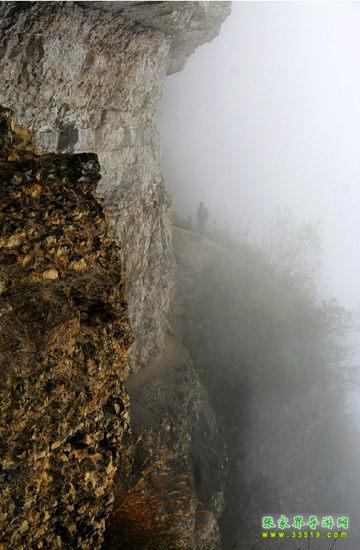
Bamianshan has a mid-mountain landform dominated by longitudinal valleys and ridge lines, with the lowest elevation at 860 meters and the highest main peak at 2,043 meters. High mountains tower majestically, with layered peaks and vast forests, famous for being "only three chi and three from heaven; people must bow their heads to pass, horses must dismount to cross." As described in the poem "Passing Bamianshan" by Hong Zhong, magistrate of Guidong County in the Qing Dynasty: "Precipices ten thousand ren high split by ghostly axes, a bird path hangs in flight, less than a chi wide. Driving away strange rocks to open primeval chaos, wondrous and young, born to lean on the empty blue. Before one peak is passed, another lies across; going up to heaven or down into the abyss, the heart trembles with fear. Hungry eagles sweep at people, sharpening their beaks by day; grieving apes call to their mates, crying deep in the night. In all my life I have not traveled to such a realm; I suspect you have opened the very orifice of chaos. In my breast the Five Sacred Mountains stand towering; before this, how can one boast of wonders and mysteries? Within a hundred li of thunder-fief, ten thousand hu tablets of mountains; green steeds and yellow ribbons among white clouds. I only wish the five districts would thicken their customs, and that people's hearts and faces would not vie with this mountain in cragginess." From this, one can glimpse Bamianshan's danger, peril, and wonder.
Bamianshan - Natural Landscapes
Perilous Rocks Towering
Due to intense geological movement, the main peak of Bamianshan has cliffs and precipices on all eight sides, with perilous rocks towering and ravines crisscrossing, forming natural landscapes of high ornamental value such as Chicken-Heart Rock, Golden Rooster Crows at Heaven's Gate, Heavenly Palace Divine Seal, Immortal Ox Soaring Through Clouds, Copper Gong Circle, and Small Stone Forest. The climate in the area is pleasant, the ecological environment quiet and elegant, and animal and plant resources are abundant, with all kinds of ancient and famous trees, rare beasts and birds, and precious flowers and grasses filling the area. In spring at Bamianshan, azaleas cover the mountains and plains, and lovebirds are full of affection among them; in summer, the Isachne grass on the summit is emerald green like a carpet, soft as a green blanket; in autumn, red leaves are like flames, fully displaying the beautiful scene of "layers of forest dyed through"; in winter, jade-like trees and jeweled branches appear as if thousands of pear trees bloom, presenting a world of powdered makeup and jade masonry. Walking through peaks and secluded valleys, expanses of blue waves connect with trickling streams; streams flow along the mountains, and mountains turn with the streams. The terrain varies, and the spring waters differ, like a jade zither softly lamenting, like drums and se zithers sounding together, like jade belts fluttering. "Mountains gain life from water, and water becomes more secluded because of mountains." The varied flows of water give Bamianshan life and vitality. Strolling within it, one finds the wonderful mood of "no mountain without green, no water but clear, fragrance in all four seasons, birdsong in ten thousand ravines."
Main Peak Shiniu Immortal
The main peak of Bamianshan, Shiniu Immortal, is 2,043 meters high. Many beautiful legends circulate in Guidong about scenic spots such as Shiniu Immortal Stone Ox and Immortal Ox Soaring Through Clouds. The most widely spread is the legend of the Cowherd and Weaver Girl of Guidong and Shiniu Immortal. Legend says that the Gray Ox Immortal, banished from heaven for violating heavenly rules, was subdued here. Shiniu Immortal is the immortal ox that the Cowherd found in the legend. Because Bamianshan is only three chi and three from heaven, its climate is cool. Legend says that when the immortals in heaven could not endure the severe summer heat, this was the place where the immortals came down to escape the heat every summer. They bathed and cooled off by the Ou River, and at Bamianshan they swam and played. The immortals played chess on the summit, and the fairy maidens bathed in the river, making it a fairyland on earth. When the heat in heaven became unbearable, the Weaver Girl and the other fairy maidens also descended to cool off together. Thus, with the help of the immortal ox, the Cowherd finally met the Weaver Girl, and they formed a happy marriage, leaving behind a beautiful tale of eternal love.
Buddhist Immortal Site
Shiniu Immortal is also a famous Buddhist immortal site in both Guidong and Zixing counties. Before Liberation, incense was abundant, and it was a temple of a certain scale. It was destroyed during the Cultural Revolution, and in another small temple, two Buddha statues with their heads destroyed are still enshrined today. In addition, on Bamianshan there still remain historical sites such as the former site of Nantian Old Treasury and Bamianshan stone inscriptions, as well as beautiful legends such as "Master Guo Fa Subdues Demons and Burns the Mountain, Baihe Immortal Farms."
Within the Bamianshan Nature Reserve there are three thousand-year-old ancient roads, upper, middle, and lower. From Sidu via Jinyinpu, Xiaowuxi, and Jiangnaoli, one can reach Zixing's Chizhuyuan and Qingshi, with a total length of 40 kilometers. Before Guidong had highways, this was the main official road from Guidong to Chenzhou. Ancient trees tower along the roadside, grotesque rocks jut out, and the road is rugged and steep, regarded by travelers as a perilous route. Guidong's Bamianshan has beautiful scenery and vast forests, making it an excellent place for scientific investigation, tourism, and summer camp activities.
Bamianshan - Plant Species
The reserve lies in the transition zone from the mid-subtropical to the south-subtropical zone and belongs to the south-subtropical mountainous humid climate. Its climatic characteristics are long winter and summer, no severe cold in winter, and no intense heat in summer. Rainfall is abundant, and the frost-free period is long (240-280 days). The annual average relative humidity is above 80%. The area preserves large areas of relatively intact natural secondary evergreen broad-leaved forest and its forest ecosystem, characterized by the convergence and transition of northern and southern floristic elements. Plant species are numerous and richly diverse. There are large numbers of rare and endangered plant resources under national key protection, such as Cathaya argyrophylla, long known as the "panda" of the plant kingdom (a plant community at the eastern edge of its distribution in China). The area has recorded 229 species of vascular plants in 922 genera and 217 families, among which there are 2,031 species of seed plants in 834 genera and 178 families. There are 21 species of wild plants under national key protection, including 5 species at Grade I: Cathaya argyrophylla, Bretschneidera sinensis, Taxus wallichiana var. mairei, Taxus chinensis, and Ginkgo biloba; and 16 species at Grade II, including Cephalotaxus oliveri, Fokienia hodginsii, Cinnamomum camphora, Magnolia officinalis subsp. biloba, Camptotheca acuminata, and Zelkova serrata. More than 1,000 Cathaya argyrophylla trees are preserved in the area, with the largest diameter at breast height reaching 138 cm and tree height 24 m. There is 13 hm2 of pure Tsuga chinensis var. tchekiangensis forest, a treasure of the forest; and Amentotaxus argotaenia forms a forest distribution covering 2 hm2. This area is the reserve in China with the largest number, largest area, and most complete preservation of Cathaya argyrophylla, Tsuga chinensis var. tchekiangensis, and Amentotaxus argotaenia.
Bamianshan - Animal Species
Known as the "north-south corridor for animals," Bamianshan has recorded 240 species of vertebrates, belonging to 66 families in 24 orders. Among them are 56 species of mammals, 116 species of birds, 41 species of reptiles, and 27 species of amphibians. Due to special geographical conditions and a superior natural environment, this area has become habitat for 43 species of wild terrestrial vertebrates under national key protection. Among them, 5 species are Grade I and 38 species are Grade II. Grade I species include: South China tiger, clouded leopard, leopard, Cabot's tragopan, and Elliot's pheasant; Grade II species include 38 species such as rhesus macaque, Tibetan macaque, Chinese pangolin, large Indian civet, small Indian civet, sambar, goral, golden pheasant, silver pheasant, giant salamander, tiger frog, and long-armed scarab. The reserve also preserves 154 species of terrestrial wild animals that are beneficial under national protection or have important economic or scientific research value (that is, "three-have wild animals").
In the 1980s, the Hunan Bamianshan Nature Reserve was one of the national nature reserves for the "three tigers" (Siberian tiger, South China tiger, and Bengal tiger), and at that time it was the only South China tiger nature reserve in China and even the world. In November 1990, the Cat Specialist Group of the World Wildlife Fund sent Mr. and Mrs. Carry to Bamianshan for an investigation. After the investigation, on November 10 they gladly wrote an inscription: "Bamianshan, beautiful mountains and rivers, paradise of the South China tiger." This nature reserve, together with national nature reserves such as Huping Mountain in Shimen and Mangshan in Yizhang, was evaluated by experts of the WWF Cat Specialist Group as where China's hope lies for saving the endangered South China tiger.
Bamianshan - Protection and Management
The Hunan Bamianshan Nature Reserve is not only a natural treasure house of species resources and genetic resources, but also possesses many rare species. Under natural conditions, they form among themselves a balanced, coordinated, and diverse natural ecosystem. This ecosystem is not only typical and diverse, but also rare, precious, ecologically viable, and fragile. It has long-term potential roles in scientific research, teaching, production, tourism, and other aspects. Further strengthening protection and management is very necessary.
The Hunan Bamianshan Nature Reserve is a provincial-level nature reserve approved and established by the Hunan Provincial People's Government in 1982. In 1984, the Hunan Provincial Department of Forestry, the Hunan Provincial Compilation Committee, the Hunan Provincial Department of Finance, and the Hunan Provincial Department of Labor and Personnel jointly issued documents Xiang Lin Sen [84] No. 10 and Xiang Bian [1984] No. 43, formally assigning staffing and funding and establishing the Hunan Bamianshan Nature Reserve Management Office. The management office was located at the Songping State-owned Forest Farm in Guidong County. The forest farm and the nature reserve were managed with one set of personnel under two signboards, working together in the same office, and the forest farm director concurrently served as director of the reserve management office. At that time, the nature reserve had an authorized staff of 24 people, including 4 cadres and 20 forest rangers, with provincial funding of 20,800 yuan for personnel expenses and 7,200 yuan for office expenses. According to work needs, the nature reserve now has 69 staff members, including 9 management personnel, 5 technical personnel, and 55 forest rangers and other personnel.
Since the Hunan Bamianshan Nature Reserve was officially established in 1984, management measures have been strengthened and management standards have continuously improved. A great deal of work has been done in infrastructure construction, forest fire prevention, and wildlife protection, with notable achievements. After the reserve was established, seven forest protection stations, one office building of brick and tile, and one observation tower were successively built and renovated. Through establishing and improving the reserve's management organization and management systems, strictly enforcing the law, and strengthening ecological environment protection and species protection and management, the reserve has maintained an excellent record of no forest fire alarms or fires in the twenty-one years since its establishment. Illegal mining and digging, illegal logging, and illegal hunting have been effectively curbed, rare and endangered animals and plants have been effectively protected, and a stable habitat has been provided for species reproduction and survival. The number of biological resources has rebounded, and the forest coverage rate of the reserve has increased from the original 63% to the current 85.2%.
The establishment and development of the Hunan Bamianshan Nature Reserve have advanced our province's wildlife protection efforts and the strategic pace of implementing sustainable economic development, expanded external exchanges and cooperation, and produced certain ecological, social, and economic benefits, having a relatively significant and far-reaching impact on promoting comprehensive social progress.
Legends
According to legend, Yu the Great had eight faces and four bodies, and was skilled at managing affairs in all eight directions. One day, Yu climbed Mount Damao and saw that the flood in the east had not receded, so he rushed to Dongyang and presided over flood control. After forty-nine days, the waters receded. When Yu the Great was about to leave, he left his bamboo hat in Dongyang, and it turned into this mountain, named Yushan, also known as Xiashan. Later generations built a "Yu Wang Temple" at the summit to commemorate Yu the Great, who brought blessings to the people.
Because Yushan is as beautiful as a painting, with an elevation of 523 meters and a circumference of over ten li, two craters remain on the mountain as historical traces. It faces the same direction on all eight sides, and no matter which direction you look from, it resembles the character "eight," so the local people named it by its shape and commonly call it "Bamianshan." Bamianshan's winding paths, rocks of all sizes, and perfectly straight trees all have magical and beautiful legendary stories, golden alms bowls, golden incense burners, golden stages, golden thresholds, golden wooden fish...
Among the various legends, the most widely circulated is the legend of the Golden Water Buffalo—one day, a golden light suddenly flashed in the distance, and a golden water buffalo came galloping over. People came from all directions to chase and surround it. In desperation, the golden water buffalo plunged headfirst into the belly of Bamianshan. To this day, people still call this depression on the mountainside the navel.
Generation after generation of people have come to the mountain's navel to pray for the golden water buffalo to come out and bring blessings to all living beings.
One day, the golden water buffalo came out and delivered a message: "If you want me to come out, you need a capable person to twist golden straw from a thousand years into a rope to lead me out!" Now, the prosperous people of Hengdian tell us with facts that the golden water buffalo's hooves have already walked into thousands of households at the foot of Bamianshan.
Main Scenic Spots
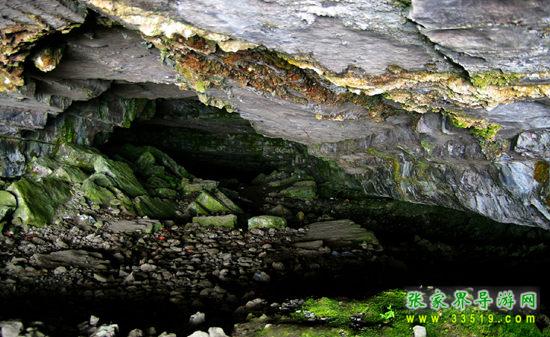
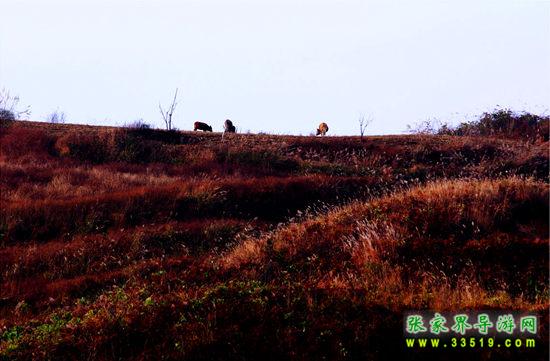
1. Swallow Cave. At the entrance of Qingyu Village, there is a farmer surnamed Zhu's house; branch off to the right, and a small path leads directly to the pasture. At the end of the pasture is one face of Bamianshan—the Swallow Cave cliff! "Swallow Cave" and other formerly famous bandit hiding caves are now nests of thousands of wild swallows, as well as natural karst caves and countless sinkholes on the mountain, making it an excellent destination for adventure enthusiasts.
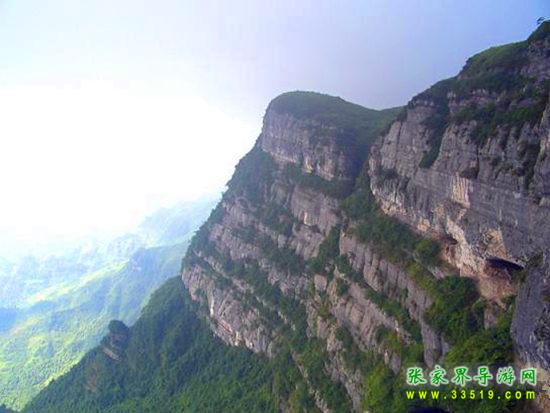
Swallow Cave is divided into Caves 1, 2, 3, and 4, all interconnected, with unknown depths inside. Inside the cave are stalactites, underground rivers, and more. About 100 meters in from the cave entrance, there are extensive excavation traces, said to have been left by "treasure" diggers.
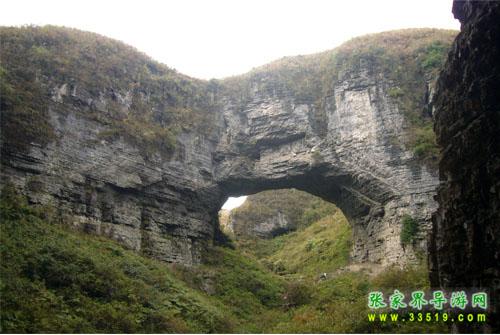
2. Zisheng Bridge and Cave. About 1 km past Qingyu Village, go down to the left for about 300 meters! A naturally formed large stone bridge! People can pass under the bridge and reach the cave directly! This is an excellent place for cave exploration, rappelling, and more!
3. Guanyin Cave. Located in Yunshan Village, on a cliff about 3 km from the village. In the old society, it was a Buddhist temple with extremely flourishing incense offerings! Now only ruins remain.
4. Dengtian Fort. Located 2 km from Qingyu Village, near the cliff on the side of Bamianshan facing Sichuan. It is the highest point of Bamianshan, known as "one step to heaven"!
5. Dazhai Fort. Located 1 km from Qingtian Village, its height is comparable to Dengtian Fort! Both are the highest places on Bamianshan.
6. Jiucai Pool. Located 2 km from Tiantang Village—"Jiucai Pool" has cold water of unfathomable depth. Legend says an evil dragon lives at the bottom of the pool, and when it returns home once every three years, it turns the world upside down.
7. Wind Cave. Located 2 km from Zhengxian Village. The cave entrance is only as large as a door, with strong wind power, warm in winter and cool in summer, spacious inside, and of unknown depth. Traces of old-time activities of boiling saltpeter (for making gunpowder) remain, along with human skeletons and more.
8. Flying Tiger Cave, also called Bat Cave. Located between Zhengxian Village and Tiantang Village, of unknown depth.