This attraction introduction is compiled from historical materials in the "Zhangjiajie Tour Guide Network" (33519.com · Scenic Spots section). Ticket prices, opening hours, transportation, and contact information mentioned in the text may be outdated. Please refer to the latest official announcements from the scenic area before traveling; some content consists of historical background/cultural introductions and is for reference only.
I. Tourism Resources
"A green mountain embraces the ancient town; a bay of Tuo River winds around the city." The Nanhua Mountain that stretches across the ancient town is known as the Father Mountain of Fenghuang City, while the meandering Tuo River is the Mother River of Fenghuang City.
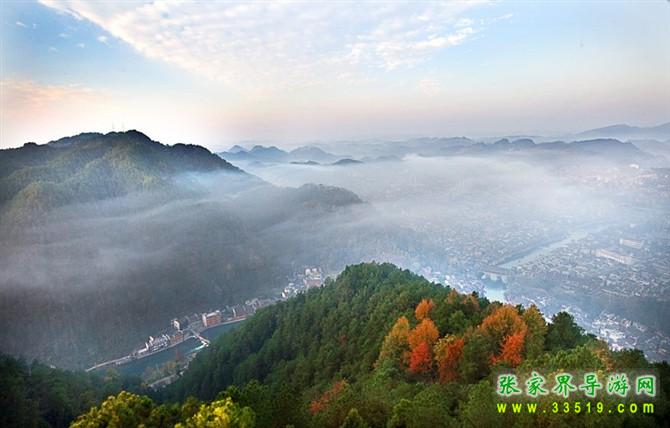
Nanhua Mountain National Forest Park is located on the south side of Fenghuang Ancient Town, with a total area of 2,354 hectares, 3 kilometers wide from east to west and 5 kilometers long from north to south. It contains 45 peaks of various sizes, 72 ravines and valleys, 21 mountain springs and wells, and numerous sinkholes and karst caves. Legend has it that the Immortal of the South Pole sprinkled divine water here, giving rise to all things, and thus the local people named this mountain Nanhua Mountain. Nanhua Mountain has deep forests and lush trees, with layers upon layers of green. The famous Nanshe poet Mr. Tian Xingliu wrote a poem in praise of it: "Green mountains stretch for a hundred thousand li, layered in emerald mist; the first is Nanhua, the main peak. Waves of pine winds roll on without end, from time to time adding to the temple gate's bell." In days gone by, the eight scenic spots of ancient Fenghuang—Dongling Welcoming the Dawn, Nanhua Layered Green, Towering Strange Peaks, Mountain Temple Morning Bell, and Orchid Path Woodcutter's Song—were all located on Nanhua Mountain.
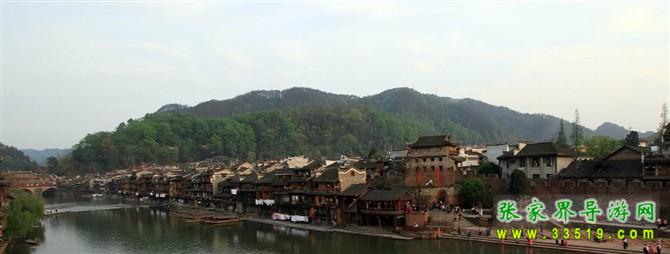
The planning of the Nanhua Mountain Divine Phoenix Cultural Scenic Area takes Fenghuang Ancient Town as its foundation and the forest park as its base, creatively constructing a cultural tourism scenic area that pairs the regional phoenix with the totemic phoenix, making it a shining pearl in the crown of Xiangxi tourism.
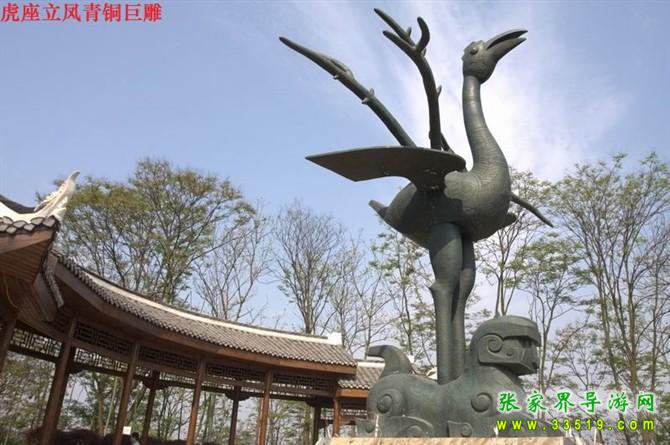
Designed by the famous art master Huang Yongyu—the Tiger-Base Standing Phoenix Bronze Giant Sculpture
II. Scenic Area Introduction
The Nanhua Mountain Divine Phoenix Cultural Scenic Area was invested in and developed by Qisheng (Fenghuang) Tourism Co., Ltd., with a total investment of 125 million yuan and a building area of 14,424 square meters. It consists of more than a dozen scenic spots: the Phoenix Six-Line Array, Phoenix Bamboo Sea, Phoenix Terrace, Youfeng Laiyi (Where the Phoenix Alights), Fengyuan Pavilion, Yinfeng Bridge, Hundred Birds Paying Homage to the Phoenix, Ninety-Nine Divine Steps, Divine Phoenix Hall, Phoenix Seat, Eighteen Divine Totem Poles, Phoenix Chronicle, Sweet Spring Terrace, Five Virtues Gate, Phoenix Whisper, Release-Life Terrace, Riding-the-Wind Boardwalk, and Hundred Birds Garden.
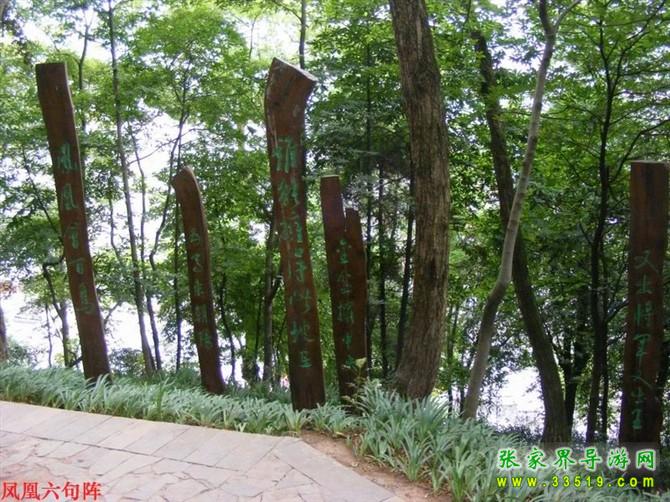
Phoenix Six-Line Array
The Phoenix Six-Line Array features six nanmu pillars of varying heights, each inscribed with one of six lines of feng shui verse long circulated among the people of Fenghuang: "Two dragons come to tame the waters, five horses face the morning sun. The phoenix gathers a hundred birds, the golden basin sits at the center. Whoever can possess this land will produce both generals and kings." These six lines came from a feng shui master of immortal bearing during the Ming Dynasty, who, based on the celestial and geographic configuration of Fenghuang, grasped the mysteries of this feng shui treasure land and made this pronouncement about the outstanding people and auspicious land of Fenghuang Ancient Town. Looking back now, this prophecy has come true.
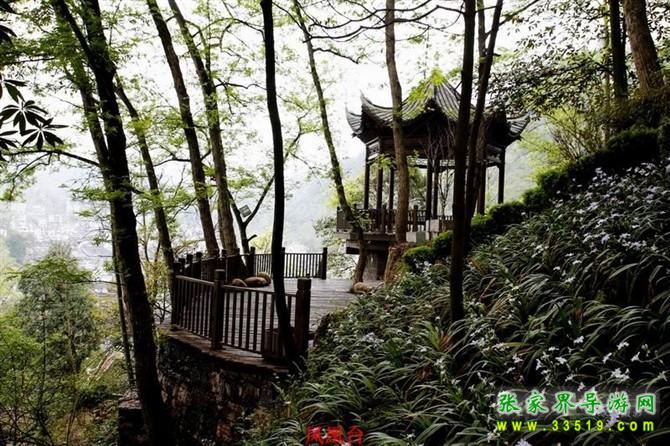
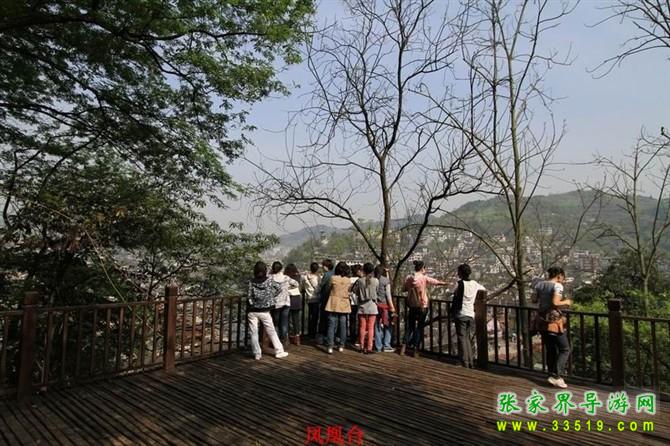
Phoenix Terrace
The phoenix roams on Phoenix Terrace; this terrace is the finest spot for overlooking the splendid scenery of Fenghuang Ancient Town. Distinctive sights such as the Yu Family Mountain House, the Tuo River Jumping Stones, Rainbow Bridge, and the Ten-Thousand-Name Pagoda all unfold before your eyes. The stone tablet in the pavilion bears on its front the original couplet by the famous calligrapher and painter Mr. Huang Miaozi gifted to Mr. Shen Congwen: "The Tuo River unfolds a painting; the border town produces a phoenix." After reading it, Mr. Shen changed it to: "Heaven unfolds the painting; the people produce the phoenix." The back of the stone tablet features the "Preface to Phoenix Terrace," written by Mr. Teng Jianbin, former president of the Fenghuang Poetry Society.
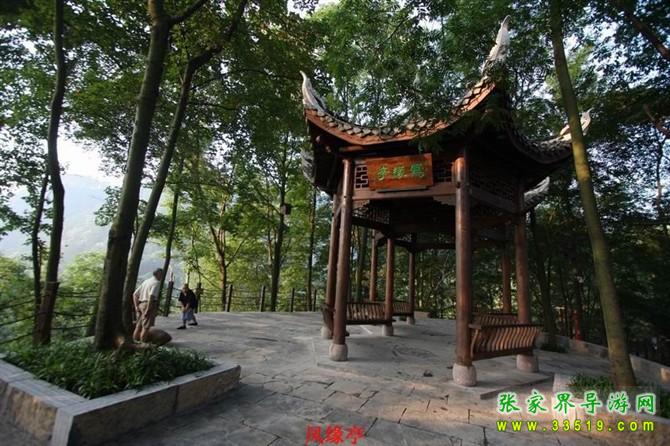
Fengyuan Pavilion
Since ancient times, the phoenix has been distinguished as male and female: the feng is male, the huang is female. Fengyuan Pavilion is formed by the Feng Pavilion and the Huang Pavilion joining together, with upturned eaves and intricate carvings, symbolizing a pair flying wing to wing and everlasting love. Between the twin wutong trees in front of the pavilion stands a stone tablet inscribed with a verse: "Feng, oh Feng, return to your homeland; Huang, oh Huang, follow me and perch." This comes from "The Phoenix Seeks the Huang" in the New Songs of the Jade Terrace, compiled by Xu Ling of the Chen Dynasty. At the tip of the pavilion stand a feng and a huang gazing deeply at each other, silent and tender, symbolizing the subtlety and reserve of love. At the center of the pavilion is a cast bronze of a feng and a huang in pictographic script, echoing the pavilion tip. Outside the pavilion, two wutong trees naturally grow as intertwined lovers' trees, symbolizing love's mutual growth and steadfast devotion.
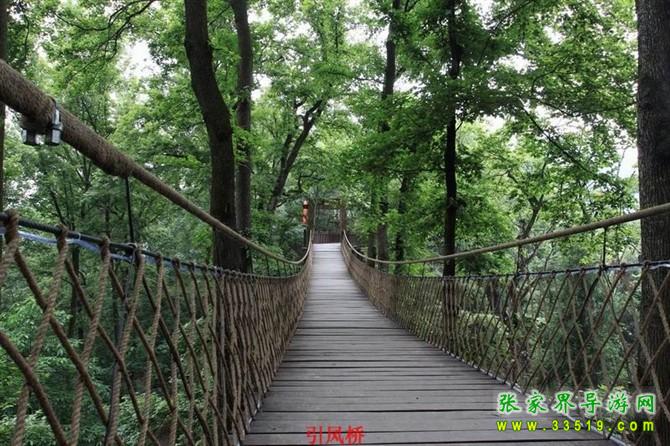
Yinfeng Bridge
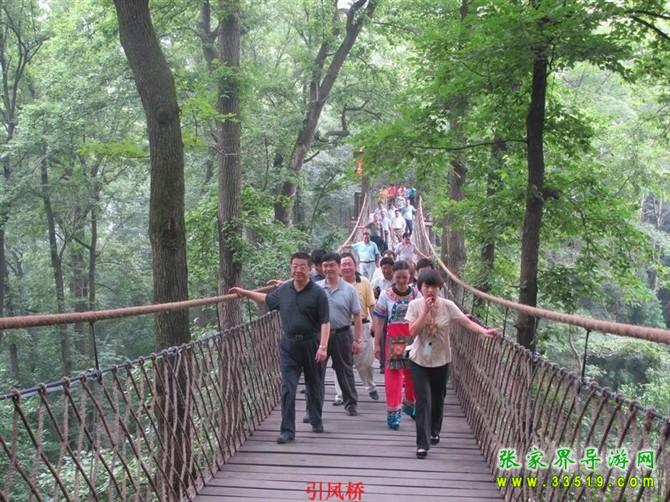
Xiao Shi and Nong Yu were immortal companions who played the flute to attract the phoenix, a tale long celebrated by the world; hence this suspension bridge is named Yinfeng Bridge (Bridge to Attract the Phoenix). The divine phoenix will not perch on anything but the wutong tree, and dozens of wutong trees stand along the sides of the bridge, symbolizing that planting wutong trees attracts the phoenix. The bridge is over 80 meters long. Below the suspension bridge, tall bamboo groves are dense and deep to behold. On the bridge, one can absorb the spiritual energy of heaven and earth and freely breathe the clear breath of the mountain forest. Ancient trees stand in rows; visitors stroll through a painting, surrounded by clouds and mist, as if retreating into a fairyland.
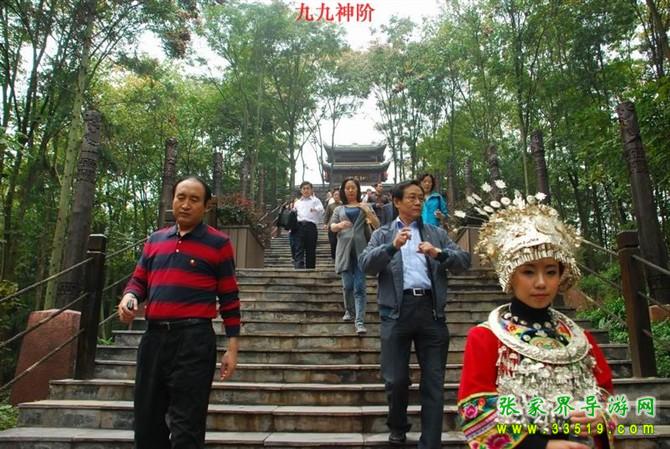
Ninety-Nine Divine Steps
The Ninety-Nine Divine Steps number 99 in total. "9" is the extreme of yang numbers, symbolizing that the divine phoenix dwells above the nine heavens. The structure of the divine steps is solemn and majestic, highlighting the dignified divine atmosphere of approaching the heavenly realm. Along both sides of the divine steps stand 18 nanmu totem poles facing the firmament, towering beyond reach. The tops of the poles gather exotic bird designs from the folk traditions of Xiang and Chu, carved with 18 birds of different postures and lively forms, integrating the classical Chinese phoenix totem, blending the virtual and the real, merging ancient and modern, subtly corresponding to the number of a hundred birds and symbolizing the auspicious image of a hundred birds paying homage to the phoenix.
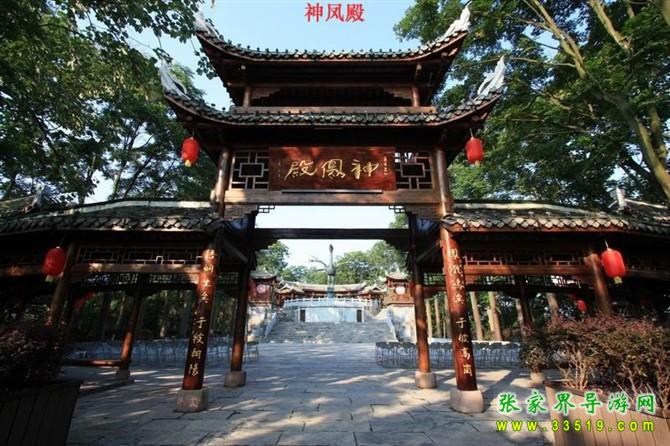
Divine Phoenix Hall
The Divine Phoenix Hall is the core sacred site of the Divine Phoenix Cultural Scenic Area. At the center of the hall's altar is enshrined the ancient Chinese phoenix deity, whose origins are recorded in the Classic of Mountains and Seas: "On the Mountain of Cinnabar Cave there is a bird, shaped like a chicken, of five colors and patterned, named Fenghuang (Phoenix)." The pattern on its head is called virtue, on its wings righteousness, on its back propriety, on its breast benevolence, and on its belly trustworthiness. This bird eats and drinks naturally, sings and dances of its own accord, and when it appears, the world is at peace. Accordingly, the Divine Phoenix Hall reenacts the phoenix totem worship ceremony themed "when it appears, the world is at peace," blending the actual site with legendary allusions to highlight the profound influence of phoenix culture on the Chinese nation. The couplets on the hall's door—"The phoenix sings, on that high ridge" and "The wutong grows, on that eastern slope"—come from the Book of Songs, "Juan A." Beside the hall stand 18 nanmu totem poles, proclaiming the 18 divine attributes of the phoenix: gathering beauty, heralding auspiciousness, reaching heaven, facing the sun, governing wind, upholding virtue, bearing righteousness, carrying propriety, embodying benevolence, practicing trustworthiness, aspiring to wisdom, esteeming the lofty, loving purity, self-renewal, expressing emotion, matching talent, and becoming king.
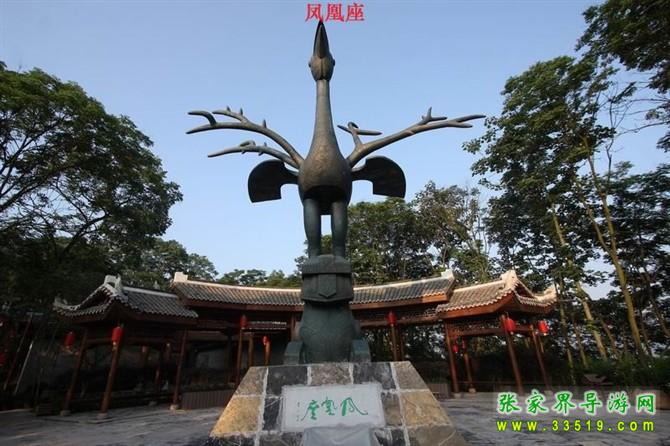
Phoenix Seat
The Phoenix Seat stands 9.9 meters tall. Its prototype is a Chu state artifact from the Warring States period—the Tiger-Base Standing Phoenix. Ancient texts record that the people of Chu worshipped the phoenix; in sacrificial ceremonies, the phoenix was imagined as a deity that ascended to the heavenly court and guided souls in flight, and the most representative object of this was the Tiger-Base Standing Phoenix. This bronze sculpture uses a tiger with head raised and crouching as its base, with an ancient phoenix standing on the tiger's back. The ancient phoenix has a pair of deer antlers on its back, recreated by Mr. Huang Yongyu based on the original work. The phoenix's lines are archaic and simple, its posture light and nimble, poised to fly. The three auspicious totems of phoenix, tiger, and deer are united as one, making it the ancient Chinese phoenix deity.
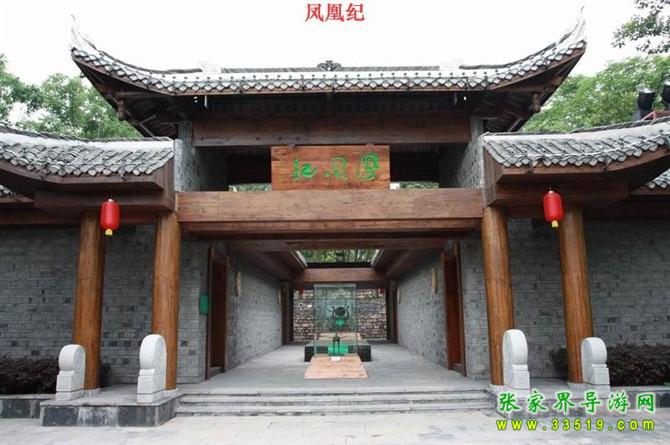
Phoenix Chronicle
Phoenix Chronicle is China's first phoenix culture exhibition hall. The hall has 2 exhibition rooms; the left and right halls display national treasure-level cultural relics related to phoenix culture across successive dynasties, including bronzes, jades, lacquerware, and ceramics. The exhibition is organized along three main threads—time, region, and influence of the artifacts—and is divided into 8 chapters presenting 7,800 years of Chinese phoenix culture in high density, making it a comprehensive showcase of phoenix culture in China.
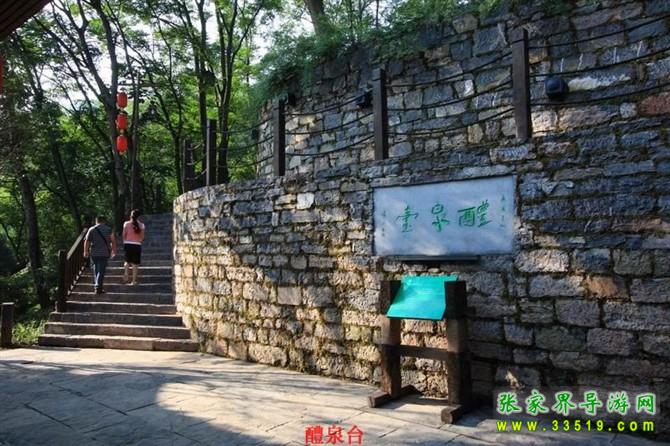
Sweet Spring Terrace
The place where the divine phoenix drinks water. According to Zhuangzi, "Autumn Floods": the divine phoenix rests only on the wutong tree, eats only the fruit of the lian tree, and drinks only from the sweet spring. According to the Ruiying Tu (Chart of Auspicious Responses): drinking regularly from the sweet spring brings longevity. This sweet spring water was originally a natural ancient spring on Nanhua Mountain, dripping gently and ceaselessly through the years, icy and pure, sweet and mellow to drink. Around the base of the Sweet Spring Terrace are evenly arranged bronze-inlaid seal-script carvings of the phoenix's 18 divine attributes; touch them with your hand and auspiciousness enters your heart.
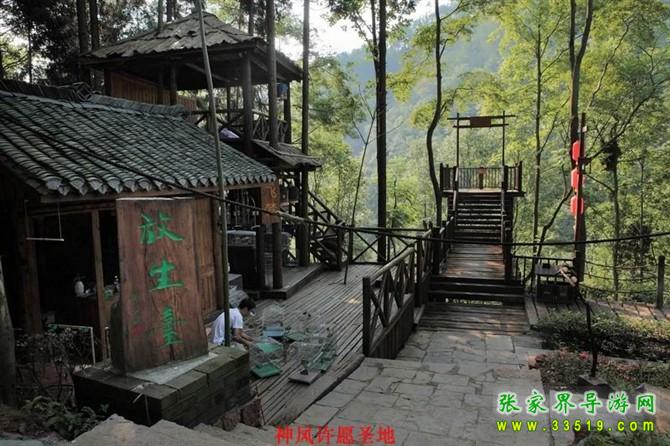
Phoenix Whisper
The sacred place for making wishes to the divine phoenix, also known as the Divine Phoenix Wishing Forest, is highly efficacious. Passing through the Five Virtues Gate of Nanhua Mountain and being purified by the Confucian five virtues of benevolence, righteousness, propriety, wisdom, and trustworthiness, one may enter the forest to make wishes. In the forest are five levels of wishing platforms, interspersed with dozens of wutong trees on which divine phoenix wishing plaques are hung. Palms together, eyes closed, heart clear—the divine phoenix and the sun and moon of the mountain together bless the wishes of the world. On the flat ground facing east in the forest stands alone the Flying Dream Terrace, a terrace for releasing life and making wishes. Of all merits, releasing life ranks first. Releasing life and making wishes on the Flying Dream Terrace means releasing one's innate compassionate heart. With compassion in one's heart, one will surely receive special blessings. Riding-the-Wind Boardwalk: This is the boardwalk that the phoenix flies over. In ancient times, the phoenix was revered as the wind deity of the Heavenly Emperor, governing the seasonal winds and knowing the timing of heaven. Classical records state: "The phoenix dwells in the wind cave." Classical records also state: "The dragon rides the clouds; the phoenix rides the wind." On the wings of the forest, passing along this Riding-the-Wind Boardwalk, one is nourished by the wind, flying together with the phoenix, with spirit and form elegant and ethereal, and all things joyful.
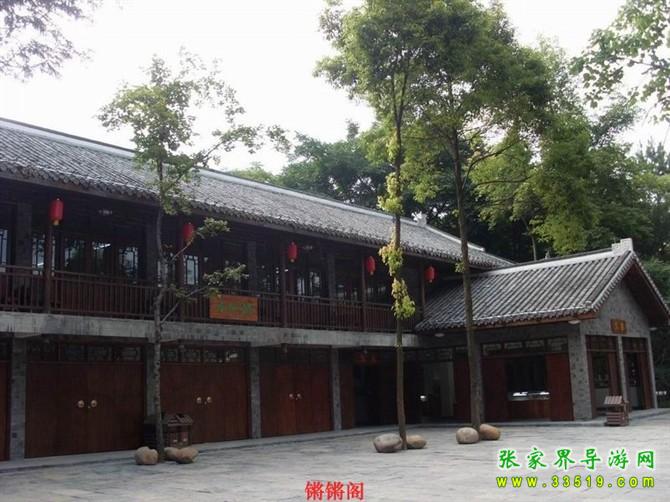
Qiangqiang Pavilion
Yinfeng Bridge (Suspension Bridge)
The sound of the phoenix in flight is "qiuqiu," the sound of the phoenix calling in harmony is "qiangqiang," and the sound of the phoenix beating its wings is "huihui." Qiuqiu Tower, Qiangqiang Pavilion, and Huihui Corridor are named accordingly. Above the ancient town, thoughts soar, dancing the qiuqiu dance; resting and chatting, making the qiangqiang sound; in the forest, enjoying the mountain scenery, hearing the huihui tidings. In the morning, thin mist veils the green; in the evening, the slanting sun congeals into purple—this is the aerial parlor of Fenghuang City.
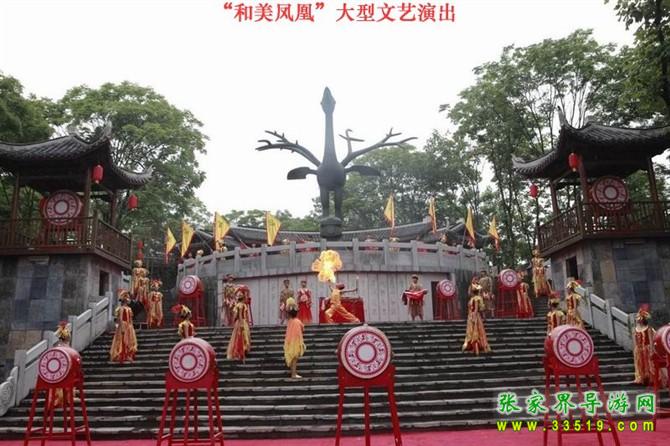
"Harmonious and Beautiful Phoenix" Large-Scale Artistic Performance
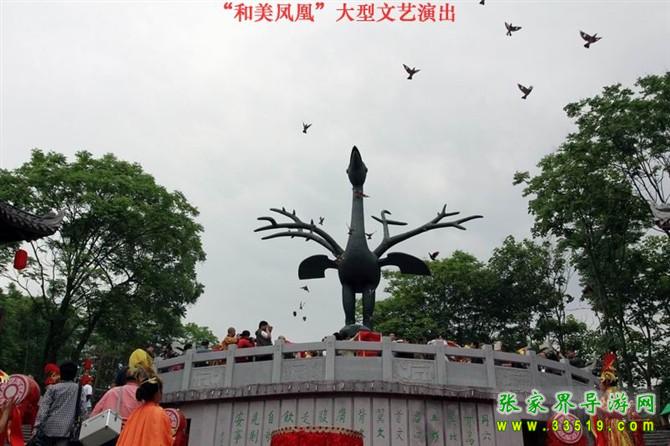 Blessing and Releasing Life
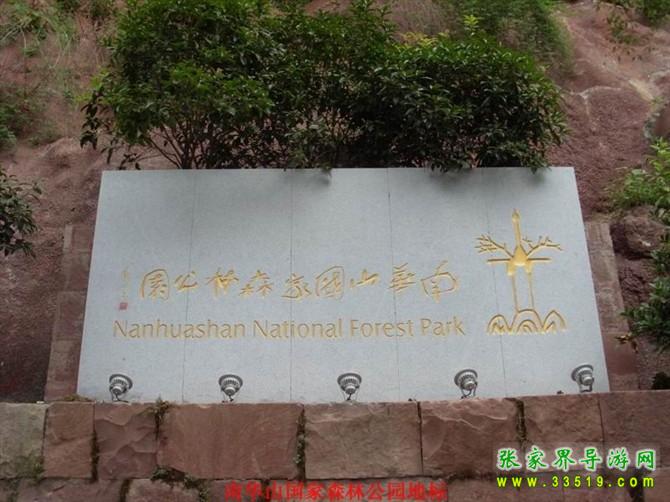
Nanhua Mountain National Forest Park Landmark
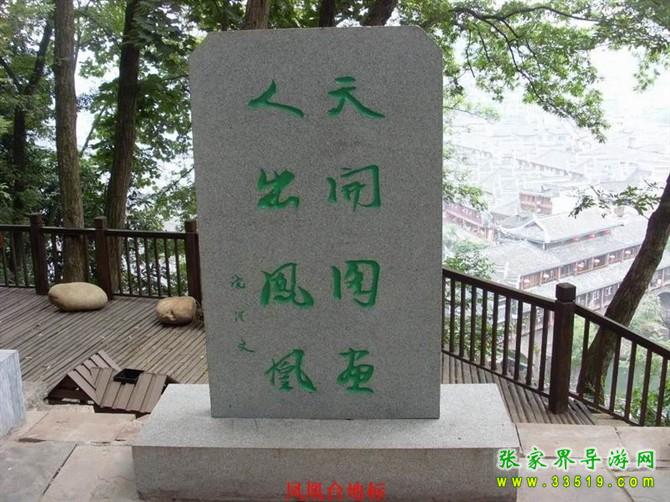
Phoenix Terrace Landmark
Guided Tour Service
IV. Scenic Area Address: The scenic area gate is located at the head of Rainbow Bridge in Fenghuang Ancient Town and is a landmark building of Fenghuang Ancient Town.
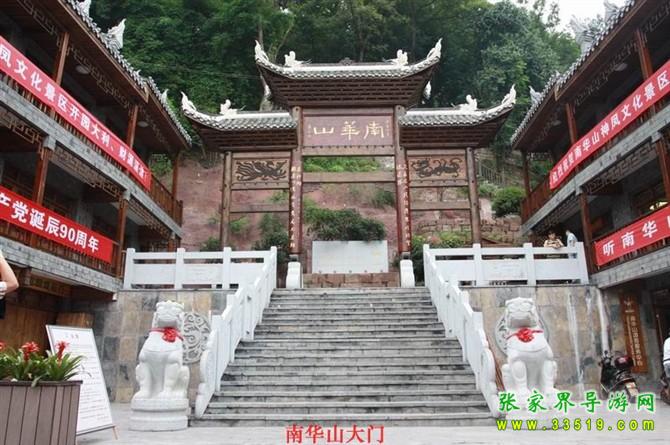
Nanhua Mountain Gate
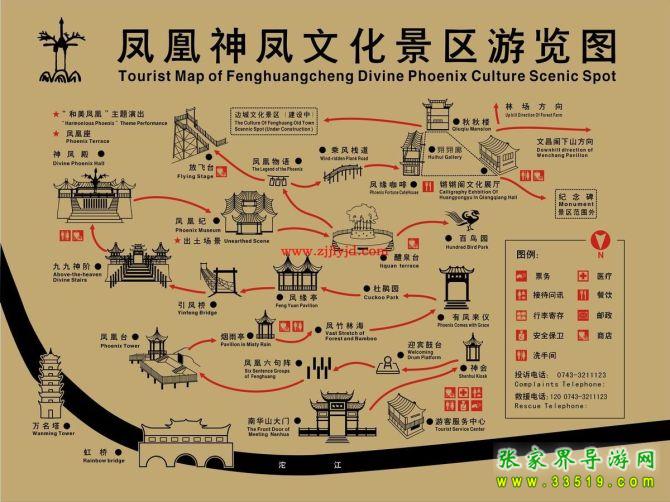
Scenic Area Guide Map