This attraction introduction is compiled from historical materials in the "Zhangjiajie Tour Guide Network" (33519.com · Scenic Spots section). Ticket prices, opening hours, transportation, and contact information mentioned in the text may be outdated. Please refer to the latest official announcements from the scenic area before traveling; some content consists of historical background/cultural introductions and is for reference only.
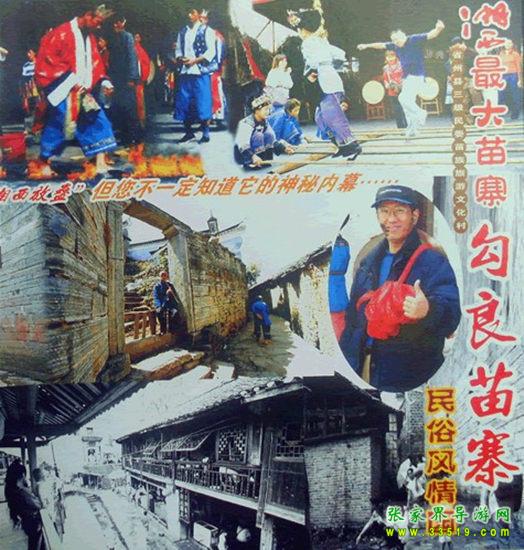
Gouliang Miao Village is located on the western edge of Hunan, a Miao-inhabited village under Luochaojing Township in Fenghuang County. Gouliang Miao Village is 6 kilometers west of Guizhou's Daxing Airport, 30 kilometers from the important Guizhou town of Tongren, 1 kilometer east of the famous Huangsiqiao Ancient Town, and 25 kilometers from the national historical and cultural city of Fenghuang County. Situated at the junction of Hunan and Guizhou, and of Han and Miao areas, it is a typical remote and primitive "raw Miao" tribe. The entire village is divided into three natural hamlets—upper, middle, and lower—with over 300 households and a population of more than 1,000. Because of its geographical position at the junction of Hunan and Guizhou, the Central Plains Han culture and the Southwest Chu witch Miao culture collided and merged here, forming a unique cultural phenomenon and producing much fascinating and thought-provoking cultural heritage.
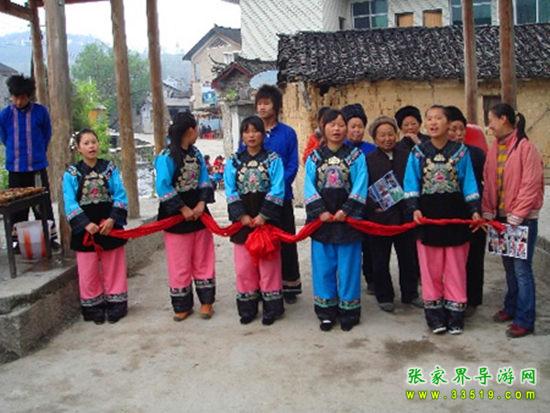
Gouliang Miao Village was first built in the third year of Chuigong of the Tang Dynasty (679 AD), and has a history of 1,300 years. It has long been known as the "First Village of the Miao Territory." It has rich folk customs and beautiful scenery, with Miao witchcraft stunt performances, the Guyao Pool Waterfall Group, the Chalong Cave Waterfall, and other scenic spots.
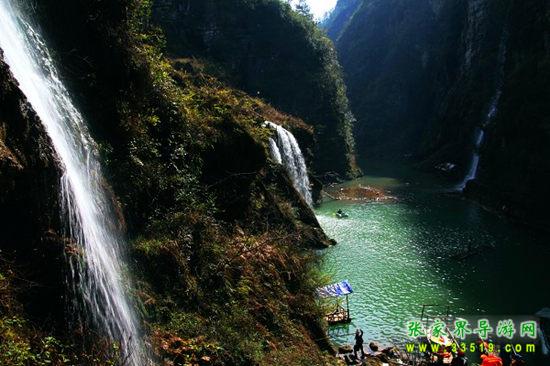
Within the village, natural and cultural landscapes complement each other, forming a typical "raw Miao" tribal landscape. Here there are the exceptionally beautiful Guyao Pool Waterfall Group and the Ancient Miao Pool Canyon, the clear and cool Miao King Spring, distinctive Miao village architecture, and astonishing stunts. In recent years, Miao drums, Miao opera, Miao songs, Miao marriage customs, and farming life and other traditional ethnic customs have been brought to the stage, reproducing the unique traditional culture of the Miao people over thousands of years and attracting many tourists. There are also the campsite of the Qianjia Miao People's Uprising Army and the ancient battlefield of official-bandit conflicts and other relics. It is famous for its danger, antiquity, and wonder.
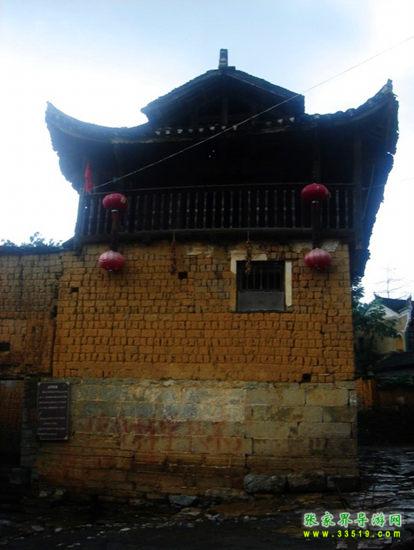
In recent years, with the growing development of Fenghuang's tourism industry, the Fenghuang County Party Committee and County Government officially launched the "Gouliang Ethnic Culture Village" construction project. The provincial and prefectural ethnic affairs departments have given strong support to the construction of the ethnic culture village, and the County Ethnic Affairs Bureau has done a great deal of practical work in terms of funding, laying the foundation for the construction of the "Gouliang Ethnic Culture Village."
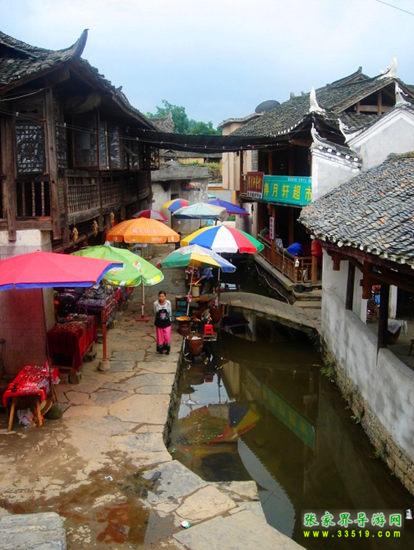
Gouliang Miao Village is a magical place. It not only has profound historical and cultural heritage, distinctive ethnic characteristics, and active ethnic folk activities, but also charming and beautiful natural scenery. It is the best destination for tourists from home and abroad. We sincerely welcome you to Gouliang Miao Village to experience the natural beauty and folk customs here, and to taste a cup of mellow Miao wine!
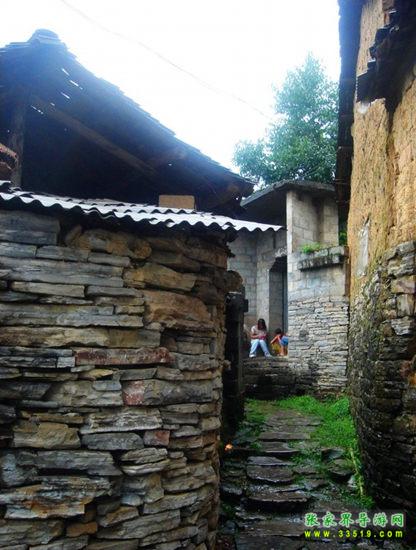
Legend has it that long ago, a brave hunter named Wu Tianlong emerged from Gouliang Miao Village. He was clever and brave, and had trained himself in excellent archery—shooting birds, birds died; shooting eagles, eagles fell—truly hitting the target every time. The Miao people all called him the Divine Archer. Wu Tianlong had a mother over seventy years old at home, and he was very filial to her. Day after day, year after year, the jackals, wolves, tigers, and leopards on the mountain were all killed off. Although the Miao people no longer feared the harm of wild beasts, their bitter days seemed like a bottomless pit, always without end. Tianlong and his mother still lived a life of skipping meals and running out of grain.
One day, Wu Tianlong returned from hunting on the mountain and said to his mother: "Mother, the jackals, wolves, tigers, and leopards on the mountain have all been wiped out by your son's divine arrows, but the jackals, wolves, tigers, and leopards among men are growing more and more numerous. We have suffered greatly under the oppression of the government, and we truly cannot go on living this bitter life. I want to lead the Miao people to rise up in rebellion, drive out and annihilate the government, and let everyone live a good life." His old mother said worriedly: "Son! This is a matter of beheading. I have only you as my son. If anything happens to you, what will I do!" Seeing his mother's distress, Tianlong quickly comforted her: "Don't worry about me, old mother. I have my own plan. The dog officials are fierce as tigers and wolves. If you don't kill them, they will eat you. We can't just sit and wait for death!" Hearing her son's words, the old mother fell silent. Seeing his mother's tacit consent, Tianlong jumped for joy.
From then on, Wu Tianlong practiced his skills diligently every morning. He cut cherry wood that had grown for three years from Lailong Mountain to make a bow, and used old palm rope soaked for forty-nine days as the bowstring. He also kept safe the three divine arrows he had obtained from the Hidden Dragon Cave on Lailong Mountain, preparing to shoot the emperor dead at the fifth watch when he held court.
That day, Wu Tianlong made all preparations and instructed his mother: "Tomorrow at the fifth watch when the emperor holds court, I will use the divine arrows to shoot him dead. Don't sleep tonight. At the fifth watch, when the rooster crows the first time, wake me up. Be sure to remember—if you miss the time, the opportunity is lost." His mother agreed: "I know. Go to sleep without worry!" As it happened, that night seemed especially long. His mother sat down to wait from the first watch, waiting and waiting! After a very, very long time, she still had not heard the rooster crow. She was truly too exhausted, and as she sat, she began to doze off. Afraid her son would blame her, and unable to wait for the rooster to crow, she went to the kitchen and took a winnowing basket and went bang, bang, bang with it. Upon hearing the "bang, bang, bang" sound, the rooster indeed crowed. She was overjoyed and hurriedly went into her son's room and woke him.
Wu Tianlong thought the rooster had really crowed, so he took the divine bow and arrows he had prepared and climbed to the top of Moon Mountain. Facing north, he drew the bow and set the arrows, using all his divine strength—whoosh! whoosh! whoosh!—three divine arrows in succession shot toward the emperor's throne hall. Unfortunately, the emperor had just come to court and was walking to his throne when he suddenly saw three divine arrows stuck in the golden dragon pillar, scaring him into a cold sweat all over.
The emperor trembled with rage and immediately issued an imperial edict to arrest the criminal who had shot at the emperor. When the news reached Gouliang Miao Village, Wu Tianlong realized he had been tricked by his mother and had not killed the old emperor, bringing down a catastrophic disaster. He immediately gathered the Miao people of eighty-one villages, practiced skills every day, and prepared for a life-and-death battle with the government.
Before long, the troops sent by the emperor indeed arrived at the Miao mountain. Wu Tianlong led the Miao people in battle against the government for seven days and seven nights, killing the government soldiers until men and horses were thrown into confusion and blood flowed like a river. Batch after batch of government troops came, but the rebel army grew fewer and fewer. Outnumbered, the rebel army was finally defeated. Wu Tianlong was captured by the government. He was brave and unyielding, and was ultimately killed by the government soldiers. After Wu Tianlong's sacrifice, he turned into a big rooster, standing high on Gouliang Mountain, announcing the dawn for the Miao people every day, calling forth the light. Today, on Gouliang Slope there are still relics such as Rooster Rock, Rooster Village, and the Archery Platform.
The day Wu Tianlong was killed happened to be the sixth day of the sixth lunar month. To commemorate this hero, the Miao people held a gathering at Gouliang Miao Village, singing, antiphonal singing, and dancing to praise and celebrate their hero and express their beautiful pursuits and aspirations. From then on, the "Sixth of the Sixth" Miao song festival has been passed down from generation to generation.