Ticket prices, opening hours, and other details for this attraction may be adjusted according to season and policy. Before traveling, please refer to the latest official announcements from the scenic area.
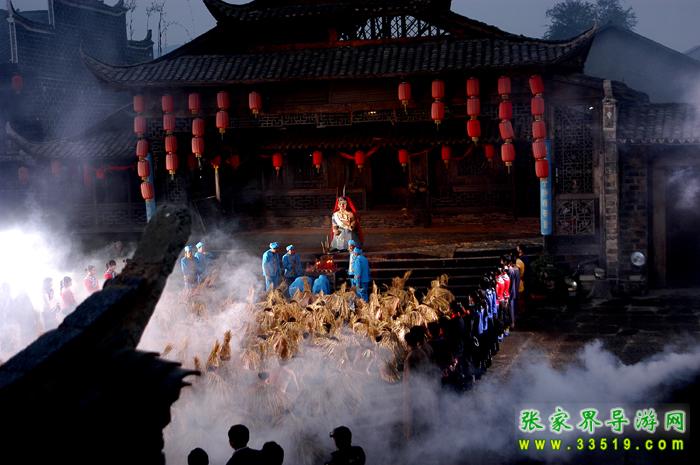
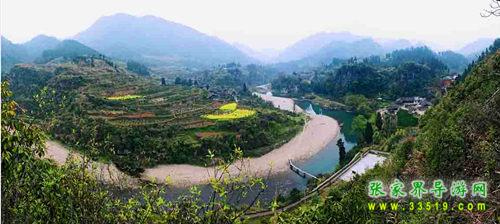
Laosicheng is located in Sicheng Village, Macha Township, more than 20 kilometers east of the county seat. This ancient city was originally named Fushi City. Because it was the ancient capital under 800 years of Tusi rule, it is also called Sicheng or Laosicheng. During the Tusi period, Fushi City was the political, economic, and cultural center of ancient Xizhou and was very prosperous. According to popular tradition, Laosicheng was divided into an inner Luocheng and an outer Luocheng, with eight streets and ten lanes crisscrossing the city. The population was dense and the shops flourished. Historical records state that there were 'three thousand households inside the city and eight hundred families outside the city,' and it was called 'a great town of the Five Streams and a frontier city of ten thousand li.' Peng Shiduo, a tribute student of the Qing Dynasty, wrote in a 'Bamboo Branch Song' in praise: 'In Fushi City brocade makes nests, beside the Tuwang Palace water rises in waves; ten thousand red lanterns, a thousand layers of people, one continuous lingering Hand-waving Song.'
Many remains of Laosicheng survive and have now become precious cultural landscapes for tourists, experts, and scholars to understand and study Tujia history and culture. The main ones include the Zushi Hall, the Peng Clan Ancestral Hall, the Tusi Virtuous Government Stele, the Yinan Memorial Archway, the Tusi Underground Palace, and the Tusi Ancient Tombs.
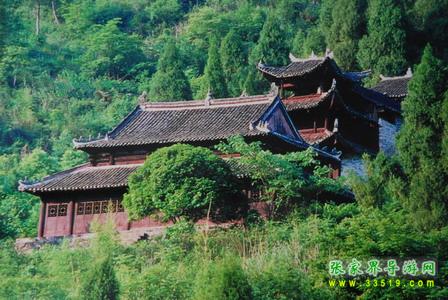
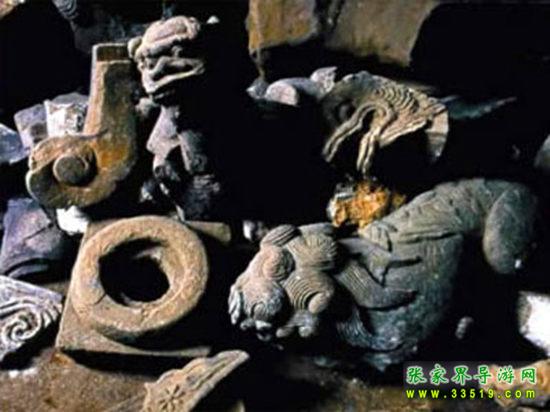
The Tusi Zushi Hall is located at the southern foot of Taiping in Laosicheng. It was first built in the second year of Tianfu of the Later Jin (937 CE) and rebuilt in the Ming Dynasty. The main hall's pillars are several arm-spans around, and the places where the wooden beams are mounted show no traces of axe or chisel work. Legend says it was built through the miraculous manifestation of Lu Ban. The hall covers more than 580 square meters. The main hall is five bays wide and four bays deep, with a double-eaved hip-and-gable roof. It is 17.5 meters long, 13 meters wide, and 20 meters high, entirely of wooden structure, with 34 large pillars supporting the roof. The pillar bases are in the double-layered round drum style, and the roof ridge and eaves are made of finely patterned pottery bricks and tiles. In front of the golden pillars in the hall, a shrine is built, dedicated to the image of the 'Zushi.' The bracket sets of the hall are majestic and ancient in style, and the beam-frame structure is quite distinctive. It is an architectural work with strong ethnic characteristics in the Tujia region and is a key cultural relic protection unit of Hunan Province.
The Peng Clan Ancestral Hall is located in the center of Sicheng, behind the Tusi 'sleeping palace.' Inside are enshrined the memorial tablets of successive Tusi, with exquisite wooden statues, each with its own expression and lifelike appearance. It also houses the legal genealogies of the Three Bonds and Five Constant Virtues established by successive Tusi. It was built in the nineteenth year of Wanli of the Ming Dynasty (1591 CE) when the twenty-fourth-generation Tusi Peng Yuanjin served as Xuanwei Shi. From the main gate of the ancestral hall all the way to the main street runs an official road more than 200 meters long, passing through four platforms and five flights of stone steps with more than thirty stone steps, rising step by step to display a majestic air. At the entrance of the ancestral hall there is a pair of stone drums, each estimated to weigh at least more than five thousand jin. Folk legend says that the ancient Tujia hero Haligaba carried one in each hand from Wuguanping, more than a hundred li away, to Sicheng. In front of the ancestral hall there are also three ancient osmanthus trees, said to have been planted in the Tusi era. These osmanthus trees are still lush today, and whenever the osmanthus blooms in the eighth lunar month, the fragrance of osmanthus drifts everywhere in Sicheng.
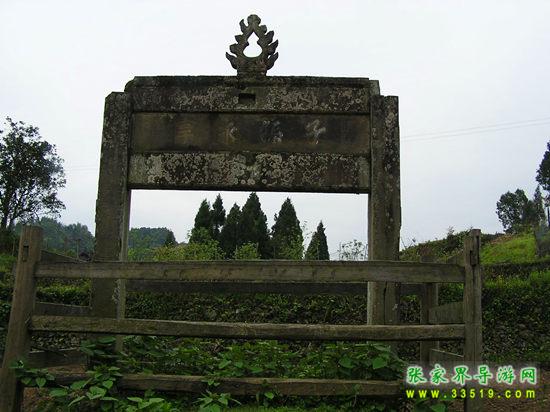
The Yinan Memorial Archway is located on the elegant lawn of Zijin Mountain and Ruoyun Academy south of Sicheng. It was first built during the Jiajing reign of the Ming Dynasty and is inscribed with the four characters 'Zisun Yongxiang' (Descendants Forever Enjoy). It was erected to commend the twenty-sixth-generation Tusi Peng Jinan for leading Tujia soldiers against Japanese pirates and achieving merit. In the thirty-third year of Jiajing of the Ming Dynasty (1554), the twenty-sixth-generation Tusi Peng Jinan, only eighteen years old, led five thousand Tujia soldiers to Jiangsu and Zhejiang to resist the Japanese pirates. The Tujia soldiers were skilled with hooked swords, flexible in formation, and brave in battle. In the Battle of Wangjiangjing they annihilated more than 1,900 enemy troops. The History of Ming says, 'Since the rise of the Japanese pirates, no military action in the southeast has surpassed this; this may be called the first merit.' The 'Zisun Yongxiang' archway was erected to commemorate it.
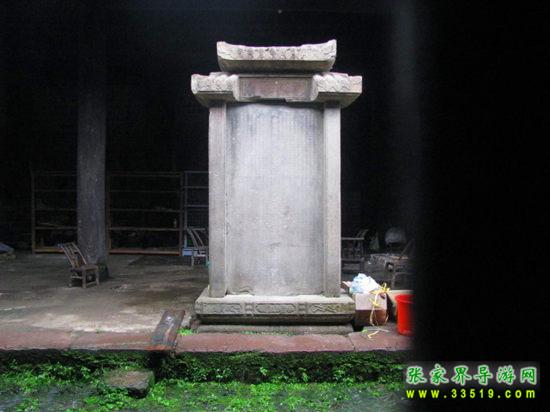
The Tusi Virtuous Government Stele stands on the left side of the remains of the Sicheng government office. It is carved from bluestone. The stele is 2.74 meters high and 1.2 meters wide, with characters carved on both front and back, a stone cap on top, and supporting stone columns at the sides. This stele was built in the second month of the fifty-second year of Kangxi of the Qing Dynasty (1713 CE) by the Yongshun native officials to praise the virtues and achievements of Peng Honghai, Xuanwei Shi of Yongshun and other places. The head of the stele bears the four seal-script characters 'Gantang Yiai' (Sweet Pear Left Behind Love). On both sides of the main stele is a couplet: 'A single stone inscribes deep grace and virtue; for a thousand autumns it is sung that the mountains and rivers are renewed.' In the center is carved: 'By imperial command, the stele of the virtuous government of the retired hereditary lord Zhonghan, Xuanwei Shi of the Xuanwei Shi Department of the Army and People of Yongshun and Other Places in Huguang.' The inscription records the 58 banners and 380 caves under his jurisdiction, the army and people's remembrance of Peng Honghai's virtuous government, and the Tusi ruling creed that 'grace may bind the people's hearts, yet cannot make the people's hearts forget; merit may shine in one's time, yet cannot make later generations take it as law.'
The Tusi ancient tomb clusters are mostly concentrated in three places in Sicheng: Zijin Mountain, Yacao Ping, and Patong Lake, with the largest number at Zijin Mountain. According to surveys, Zijin Mountain alone has 109 tombs of Tusi kings and their nobles. After Peng Fushi Chong, later Tusi, native officials, and their family members were all buried here separately. The size of the ancient tombs depended on official rank and title. Judging from more than 30 ancient tombs that have been opened, the basic form is a semicircular arch made of earth bricks, with stone figures and stone horses in front of the tomb, walls built around it, and an iron gate as the only way in and out. The four walls of the tomb chamber are carved with exquisite floral and grass patterns and dragon-and-phoenix patterns. The coffins are made of nanmu and catalpa wood, painted black with native lacquer, and suspended within the stone chamber by iron hooks. The burial objects are also extremely rich, including gold flowers, gold hairpins, hair inserts, earrings, lotus pods, and other gold and silver ornaments, as well as various jade objects. The tombs of some famous Ming Dynasty Tusi such as Peng Xianying and Peng Jinan are still well preserved today. The ancient tomb cluster is now a key cultural relic protection unit of Hunan Province.
Laosicheng was the political, economic, cultural, and military center under more than 800 years of Tusi rule. In 2001 it was designated by the State Council as a national key cultural relic protection unit. It has been praised by Zhang Zhongpei, former director of the Palace Museum in Beijing, and Luo Zhewen, an expert on ancient Great Walls, as 'the most completely preserved military castle in the southwestern minority regions' and 'a well-preserved ancient fortress-style ethnic cultural city in the southwest.' It preserves a large number of precious historical remains. The Laosicheng site includes distributed areas such as the palace area, government office area, residential area, tomb area, and religious sacrificial area. Within the site area there still survive the Zushi Hall, Huangjing Terrace, Yuhuang Pavilion, ancient tombs, ancient streets, ancient city walls, memorial archways, bronze bells, stone horses, and Ruoyun Academy. It is the largest, best-preserved, and most typical ethnic cultural relic in the Hunan, Hubei, Chongqing, and Guizhou region, and its potential value is immeasurable.
The Tusi system was a special political system by which successive feudal dynasties in China ruled local people in minority areas through the enfeoffment of hereditary local chiefs. Yongshun County in Hunan belongs to the Tujia region. The Tusi system in this area began in the Five Dynasties, initially as the Jimi system, developed in the Song Dynasty, became complete in the Yuan and Ming dynasties, evolved from the Jimi system into the Tusi system, and ended in the mid-Qing Dynasty, lasting more than 800 years.
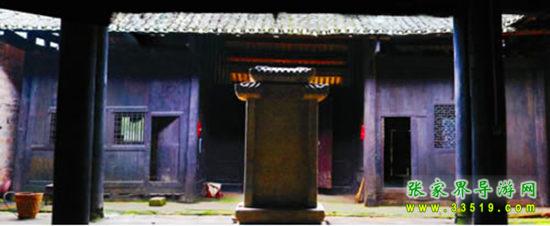
On the Laosicheng site, shaded by lush trees and green bamboo, typical old Tujia dwellings with wooden wall posts and dark tile roofs still stand in orderly disorder. The architectural layout revealed by the remains of the Tusi inner palace, sleeping palace, music palace, underground palace, imperial street, city walls, city gates, beacon towers, Hand-waving Hall, military drill ground, Tuwang Shrine, and Zushi Hall faintly lets one feel the ancient city's former momentum and glory.