Ticket prices, opening hours, and other details for this attraction may be adjusted according to season and policy. Before traveling, please refer to the latest official announcements from the scenic area.
Wulongshan Grand Canyon Karst Cave Group Scenic and Historic Area is located in the northwest of Hunan Province, 35 kilometers from Longshan County seat. It is part of the Xiangxi tourism golden corridor that includes Zhangjiajie, Mengdong River, and Fenghuang Ancient Town. The scenic area consists of the Pidu River canyon scenery and the karst cave group landscape, with a total area of 41.13 square kilometers and an elevation of 1,054 meters. Within the 15-kilometer-long Wulongshan Grand Canyon, with its lush trees and dense bamboo, lies a huge (212) karst cave group, especially famous for the magical and magnificent Feihu Cave, which connects three provinces through one cave. It is one of Hunan Province's provincial-level scenic and historic areas. The scenic area has 7 national first-class attractions, 7 second-class attractions, and 19 third-class attractions. According to assessments by renowned scholars such as Yu Jinbiao of Nanjing University, the first-class attractions of the scenic area rank among the best compared with similar attractions nationwide. The entire scenic area is characterized mainly by natural features such as mountains, water, caves, and rocks, infused with the long history and culture and unique folk customs of the Tujia people of western Hunan. It is suitable for exploring wonders, leisure vacations, scientific research and archaeology, and adventure activities.
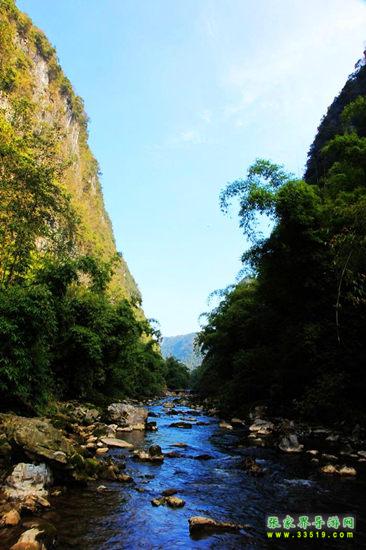
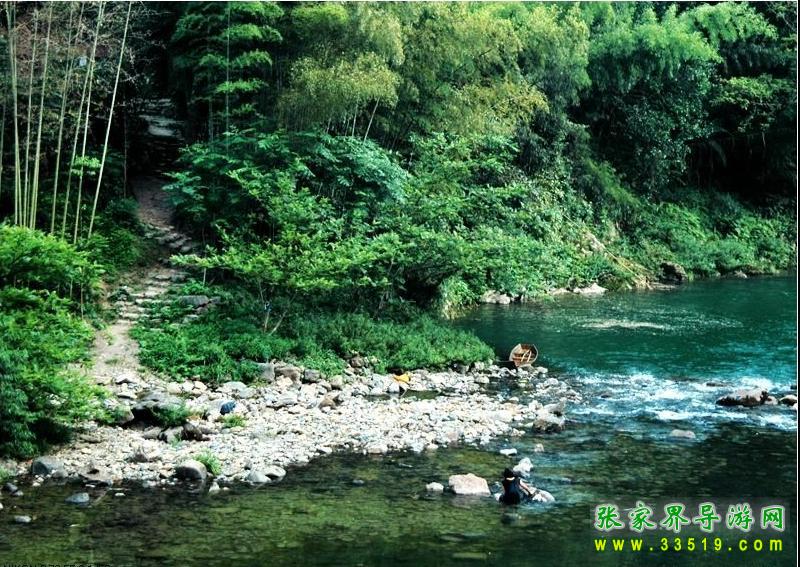
The Pidu River canyon is about 15 kilometers long, with the widest point about 500 meters and the narrowest point about 50 meters. In the canyon, exotic flowers and rare grasses compete in beauty, and trees, birds, insects, and animals coexist and thrive together—it is known as the "Ten-Li Gallery." Among the scenery of the Pidu River canyon, the most eye-catching are the Pidu River, Tiankeng Drum, Tongtian Gate, and the "Husband and Wife Trees."
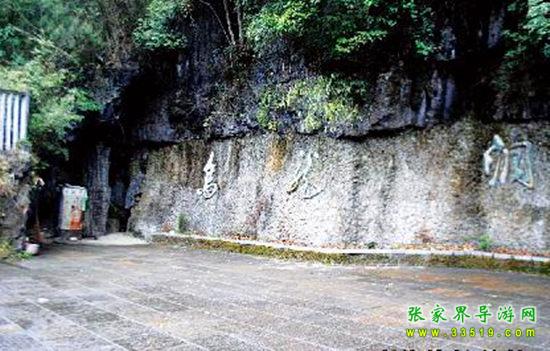
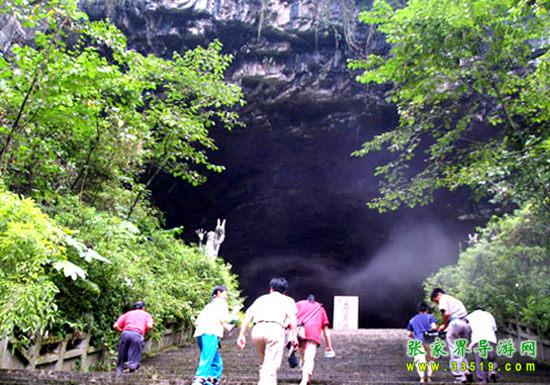
It is located in the cliff face at the lower end of the Pidu River and is a large stone cavern running through the mountain range. It is 150 meters high, 400 meters deep, and an average of 5 meters wide, with the bottom rising upward in a slanted trapezoidal shape, appearing to connect with the sky—hence the name Tongtian Gate (Gate to Heaven).
They are mainly distributed on both banks of the Wulongshan Grand Canyon. A total of 212 karst caves of various sizes have been discovered so far, each with different origins and distinct landscapes, forming a bizarre underground world. After visiting this place, the famous Chinese painter Huang Yongyu once praised it in verse: "Longshan has two thousand two hundred caves, each wondrous and unknowable."
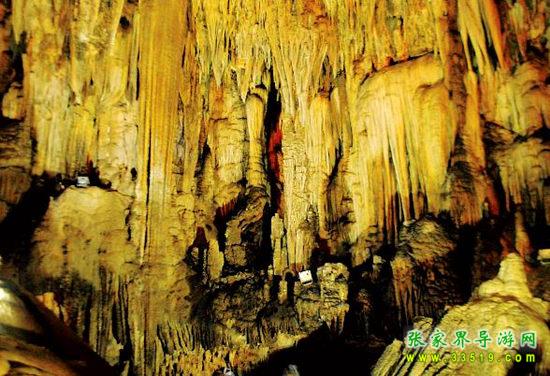
Wulong Cave was formed 600,000 to 700,000 years ago. Inside the cave, fossils of leg bones and teeth of ancient vertebrates that lived here 300,000 to 400,000 years ago have been discovered. Wulong Cave is a bizarre underground labyrinth, renowned far and wide for its magnificent grandeur and profound vastness. Some domestic and international visitors say it is an enlarged bonsai, a miniaturized fairyland.
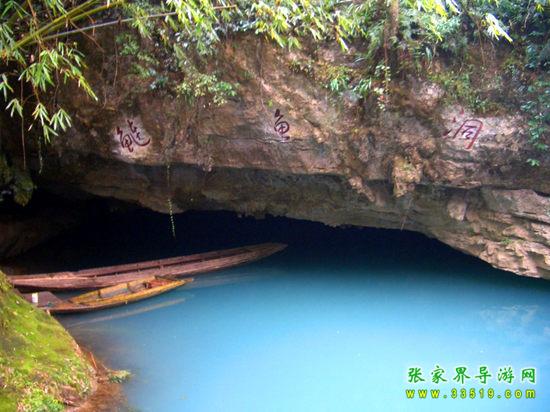
Lianyu Cave is connected to the Pidu River and must be accessed by bamboo raft. Tujia girls on the raft will sing several Tujia love songs for you with their clear voices. The raft drifts slowly, the songs linger—in such a scene, one's thoughts wander endlessly, as if entering a wondrous realm where all worldly cares melt away.
Feihu Cave is spacious, tall, and magnificent. Cave explorers from the United States, Japan, Belgium, and other countries have come to Feihu Cave multiple times to explore, but none have found the end of the cave. It is called the world's "mysterious underground corridor."
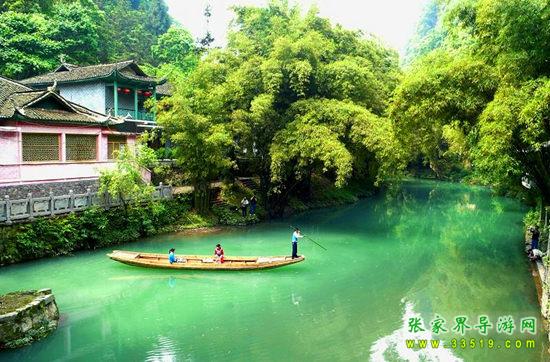
Along the Pidu River, lush green bamboo forms an emerald corridor, and the river water is clear and translucent, like a green satin string connecting countless pearls. In the canyon, water kisses the mountains, creating a dynamic water rhythm and majestic peaks that together form a panoramic scroll of mountains and waters.