This attraction introduction is compiled from historical materials in the "Zhangjiajie Tour Guide Network" (33519.com · Scenic Spots section). Ticket prices, opening hours, transportation, and contact information mentioned in the text may be outdated. Please refer to the latest official announcements from the scenic area before traveling; some content consists of historical background/cultural introductions and is for reference only.
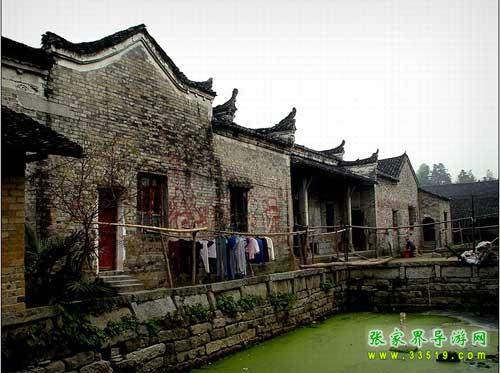
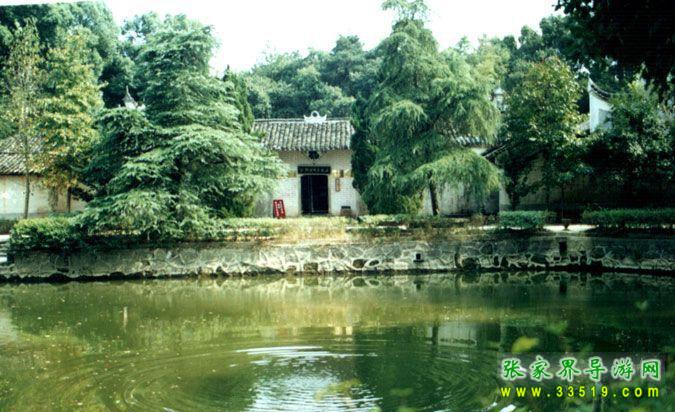
The ancient village of Zhang Guying, first built during the Wanli era of the Ming Dynasty and known as the "Folk Forbidden City," is located in the Weidong mountain area of Yueyang County, Hunan Province, surrounded by green mountains and babbling streams. As a representative of Han Chinese clan settlement, the ancient village's founding ancestor Zhang Guying's descendants have multiplied over 26 generations, with thousands of people living together under one roof. The ancient village is grand in scale, ingenious in layout, and exquisite in design, embodying the essence of architectural art, folk culture, clan culture, farming-and-reading culture, and Ming-Qing style. In 2001, the Zhang Guying ancient architectural complex was designated a national key cultural relic protection unit by the State Council. In 2003, Zhang Guying Village was awarded the title of one of the first batch of national "Historical and Cultural Villages" by the Ministry of Construction and the State Administration of Cultural Heritage of the People's Republic of China.
According to legend, in the 1360s, three mysterious people traveled together "from Wu to Chu," arriving in the Weidong mountain area at the foothills of the Mufu Mountains. One was named Zhang Guying, one Liu Wanfu, and one Li Qianjin. Among them, Zhang Guying understood feng shui and surveyed and selected sites along the way, finally drawn by the extraordinary scenery of Weidong. There, they identified three auspicious sites. According to the terrain and feng shui, one site favored wealth, one favored descendants, and one favored officialdom. Zhang Guying let his companions choose first. Liu Wanfu chose the wealth site, hoping for prosperity in all seasons and becoming a wealthy family; Li Qianjin chose the officialdom site, hoping to enter official ranks and become an official family; the remaining site favoring descendants naturally belonged to Zhang Guying. So they each built homes on their chosen auspicious sites and multiplied. Sure enough, those who sought wealth became wealthy, those who sought office became officials, and the Zhang clan became a prominent family within a hundred li, continuing for 26 generations and multiplying over 8,000 descendants. To commemorate their founding ancestor, Zhang Guying's descendants named the great house after him—"Zhang Guying."
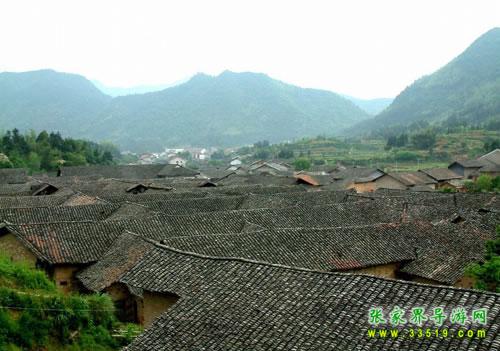
Although Zhang Guying Village has endured many vicissitudes, it has basically retained its original appearance. There are three main buildings: "Dangda Gate," "Wangjia Duan," and "Shangxin House." The gateways of the three main buildings face east, west, and south respectively. The main courtyards have high walls and thick eaves, and the enclosing houses surround layer upon layer—separated, each forms its own system; combined, they form an integrated whole. The total building area of Zhang Guying Great House exceeds 51,000 square meters, with over 1,700 rooms and 206 courtyards. Each connected gateway of varying specifications consists of a "four-entry" sequence—passage hall, meeting hall, ancestral hall, and rear hall—along with three courtyards formed with side rooms and wing rooms. Looking along the roof ridges, the entire Zhang Guying Village architecture becomes countless "well" characters. In the halls, corridors are neatly arranged, courtyards are laid out like a chessboard, rigorous and symmetrical, with form, scale, and decorative colors tending toward harmony and unity, demonstrating superb architectural skill. The building materials are primarily wood, supplemented by blue bricks and granite.
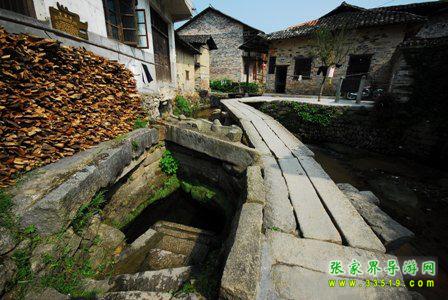
Viewed from a height, green mountains surround a cluster of houses on all sides, and the Weixi River winds through the village, with 47 stone bridges of various sizes spanning it. The walls and eaves of the houses connect with each other, staggered above the stream, forming a pattern of "streams flowing beneath the steps, doors opening toward the water." A long corridor runs along the stream, paved with a bluestone path that leads to every household and connects every lane entrance. There are over 60 crisscrossing lanes reaching every hall, the longest being 153 meters. Residents here can "avoid the scorching sun on clear days and keep their shoes dry on rainy days." Under the eaves, the round beams and columns are carved with taiji diagrams; beneath the houses are delicate carvings of small deer; window lattices, partition walls, and screens are mostly inlaid with carved panels featuring patterns of magpies, plum blossoms, and fierce beasts, all lifelike.
The people of Zhang Guying Village have for generations revered the teachings of Confucius and Mencius, emphasizing etiquette and education. Villagers take pride in reading and consider illiteracy a shame; the fondness for study has been passed down through generations. In the imperial examination era, there was 1 jinshi, 7 juren, 6 gongsheng, 1 gongyuan, 1 yisheng, 45 xiangsheng, and 33 taixuesheng. In contemporary times, there have been over 240 university students, as well as doctoral students and overseas students. The people of Zhang Guying Village not only love reading but are also skilled in martial arts. Many have developed excellent martial skills.
At present, Zhang Guying Scenic Area has become one of the important tourist attractions in northern Hunan.