This attraction introduction is compiled from historical materials in the "Zhangjiajie Tour Guide Network" (33519.com · Scenic Spots section). Ticket prices, opening hours, transportation, and contact information mentioned in the text may be outdated. Please refer to the latest official announcements from the scenic area before traveling; some content consists of historical background/cultural introductions and is for reference only.
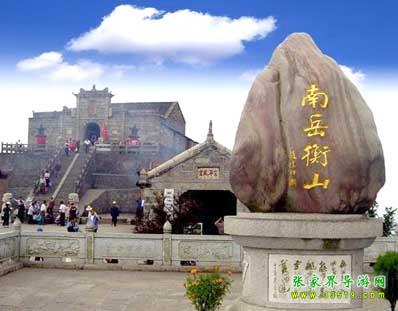
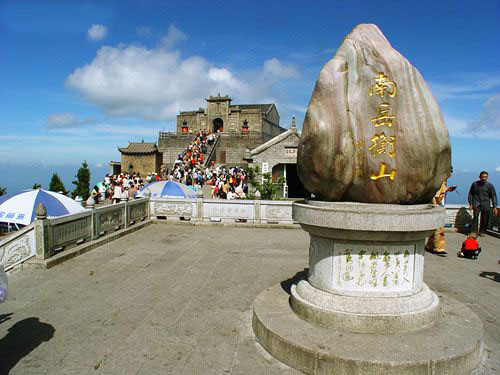
The height of Zhurong Peak, one of the “Four Wonders of Nanyue.” Zhurong Peak rises tall and prominent, towering above Furong, Zigai, Tianzhu, Xiangguang, Yanxia, and Zhenxiu peaks. According to the newly compiled “Nanyue Annals”: Zhurong Peak, at 1,289.8 meters elevation, located at 27 degrees 18 minutes 6 seconds north latitude and 112 degrees 41 minutes 05 seconds east longitude, is the highest and main peak of the seventy-two peaks of Nanyue. It is named after the Fire God Zhurong. Legend says Zhurong was a minister of the ancient Yellow Emperor Xuanyuan. After humanity invented friction fire-making but could not preserve fire or use it, Zhurong, being close to fire, became an expert at managing and using fire. The Yellow Emperor appointed him as the Fire Administrator. Because he was familiar with conditions in the south, the Yellow Emperor also made him Minister of Education, in charge of southern affairs. He lived on Mount Heng and was buried there after death. To commemorate his great contributions to the people, the highest peak of Mount Heng was named Zhurong Peak. In ancient language, “Zhu” means enduring, and “Rong” means brightness — may he be forever bright.
At the summit of Zhurong Peak is the Zhurong Hall, originally named the Old Sage Emperor Hall, first built as a shrine during the Wanli era of the Ming Dynasty (1573—1620). The current structure was rebuilt later. Stone railings are installed on the rocks behind the hall, offering a panoramic view of the northern mountain scenery.
To the west of Zhurong Hall is the Moon Viewing Terrace. On a bright moonlit night, the full moon hangs in the sky, casting silver light in all directions, making the scenery especially bright and beautiful. Visitors standing on the terrace admiring the moonlight experience a scene quite different from that on flat ground. Even after the moon sets in the west, its afterglow remains here. As depicted in the poem by Sun Ying'ao of the Ming Dynasty: “The bright soul of the world has all set, yet here the pure light has not yet lowered.” The subtle and wonderful scene can well be imagined.
Around Zhurong Peak, temples stand in great numbers. To its south is Shangfeng Temple, which was called Guangtian Temple before the Sui Dynasty and was a place of Daoist activity. During the Daye reign of Emperor Yang of Sui (605–618), an imperial order was issued to change its name to Shangfeng Temple. Directly in front of Shangfeng Temple is the South Heavenly Gate. On the mountain behind Shangfeng Temple is the Sun-Viewing Terrace, where a meteorological station is now located. Beside the Sun-Viewing Terrace stands a stone stele inscribed with four large characters, "Place of Sunrise Viewing." On crisp autumn days, especially after rain when the sky first clears, visitors can witness the wondrous sight of "a red sun rolling like a golden ball."