This attraction introduction is compiled from historical materials in the "Zhangjiajie Tour Guide Network" (33519.com · Scenic Spots section). Ticket prices, opening hours, transportation, and contact information mentioned in the text may be outdated. Please refer to the latest official announcements from the scenic area before traveling; some content consists of historical background/cultural introductions and is for reference only.
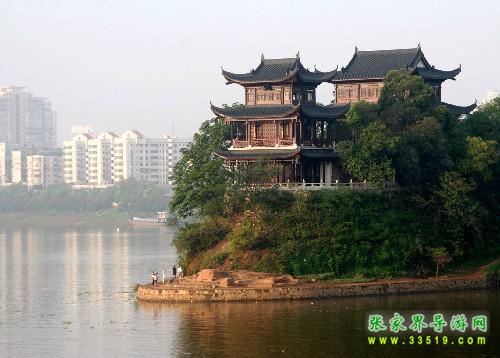
Shigu Academy is located on Shigu Mountain outside the north gate of Hengyang City. The mountain stands like a peninsula at the confluence of the Zheng River and the Xiang River, at an elevation of 69 meters and covering an area of 4,000 square meters.
The origin of the name Shigu (Stone Drum) is lost in antiquity, and explanations differ. One account says that Shigu is hollow on all sides and shaped like a drum, hence the name, as recorded in the Commentary on the Water Classic: "The mountain's form is green and round, exactly like a drum; the mountain body is pure stone without soil, so it takes its name from its shape." Another account says that because it is surrounded by water on three sides, the waves striking the stone sound like a drum. Thus the name Shigu was derived from its natural form—from its shape and from its sound. As for its age, according to the Commentary on the Water Classic, the name Shigu was already recorded in historical texts before the Qin Dynasty.
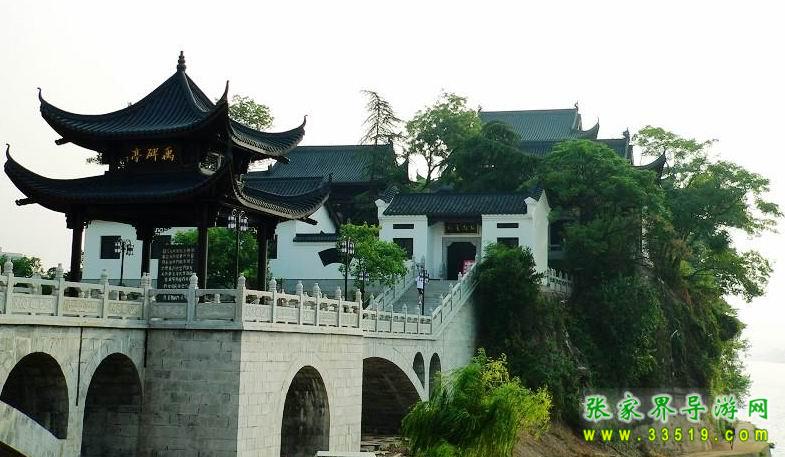
Legend has it that in the Han Dynasty, Zhuge Liang came to Hengyang in his capacity as military adviser to supervise the military taxes of three commanderies and stayed on Shigu Mountain. To commemorate Zhuge Liang's spirit of "bending every effort to the task until death," the people of Hengyang built the "Marquis Wu Shrine" on the left side of Shigu Mountain for offerings and worship. Today no trace of it can be found.
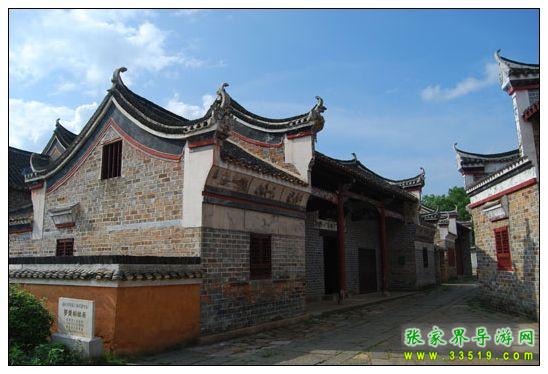
During the Zhenguan era of the Tang Dynasty (627-650 AD), the prefect Qi Ying built the "Hejiang Pavilion" east of the mountain. During the Yuanhe era of Emperor Xianzong of Tang (806-820 AD), the hermit Li Kuan of Hengyang built a cottage on the mountain named "Xunzhen Temple," where he devoted himself to study—this was the prototype of Shigu Academy. In the third year of the Zhidao era of the Song Dynasty (997 AD), Li Shizhen, a native of Hengyang Commandery, founded the academy. In the second year of the Jingyou era (1035 AD), the imperial court bestowed the plaque "Shigu Academy," placing it on par with the then Suiyang Academy, Bailudong Academy, and Yuelu Academy, collectively known as the Four Great Academies of the nation.
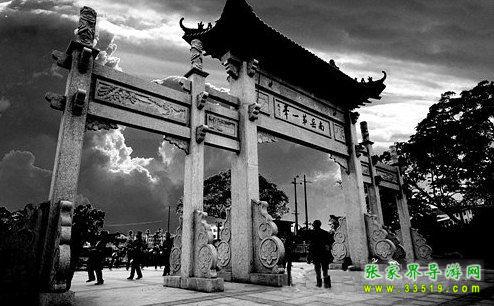
In 2004, Hengyang City decisively demolished over 30,000 square meters of dilapidated houses in front of the academy and built the Shigu Cultural Leisure Square, covering 3.18 hectares with lush bamboo and trees and carpet-like flowers and grass, allowing the academy to once again "reveal its mountain and water." The "Shigu Academy Inscription" written by Zhu Xi was engraved on a giant granite book, while the General's Tower and walkways restored with Qin bricks and Han tiles are simple and elegant. The bronze statues of the Seven Sages—Han Yu, Zhu Xi, Zhou Dunyi, and others—are lifelike and vivid, interpreting the cultural heritage of Shigu Academy through sculptural language.