This attraction introduction is compiled from historical materials in the "Zhangjiajie Tour Guide Network" (33519.com · Scenic Spots section). Ticket prices, opening hours, transportation, and contact information mentioned in the text may be outdated. Please refer to the latest official announcements from the scenic area before traveling; some content consists of historical background/cultural introductions and is for reference only.
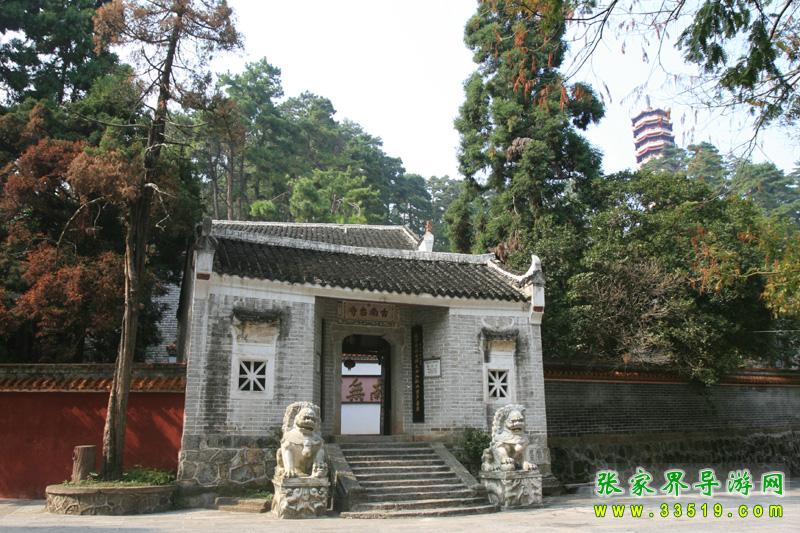
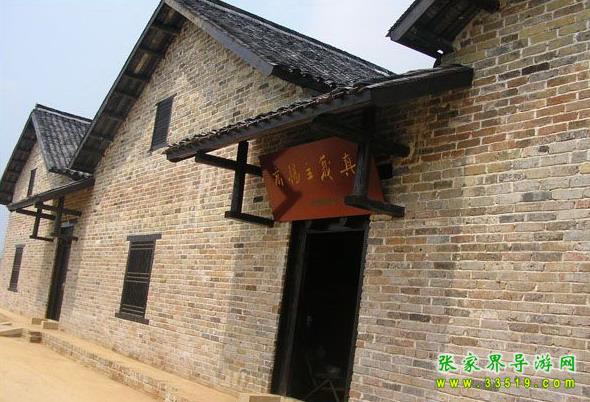
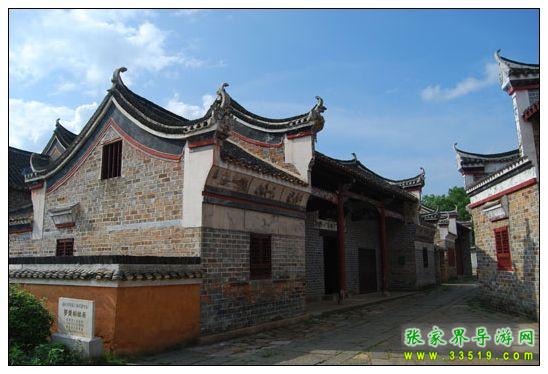
Nantai Temple is located at the foot of Ruiying Peak in Nanyue District, Hengyang City, Hunan Province. At an elevation of over 600 meters, with an average summer temperature of 28 degrees Celsius, it is surrounded by verdant pines and bamboo whose dense shade blocks out the sun; with secluded paths and murmuring streams, and mountain birds calling, it is an ideal place for spiritual practice and a summer retreat. Through the ages, eminent monks have resided in this pure and ethereal realm, making the ancient Nantai Temple a "Pure Land of the Three Treasures" both in heaven and on earth. Nantai Temple was first built during the Tianjian era of the Liang Dynasty of the Southern Dynasties (502–519). Legend has it that after Monk Haiyin arrived at Nanyue, he saw a flat area at the foot of Ruiying Peak, surrounded by emerald peaks, dense pines and tall bamboo, with verdant greenery and drifting mist, so he built a thatched hut and founded this temple. Because it was situated on the sunny side of the mountain, it was named "South Temple," and later renamed "Nantai Temple." Behind the temple's dining hall there is now a cliff inscription, bearing three large characters two chi in diameter in a horizontal plaque reading "Nantai Temple." On either side are inscribed the captions "During the Tianjian Era of Liang" and "Monk Haiyin."
In the second year of the Tianbao era of the Tang Dynasty (742), Monk Xiqian came from Qingyuan Mountain in Jiangxi to Nanyue and built a hut on a large rock east of the temple, and was known at the time as "Stone Monk." At the foot of Ruiying Peak, he vigorously propagated the teachings of Chan Buddhism. Buddhists from across the land came drawn by his fame to listen to his sermons before his seat, and his disciples grew daily in number, so Nantai Temple was continuously expanded. From the late Tang and Five Dynasties through the Song Dynasty, when Zhu Xi and Zhang Shi in the third year of the Qiandao era (1167) composed matching poems after the snow cleared at Nanyue and visited this temple, it was already a place of "lofty pavilions of steady scale," enjoying the grandeur of a "jade terrace at the edge of heaven." During the Hongzhi era of the Ming Dynasty (1488–1505), Monk Wuyai came here from Xinyang; he lived in a stone cave, ate wild vegetables, and wore patched clothing. The gentry of Nanyue were moved by his ascetic practice and donated funds to help him build a temple hall. During the Qianlong era of the Qing Dynasty, the temple buildings collapsed from years of neglect, with shattered tiles and broken rafters. Unworthy monks took the opportunity to divide the temple's property, each building private hermitages along the western corridor of the Great Temple of Nanyue, calling themselves "New Nantai Temple" and "Old Nantai Temple." It was not until the Guangxu era of the Qing Dynasty that Monk Danyun, abbot of Zhusheng Temple, and his disciple Miaojian, seeing that the new and old Nantai temples were both counterfeit and "competing for profit, bringing disgrace to Buddhism," resolved to revive the Chan tradition of Nantai. In the sixteenth year of the Guangxu era of the Qing Dynasty (1890), a Sichuan provincial governor together with monks Fucheng, Danyun, and Mo'an found, amid thorny thickets and jumbled rocks, the stele inscription of Stone Xiqian's "Jianxiang Pagoda" and the ruins of the ancient temple with the stone horizontal plaque inscribed "Nantai Temple." The three then made a vow to devote their lives to restoring the temple buildings and reviving Nantai. They traveled to all quarters, and after fourteen years finally raised over 18,000 strings of cash. The reconstruction began in the twenty-fifth year of the Guangxu era of the Qing Dynasty (1899) and was completed after five years. A magnificent ancient Buddhist temple of gray brick and gray tile stood towering on the verdant summit of Nanyue, becoming a renowned monastery shining with Buddhist light in Chinese Han Buddhism.