This attraction introduction is compiled from historical materials in the "Zhangjiajie Tour Guide Network" (33519.com · Scenic Spots section). Ticket prices, opening hours, transportation, and contact information mentioned in the text may be outdated. Please refer to the latest official announcements from the scenic area before traveling; some content consists of historical background/cultural introductions and is for reference only.
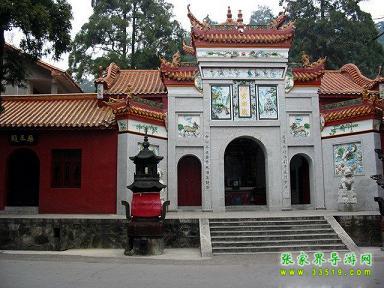
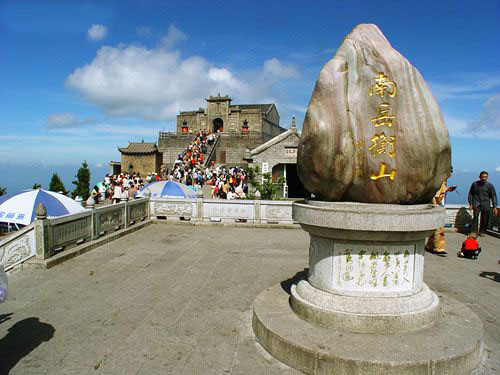
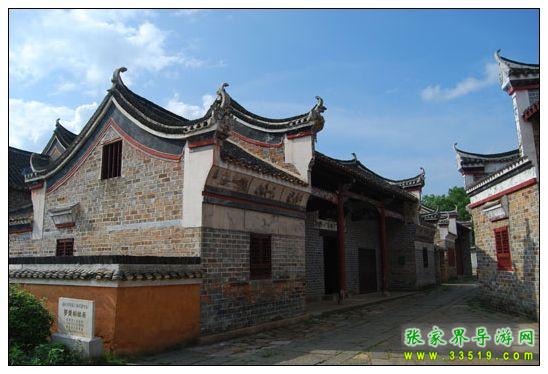
The Nanyue Temple is located in Nanyue District (formerly Nanyue Town) at the foot of Mount Heng. It is the largest palatial ancient architectural complex in southern China. The temple was first built in the early Tang Dynasty, covers an area of 98,500 square meters, and its main structures are divided into nine successive sections: the memorial archway, the ancient opera stage, the Zhengchuan Gate, the Imperial Stele Pavilion, the Jiaying Gate (where local officials received officials sent from the capital on inspection tours), the Imperial Library Tower, the Main Hall, the Resting Palace, and the North Rear Gate.
The Main Hall is also called the Hall of the Sacred Emperor. Interestingly, on the east side of this hall there are eight Taoist temples, and on the west side there are exactly eight Buddhist temples.
Every autumn, a large traditional temple fair is held here.
The Great Temple faces south with its back to the north, with the North Street in front and the Chidi Peak behind, and is flanked on both sides by the waters of Luosi Pond. The principal deity worshipped in the Great Temple is the Sacred Emperor of Nanyue. The total area of the entire Great Temple reaches 98,500 square meters, and the main structures are divided into nine successive sections. The first section is the Lingxing Gate, a memorial archway built of granite blocks; the second section is the Kuixing Pavilion, which serves as an opera stage, with a lifelike wooden carved dragon suspended above the center of the stage, and paintings of the Eight Immortals of the Ravine on the stage, well preserved. On the left is a Drum Pavilion, and on the right a Bell Pavilion, in which hangs a 9,000-jin iron bell cast during the Yuan Dynasty.
In the arched doorway below the stage is engraved the poem "Worshipping at the Hengyue Temple and Spending the Night at the Yue Temple, Inscribed on the Gate Tower" written by Han Yu of the Tang Dynasty; the third section is the Zhengchuan Gate; the fourth section is the Imperial Stele Pavilion, which contains a large stele commemorating the reconstruction of the Nanyue Temple, erected in the forty-seventh year of the Kangxi era of the Qing Dynasty (1708), standing on a large stone tortoise weighing 38,000 jin; the fifth section is the Jiaying Gate, originally the place where local officials before the Qing Dynasty received imperial censors from the capital who came to sacrifice to the mountain deity; the sixth section is the Imperial Library Tower, the repository of books through the ages; the seventh section is the Great Hall of the Sacred Emperor of Nanyue, used for sacrifices to Emperor Yan, resplendent in gold and jade, of wood-and-stone construction, with a roof covered in colored glazed tiles,
somewhat resembling the Forbidden City in Beijing. It is the tallest and largest hall at Nanyue, first built in the thirteenth year of the Kaiyuan era of the Tang Dynasty (725), and after six reconstructions, the present hall was completed in the eighth year of the Guangxu era of the Qing Dynasty (1882). The hall is seventy-two chi tall, with seventy-two pillars inside and out, symbolizing the seventy-two peaks of Nanyue; the eighth section is the Resting Palace Hall, first built in the fifth year of the Dazhong Xiangfu era of the Northern Song Dynasty (1012); the ninth section is the Main North Gate.