This attraction introduction is compiled from historical materials in the "Zhangjiajie Tour Guide Network" (33519.com · Scenic Spots section). Ticket prices, opening hours, transportation, and contact information mentioned in the text may be outdated. Please refer to the latest official announcements from the scenic area before traveling; some content consists of historical background/cultural introductions and is for reference only.
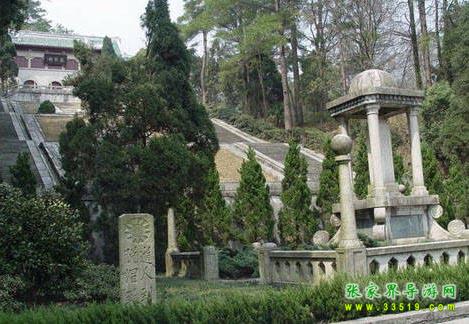
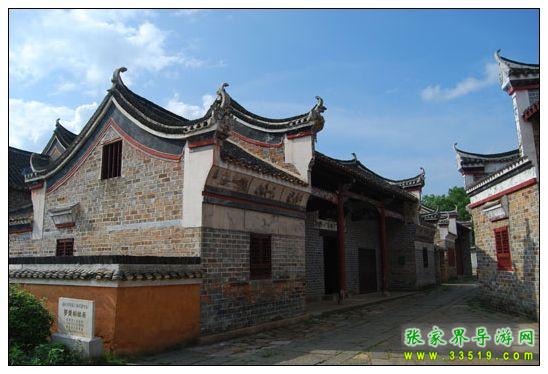
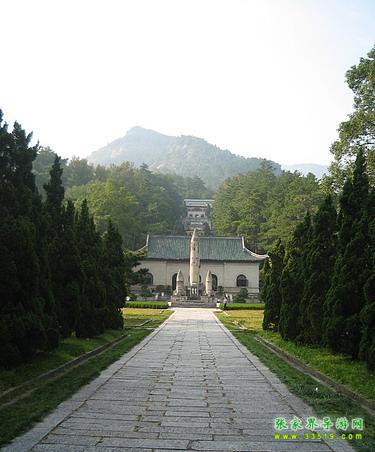
The Nanyue Martyrs' Shrine is located 4 kilometers from the ancient town of Nanyue in Hengyang City, Hunan Province. Here peaks and ridges rise in jagged succession, pines and cypresses shade one another, streams embrace the area, and the highway winds around—both a landscape of layered mountains and waters and a bright, elevated, sun-facing site, making it an ideal location for building a shrine. The entire shrine faces south with its back to the north, and along the central axis, following the terrain that is low in front and high in back, are arranged in sequence: the memorial archway, the July 7th Monument, the Memorial Hall, the Memorial Pavilion, and the Offering Hall. Except for the monument and memorial pavilion, which are of pure stone construction, the rest are all of stone walls and green tiles with single-eave upturned corners.
On July 7, 1937, the "July 7th" Incident that marked the beginning of Japan's invasion of China broke out, and from then on an aggressive war long premeditated and aimed at destroying China began in full. By the end of 1938, although the Chinese army resisted tenaciously, due to inferior equipment and inadequate training, half of China's territory had been occupied by the Japanese army, and the blood of countless patriotic officers and soldiers stained the land of China red.
At this time, Guangzhou and Wuhan fell one after another, and Hunan Province, situated in the rear area, became strategically important to an extraordinary degree, becoming another major base for the war of resistance after Wuhan. Mount Heng of Nanyue has long been known as the most beautiful of the Five Great Mountains, and its road, rail, and water transportation links are extremely convenient. Chiang Kai-shek, Chairman of the Military Commission of the Nationalist Government, personally presided over the convening of the "First Nanyue Military Conference," and also invited Zhou Enlai, Vice Chairman of the CPC Central Committee, and Ye Jianying, Chief of Staff of the Eighth Route Army. The two parties, putting the great cause of the nation first, joined hands to resist Japan.
At this conference, many generals mentioned that fallen officers and soldiers mostly "left their corpses on the battlefield" and could not be buried; those who spoke were grieved, and those who listened grew solemn. Chiang Kai-shek was deeply pained upon hearing this, and after the meeting summoned Generals Chen Cheng and Xue Yue, solemnly arranging the matter of building a public cemetery.
Later Chen Cheng was transferred to Sichuan, while Xue Yue concurrently served as Chairman of the Hunan Provincial Government, so the building of the public cemetery was basically presided over by Xue Yue.
Because during this period fighting with the Japanese army continued, and in addition to preliminary work such as surveying, land requisition, and fundraising, it was not until September 10, 1940, that the first phase of the Nanyue Martyrs' Shrine project officially broke ground. The second phase began on November 5 of the following year and was fully completed by June 1943. On July 7, the Nanyue Martyrs' Shrine held a grand completion ceremony, at which Xue Yue, the presiding official, respectfully read the memorial address before the martyrs' spirit tablets and solemnly declared that "since the War of Resistance, all loyal and martyred officers and soldiers shall enter the shrine as of today and receive sacrifices at the proper seasons." The first group of generals to enter the shrine included Zhang Zizhong, Hao Menglin, Tong Linge, Zhao Dengyu, and others, thirty-eight in all.
After the Martyrs' Shrine was completed, in 1944 Nanyue fell, and it suffered damage from the Japanese army, and later during the Cultural Revolution it was severely damaged by the Red Guards.
In 1984, Hu Yaobang came here to pay his respects, and in 1987 the National Committee of the Chinese People's Political Consultative Conference put forward restoration proposals. It was not until 1992 that the local government carried out a comprehensive restoration. In 1996 it was rated by the central government as a national key cultural relic protection unit.