This attraction introduction is compiled from historical materials in the "Zhangjiajie Tour Guide Network" (33519.com · Scenic Spots section). Ticket prices, opening hours, transportation, and contact information mentioned in the text may be outdated. Please refer to the latest official announcements from the scenic area before traveling; some content consists of historical background/cultural introductions and is for reference only.
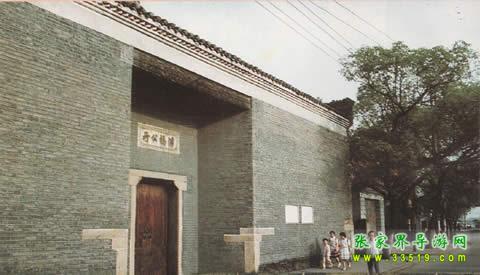
The Exhibition Hall of the Former Site of the Xiangnan Student Union is located at No. 1 Yuehan Road in Jiangdong. In 1919, the "May Fourth" Movement spread to Hengyang. Under the influence of the Xinmin Society, the provincial student union sent people to Hengyang to contact various schools and initiate the organization of the Hunan Student Union. Later, through a resolution of Hengyang's educational and business circles, the "Floating Bridge Office" was allocated for use by the Xiangnan Student Union. At that time, Qing Dynasty Provincial Military Commander Shen Tangfa, who had occupied the office and lived there, was driven out, and the sign "Xiangnan Student Union" was hung up.
The members who joined the Xiangnan Student Union included: Hunan Provincial Third Normal School, Hunan Provincial Third Middle School, Hunan Provincial Third Class-A Industrial School, and Hengyang's private Chengzhang Middle School, Daonan Middle School, Xihu Middle School, and others, and it governed schools in 34 counties of southern Hunan. Funding came from the student self-governance associations of member schools, and the Hengyang National Goods Maintenance Association also provided part of the funds. The student union had one secretary-general and several officers. It was divided into departments for propaganda, publication, entertainment, and clerical work, with each school electing a general affairs director, and additionally setting up accounting and review. The Xiangnan Student Union organization held elections once a year. Its purpose was: to unite feelings, exchange knowledge, promote culture, and reform society. It successively published periodicals such as the "Xiangnan Student Union Weekly," "Xiangnan Students," and "Xiangnan Schools."
After its establishment, the Xiangnan Student Union actively organized and led Hengyang students in the struggle against imperialism and feudalism, boycotted Japanese goods, propagated new ideas against old ones, and publicized the victory of the October Revolution. Young students began to take the path of integrating with workers and peasants, promoting the development of the student movement in southern Hunan. This place became the center of the student movement in southern Hunan during the "May Fourth" period, and at the same time prepared the way in thought and in cadres for the establishment of Party and League organizations in southern Hunan.
In the early days of the Communist Party of China, Mao Zedong visited Hengyang many times in person, staying in the hall of the Xiangnan Student Union, spreading Marxism-Leninism, carrying out Party-building activities, and guiding the revolutionary struggle in southern Hunan. In the late autumn of 1923, Mao Zedong, wanted by the reactionary warlord Zhao Hengti in Changsha, passed through Hengyang on his way to Guangzhou. During his time in Hengyang, Mao Zedong once again guided the work of the Xiangnan Student Union and personally delivered a report at the Third Normal School. During this period, many other famous figures also came here to carry out revolutionary activities, such as Liu Shaoqi, Li Da, He Shuheng, Deng Zhongxia, Yun Daiying, and Li Lisan.
In the long course of revolutionary struggle, the Xiangnan Student Union produced a large number of revolutionary martyrs, such as Xia Minghan, Jiang Xianyun, Huang Jingyuan, Zeng Zhongsheng, Chen Weiren, Wu Yunfu, Zhang Jichun, He Baozhen, Guan Zhonglian, Mao Zejian, Jiang Hua, Huang Kecheng, and Tang Tianji.
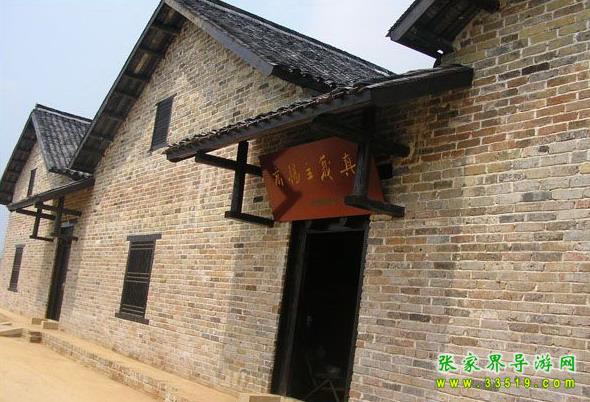
The office site of the Xiangnan Student Union was originally a social institution specifically managing the pontoon bridge, hence the name "Pontoon Bridge Office." It was first built in the summer of the 28th year of the Guangxu reign of the Qing Dynasty (1902 AD). The building faces west with its back to the east, fronting the Xiang River. Looking south along the river, one can see the beautiful Huiyan Peak and Yueping Mountain; looking north along the river, one can also see the dignified Shigu and Laiyan Pagoda. A winding stone-slab path in front of the gate leads directly through Nanxue Jinliang to the Hunan Provincial Third Middle School and Third Normal School. The characters "Pontoon Bridge Office" are inscribed in white marble in regular script, written by Zeng Xi, a former Qing Dynasty jinshi and expectant daotai. On the right side of the door hangs a white sign with black characters reading "Xiangnan Student Union." The original site had a square wall of blue bricks stamped with characters, covered with small grey tiles, with a central courtyard, totaling more than ten rooms and covering an area of 583.64 square meters. It was surrounded on the east, south, and north by low residential buildings.
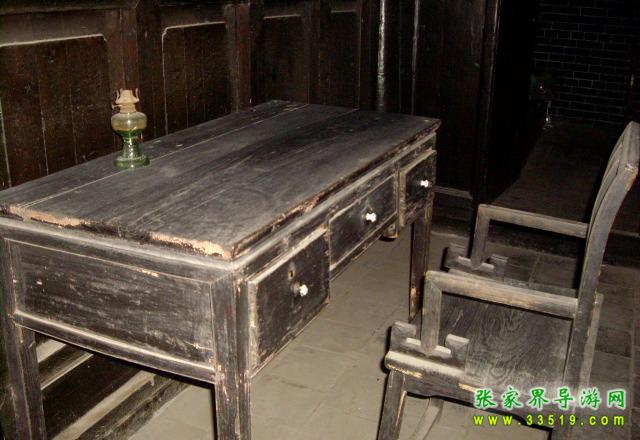
The site consists of two sections with five bays each. In the first section, the right bay was the office of the Secretary-General of the Xiangnan Student Union. Secretaries-General of successive terms all worked and lodged here. The famous martyr Xia Minghan, when serving as Secretary-General of the Student Union, once lived and worked here. In the second section, the three rooms in the left bay were the room where Mao Zedong stayed when he came to Hengyang, the room of the resident representative of the Xiangnan Student Union, and the book and newspaper reference room of the Xiangnan Student Union. The two rooms in the right bay were the office of the Xiangnan Student Union and the living quarters of its resident representative. Behind the second section was the hall of the Xiangnan Student Union, and on both sides of the rear courtyard were miscellaneous rooms.
After the Ma Ri Incident in 1927, the Xiangnan Student Union organization suffered severe damage. Thereafter, this building was used for various purposes, successively housing a Red Cross society, a school, and a warehouse. When the Japanese invaders came to Hengyang, the old site was almost completely destroyed. After that, it was continuously used as residential housing.
In view of the historical and contemporary significance of the Xiangnan Student Union, and for the sake of permanent commemoration, in 1967 the government began allocating funds for a comprehensive renovation of the building to restore the original site, and added an exhibition hall open to the public. The name of the hall was inscribed in Guo Moruo's handwriting: "Exhibition Hall of the Former Site of the Xiangnan Student Union, a Revolutionary Commemorative Site of Comrade Mao Zedong." In 1972 it was designated a "Key Cultural Relic Protection Unit of Hunan Province." In 1983 it was renamed the Xiangnan Student Union Memorial Hall. Since its establishment, it has held more than 100 exhibitions and receives over 50,000 visitors annually, becoming an important venue for revolutionary education. Central leaders such as Jiang Hua, Xiao Ke, and Wang Shoudao have visited the hall and offered guidance.
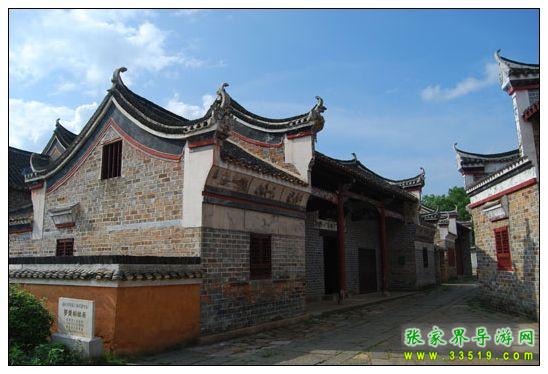
Having weathered storms and undergone many vicissitudes, the old site of the memorial hall grew increasingly dilapidated, and the exhibition rooms were cramped and leaked rain. In order to protect the historical and cultural heritage and vigorously carry forward the revolutionary spirit of the Student Union, the Hengyang Municipal Party Committee and Municipal Government incorporated the renovation and construction of the Student Union into the overall plan for the scenic belt on the east bank of the Xiang River. In September 2003, construction began on the Student Union Memorial Park, covering over 80 mu with an investment of over ten million yuan. Zhuhui District was responsible for the demolition of 40,000 square meters of buildings, and the Municipal Construction Bureau was responsible for construction. The entire project was completed in July 2004. The park is planned in two parts: a memorial area and a recreation area. The memorial area features the newly renovated Xiangnan Student Union Memorial Hall as its main body, highlighting the theme of revolutionary tradition education. In the recreation area, an artificial stream meanders along, exquisite small bridges span the water, and green spaces and flower beds complement the pavilions. All scenic spots in the park maintain an antique style, blending seamlessly and naturally with the Student Union Memorial Hall. The entire park possesses both traditional charm and modern flavor; it is suitable both for visiting and learning, and for leisure and relaxation. The Xiangnan Student Union has become a patriotism education base and a tourist attraction.