This attraction introduction is compiled from historical materials in the "Zhangjiajie Tour Guide Network" (33519.com · Scenic Spots section). Ticket prices, opening hours, transportation, and contact information mentioned in the text may be outdated. Please refer to the latest official announcements from the scenic area before traveling; some content consists of historical background/cultural introductions and is for reference only.
[Ticket Price Information Update · 2026-09-14]
- Yueping Park is now a free public park (amusement rides inside the park are charged separately); open approximately 7:00–23:00.
If old ticket prices/opening hours appear in the main text, they are historical materials and may be outdated, for reference only.
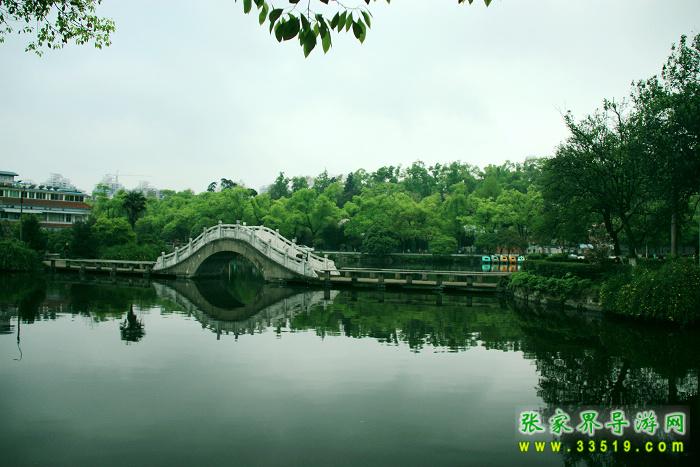
Yueping Park is in the south of Hengyang's urban area, close to the city center, with a total area of 21 hectares. It is named after Yueping Mountain within the park. At the summit there was originally the Xiecuì Pavilion, hidden among fragrant woods. In the late Qing Dynasty, Yueping Academy was established at the summit, and after 1902 it was changed into the Qingquan Official Higher Primary School and a rural normal school. The ancient buildings on the mountain were destroyed by Japanese bombing in 1944. After the victory of the War of Resistance, the people of Hengyang built a brick pagoda at the summit to commemorate the victory. It has now been renovated and renamed the Hengyang Liberation Memorial Pagoda. At the eastern foot of Yueping is the Municipal Museum, which displays and preserves thousands of cultural relics from successive dynasties, and is especially famous for its exhibition on the life, deeds, and writings of Wang Chuanshan. At the western foot is a zoo, with a monkey mountain, bird lake, fish pond, and beast house. On the southern slope of Yueping Mountain there is a roller-skating rink. There is also an artificial lake dredged from Dawan Pond—Yunshui Pond—with pavilions, terraces, bridges, paths, flower beds, and rockeries, elegantly laid out with exquisite craftsmanship.
Admission: 5 yuan.
Location: In the south of Hengyang's urban area, close to the city center.
Area: 21 hectares.
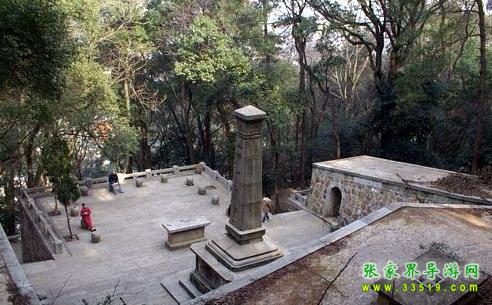
On Yueping Mountain there was once the Xiecuì Pavilion, hidden among fragrant woods. Zhang Tongchang, a zhongshu sheren of the late Ming Dynasty, inscribed "Yueping Autumn Green" at the pavilion. Whenever after snow the sun cleared, birds perched on the pavilion eaves and sparrows clamored on the branches. This was formerly one of the eight scenic spots of Hengyang, with the line "At Yue Pavilion after snow, birds clamor." Considering that the population was sparse at the time and birds often chirped in the mountain forests, this seems credible. In the late Qing Dynasty, Yueping Academy was built at the summit, and behind the academy was an outer city wall like a giant dragon, below which, at the foot of Bao'en Temple, was the Jiangxi Guild Hall. All of this has become history. During the War of Resistance, Hengyang became a heroic city of resistance, and Yueping was naturally a phoenix in the flames; all its ancient relics were reduced to ashes. After the restoration, a "Hengyang War of Resistance Memorial Pagoda" appeared at the summit, with two auxiliary pavilions in front. The front of the pagoda bore an inscription by Chiang Kai-shek. After Liberation, it was renamed the "Hengyang Liberation Memorial Pagoda." It was merely a change of name. To respect history, in 1984 its name was restored to "Hengyang War of Resistance Memorial Pagoda," and the late Chairman Cheng Xingling was respectfully invited to inscribe it. The pagoda body was heightened, and the auxiliary pavilions were renovated, for people to pay tribute to the soldiers who died in the Hengyang War of Resistance. Standing at the summit and looking around, the city walls and streets are all visible at a glance.
Yueping Mountain was formerly also called Huayao Mountain. Legend has it that during the Eastern Jin Dynasty, the two immortals Huang and Ge refined elixirs on the mountain. It is also said that He Xiangu stopped here, hence the name. At the foot of Huayao Mountain was the Guangxiao Bao'en Temple (i.e., Huayao Temple), first built in the fifth year of the Baoyou reign of the Southern Song Dynasty (1257 AD). The temple was solemn, majestic, quiet, and elegant, and was one of the four great Buddhist monasteries of Hengyang at the time. To the west of the temple was Chunxi Well, with clear, emerald water that reflected the gilded carved dragons on the temple. As the water rippled, the dragon forms appeared and disappeared, as if present yet not, and it was praised as "Huayao Spring Stream, Dragon Shows Its Claws," also one of the eight scenic spots of Hengyang. The rear hall of the temple was destroyed in the flames of the War of Resistance, and the surviving front hall was also destroyed during the years of turmoil. Now the ancient temple is completely gone, and the area has been assigned to an opera school. Nearby a children's playground for Hengyang was established, on which a zoo was built, with a monkey mountain, bird isle, fish pond, and beast house, for children and visitors to see rare birds and animals of nature, and a teahouse is also provided for visitors to have a drink.
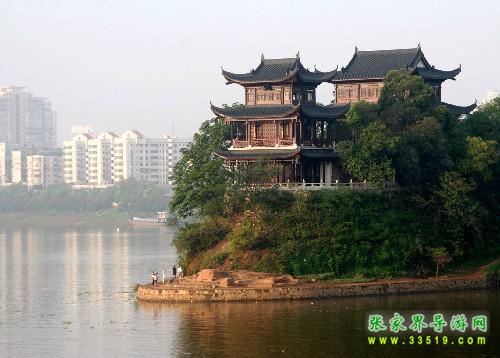
The former site of the Jiangxi Guild Hall at the foot of Yueping Mountain has been converted into a museum, containing a special hall for Master Wang and an antique shop. The dragon exhibition in the Year of the Dragon was especially eye-catching. Adjacent to the museum is a flower garden, where flowers and rare orchids are available for viewing throughout the four seasons and eight festivals. Separated from the museum by only a road is an artificial lake dredged on the basis of Dawan Pond. There is a pool named Yunshui Pond, around which runs a circular path. To the north is a mid-lake pavilion, connected to the lake island by a bridge imitating the Jade Belt Bridge of the Summer Palace. People can play and rest on the lake island. Crossing the winding bridge and following the covered corridor, one comes to a pavilion similar to the Pinghu Qiuyue style of West Lake, with a stilted teahouse above. On the pavilion is a couplet: "Cloud-capped peaks, vast and dim, are fit to enter a painting; water waves rippling form patterns of themselves." This couplet is profound yet accessible, with a charm that appeals to both refined and popular tastes.
The design of the entire garden absorbs features from both north and south, each with its own merits comparable to Huiyan Peak and Shigu Park. The embellishing pavilions, terraces, bridges, paths, flower beds, and rockeries form an integrated whole yet are well arranged with variety. The Garden-within-a-Garden newly established in 1985 adds rare flowers and plants to the garden. The woods are dense, the flowers and plants varied, the winding bridges and fragrant paths delightful, and the towers, terraces, and pavilions radiant. Colored pleasure boats and electric motorboats have been added on the lake, bringing movement within stillness. All of this suits visitors of different backgrounds and offers distinctive charm.
Strolling in the garden with lingering enjoyment, one exits through the south gate and looks back at the white marble carved stone lions, lifelike and vivid, then gazes at the couplet on the white jade stone archway: "Fine air of the four seasons comes from Hengyue; ten li of green mountains form a painted screen." Savored carefully, this couplet is very neat, with the last characters embedding the two words "Yueping." It not only reflects the beautiful scenery of Yueping but also shows the author's exceptional ingenuity.