This attraction introduction is compiled from historical materials in the "Zhangjiajie Tour Guide Network" (33519.com · Scenic Spots section). Ticket prices, opening hours, transportation, and contact information mentioned in the text may be outdated. Please refer to the latest official announcements from the scenic area before traveling; some content consists of historical background/cultural introductions and is for reference only.
Zhuling Immortal Cave is located on the east side of Shigu Mountain. Legend has it that during the Tianbao period of the Tang Dynasty, Dong Fengxian once refined elixirs inside the cave, hence the name Immortal Cave. It is also said that this cave connects northward with Mount Heng and the Water Curtain Cave (also called Zhuling Cave), the two caves being linked, and that a eminent monk from Mount Heng once used this cave to travel back and forth between Hengshan and Hengyang, arriving in an instant. On the cave walls were once left as many as a thousand works by famous figures of successive dynasties such as Du Fu, Han Yu, and Wang Fuzhi, making Zhuling Cave renowned throughout the three Xiang regions for its poetry. Later, due to wars, especially the frenzied bombing by the Japanese invaders, most of the inscriptions and carvings were destroyed. Only the broken edges of the small cave and the remaining characters "Zhuling Rear Cave" and "East Cliff" above the cave entrance were left. Although repairs were later made, the original appearance was difficult to restore. Nevertheless, as one of the Eight Scenic Spots of Hengyang, Zhuling Cave still captivates the hearts of many visitors.
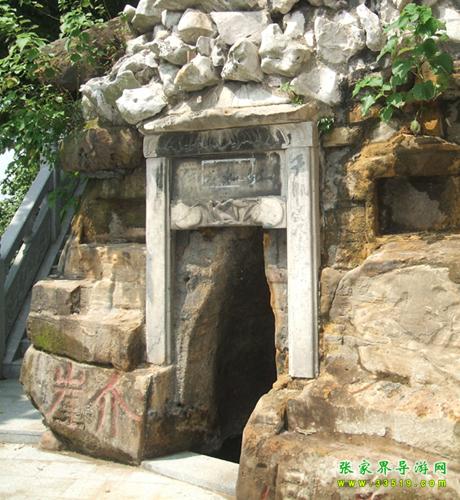
"Within the cave, spring light is boundless, stars resplendent, all should be sword dances in the clouds, light according to." "Immortal doors open, stone stalactites hang down like silver garlic on the sides." These are lines from the ci poem "Ode to Zhuling Immortal Cave" by Wang Fuzhi, the great thinker and literary figure of the late Ming and early Qing dynasties. This description depicts a strange and wondrous scene, with scenery like a jade palace and celestial realm. This "immortal cave dwelling" is one of the Eight Scenic Spots of Hengyang—Zhuling Cave. Zhuling Cave is beneath the cliff on the east side of Shigu Mountain, and is what Daoism calls a "cave heaven and blessed land." Legend has it that during the Tianbao period of the Tang Dynasty, a Daoist priest named Dong Fengxian once refined elixirs inside the cave, hence the name Immortal Cave. It is also said that there is a cave here that leads to Mount Heng; this is the rear cave, while the front cave is at the foot of Mount Heng, connected from beginning to end. It is also said that long, long ago, a person came from Mount Heng to Hengzhou to sell tofu, entering and exiting through this cave, covering a round trip of more than a hundred li in just one morning. But in reality, this cave is only a few square meters wide and a little over two meters high, with no profound underground passage. People praise Zhuling Cave not for its ethereal immortal traces, but solely for its magnificent poetry. "Within Zhuling Cave are a thousand poems," and it is renowned throughout the three Xiang regions for its poetry. Since the Tang and Song dynasties, many poets and men of letters have come here to compose fu and recite poetry in high spirits, often carving their poems on the inner and outer walls of the cave. Du Fu, Han Yu, Zhang Ji, Lü Wen, Du Xunhe, Fan Chengda, Wen Tianxiang, and other literary celebrities intoxicated by the landscape of Hengyang all expressed their feelings through poetry. "Within the cave, jade light should make it never night; the one treading the void enters the crystal palace." (Wang Zaijin: "Zhuling Cave") What a gorgeous scene! This cave may have been a karst cave formed by the erosion of the Xiang River thousands of years ago. On its inner walls were left works by poets of successive dynasties, which over the long years have become incomplete, especially after the frenzied bombing by the Japanese invaders, when the inscriptions and carvings inside were destroyed. After Liberation, only the broken edges of the small cave and the few large carved characters "Zhuling Rear Cave" and "East Cliff" above the cave entrance remained. In recent years, efforts have been made to restore the cave's original form. Nourished by our country's excellent traditional poetry, Zhuling Cave will inspire new poets to write more and better poems.