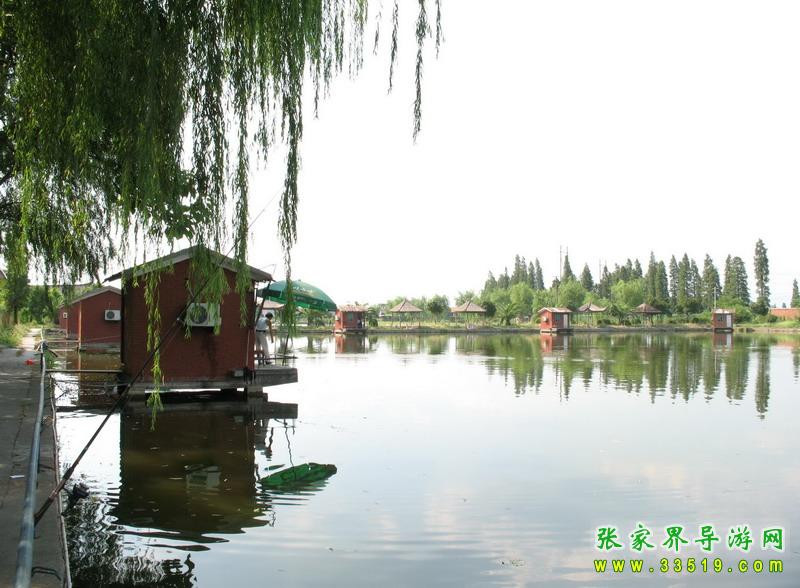
This attraction introduction is compiled from historical materials in the "Zhangjiajie Tour Guide Network" (33519.com · Scenic Spots section). Ticket prices, opening hours, transportation, and contact information mentioned in the text may be outdated. Please refer to the latest official announcements from the scenic area before traveling; some content consists of historical background/cultural introductions and is for reference only.
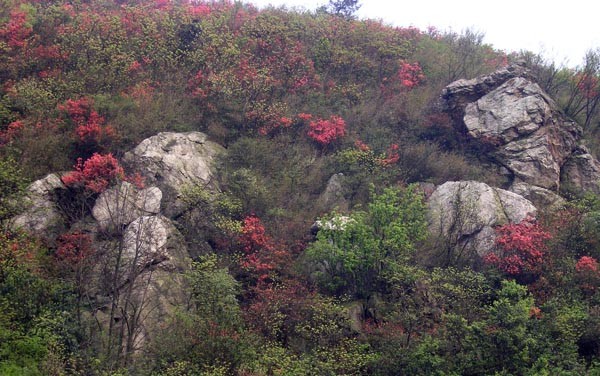
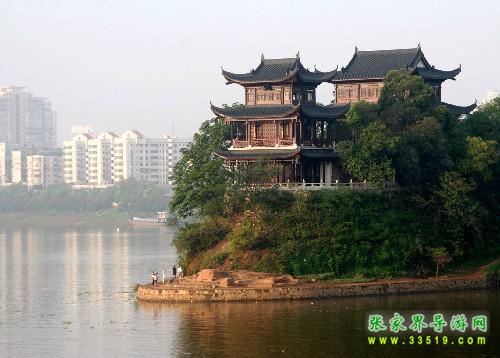
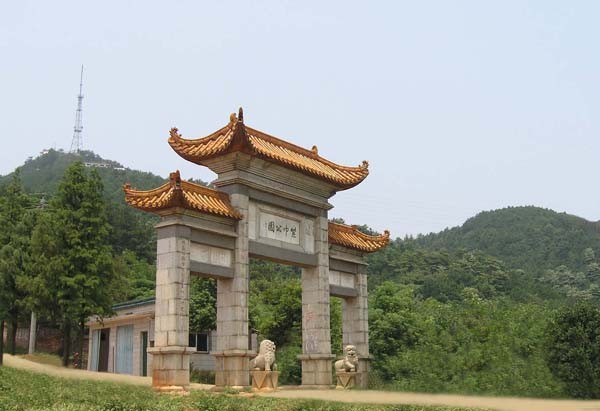
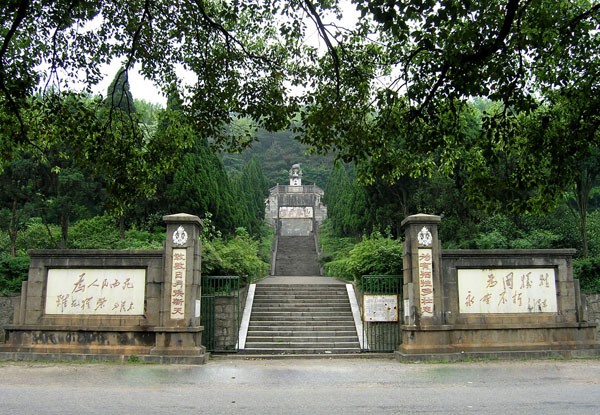
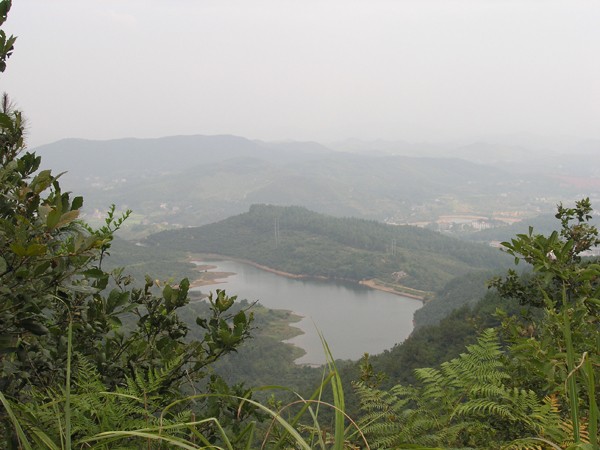
Zijinshan Forest Park is located east of Nanyue and west of Hengshan County town, echoing the Xiang River, 1.5 kilometers from the county center and 15 kilometers from the Nanyue Scenic and Historic Area. Transportation is extremely convenient, and its geographical position is very important. Among the seventy-two peaks of Nanyue, three peaks—Jinzi Peak, Goutou Peak, and others—lie within the park. The total area is 574.5 hectares, with a forest coverage rate of 87%, making it a junction point on the central Hunan forest tourism route. In 1992 it was designated a provincial-level forest park, with 45 natural and cultural scenic spots, making it an ideal resort for sightseeing, rest, and summer escape. The mountain trees are lush and green all year round, and the scenery is beautiful and enchanting. Here the mountains have form, the forests have rhythm, and the waters have sound; the forest is secluded because of light, and the mountain moves with the clouds. Here there are moving legends, poems by ancients, and the footprints of great figures. Here you can gather purple azaleas in spring, listen to the purple-gold pine waves in summer, admire the purple-gold maple reds in autumn, and enjoy the purple-gold snow scenery in winter. It lets you travel within it and be enchanted within it. After entering the memorial archway, follow the cement winding mountain road to reach the park scenic area. Because the mountain road turns with the slopes, it has quite the mood of the "eighteen bends of a mountain road." Entering Guanxiang Pavilion, you can look down on Hengshan, and the "three-dimensional triangle" of the county town is fully visible at a glance; in the distance, the nine-bend Xiang River is like a pure white ribbon drifting toward the horizon, and also just like nine giant dragons rushing together toward Hengshan, so magnificent that one can only gasp in admiration. Continuing upward, you come to the Poetry Stele Corridor. The Poetry Stele Corridor was built by the Hengshan County Government with special funds at the site of the former Nanshan Temple. The three wings of the poetry steles face one another, and the construction craftsmanship is exquisite. It is about 100 meters long in total and has 108 bluestone steles embedded in it, inscribed with poems by ancient and modern literati who climbed Zijin and expressed their feelings. Du Fu's poem on visiting Jinzi Peak is embedded first; Han Yu and the revolutionary martyr Tian Han also have poems carved there. Today, several blank poetry steles remain for later generations to inscribe. The top of the stele corridor is a platform-style scenic corridor for visitors to enjoy the view. By day, one can look down on the fishing sails dotting the Xiang River and the vehicles coming and going south and north on the Beijing-Guangzhou Railway and the Beijing-Zhuhai Expressway; by night, the fishing lights dotting the Xiang River and the ten thousand household lights of the county town are all taken in at a glance, stirring poetic inspiration—even those who cannot write poetry cannot help but recite a few lines.
Zijinshan Forest Park has its own distinctive features: first, it is ancient. Nanyue Hengshan has been a "civilized and profound region" since ancient times, with a deep historical and cultural heritage. When Emperor Shun toured south, he once gathered the feudal lords here and held ceremonies of sacrifice and homage; when Yu the Great controlled the waters, he received guidance from golden slips at Hengshan, built the Zijin Terrace, and left steles; when King Mu of Zhou traveled through Hengshan, he also left two terraces as historic sites. After the Han and Jin dynasties, Buddhism and Daoism flourished together, and eminent monks and immortal Daoists practiced meditation and taught the Dharma here. The famous Qingliang Temple was one of the ten great Buddhist monasteries of Nanyue and was renowned in Japan and Southeast Asia. Famous figures and scholars of successive dynasties gathered here, chanting poems and composing fu. Li Bai and Du Fu expressed their feelings while enjoying the scenery, Han Yu prayed at the mountain and the clouds opened, Zhu Xi and Zhang Shi lectured on the classics, Wang Fuzhi wrote books and expounded theories, and the Lotus uprising raised troops. Second, it is red. Hengshan is a cradle of red tourism resources. The Mao Zejian Martyr Memorial Park and Kangwang Temple, two provincial-level cultural relic protection units, and the Yuebei Peasant Workers' Union 35 kilometers from the park have been included in the province's five premium red tourism routes. In addition, as an old revolutionary base area, Hengshan has a large number of revolutionary martyrs, including the famous Fang Bowu, a principal leader of the Beijing Local Committee and a flower-and-bird painter who died on the gallows together with Li Dazhao; Wen Lizheng, political commissar of the Railway Guerrilla Force; Li Shixing, commander of the First Division of the Fifth Army of the Third Red Army Corps; Xie Huaide, one of the leaders of the great strike of workers at the Anyuan Railway and Mines; and the famous writer and dramatist Tian Han, as well as Mao Zedong during his investigation of the peasant movement, and Zhou Enlai and Ye Jianying during their guerrilla training classes, all of whom left glorious footprints in the park. Third, it is beautiful. Nanyue Hengshan is the most beautiful of the Five Great Mountains. Zijinshan Forest Park is located in the Hengshan mountain range. Owing to the Caledonian and Yanshan movements, the area has layered ridges and rolling peaks, with great differences in elevation. The highest elevation is Zijai Peak at 1026 meters, and the lowest is the bank of the Xiang River at only 60 meters. The park's forest coverage rate is as high as 87%. Within its boundaries there are 104 families, 286 genera, and 587 species of seed plants, including 10 species of nationally key protected plants. There are more than 80 species of wild animals, including 8 species of nationally protected animals. It can truly be said: one garden of greenery, ten li of pine waves, a hundred qing of azaleas, a thousand years of ancient charm, and ten thousand household lights. This is the original producing area of Hengshan Jiulong plums. It has both the intangible cultural heritage Hengshan shadow puppetry and the true prototype of the Yu Wang Stele; both the refreshing Zifeng Yunwu tea and the long-famous Hengshan local dishes... It makes you linger and forget to return, intoxicated with delight.
The park has very convenient transportation and is close to the ancient and civilized Hengshan County town. National Highway 107 passes by the park, Provincial Highway 314 links east and west, and Hengshan Railway Station on the Beijing-Guangzhou Railway line and the Xintang interchange of the Beijing-Zhuhai Expressway are connected to Hengshan County town by a single bridge. The Shigu Station of the Wuhan-Guangzhou high-speed passenger railway under construction is 5 kilometers from the park, and the Tan-Shao Expressway is only 35 kilometers from the park.
Zijinshan Forest Park is rich in resources, with dense vegetation and a great variety of animals and plants. According to surveys, there are 143 species of higher plants and more than 10 species of rare animals, thus forming a forest landscape in which the mountains have form, the forests have rhythm, and the waters have sound; the forest is secluded because of light, and the mountain moves with the clouds, with forest seas and pine waves, streams and flying waterfalls, and waterfall valleys and secluded caves.
Within Zijinshan Forest Park there are currently 26 forest, natural, and cultural landscapes and ancient sites awaiting restoration. First-level scenic spots include six places: Jinzi Peak, the Poetry Stele Corridor, the Thousand-Step Cloud Ladder, the Brilliant Azaleas, Duojinshi, and Dashuilong. Second-level scenic spots include 14 places such as Bailong Spring and Jinzi Pine Waves. Third-level scenic spots include 6 places such as Guanxiang Pavilion and Shitou Ridge. In addition, there are many peripheral scenic spots such as the Mao Zejian Martyr's Tomb, Kangwang Temple, the former site of the Yuebei Peasant Workers' Union, the Hengshan Memorial Hall, the Ouyang Hai Martyr Monument, and the Guanxiangzhou Entertainment City.
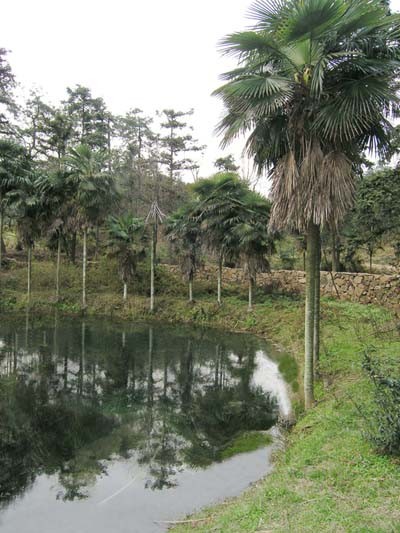
Jinzi Pine Waves: Jinzi Peak stands by the edge of the county town, rising above the surrounding mountains, with an elevation of more than 200 meters. It is covered with 30 hectares of natural Masson pine forest, vigorous and upright, standing on the mountain slopes with a touch of heroic spirit. As the wind direction changes, the pine waves rise and fall continuously.
Maple Grove Autumn Colors: "I stop the carriage, loving the maple grove at dusk; frost-covered leaves are redder than February flowers." At the foot of Jinzi Peak, a stretch of sweetgum trees, adorned by autumn frost, turns red as blood, dotting the green sea and dyeing the mountains.
Cryptomeria Corridor: At Houzi Maiye there is a pure planted forest of about 4 hectares of cryptomeria, planted in the early 1960s. The trunks are straight and tall, and the branches and leaves are so green they seem about to drip. Strolling through the forest with fallen leaves everywhere and treading on thick cryptomeria leaves is like traveling through a long corridor; the fragrance given off by the cryptomeria grove is especially refreshing.
Pear Orchard Households: At Xiaoshuilong there is a pear orchard spreading through the valley. Here there are small bridges, flowing water, and households, creating an incomparable pastoral landscape painting for visitors.
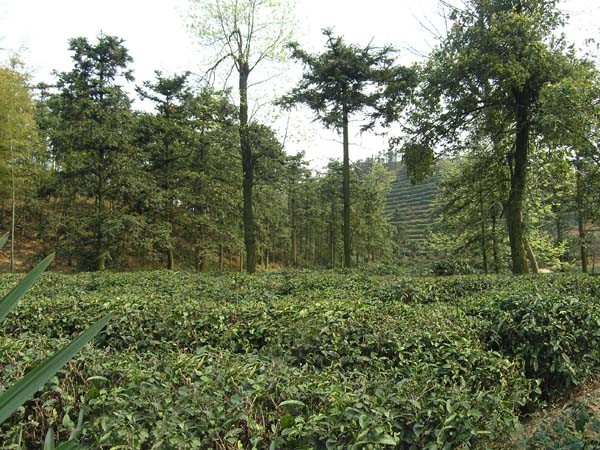
Camellia in Full Bloom: In the Duojinshi area there is a tea-oil camellia grove of about 5 hectares. The famous writer and dramatist Tian Han once wrote many poems, among which lines such as "ten thousand trees of camellia and a belt of pines" and "camellias tucked all over the head on returning" vividly describe the picturesque scenery here.
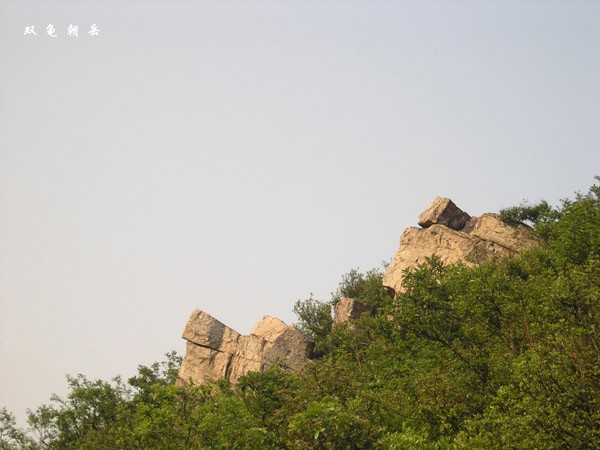
Jinzi Peak: The seventy-two peaks of Nanyue Hengshan have long had the saying, "Sails turn with the Xiang, and Heng is viewed from nine sides." Jinzi Peak is located southwest of the county town and was originally named Zijin Peak. Azaleas grow all over the mountain. Every spring they bloom in competition, especially the purple-flowered azaleas, whose red blossoms are dazzling and shaped like a purple kerchief, hence the name. It has an elevation of 269.5 meters. On it is the Hengshan television relay station, making it the commanding height near the county town. Climbing to its summit and gazing far to the west, the peaks of Nanyue stand erect beyond the clouds; turning to look east, the winding Xiang River shines like a white silk ribbon; at your feet, the ancient Hengshan County town, rich with urban charm, is full of prosperity. At dawn you watch the sunrise, with ten thousand strands of red clouds; at dusk you watch the sunset, with its infinite beauty; at night you watch the moonlight, with graceful tree shadows.
Duojinshi: Located to the west of Jinzi Peak, the two face each other from afar, seemingly within reach. Legend says a great golden stone flew from the sky and fell on the peak tip, hence the name Duojinshi. The stone is a granite body, simple and ancient in appearance.
Streams and Cascading Waterfalls: Zijinshan is relatively rich in water resources. According to legend, there was a small stream that came from Yueshan, flowed past Shigu Bridge, and after reaching Tuwu Peak became the West Stream. There is a bridge over the stream called Xixi Bridge, as well as scenic spots such as Wang Shiba Cave and Liubei Pool.
Wang Shiba Cave The cave entrance is located in a pine forest about 0.5 kilometers north of Liubei Pond. How deep the cave goes, no one has ever walked through it to this day. Legend has it that a vegetable farmer named Wang Shiba would carry vegetables into the cave every morning, sell them in Hengyang, then return through the same cave in time for breakfast, covering three hundred li round trip. The cave is deep and cool inside, with ancient towering pines outside.
Bailong Spring On the eastern hillside of Jinzi Peak, beside the Poetry Stele Corridor, a pool of spring water flows out from within the rock, never overflowing nor running dry. During heavy rains, the spring water churns up and down, believed to be caused by the white dragon swaying, hence the name.
Thousand-Step Cloud Ladder In the pine forest on the southeast side of Jinzi Peak, it is a stone staircase built of granite. Strolling up it gives one the feeling of "to see a thousand miles farther, climb one more storey."
The park has a pleasant climate and many tourist attractions. It is the best place for summer retreats and convalescence, adventure and exploration, sightseeing and recreation, science education, fishing and hunting.
To fully leverage the advantages of forest tourism resources, the local government attaches great importance to the park's development and has granted a series of preferential policies for the park's development. The park is specifically seeking investment from both home and abroad, and various service projects such as hotels, sanatoriums, and holiday resorts can be built. We sincerely welcome discerning investors from home and abroad to invest in Zijin Park and jointly participate in the park's construction.
Best travel season: The best travel season for Hengshan County should be March to May. The temperature is just right! Comfortable! A single woolen sweater is enough! The spring breeze caresses your face! It is truly wonderfully comfortable!
Transportation: Hengshan County has highly convenient transportation and has now initially formed a three-dimensional transportation network integrating rail, water, and road. The Beijing-Guangzhou Railway running north-south passes parallel with four major transportation arteries: the national highway, the Beijing-Zhuhai Expressway, and the Xiangjiang water route; the Provincial Highway 314, which crosses the Hengshan Bridge, and the Dayuandu Navigation-Power Hub Dam Road on the Xiangjiang in Hengshan connect the east and west banks of the Xiangjiang. These four vertical and two horizontal routes form a transportation pattern shaped like the Chinese character mu, extending in all directions and running through north, south, east, and west. In particular, the Xintang entrance and exit of the already open Beijing-Zhuhai Expressway is less than three kilometers from the county seat center. The advantages of fast and convenient transportation have shortened the distance between Hengshan and other places.
After entering the memorial archway, follow the cement winding mountain road to reach the park scenic area
Food: Huzhijiu (Huzhi Wine)
Originally named Lingjiu. Produced in Hengyang City. Brewed from glutinous rice and Linghu Lake water. The wine has a lingering aroma, clear and sweet. Zhang Zai of the Jin Dynasty said in his "Ode to Lingjiu": "Precious wine comes from Xiangdong, greatly renowned in the imperial capital... Brewing begins in autumn, completion comes in spring. It has complete flavors, nourishing and harmonious, with a pure and clear body. It invigorates the spirit and governs the will, its extraordinary qi nourishes the soul. It dispels worries and eliminates troubles, suiting one's nature and following one's feelings. Those who speak of it praise its delicious taste; those who record it abandon their affairs and forget glory." Such high praise indeed. Huzhi Wine has always been brewed only in Hengyang and is a beverage loved by locals, but it has also influenced the Hengshan area. It is mostly extracted from good rice wine, called jiufuzi; with a little water added, it is also called shuijiu. This wine can ward off cold in winter and quench thirst in summer. In the past, ordinary taverns all sold it, called Furong Wine, excellent in color, aroma, and taste. And Hengdong County, formerly part of Hengshan, also brews a premium grain wine called Yueshan Daqu, which together with Furong Wine are renowned wines of the Hengyue region.
Crispy Thin Mooncakes
A famous, superior traditional specialty food of Hengyang City, with a production history in Hengyang of over 140 years. The Hengyang Nanbei Special Food Factory conducted detailed research on the ingredients and production of traditional crispy thin mooncakes, creating a new generation of Shigu-brand crispy thin mooncakes with carefully selected ingredients, fine workmanship, unique flavor, and a fluffy, crispy, delicious taste, loved by diners at home and abroad. Shigu-brand crispy thin mooncakes use 12 ingredients including high-grade white sugar, maltose, refined flour, cream, animal and vegetable oils, rose, osmanthus, candied melon, and sesame paste, refined through 14 traditional craft processes combined with modern technology. The surface is golden yellow, the bottom is cream-colored, round like the moon, uniformly thick, with about 10 pieces weighing 0.5 kilograms. In 1981 it won the National Silver Quality Award, and in 1988 it won the Gold Award at the First China Food Expo.
Yulin Xiangyao
A traditional flavorful delicacy of Hengyang. Also known as "Pagoda Xiangyao" and "Guanduizi Xiangyao." It was created by the family chef of Peng Yulin, a famous official of Hengyang in the Qing Dynasty, based on local flavorful snacks such as fish balls, huangque meatballs, and guoshao meatballs, hence the name. This dish gathers many snack varieties in one bowl, stacked layer upon layer, shaped like a pagoda, symbolizing rising step by step. Later it spread to the common people and became a fixed first-course dish in Hengyang-style banquets, and is also an indispensable item in family reunion meals for weddings, childbirth, birthday celebrations, or festivals. The dish has seven layers, from bottom to top: red dates with tiger-skin eggs, slippery meat, guoshao meatballs, huangque meat, fish balls, egg rolls, and kidney slices. Other dishes can also be added on top. Topped with sea cucumber it is called "Sea Cucumber Xiangyao," topped with dried scallops it is called "Yaozhu Xiangyao," topped with sliced meat, pork liver, pork heart, etc., it is the ordinary Pagoda Xiangyao. The base layer can also vary according to person, season, and material conditions. Its characteristics are: beautiful presentation, brilliant colors, savory-sweet and fresh-fragrant, delicious and tasty.
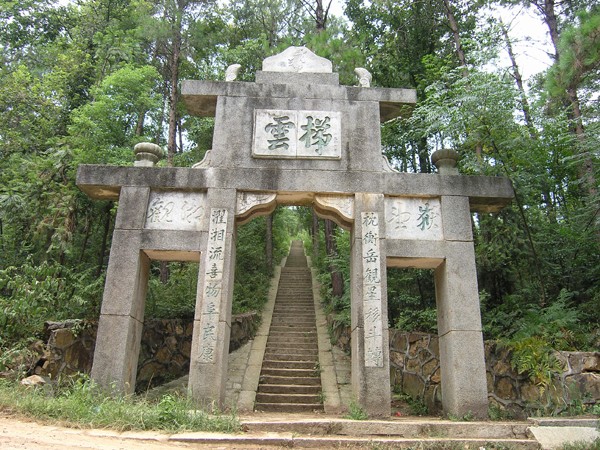
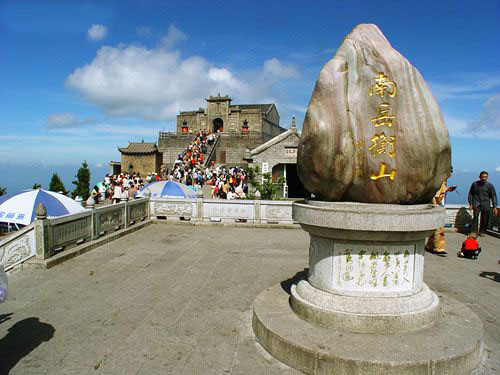
Climbing the Hundred-Step Cloud Ladder of 123 steps, you can see three powerful characters "Zijin Peak" carved on a huge rock. This huge rock is five meters high. There is a palindrome poem "Hengshan's Scenery Is the Finest Here": Changsheng views the isle, sails mooring on waves / Yong hears the flute, the shepherd's pride, Han Xiao / Fu Gang reflects the Xiangjiang, ever brighter at night / Huai Dong gazes at purple peaks, casting the moon / Flowing qi cuts off the peak, chanting in morning mist / Evening wildness, desire and joy, poetry in the vast sun / Resounding bells at the temple, mist in the west, vast.
This poem encapsulates the Eight Scenes of Hengshan within it. Read from the middle back and forth, the right half of the last character of the previous line is the first character of the next line. Savored carefully, it has a uniquely charming appeal when read.