This attraction introduction is compiled from historical materials in the "Zhangjiajie Tour Guide Network" (33519.com · Scenic Spots section). Ticket prices, opening hours, transportation, and contact information mentioned in the text may be outdated. Please refer to the latest official announcements from the scenic area before traveling; some content consists of historical background/cultural introductions and is for reference only.
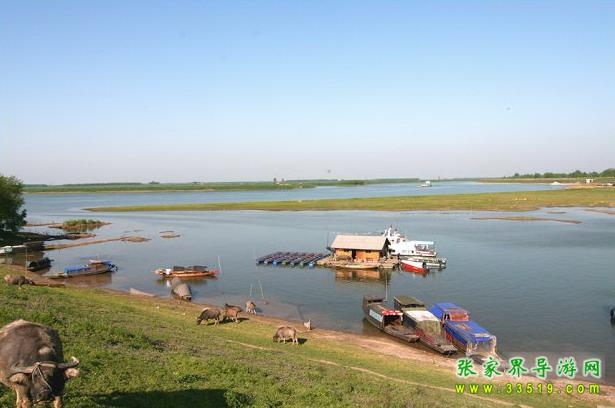
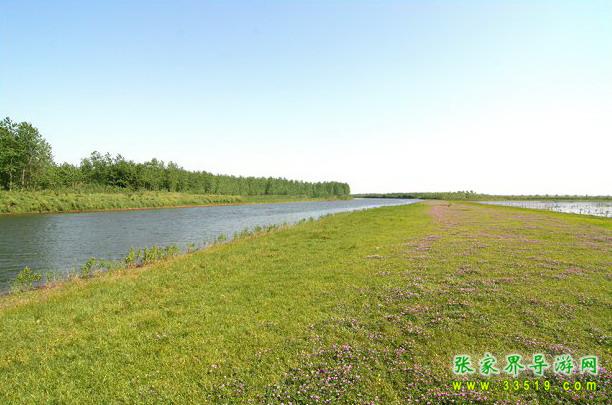
Dongting Lake was called "Yunmeng Marsh" in ancient times and is China's second-largest freshwater lake. It spans Hunan and Hubei provinces, connecting to the Yangtze River in the north and receiving the four rivers Xiang, Zi, Yuan, and Feng in the south, and is known as the "eight-hundred-li Dongting Lake." The meaning of Dongting Lake is the cave dwelling of immortals, which shows how beautiful and enchanting its scenery is. Dongting Lake is vast and winding, with towering mountains. Its greatest feature is that there are lakes beyond the lake and mountains within the lake, with fishing sails dotting the water, green reeds, water and sky merging into one color, and gulls and egrets flying. The scenery differs in the four seasons of spring and autumn, and changes endlessly within a single day. Among the "Eight Views of Xiaoxiang" described by the ancients, "Autumn Moon over Dongting," "Returning Sails from Distant Shores," "Wild Geese Alighting on Flat Sands," "Fishing Village in Evening Glow," and "Evening Snow on River and Sky" are all reflections of the present East Dongting Lake.
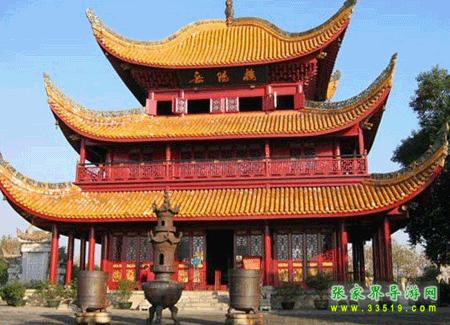
Writers and poets of past dynasties have all passionately praised the beautiful Dongting Lake. The "Record of Yueyang Tower" by Fan Zhongyan, a famous Northern Song statesman, military strategist, and writer, describes the ever-changing scenery of Dongting Lake from the perspective of Yueyang Tower (looking down from above) in vivid and widely admired detail. The momentum of Dongting Lake is majestic and magnificent, and the moonlight over Dongting Lake is soft and splendid. Even in gloomy, misty weather, it gives people a unique and mysterious feeling, arousing people's desire to travel. The vast, blue-wave Dongting Lake deserves to be called "the finest water under heaven." Boating on the lake brings joy and endless pleasure.
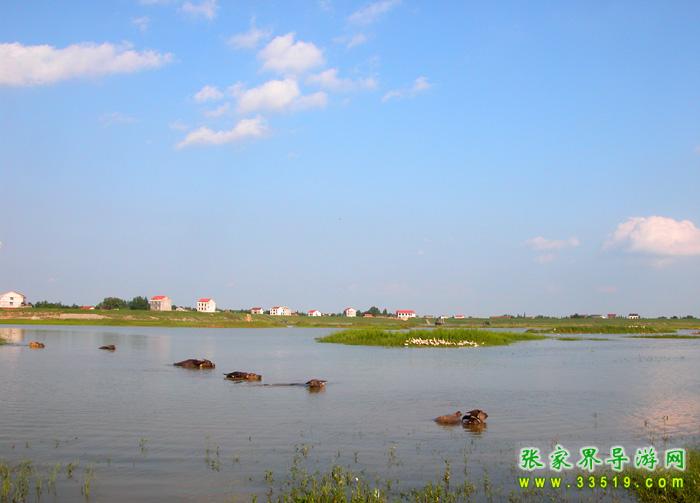
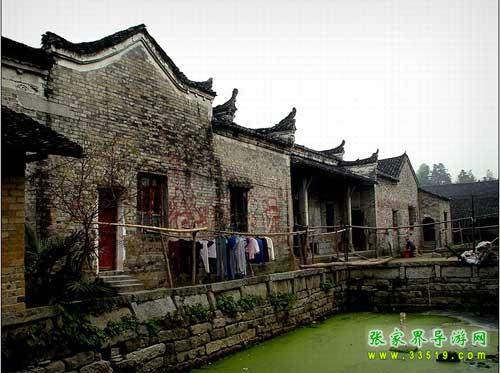
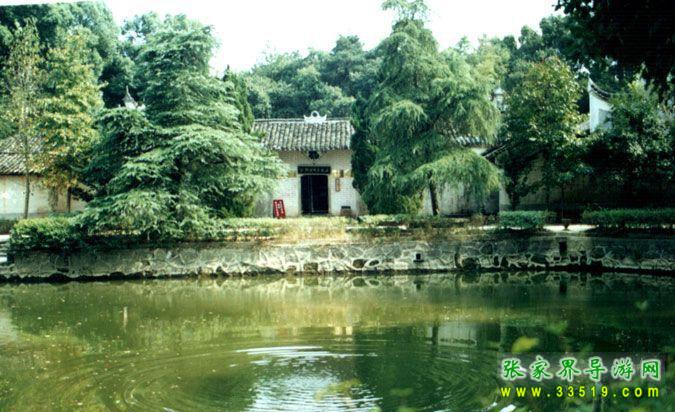
The lakeside scenery is extremely beautiful, and many scenic spots are national-level scenic areas, such as Yueyang Tower, Junshan, Du Fu's Tomb, Yang Yao's Stockade, the Iron Sutra Pillar, Qu Yuan Temple, Yuelong Pagoda, the Confucian Temple, and Longzhou Academy, among other historical sites. At Chenglingji, where West Dongting Lake meets the Yangtze River, there is a place called Sanjiangkou. Looking out at Dongting from here, one sees the Xiang River surging north, the Yangtze rolling east, water birds soaring, hundreds of boats racing, and water and sky merging into one color—a truly majestic and spectacular scene. The folk legends of Liu Hai teasing the golden toad, Dongfang Shuo stealing immortal wine, and the two consorts of Emperor Shun searching thousands of miles for their husband all originate from this place... The most famous spot in the lake is Junshan, which has beautiful scenery. It is an isolated island on Dongting Lake, with 72 peaks of various sizes. There is a ferry here every day, with a voyage of about one hour. Touring the mountains takes one day—go in the morning and return in the afternoon. Having visited Junshan and also enjoyed a cruise on Dongting Lake, you get two benefits in one trip. Junshan was originally called Dongting Mountain, meaning the cave dwelling of immortals. Legend has it that 4,000 years ago, Emperor Shun made a southern inspection tour, and his two consorts Ehuang and Nüying, unable to catch up, clung to bamboo and wept bitterly. Their tears dripped onto the bamboo, turning it into mottled bamboo. Later the two consorts died on the mountain, and later generations built the Tomb of the Two Consorts. The two are also called Xiangfei and Xiangjun. To commemorate Xiangjun, Dongting Mountain was renamed Junshan. Existing historical sites include the Tomb of the Two Consorts, Xiangfei Temple, Liuyi Well, and the Flying Bell. Junshan's bamboo is very famous, including mottled bamboo, arhat bamboo, square bamboo, solid bamboo, purple bamboo, moso bamboo, and more. A grand Dragon Boat Festival, Lotus Festival, and water sports events are held here every year.
Dongting Lake is a famous land of fish and rice, and its products are extremely rich. The lake's specialties include river mussels, yellow eels, Dongting crabs, snakehead fish, and other precious freshwater delicacies, as well as famous Junshan tea and bamboo products such as arhat bamboo, square bamboo, solid bamboo, purple bamboo, mottled bamboo, and moso bamboo, with a very wide variety.
Dongting Lake is China's second-largest freshwater lake. In the center of the lake is a verdant, ever-green small mountain called Dongting Mountain, from which Dongting Lake gets its name. The total lake area is about 18,000 square kilometers. To the south of the lake is Hunan Province, and to the north is Hubei Province. During floods, the lake is vast like a sea, with an area of 3,900 square kilometers and a volume of one to two hundred billion cubic meters. To its south, the four rivers Xiang, Zi, Yuan, and Li flow in; to its north, the four outlets Songzi, Taiping, Ouchi, and Tiaoxian connect with the Yangtze River. The lake water finally empties into the Yangtze River at Chenglingji in Yueyang. It is like a natural large reservoir, containing the four rivers, taking in and discharging the Yangtze, regulating floods, and controlling Chu while embracing Wu.
There are many explanations for the origin of the name Dongting Lake. In ancient books such as the "Records of the Grand Historian," "Rites of Zhou," and "Erya," there are records of "Yunmeng." Meng was the Chu dialect word for "lake marsh," interchangeable with the character "mang." "In the first year of Duke Zhao of the Spring and Autumn period, the Viscount of Chu and the Earl of Zheng hunted in the dream of Jiangnan." It also says: "In the fourth year of Duke Ding, the Viscount of Chu crossed the Sui and crossed the river, entering the clouds." The "Hanyang Gazetteer" says: "Yun is north of the river, Meng is south of the river." Together they are collectively called Yunmeng. At that time, the area of Yunmeng Marsh once reached 40,000 square kilometers. "Modern Explanation of Geography" records: "East to Qizhou, west to Zhijiang, south of Jingshan, north of Qingcao—all were ancient Yunmeng." Sima Xiangru's "Rhapsody on Zixu" says: "Yunmeng is eight or nine hundred li square." By the late Warring States period, due to sediment deposition, Yunmeng Marsh was divided into north and south parts. North of the Yangtze became marshland, while south of the Yangtze still retained a vast lake. From then on it was no longer called Yunmeng, and this large lake was called Dongting Lake, because there is a famous Junshan in the lake, originally named Dongting Mountain. "Brief Record of the Xiangfei Temple" states: "Dongting is one of the cave dwellings of immortals. Because it is the courtyard of Dongting, it is called Dongting. Later generations, because it is a vast expanse with floods reaching the sky and no way to describe it, pointed to Dongting Mountain and named the lake Dongting Lake." This is the origin of the name Dongting Lake.
Dongting Lake's blue waters merge with the sky, vast and boundless. From ancient times to the present, through all dynasties, records and descriptions of it have been countless. During the Warring States period, the great poet Qu Yuan repeatedly sang of the beautiful Dongting Lake in his poems, such as "up to Dongting and down to the river" in "Lament for Ying"; "I turn my path toward Dongting" in "Xiangjun"; and "the autumn wind blows gently, Dongting's waves ripple as leaves fall" in "Lady Xiang." In the poems "Xiangjun" and "Lady Xiang," Qu Yuan, based on folk legends, depicted Dongting Lake as a place where immortals come and go: a pair of beautiful gods of love, riding a light, flying cassia boat, playing melodious panpipes, cruising on the autumn-wind-rippled blue waves of Dongting. Xiangjun used lotus, fragrant angelica, asarum, purple cowrie, cassia, magnolia, wintergreen, and climbing fig—specialties of the Dongting area—to construct a fragrant water palace to welcome the arrival of Lady Xiang.