This attraction introduction is compiled from historical materials in the "Zhangjiajie Tour Guide Network" (33519.com · Scenic Spots section). Ticket prices, opening hours, transportation, and contact information mentioned in the text may be outdated. Please refer to the latest official announcements from the scenic area before traveling; some content consists of historical background/cultural introductions and is for reference only.
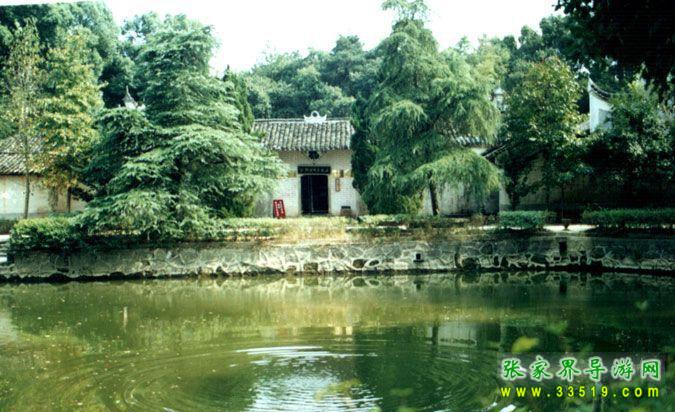
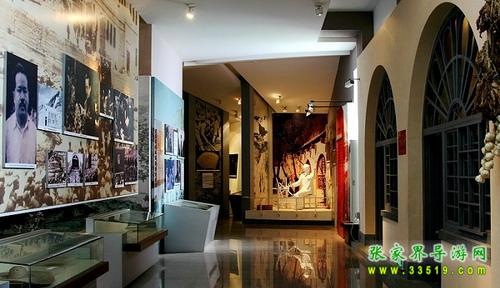
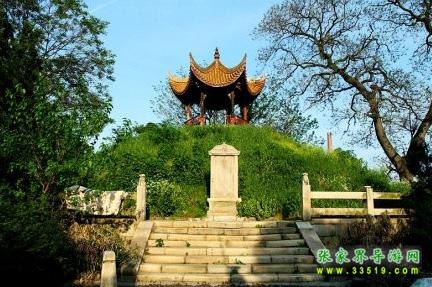
Lu Su's Tomb is located on the south side within Factory 3517, about 200 meters north of Yueyang Tower. It covers more than 800 square meters, with a mound 8 meters high and 32 meters in diameter. Around the tomb, along the circular path, granite railings are built. On the south and north sides there are stone steps leading to the top of the tomb. On the tomb top stands a hexagonal pavilion with red pillars and yellow tiles, 6 meters high, occupying 20 square meters. In front of the tomb is a stele erected in the fifteenth year of Guangxu of the Qing dynasty (1889) by Zhou Zhide, magistrate of Baling County, inscribed "Tomb of Wu Grand Master Lu Gong Su." On both sides are tomb chambers, now converted into exhibition rooms introducing Lu Su's life and deeds to visitors. Eight meters from the stele stands a four-pillar, three-bay stone memorial archway 3.5 meters high and 4 meters wide. The archway pillars bear a couplet:
Supporting the Emperor and exposing Cao's treachery, his insight surpassed that of Xun Yu;
Serving Wu while cherishing Han lineage, his heart was the same as that of Marquis Wu.
This gives a fair and judicious appraisal of Lu Su's life's work and political views.
Lu Su, courtesy name Zijing, was a native of Dongcheng in Linhuai of the Eastern Han dynasty, i.e., present-day Dingyuan County, Anhui Province. He was a political and military strategist of outstanding merit in Eastern Wu during the late Eastern Han dynasty. The "Records of the Three Kingdoms: Book of Wu" says he had heroic integrity from youth, was fond of ingenious stratagems, was wealthy, and by nature generous in giving. During the warlord chaos of the late Eastern Han, he contributed his family fortune and followed Zhou Yu to join Sun Quan. When Sun Quan first met him to secretly discuss state policy, he made the judgment that "the Han house cannot be revived, Cao Cao cannot be eliminated overnight; for the General's plan, there is no choice but to establish a tripartite footing east of the Yangtze and watch for openings in the realm." His views were in remarkable accord with Zhuge Liang's "Longzhong Plan." Before the great Battle of Red Cliffs, he strongly advocated allying with Liu Bei against Cao Cao. During the war he mediated extensively, reconciling conflicts between Zhou Yu and Kongming, and finally assisted Zhou Yu in winning the great Battle of Red Cliffs, laying the foundation for Sun Quan's dominance over the region east of the Yangtze. After the Battle of Red Cliffs, he strongly advocated lending Jingzhou to Liu Bei, strengthening the alliance with Liu Bei, increasing Cao Cao's adversaries, and bringing about the tripartite balance of power. When Cao Cao heard that Sun Quan had lent territory to Liu Bei, the writing brush he was holding while writing fell to the ground. The Qing dynasty poet Li Diaoyuan praised him in the poem "Lu Su's Tomb": "Lending Jingzhou could make Lord Cao drop his brush; never lightly regard the man within the tomb." In 210, when Zhou Yu was critically ill in Yueyang, he wrote to Sun Quan from his sickbed, strongly recommending Lu Su to succeed him, saying: Now that we are enemies of Cao Cao, and Liu Bei is close by at Gong'an, the border is extremely near, and the people have not yet fully submitted. We should have a good general to guard and pacify Baqiu. Lu Su's wisdom is fully equal to this task. I beg you to let him replace me; then even if I die, I will have no worries left behind. After Zhou Yu's death, Sun Quan accordingly ordered Lu Su to guard Yueyang. In Yueyang, Lu Su once went to Yiyang for a single-blade meeting with Guan Yu, reasoning with Guan Yu and moving him with emotion, finally persuading Guan Yu to agree to take the Xiang River as the boundary, thereby establishing the border between Wu and Shu. In Yueyang he stationed troops and built a city, strengthened border defense, built the Military Review Tower to drill officers and soldiers, and generously pacified the people of Baqiu, allowing the people amid war to recuperate. Therefore, the people of Yueyang through the ages deeply remembered his virtue, revered him as a worthy, and specially built the General Lu Temple to offer sacrifices to him. In addition, his memorial tablet was also enshrined in the "Three Worthies Temple" and the "Confucian Temple's Shrine of Notable Officials." All this shows that as long as one sincerely does good deeds for the people, the people will never forget.
There are five known Lu Su tombs nationwide, distributed in Yueyang, Hanyang, Zhenjiang, Dantu, and Jurong, with various claims as to which is authentic. He Guangyue's "Examination of Ancient Tombs of Three Kingdoms Notables in Yueyang" holds that the Yueyang Lu Su tomb is a remnant of a relocated burial. "Yueyang is hot in summer, and Lu Su died during the dog days, so the coffin could only be temporarily interred to stabilize military morale. Moreover, since Wei and Shu constantly harassed the river routes, Lu Su's coffin could hardly be transported back to Eastern Wu by the Yangtze for burial, so a temporary burial tomb exists." Later, Lu Su's son Lu Shu, as General of Zhaowu, was transferred to be Commander of Xiakou, and only then moved his father's tomb to Guishan in Hankou; hence Guishan is also called "Lu Mountain." The Lu Su tomb in Yueyang legend is quite mysterious, saying that the huge red-lacquered coffin in the tomb chamber was suspended by copper cables and iron chains, with a large oil vat before the coffin burning an eternal lamp, and on the wall hung the Qingfeng sword Lu Su had used in life. If the coffin were to fall to the ground, a great fire would break out in Yueyang. During the "Cultural Revolution," when air-raid shelters were being dug, some people wanted to make use of this large tomb chamber. After precise calculation, they dug from both the north and south sides, and the two teams indeed met underground, but found nothing. In fact, the Tongzhi-era "Baling County Gazetteer" of the Qing dynasty, in recording Lu Su's tomb, already suspected it was a "boot tomb," and some even said it was a later fabrication. However, none of this affects Lu Su's image as an eternal "worthy" in the hearts of the people of Yueyang.