This attraction introduction is compiled from historical materials in the "Zhangjiajie Tour Guide Network" (33519.com · Scenic Spots section). Ticket prices, opening hours, transportation, and contact information mentioned in the text may be outdated. Please refer to the latest official announcements from the scenic area before traveling; some content consists of historical background/cultural introductions and is for reference only.
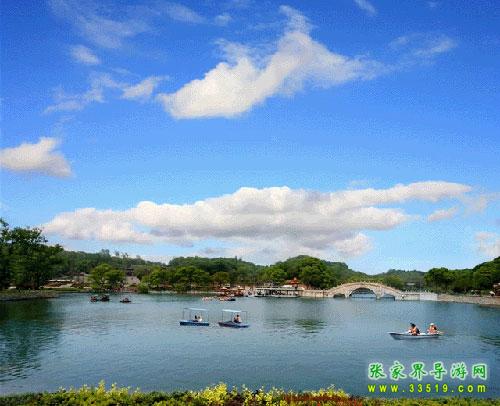
Junshan is located in Dongting Lake, 15 kilometers southwest of Yueyang City, a small island with an area of less than 100 hectares. Originally named Dongfu Mountain, meaning the 'courtyard of the cave dwelling' of immortals. Legend says this 'Dongting Mountain floats on the water, beneath which are hundreds of golden halls where jade maidens dwell, and the sound of metal, stone, silk, and bamboo instruments is heard in all four seasons, echoing to the mountaintop.' Later, because Emperor Shun's two consorts Ehuang and Nüying were buried here, and Qu Yuan in his 'Nine Songs' called them the Lady of the Xiang and the Lady of the Xiang, later generations renamed this mountain Junshan.
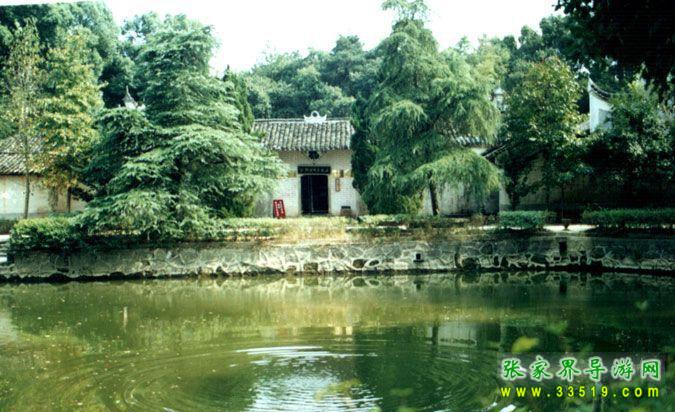
Junshan is composed of seventy-two peaks, each one ethereal and beautiful. 'The misty waves are still, the scene is deep and serene, / No trace of emerald, only deepening green. / One suspects it is where the water nymph combs and washes, / A single spiral of dark blue at the center of the mirror.' This ethereal scenery has intoxicated countless literati, and the magical, wonderful legends inspire even more reverie. Leaving the boat and climbing the mountain, one may first pay respects at the 'Tomb of Emperor Shun's Two Consorts.' The stone-carved couplet on either side of the tomb reads: 'The two souls of the lord's consorts fragrant through the ages, / The speckled bamboo of the mountain, tears for one man.' The phrase 'tears for one man' comes from this allusion: Yu Shun on his southern inspection tour died at Cangwu, and his two beloved consorts Ehuang and Nüying came to Dongfu Mountain seeking their husband. Suddenly hearing the terrible news, they were overcome with grief and, clutching the bamboo, wept bitterly. Their tears of blood dripped onto the bamboo, which became speckled bamboo. The two consorts died of grief at Junshan and were buried here. Crossing a mountain ridge from the Two Consorts' Tomb and walking a short distance, one arrives at 'Liu Yi Well.' The story of 'Liu Yi Delivers a Letter,' written by Li Chaowei of the Tang Dynasty, took place here. On the western hill is Yang Yao's Fort, said to be the site of the military camp of Yang Yao, leader of the peasant uprising army at Dongting Lake in the early Southern Song Dynasty. Departing from here, one reaches Jiuxiang Mountain. Legend says there was fine wine on the mountain, and drinking it would make one immortal. Emperor Wu of Han, who sought eternal life, heard of this and sent the scholar Luan Ba to Junshan to seek the wine. After the wine was obtained, it was drunk by Dongfang Shuo, which later caused a great joke.
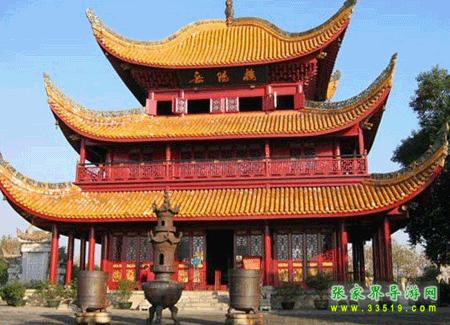
Junshan has a unique topography and is the largest island in Dongting Lake. On the island there have historically been 36 pavilions, 48 temples, Qin Shi Huang's mountain-sealing seal, Emperor Wu of Han's 'Shooting the Flood Dragon Terrace,' and other precious cultural relics and sites. Junshan Yinzhen tea is renowned at home and abroad and has been listed as tribute since the Tang Dynasty. By the Miluo River are the Qu Yuan Temple and Du Fu's Tomb. In addition, the scenic area also has the Cishi Pagoda, the Jindai Confucian Temple, the Lu Lu Tomb, Huanggai Lake, the Three Kingdoms ancient battlefield, and other places of historical interest.