This attraction introduction is compiled from historical materials in the "Zhangjiajie Tour Guide Network" (33519.com · Scenic Spots section). Ticket prices, opening hours, transportation, and contact information mentioned in the text may be outdated. Please refer to the latest official announcements from the scenic area before traveling; some content consists of historical background/cultural introductions and is for reference only.
Spring colors rise by the lakeside, green waters and fragrant shores, / Peering into the void, water creatures play among the fireflies. / The wind stirs faint ripples, turning brocade waves, / Dot by dot, star by star.
Do not let it drift and scatter, / But recognize the clear river— / The Peach Blossom Spring world is here and now. / Before Jiaoguang Bridge, clear as jade, / Reflections perfectly distinct.
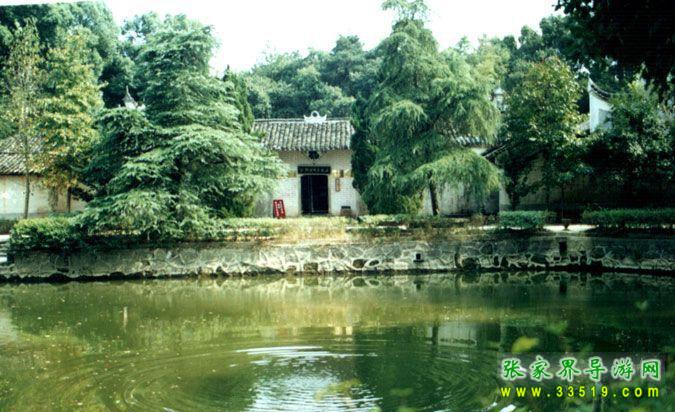
Outside the south gate of Lucheng there is a bridge called Jiaoguang Bridge. This bridge spans Baisha Harbor, directly facing Guanyin Pavilion. In spring, peach blossoms and flowing water; in summer, lotus buds emerge; in autumn, mountain colors of dark blue; in winter, morning mist and evening smoke congeal—what a beautiful scene of lake and mountain, a paradise on earth. See the fishing rods by the weeping willows, geese and ducks at leisure—one cannot help but feel enchanted. Every morning, when the morning breeze wrinkles the lake surface in circles and the rosy dawn reddens the water and mountains, in people's drowsy eyes, the women washing clothes and yarn on both banks come in groups to the water's edge below the bridge, and then the laughter, the sound of beating clothes, and the splashing of water merge into a harmonious, melodious symphony. Accompanied by birdsong and dogs barking, it is like a poem, like a painting.
Legend has it that in the late Tang Dynasty, a beauty named Wanzhu was born to the Xiao family of Lucheng. She was gentle in temperament, upright in character, delicate and clever, beautiful as a fairy. One day, King Ma Yin of Chu passed by the bridgehead, gazing freely from his tall horse, completely enchanted. Suddenly, he noticed among the clothes-beating women a young girl, lovely as Xi Shi, simple and elegant, with graceful bearing, tender and charming—far beyond any ordinary pretty girl from a humble family. He could not help but feel love at first sight. So he sent someone to act as matchmaker and took her as his wife. Later, this woman became the famous Consort Xiao, known as Empress Xiao. From then on, the bridge became known because of the person, and the water became famous because of the bridge. 'Jiaoguang Spring Water' thus became 'the first of the Eight Scenes of the Xiang River Bank at Lucheng.'
In the sixteenth year of the Jiajing reign of the Ming Dynasty, Linxiang County Magistrate Yin Zhongwen rebuilt the old bridge and renamed it 'Yongxing Bridge.' In the fifty-first year of the Kangxi reign of the Qing Dynasty, Magistrate Fu Lin replaced the wooden bridge with a stone-slab bridge surface and renamed it 'Tongji Bridge.' In 1964, it was renovated and updated as a reinforced concrete bridge, named 'Lucheng Bridge.' In 1987, considering the limited load-bearing capacity of the single bridge, people built another single-arch bridge about one hundred meters upstream from the old bridge, named 'Zhenxing Bridge.' Viewed from near or afar, they resemble twin rainbows lying on the waves, reflections floating in the sky, further enhancing the splendor of this scenic spot.