This attraction introduction is compiled from historical materials in the "Zhangjiajie Tour Guide Network" (33519.com · Scenic Spots section). Ticket prices, opening hours, transportation, and contact information mentioned in the text may be outdated. Please refer to the latest official announcements from the scenic area before traveling; some content consists of historical background/cultural introductions and is for reference only.
The bright moon rises from the eastern mountain, / Shining through the human world, / Deep in the white clouds hides the city bay. / Wave after wave, the sound of the great bell roars, / Awakening the foolish and stubborn.
Worldly affairs are ever troublesome, / Fame and gain leave no gap, / Best to come for a dose of cool elixir. / Understanding the clear and empty ancient response, / Birds roost, the gate closes.
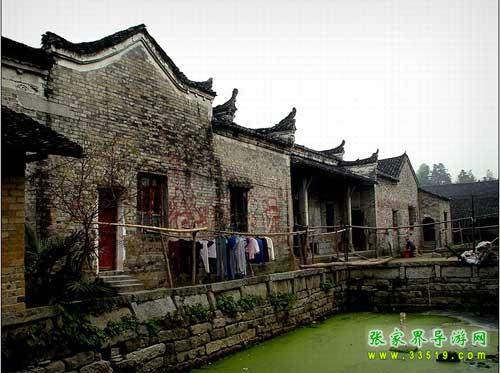
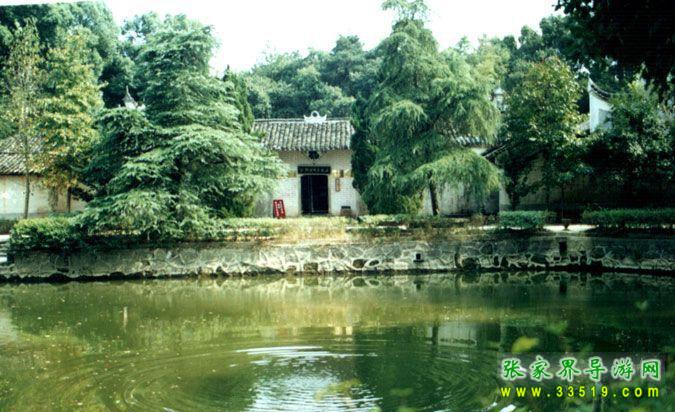
Jiayou Temple is located outside the south gate of Lucheng. In the fifth year of the Jiayou reign of the Northern Song Dynasty (1060), Emperor Renzong traveled incognito to Lucheng and, captivated by the scenic wonders of Yuliang's clear haze, Ma'an's sunset glow, and Chunhu's night moon, lingered for many days. He decreed that a temple be built at his lodging place as a memento and personally wrote the three characters 'Jiayou Temple' in imperial brush. The abbot Congti was ordered to rebuild it. In the Qing Dynasty, the Taiping Army burned the temple buildings, and the ritual implements were scattered and lost. The temple's treasure—the authentic imperial inscription 'Jiayou Temple'—and the ancient Netherworld Bell were both destroyed, leaving only broken beams, ruined buildings, shattered steles, and crumbling walls, washed by the vicissitudes of time and swaying in wind and rain. The local man Liu Ao once planned to rebuild it, but later, having incurred blame and been demoted, the plan came to nothing.
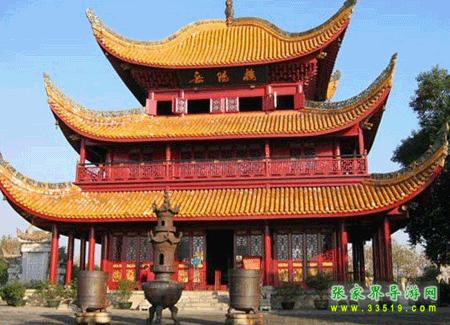
Jiayou Temple originally had five rows of halls, with layered towers and pavilions, fully furnished with Buddhist halls and monks' quarters, resplendent in gold and brilliant colors, with high eaves and towering ridge ornaments, numerous ordained monks, and bells ringing over ceremonial feasts. It was a great Zen monastery with forty-eight courtyards. East of the Maitreya Buddha Hall stood a large bell tower in the form of an octagonal pavilion with a jeweled top and flying eaves. Inside hung a Netherworld Bell, about five meters tall with a maximum diameter of about two meters, its body covered inside and out with cast sutras and incantations in regular script in relief, as well as large seal-script characters. A gentle pull of the lever and a mighty sound would rise, resounding to the heavens, echoing through mountains and valleys, lingering endlessly. Legend says that in the Ming Dynasty, an official from Yuezhou came to the county and, in the vast darkness of night, lost his way at Daorenji. His horse's hooves seemed to sink into the ground, unable to pull free no matter how it struggled, and no amount of whipping could move it. The official was panic-stricken, thinking he would surely die. Just at the critical moment, the sound of a bell came faintly from Jiayou Temple—though far, it seemed near; though loud, it was clear. Horse and rider awoke as if from a dream and were finally freed. When the horse reached the temple gate, the official hurriedly paid respects to the Buddha in gratitude and offered a vegetarian feast for the monks to spread blessings. The more than one hundred mu of temple land at Tuqiao was donated by this man. From then on, the 'Evening Bell of Jiayou Temple' became famous far and wide.
Jiayou Temple's fame had many causes: feudal dynasties liked to issue decrees to the realm, using temples to sing praises of their virtues; emperors mostly loved to seek fame and reputation, and with imperial brush inscriptions on the plaques, Jiayou Temple's fame spread far and wide—naturally so. In the Ming Dynasty, the monk Baoxiang in the temple was peerless in medicine; he once used the silk-thread pulse diagnosis to cure the empress's hidden gynecological ailment and breast sores, and was one of the Three Extraordinary Ones of Linxiang. The Daoist arts of the Hemp Monk were still widely known within a hundred years. Through the generations, the temple had literary and poetic monks who loved elegance and were known for exchanging verses, such as the monk Mozhuang, who was quite famous in literary circles. The temple was the 'Seng Hui Si' (Buddhist Registry Office), authorized to govern all monks and nuns in the county, inspect precepts, and examine monastic conduct; it also had a Dharma Hall administrator, with the title of monk official. The temple's Netherworld Bell was renowned, ranking first among all temples in Jiangnan. The temple had a well called the 'Spring God,' whose water was rich in minerals, sweet in taste, warm in winter and cool in summer, and could cure all diseases. It was therefore said to be a dragon-eye spring, and also said to be supplied by the sweet dew from Guanyin Bodhisattva's pure vase. In old times, when holding rituals to avert disasters, there would invariably be ceremonial processions and drum music, and ritual water would be drawn from the spring; even the county magistrate would bow and burn incense. All these undoubtedly added branches and leaves to Jiayou Temple's transmission through the ages, its cultural flourishing, and its fame throughout Huguang, and also added a glorious page to the local history and culture of Lucheng.