This attraction introduction is compiled from historical materials in the "Zhangjiajie Tour Guide Network" (33519.com · Scenic Spots section). Ticket prices, opening hours, transportation, and contact information mentioned in the text may be outdated. Please refer to the latest official announcements from the scenic area before traveling; some content consists of historical background/cultural introductions and is for reference only.
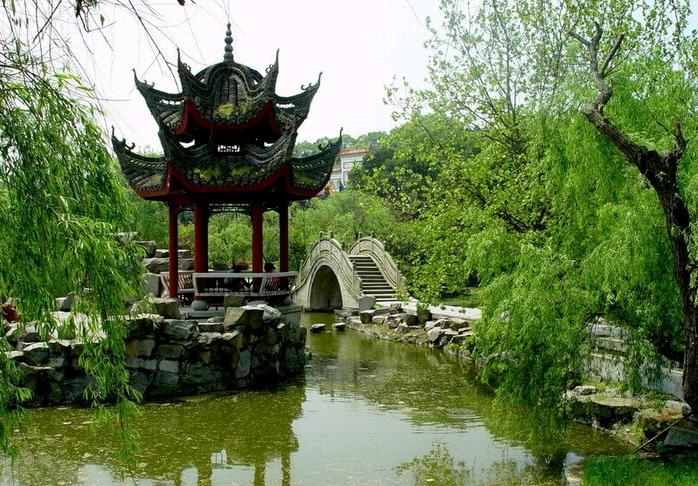
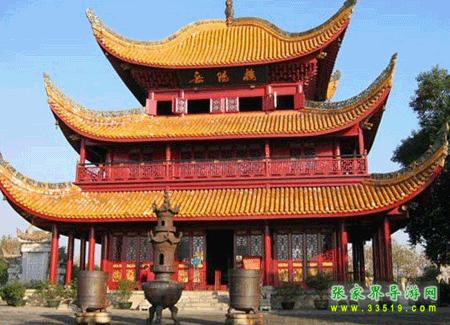
Junshan, anciently called Dongting Mountain, Xiang Mountain, or Youyuan Mountain, is a small island in the eight-hundred-li Dongting Lake, facing the famous ancient tower Yueyang Tower from afar. With a total area of 0.96 square kilometers, it is composed of seventy-two peaks large and small, and is listed in the 'Daoist Scriptures' as the eleventh blessed land under heaven. It is now a national key scenic and historic area and a national AAAA tourist area.
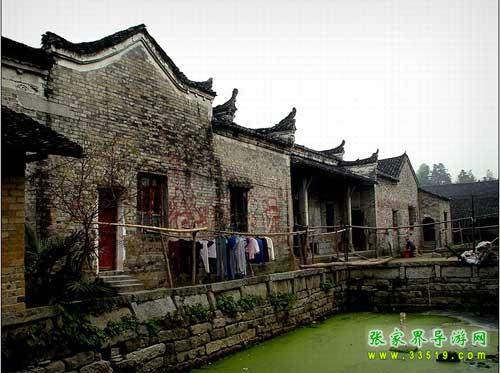
Junshan has many scenic spots and historic sites and a profound cultural heritage. It is said that Junshan Island once had 5 wells, 4 terraces, 36 pavilions, and 48 temples. Through the ages, men of letters and artists, drawn by Junshan's 'wondrousness,' 'smallness,' 'ingeniousness,' 'seclusion,' and 'antiquity,' either wrote essays and poems or inscribed books and carved stones. There are China's earliest discovered cliff inscriptions in history, a 'Star Cloud Chart,' and Neolithic remains. There are witnesses to earth-shaking, ghost-weeping love—mottled bamboo, the Tomb of the Two Consorts, and the Liu Yi Well. There are the First Emperor Qin Shi Huang's mountain-sealing seal, Emperor Wu of Han's platform for shooting the flood dragon, and the Flying Bell of the Song Dynasty peasant uprising, among others. Every historic site is a weighty piece of history, and every story is a distant memory; noble spirit links to remote antiquity, and heartfelt feelings speak to all of China. Especially since the Tang Dynasty, Li Bai, Du Fu, Huang Tingjian, Xin Qiji, Zhang Zhidong, and other poets and literary figures all climbed Junshan to enjoy the scenery and express their feelings, leaving countless enduring masterpieces. Li Bai's 'Lightly sweeping the bright lake opens a jade mirror; what is painted in colors is Junshan' and Liu Yuxi's 'Gazing afar at Dongting's green mountains and waters, a green snail in a silver plate' made Junshan even more famous. On the island ancient trees reach the sky, with dense forests and tall bamboo; of famous bamboos alone there are more than 20 kinds, and the wondrous and affectionate mottled bamboo grows around the Tomb of the Two Consorts. Junshan tea is another brilliant sight: layer upon layer of tea gardens wind around the peaks large and small like green jade belts, and Junshan Silver Needle, one of China's top ten famous teas, is produced here.
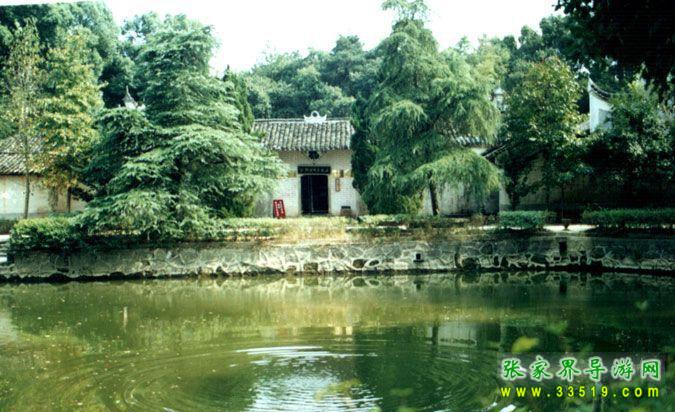
Junshan has always vied with famous mountains under heaven by virtue of its unique geographical position and its peerless scenery that gathers wonders. It covers 0.96 square kilometers and has a circumference of less than 7 li, formed by twelve peaks and seventy-two hillocks linked together, with clustered ridges, winding ravines, verdant bamboo and trees, and scenery like a painting. The terrain is high in the southwest and low in the northeast, with an average elevation of 55 meters and the highest point, Xiangshan, at 63.3 meters. The southwest of the mountain has overhanging cliffs and jagged rocks, with stone caves beneath the cliffs. Because it is not on level land, not among ten thousand mountains, not on the shore of a small stream, but floating in the vast and mighty Dongting Lake, wrapped in clouds and mist, rocked by waves, it is uniquely distinctive and singularly wondrous. A lake of emerald water brings Junshan Island to life as well, like a fairy maiden bathing in a pool, more like a beautiful woman dressing before a mirror; and again like a great ship sailing straight upstream, rising and falling with the waves, yet never sinking no matter how the wind and waves batter it. Since ancient times, all who have visited Junshan have been captivated by its wondrous beauty and marveled at nature's uncanny workmanship. Li Bai of the Tang Dynasty described her: 'Lightly sweeping the bright lake opens a jade mirror; what is painted in colors is Junshan.' Liu Yuxi praised her: 'Gazing afar at Dongting's green mountains and waters, a green snail in a silver plate.' Yuan Mei of the Qing Dynasty exclaimed: 'A few points of Junshan stand beyond the clouds; I would ride the wind to visit Penglai.' The poets compared Junshan to a fairyland.
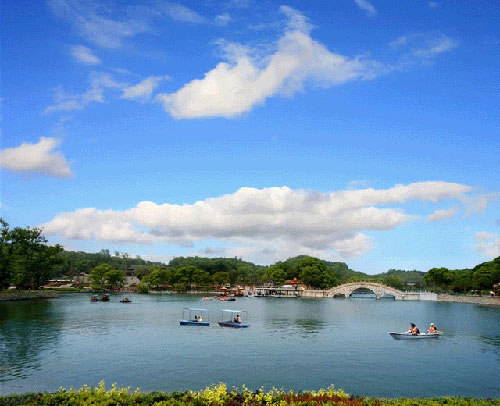
Junshan is also a beautiful green islet, and the plants and trees on the island have been famous since ancient times. Now, before the waters rise in early spring, the lake flats are covered with soft green grass and bright wildflowers, quite possessing a grassland flavor; once summer comes and the waters rise, the reed leaves are green and water birds come and go, presenting again a scene of reed marshes. Junshan has a great variety of trees, as many as more than 200 species, and all kinds of flowers bloom in all four seasons, truly green to the clouds and fragrant over the whole island. Among the dense greenery, the bamboo groves and tea gardens are especially distinctive.
Junshan is surrounded by water on all sides, with a mild climate and fertile, soft soil, suitable not only for the growth of bamboo and trees but even more for tea bushes to settle. The whole island has nearly 500 mu of tea gardens, with tea bushes layered densely over the slopes, green as if about to drip. Therefore Junshan is also called the 'Dongting Tea Island.' The tea treasure here—Junshan Silver Needle—has long been renowned throughout China.
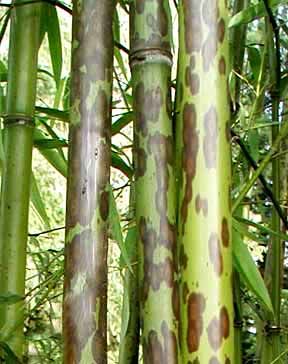
The bamboo of Junshan is even more singular and varied, with a charm all its own. There is mottled bamboo with little purple speckles like tear stains, square bamboo with neat angular edges, and more than ten other kinds including moso bamboo, purple bamboo, osmanthus bamboo, dragon bamboo, tortoise-shell bamboo, plum-blossom bamboo, shengyin bamboo, and twin-stem bamboo, distributed over more than a dozen hilltops and covering over 500 mu, spreading across the hills and fields, piling green upon green. When a breeze blows, the slender bamboos sway and whisper softly; and again like 'the Xiang spirit playing the se,' pleasing to the ear. Thus predecessors left the verse: 'Jade-green and dense by the green water bay, phoenix calls and jade pendants ring all over Xiang Mountain.' Especially the clumps of mottled bamboo—their graceful figures swaying in the wind and their tear-streaked patterns glistening like pearls—make one's thoughts fly far, and naturally recall the verse 'The grief of Cangwu is unending; tears are stained upon the bamboo.' Not only does mottled bamboo have a fine tale; square bamboo, arhat bamboo, and shengyin bamboo each have their own legends, adding endless charm to Junshan Island. Thus the birds flying in the blue sky, the fish swimming in the green water, and the varied green trees and rare bamboos swaying in the wind form a vivid picture of Junshan's natural landscape.
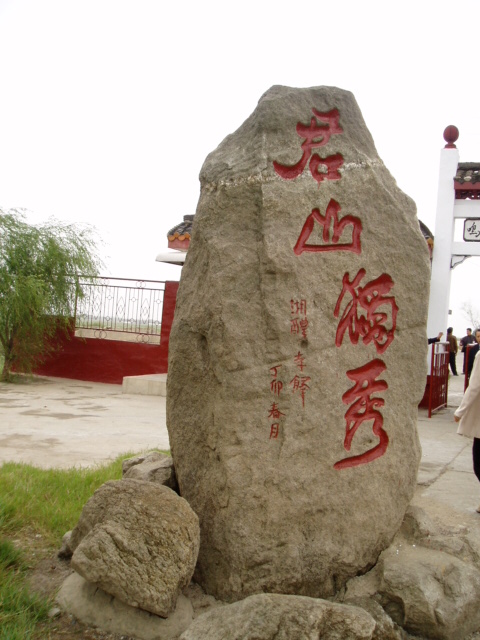
Junshan Park
Junshan, anciently called Xiang Mountain and Dongting Mountain, got its name because it was the place where Yao's daughters, the Xiang Consorts, roamed. With an area of 0.96 square kilometers, it lies in East Dongting Lake 12 kilometers southwest of Yueyang City, facing the famous ancient tower Yueyang Tower from afar, and is now a national key scenic and historic area.
Junshan has a profound cultural heritage and a long history. Since the time of Yao's daughters, Junshan has had a history of more than four thousand years, and is the ninth grotto-heaven blessed land of the Chinese nation's Daoism. Through the ages, men of letters and artists, around the characters 'wondrous,' 'small,' 'ingenious,' 'secluded,' and 'ancient,' either wrote essays and poems, inscribed books and carved stones, depicted it in paintings, or sang of it in songs. Especially since the Tang Dynasty, Li Bai, Du Fu, Huang Tingjian, Liu Yuxi, Xin Qiji, Zhang Zhidong, and other literary figures all climbed Junshan, enjoying the scenery and expressing their feelings, leaving countless enduring masterpieces.
Tomb of the Two Consorts:
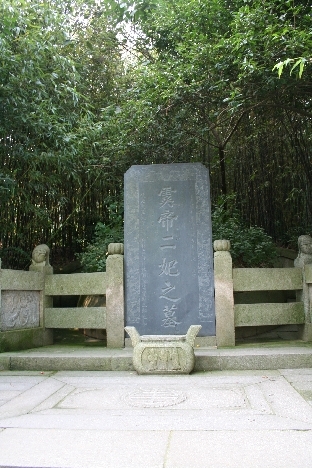
It is said that more than four thousand years ago, Emperor Shun made a southern inspection tour, and his two consorts, Ehuang and Nüying, came after him. Their boat was blocked by a great wind at Junshan, and the two consorts suddenly heard that Emperor Shun had died at Cangwu. Overcome with grief, they gazed at the vast lake waters and, clutching the bamboo, wept bitterly; their tears sprinkled over all the bamboo groves on the mountain and became mottled bamboo. Before long, the two consorts fell ill from melancholy and died at Dongting Lake, and were buried at the eastern foot of the mountain. To commemorate the two consorts, Dongting Mountain was renamed Junshan. The present tomb was repaired in 1979 by the Yueyang municipal government according to the tomb as rebuilt by Peng Yulin of the Qing Dynasty. The tomb is of stone construction, with stone pillars in front carved with qilin, mighty lions, and elephants, and in the center stands the tombstone 'Tomb of the Two Consorts of Emperor Yu.' Ten meters in front of the tomb is a pair of stone guide pillars, bearing a pair of regular-script stone couplets: 'The two souls of the Jun consorts are fragrant through the ages; every speck on the mountain bamboo is a tear for one man.'
Liu Yi Well:
Liuyi Well, also known as Orange Well, is located at the root of the Dragon's Tongue within the Dragon's Mouth of Junshan. According to the "Longqing Yuezhou Prefecture Gazetteer": "Baling (present-day Yueyang City) has the Yonghu Well and the Ba Snake, Luohan, and Qin Emperor wells, but the most famous well is called 'Liuyi.' Beside the well stands an ancient orange tree, 'five or six arm-spans' around, with strangely ancient branches and trunk. The "County Gazetteer" also says: The Orange Well 'is said to be the place where Liu delivered his letter (the entrance to the Dragon Palace). The well opening is about one zhang wide, with a flat stone as its bottom, pierced with several holes to let the spring through; below the stone, the depth is unfathomable.' In the past, an old monk at the Chongsheng Shrine conducted an experiment: he tied a copper coin to one end of half a jin of silk thread and lowered it into the well; when the silk thread was all paid out, he still had not reached the bottom. In the Tang Dynasty, because a large orange tree grew beside the well, it was also called 'Orange Well.' Though the orange tree beside the well no longer exists, the kind and upright Liu Yi is forever celebrated among the people.
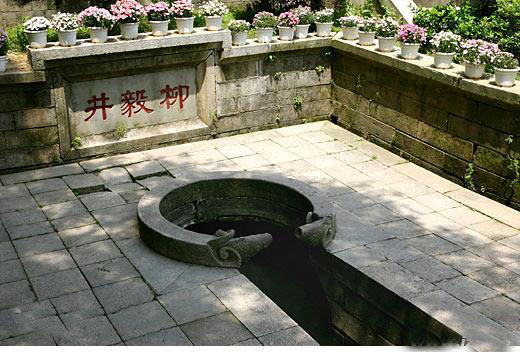
The beautiful story of Liu Yi Delivering the Letter took place right here. The story originates from "The Tale of Liu Yi" written by Li Chaowei of the Tang Dynasty (probably a man of the mid-Tang period; his life is no longer verifiable). Its content is as follows: during the Yifeng era of the Tang (676-679 AD), the scholar Liu Yi went to the capital for the imperial examination but failed; on his way home through Jingyang, he happened upon a shepherdess with a face covered in tears. Liu Yi approached and asked, and learned that the woman was the Dragon Girl of Dongting who had married the Lord of Jingyang and had been subjected to his brutal abuse to this extent. Entrusted by the Dragon Girl, he delivered a letter to Junshan, found the Orange Well, and knocked three times on the orange tree beside the well; the sea-patrolling deity guarding the gate then led him into the Dragon Palace. He met the Dragon Lord, presented the letter, and recounted the Dragon Girl's sufferings. The Dragon Lord's younger brother, the Lord of Qiantang, flew into a rage, transformed into a hundred-zhang red dragon, and went straight to Jingyang, destroyed the Lord of Jingyang, and brought the Dragon Girl back; after many twists and turns, Liu Yi was taken as a son-in-law. To commemorate Liu Yi's delivery of the letter, the people renamed Orange Well as Liuyi Well and built the Liu Yi Delivering the Letter Pavilion beside it.
Wu Yanju, a censor of the Ming Dynasty, wrote this poem to praise Liu Yi's righteous act of delivering the letter and to celebrate the age-old Liuyi Well. "On the shepherding slope he met the fair maiden, / Entrusted to deliver a letter—what was his intent? / Gazing straight ahead, he sought out the orange tree, / Say not that the waves of Dongting lie far between. / The Dragon Palace disciple's sealed letter had just been opened, / While in the mortal world the bright lord's misfortunes were already many. / The old traces remain, the well still here, / Its spring fragrant and clear, flowing out from the river's bend."
The tale of Liu Yi is vivid and widely known throughout the world. But opinions have long differed about where the story took place. It is also said that this well connects with Taihu Lake in Suzhou, facing each other across a great distance, and that between the two mountains, though separated by a thousand li, there is a 'hidden passage through the stone cave'—truly 'heaven and earth, Wu and Chu, both open their eyes.' This adds even more mystery to Junshan. In Wengxiang Village, northeast of Dongshan Town in Wuxian County, Jiangsu, there is also a 'Liuyi Well.' According to research, nearby are a Dragon Girl Temple and a White Horse Earth God Temple, said to be where the white horse was tethered when Liu Yi delivered the letter. Taihu Lake also has a 'Liuyi Well,' and nearby there is a stone cliff said to be the place where Liu Yi inquired about delivering the letter. Beside the well stands a stone stele inscribed by the Grand Secretary Wang in the fifth year of Zhengde of the Ming Dynasty (1510 AD). The well's rim is mottled with moss, its ancient traces elegant, its spring water sweet and fragrant—'neither overflowing in flood nor drying in drought, nor growing turbid when shaken by wind'—and it is one of the famous springs of Dongshan. In addition, there is another legendary Liuyi Well at Hongzhanzhou in Changde, Hunan, where clear spring water has flowed for ages without ever drying up; locals say it is the place where 'Liu Yi delivered the letter' and descended into the Dragon Palace, and it is also called 'Liuyi Well.' And so on—probably because Liu Yi, having endured countless tribulations and hardships in delivering the letter, lives in people's hearts as a figure of righteous courage, and claiming the site of the fine tale as their own adds a touch of glory to the local place. According to textual research, the legendary Liuyi Well is indeed at Junshan, and we can find the answer through research into the address of the Dragon Girl's 'Third Princess' marital home.
Jiuxiang Pavilion:
Jiuxiang Pavilion stands on Jiuxiang Peak in the central part of Junshan, screened among green bamboo and vines. Resting in the pavilion, one enjoys not only birdsong and flowers but also a faint aroma of wine wafting to the nose. It turns out that on this mountain grows a kind of green vine with small yellow flowers, whose fragrance carries the scent of wine; this vine is called Jiuquan Vine. Legend says that wine brewed from its small flowers grants immortality and the power to become an immortal. When this reached the ears of Emperor Wu of Han, he sent the envoy Luan Ba at the head of several dozen men and women to Junshan, and they brought back the immortal wine. When the wine reached the capital, it was stolen and drunk by the eloquent minister Dongfang Shuo. When Emperor Wu learned of this, his 'dragon countenance' flared with rage, and he wanted to behead Dongfang Shuo. Unhurriedly, Dongfang Shuo memorialized: "If drinking this wine truly grants long life and the power to become an immortal, then Your Majesty cannot kill me; if I am killed, then this wine, even if Your Majesty drinks it, will not grant long life either." The emperor had no reply and pardoned him. When this reached Junshan, the people built the Jiuxiang Pavilion on Jiuxiang Mountain in commemoration. The present pavilion was restored in 1981, covering nearly thirty-two square meters and standing more than six meters high; it is a four-pillared square structure of mixed brick, stone, and wood, antique and full of poetic charm.
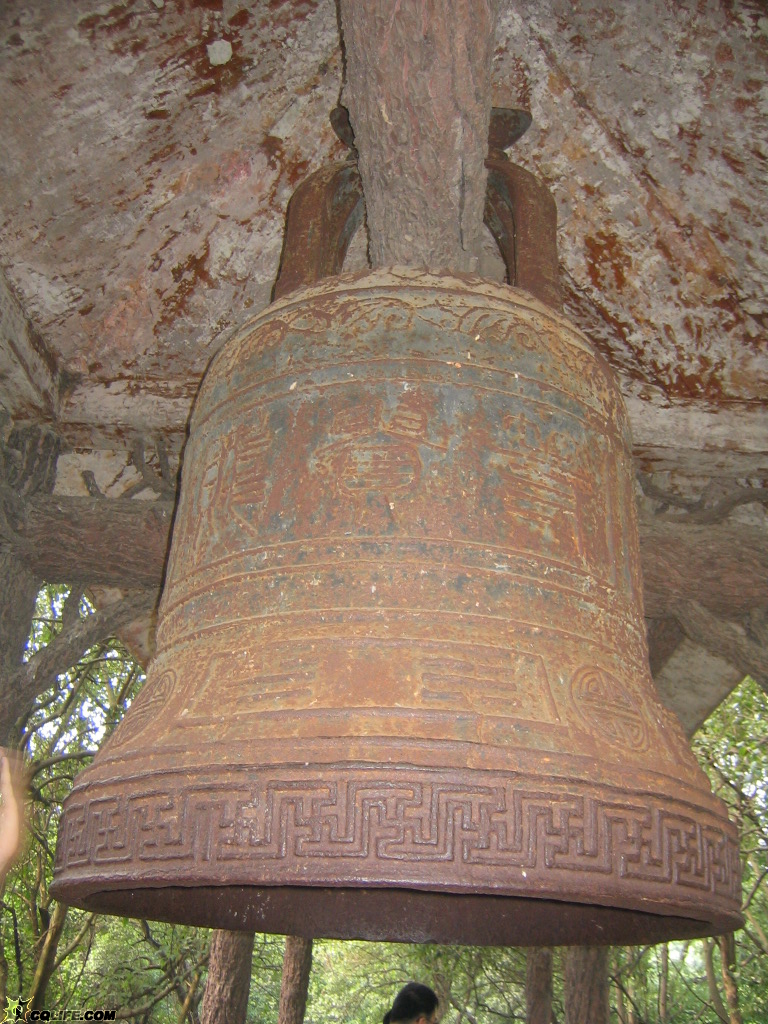
Feilai Bell:
According to historical records, after Emperor Huizong of Song and his brother were captured by the Jin, Zhao Gou established the Southern Song in Lin'an. The Jin troops continued to invade southward, burning, killing, and plundering along the way, while officials took advantage of the chaos to loot, leaving the people with no means of livelihood. Under the banner of 'equalize the noble and the base, equalize the rich and the poor,' Yang Yao led the people of the lake region in uprising. In the Dongting Lake area they established one hundred and eight water forts with four hundred thousand soldiers, and the main fort was set up at Junshan, where the 'Yang Yao Fort' remains to this day. It is said that a great bell flew down from the sky, and when the enemy came to attack, the bell sounded of itself. According to historical records, after Emperor Huizong of Song and his brother were captured by the Jin, Zhao Gou established the Southern Song in Lin'an. The Jin troops continued to invade southward, burning, killing, and plundering along the way, while officials took advantage of the chaos to loot, leaving the people with no means of livelihood. Under the banner of 'equalize the noble and the base, equalize the rich and the poor,' Yang Yao led the people of the lake region in uprising. In the Dongting Lake area they established one hundred and eight water forts with four hundred thousand soldiers, and the main fort was set up at Junshan, where the 'Yang Yao Fort' remains to this day. It is said that a great bell flew down from the sky, and when the enemy came to attack, the bell sounded of itself.
Langyin Pavilion
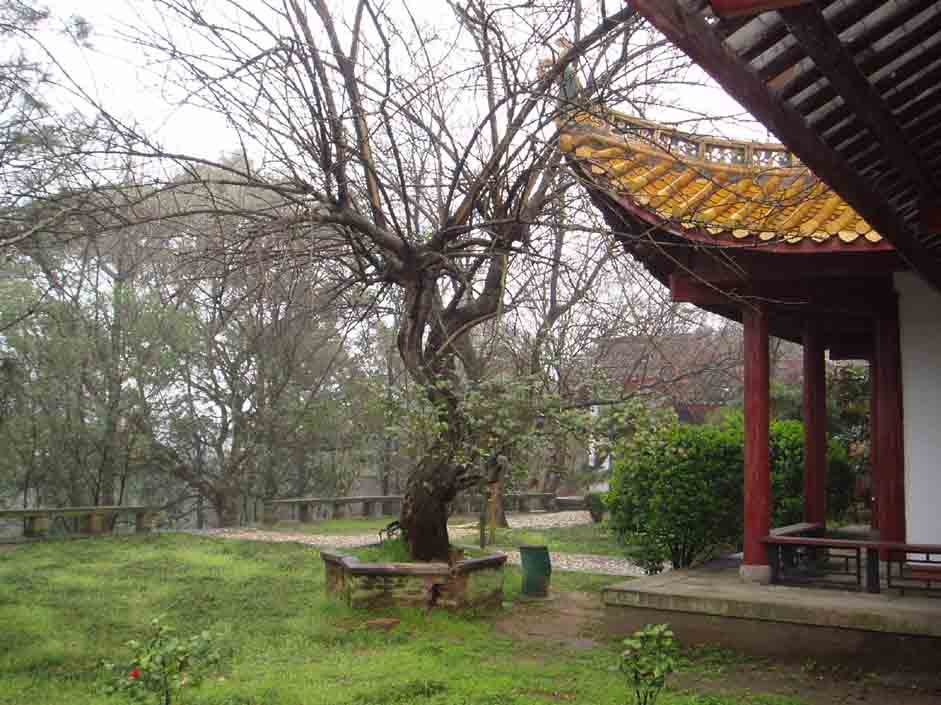
Tradition says this is the place where Lü Dongbin once chanted poetry. It sits on the left head of the Dragon's Mouth of Junshan, gazing from afar at Yueyang Tower and Sanzui Pavilion on the opposite shore. Lü Dongbin visited Yueyang several times and once wrote a poem: "At dawn I roam the northern Yue, at dusk Cangwu; / In my sleeve a green snake, my courage bold. / Thrice drunk at Yueyang, yet none know me; / Chanting aloud, I fly across Dongting Lake." After flying to Junshan, he washed his feet in the spring, lay down at ease on the mountain, and enjoyed the moon through the night. To commemorate him, a two-story 'Langyin Pavilion' was built at the place where he poured wine, chanted aloud, and lay drunk in deep sleep.
Spotted Bamboo
Emperor Shun made a southern inspection tour and unfortunately died in the wilds of Cangwu, and was buried at the foot of Mount Jiuyi. His two daughters, Xiaoming and Zhuguang, set out to attend his funeral; unable to find the way, they came to Junshan in Dongting Lake. Their hearts broke with longing for their father, and they wailed in grief; when their tears were exhausted, they wept blood, and the blood and tears sprinkled upon the bamboo stained the green bamboo with speckles, hence the name spotted bamboo.