This attraction introduction is compiled from historical materials in the "Zhangjiajie Tour Guide Network" (33519.com · Scenic Spots section). Ticket prices, opening hours, transportation, and contact information mentioned in the text may be outdated. Please refer to the latest official announcements from the scenic area before traveling; some content consists of historical background/cultural introductions and is for reference only.
Yuchi Mountain is located at the southern end of Miluo City, part of the remaining range of Mufu Mountain. It is the first mountain to the north of Changsha and a spot of unique beauty to the south of Yueyang. The entire mountain area comprises fifteen administrative villages and 162 villager groups, with nearly 9,000 people and a total area of 41.3 square kilometers. This is a fine scenic area where cultural landscape and natural scenery are seamlessly blended.
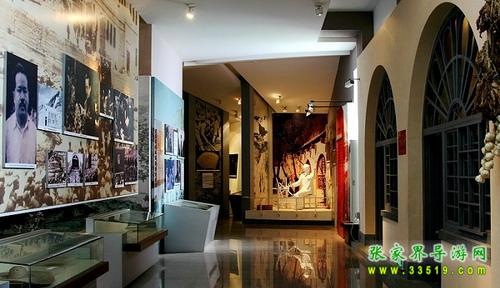
Looking back, this place once had a glorious history. In 1928, the Party organization established the Soviet people's regime of Xiangyin County within its borders, actively spreading Marxism and the flame of revolution, writing a glorious page for the growth and strengthening of the Party organization and for Chinese revolution breaking out of its low ebb; in May 1945, the older-generation proletarian revolutionaries Wang Zhen and Wang Shoudao led the southward detachment of the 359th Brigade and again established here (in the Zou Family Ancestral Hall in present-day Gaolong Village) the Xiangyin County Anti-Japanese Democratic Government, leading the mountain people in bloody struggle and guerrilla warfare, forging an indelible historical monument for striking the Japanese invaders and establishing an anti-Japanese base behind enemy lines; in August of the same year, the martyr Mao Chuxiong, nephew of Mao Zedong, secretly led his troops to join and liaise with the southward detachment at Baihe Bridge and worked at the station for three days and nights; the precious photographs and historical materials are still kept in the memorial hall in the hometown of the great man—Shaoshan. The flames of revolution forged the industrious and kind character of the Yuchi people and their frugal and upright folk ways.
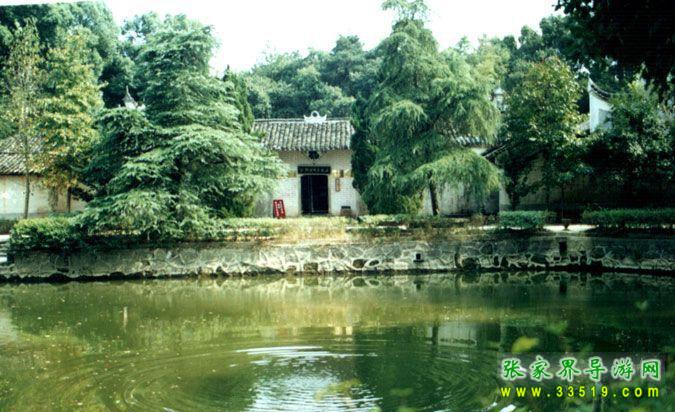
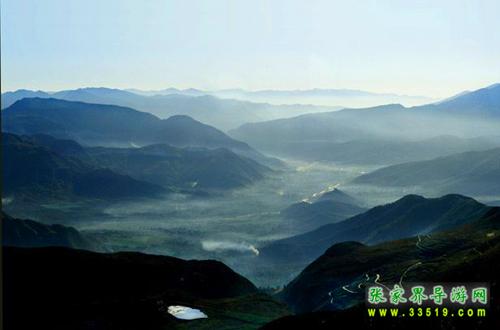
Here, mountains pile up in emerald layers, and the scenery is serene and beautiful. Within its borders, from east to west, are Mingyue Mountain, Damo Mountain, and Yuchi Mountain, running north-south and arranged in parallel, like a crouching tiger and coiling dragon, displaying vigorous majesty, with an average elevation of 600 meters. The highest peak—Damo Ridge at 800 meters—is the tallest peak in northern Hunan, and a Damo Ridge television relay station now stands there. Most distinctive are the tens of thousands of mu of forest, among which 20,000 mu of bamboo groves are densely spread across the mountain, lush and verdant through all four seasons. Viewing this fills one with joy and peace. Stone caves crisscross the mountain, the more famous being ten great caves: Shuangshi, Fujia, Wangta, Zimu, Daijia, Chenjia, Gujiao, Baihe, and Xiaoshu. Water resources are extremely abundant; most mountain springs gurgle out from rock crevices and, according to appraisal by professional departments, contain twenty-six trace elements, making them natural mineral water and an excellent health beverage. Within its borders are eight reservoirs of types I and II—Baihedong, Wangta, Saiying, Xiaodong, Guanshan, Qingkeng, Kujiao, and Xiaoshudong—like bright mirrors dotting the foot and midst of the mountain, water and sky merging in one color, reflections like paintings, an ideal 'paradise' for leisure, fishing, and sightseeing. Thus Yuchi Mountain has long enjoyed the reputation of 'three mountains, ten caves, and eight calm lakes.'
This area has a subtropical monsoon humid climate, with four distinct seasons, cold winters and cool summers. The vertical climatic differences are great. In winter, ice and snow cover everything, mountains dancing like silver serpents, as if in a world of silver white; summer is especially cool, and to this day people still spend the summer here 'wearing shirts by day and covering with quilts by night,' making it a typical fine summer resort. Zuo Zongtang, the Qing imperial commissioner, once built a summer villa and study here and spent three summers escaping the heat; the ruins still survive.
Transportation and communications here are very convenient: 40 kilometers south of the provincial capital Changsha, 90 kilometers north of Yueyang, 10 kilometers east to connect with National Highway 107 and the Beijing-Zhuhai Expressway, and 8 kilometers west to connect with the Beijing-Guangzhou Railway; it also links up with Qu Yuan Temple, Yang Kaihui's Former Residence, and the Ren Bishi Memorial Hall, integrating tourism, sightseeing, and leisure. There are now direct passenger buses to Shoutuan; the Yu-Gong Road is undergoing widening and reconstruction, and the road surface will be hardened to high standards; roads have already reached villages and villager groups, and program-controlled telephones have been fully installed in villages, townships, and villager groups.
Yuchi Mountain's tourism resources are extremely rich; the scenic area is large, covering more than 40 square kilometers, with as many as 46 scenic spots and places of interest.
Fantastic rocks and grotesque stones are captivating. "Zhenzhu Rock" (Pearl Rock) is the site where Tao Dan, a real man and the grandson of Tao Kan, Grand Commandant of the Jin Dynasty, cultivated himself and refined elixirs. The interior of the rock is spacious, with stone tables and stone stools. The rock got its name because strings of water droplets in the stone crevices are crystal clear like pearls. "Reshui Rock" (Hot Water Rock), 200 meters away, is the largest in area and serves as a habitat for bats; in winter, wisps of steam rise from the spring water. Both rocks are on the hill behind Baihe Temple. The "Guguai Rock" (Bizarre Rock) in Zitong is steep and peculiar; at "Guanmu Pit" in Dafeng, there is a stone shaped like a coffin, and a doggerel poem is now circulated: "The bluestone towers like a coffin, day and night the funeral is halted without burial declared; the lamp oil on the table shines under the bright moon, offerings before the spirit wait for spring to come; heavy snow falls, every mountain in mourning, sun and frost melt, every tree in grief." The "Guozi Stone" (Fruit Stone) in Anshan is formed by overlapping stones, just like a divine swan resting; the "Chuizhong Stone" (Hanging Bell Stone) is like a stone bell hanging on the mountainside; standing beneath it, you feel it may fall at any moment, making your hair stand on end. A county magistrate, Ren Qiaochun, once wrote a couplet: "The bell's sound sways the evening mist, the stone's aura chills the Zen mind." Martyr Liu Bingqian wrote: "Not far from here is Bodhidharma; I delight in the bright moon as neighbor, illuminating the vast world; below the ridge, gazing afar at Dongjue, listening to the hanging bell's echo, awakening billions of stars." The "Mutou Stone" (Wood Stone) in Anshan resembles a coffin; the "Yuanshuai Hall" in Dalong is like a natural palace, truly imposing; the "Damen Stone" (Great Gate Stone) is located at the gate dam of Damen in Hequan Heshi Rock, with two large stone-carved gates whose lines are well-proportioned and outlines distinct; not far away, the "Hama Stone" (Toad Stone) is like a lifelike toad leaping up; the peak rock at the border of Gaolong and Wangta villages is shaped like a cat's head, with residual stones like cat's eyes, hence named "Maogong Rock" (Male Cat Rock); the "Guanyin Stone" (also called "Liyu Stone", Carp Stone) in Shuangshi seems to leap into the air to welcome you; there are also Yuming's "Mozi Stone" (Millstone Stone), "Mituo Stone", and "Tuozhi Stone", each with unique features, remarkably true to life.
Flying waterfalls and flowing springs dazzle the eyes. Longshan Head is located at Yuchi and Tongpen; the water from Baihe Cave flows through here, shaped like a lion and an elephant, vividly lifelike, also known as "Lion and Elephant Guarding the Gate." Longshan Waterfall is dozens of meters high with a great drop, the terrain steep; throughout the year, the flying waterfall splashes, white as jade. Shitan Waterfall is downstream of the Gujiao Reservoir; joined by mountain springs converging like a pour, water splashes drift constantly, a stretch of silvery white. The Rugong Bridge Waterfall is within Anshan; when the rainy season comes, it is like pieces of trailing white cloth merging into the Qingkeng Reservoir, for you to fully enjoy and be intoxicated by.
The ancient well and pavilion site is endlessly evocative. Baihe Well is located beside Baihe Temple; over the well is built a granite pavilion, the well mouth hexagonal, the spring water clear as a mirror, warm in winter and cool in summer. Legend has it that a white crane flew down here and transformed into a clear spring, with a white crane appearing in the water, hence the saying "Junshan tea, Baihe spring"; through the dynasties it was always a tribute for the imperial palace. The ancient well site still exists, with the three characters "Baihe Spring" vividly on the stone wall. "Cuigang Pavilion" and "Jingtai Pavilion" were both built during the Jiaqing period, piled from finely cut stone strips. The pavilion names are all carved in stone, beautiful in appearance and full of character. Guanshan's "Bishu Cave" (Summer Retreat Cave): in April 1854, Zuo Zongtang and Tao Shu came here to rest and live in seclusion, and once wrote a couplet: "Desiring to gather writing to depict things, suspecting it is the immortals who made the master terrace." They also purchased a villa as a summer retreat each year, and the cave got its name from this. There is also the ancestral tomb of Ren Bishi at Yuexing Mountain in Yushan, with tall stone steles and ornamental columns, each with distinctive construction. "Xianren Bridge" (Immortal Bridge) and "Zhanyu Bridge" have beautiful legends that are thought-provoking.
In short, Yuchi Mountain has green hills and clear waters, charming scenery, and an endless array of scenic spots and historic sites. In 1993 it was designated a tourist scenic area by Yueyang City. The construction of scenic spots and areas has now been further planned and begun to take shape, divided into four major scenic areas, namely "Yuchi Mountain Scenic Area," "Damoling Scenic Area," "Dalong Mountain Scenic Area," and "Baihe Cave Scenic Area." The development prospects are broad and the value incomparable. We sincerely welcome people of ambition, bosses, and talents to come invest and develop, joining hands to create in the new century a brilliant pearl of landscape shining brightly on Yuchi Mountain, and let the old revolutionary base area of Yuchi Mountain play the melody of youth.