This attraction introduction is compiled from historical materials in the "Zhangjiajie Tour Guide Network" (33519.com · Scenic Spots section). Ticket prices, opening hours, transportation, and contact information mentioned in the text may be outdated. Please refer to the latest official announcements from the scenic area before traveling; some content consists of historical background/cultural introductions and is for reference only.
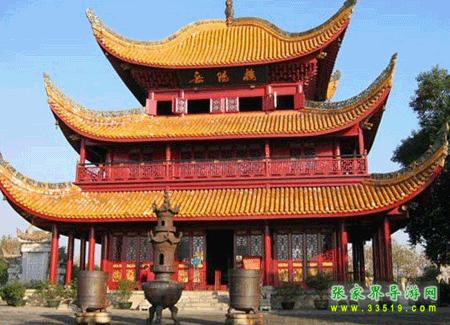
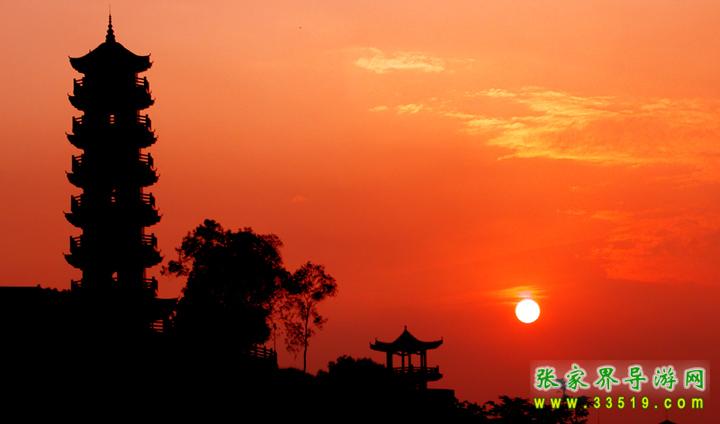
Ruji is located in the northwestern part of the city, 40 kilometers from the urban area, facing the river and overlooking the lake. It was the ancient "Ru Mountain." The "Commentary on the Water Classic" says, "Ru Mountain faces Yinji to the north," and the "Zuo Commentary" says, "The Viscount of Chu sent Zhou Qu to settle the Ru people." Thus Ru Mountain got its name, and there are ancient cultural sites. After the Ru people settled, because they lived by the water and sought fish and shrimp, boats and nets gradually flourished, and below the rocky promontory became a gathering point for fishing, hence it was also called Ji, elegantly named Ruji. Later generations expanded it into a place name, changed to Ruxi. In the 7th year of Guangxu of the Qing Dynasty, Liu Ao, who served as Daotai in Taiwan, built a solid pagoda 30 meters high, seven stories, eight sides, on the promontory to cultivate literary style and commemorate fallen soldiers. The famous Hunan scholar Wu Xie wrote "Linxiang Pagoda Record" and had it carved on it. The pagoda faces the great river, with no startling waves, the rushing waters flowing on, cloud sails dotting the distance, and fishing songs filling the ear. It is one of the Ming "Eight Scenes of Xiangmei" and a key cultural relic protection site of the city. Baima Ji by the river has many myths and stories handed down, attracting literati and poets of past dynasties to climb and visit.
The Linxiang section of the Yangtze River is nearly 30 kilometers long, with Ruxi Town, Jiangnan Town, and Huang Gai Town along the river. There are many lakes along the river with beautiful scenery, including Ye Lake, Yangxi Lake, Juntian Lake, Chenjia Lake, Tuji Lake, Taiyang Lake, and Huang Gai Lake. There are also many sandbars along the river. Jiangnan Guhua Zhou was originally a barren sandbar; after development it produced abundant cotton and millet. Local people called millet "gu" and cotton "hua," hence the name Guhua Zhou. The former barren sandbar and lake beach have become a "land of fish and rice" with comprehensive development of agriculture, forestry, animal husbandry, sideline production, and fisheries.