This attraction introduction is compiled from historical materials in the "Zhangjiajie Tour Guide Network" (33519.com · Scenic Spots section). Ticket prices, opening hours, transportation, and contact information mentioned in the text may be outdated. Please refer to the latest official announcements from the scenic area before traveling; some content consists of historical background/cultural introductions and is for reference only.
The Longjiao Mountain Site is located in Longyuan Township in the eastern part of Linxiang City, 37 kilometers from the city proper. It is the "Qianjiadong" that the Yao people call their ideal homeland. Regarding the Yao people living within Yuezhou, the earliest record appears in the Tang Dynasty's "Yuanhe Prefecture and County Atlas": "Tanzhou was the territory of Qianzhong Commandery in the Spring and Autumn period, the southern frontier of Chu... From the Han to the Jin, it all belonged to Jingzhou. Emperor Huai of Jin divided the various commanderies of Jing and Xiang to establish Xiangzhou, bounded by the Five Ridges to the south and Dongting Lake to the north. Since the Han and Jin dynasties, it has also been an important town. Now according to its customs, it is mixed with a people called Yao. They say their ancestors had merit and were exempted from corvée labor." Next is Fan Zhiming's "Yueyang Customs and Land Records": "Longjiao Mountain is southeast of (Linxiang) County. According to Ezhou's Chongyang County, there are Leijia Cave and Shimen Cave; the mountain is extremely deep and far. The residents therein are called Bird Village; their language is unintelligible; they make their living by slash-and-burn farming. Unless buying salt and tea, they do not enter the city, and the county also has no tribute or taxes—they are mountain Yao people." Then there is Song Dynasty Ma Ziyan's "Yueyang Jia Records": "Longjiao Mountain is north of Baling. The mountain is truly steep and extreme, with a Thunder Cave above and a Shimen Cave. Mountain Yao live there, farming for their own food and weaving for their own clothing." Later prefectural and county gazetteers record similar accounts. The poet Du Fu also left verses here: "The year is drawing to a close with many north winds; amid the snow of Xiaoxiang and Dongting. The fisherman's nets freeze in the cold; the Moyao shoot geese with twanging mulberry bows." By the wars at the end of the Yuan and beginning of the Ming, they began to migrate out in groups, crossing the seas—that is, crossing Dongting Lake and moving south. Therefore, the Ming Longqing "Yuezhou Prefecture Gazetteer" records: "They existed before the Song, but not now."
The Yao are an influential ethnic minority in the world's community of peoples. With a population of nearly 3 million, they are distributed across more than 10 countries and regions including China, Vietnam, the United States, France, and Canada. For many years, the Yao people have composed heart-wrenching and moving stories in their search for their earliest homeland, "Qianjiadong." In the first spring of the 21st century, her mysterious veil was finally lifted. This Yao ideal homeland "Qianjiadong," "raised in the deep boudoir unknown to outsiders," is in Longyuan Township, Linxiang, Yueyang City. Li Bengao's "Investigation Report on the Yao 'Qianjiadong' at Longjiao Mountain, Linxiang City, Hunan Province" states: "The Yao are an ethnic group with a long history. As early as the era of Yan and Huang, they formed a powerful tribal alliance with the ancestors of the Miao (Chi being the Miao self-designation, You being the Yao self-designation), contending against the Yan-Huang tribal alliance and fighting with Emperor Yan and Emperor Huang in the wilderness of Zhuolu. Later they were scattered and forced to migrate south. During the Zhou Dynasty, the Yao ancestors, the Jingman, were active in the Yunmeng Marsh region. 'Xiaoya: Caiqi' says: 'Foolish are the Jingman, making a great state their enemy.' At this time, Longjiao Mountain belonged to Baling and should have been within the Sanmiao State, so it is very likely that some Yao ancestors entered Longjiao Mountain." According to his inference, at the latest by the Zhou Dynasty, the Yao people had entered Longjiao Mountain. They lived here for more than two thousand years and created a brilliant culture with abundant verifiable traces. Two on-site expert investigations in April 2000 and April 2001, especially the "National Yao Academic Seminar" held in Linxiang from September 24 to 27, 2001, finally unveiled the thousand-year mystery of the stone culture of Longjiao Mountain and untied the knot of "Qianjiadong" that the Yao people had sought for hundreds of years. On October 8, 2001, the China (Guangxi) Yao Studies Society issued the "Opinion on the Recognition of Qianjiadong at Longjiao Mountain": "Qianjiadong is an ideal homeland in Yao folk legend where they once lived. The Yao people and Yao researchers have been unswervingly searching for the whereabouts of Qianjiadong." "Through in-depth investigation and scientific verification, researchers have determined that Longjiao Mountain in Linxiang City, Hunan Province, whether from the content of relevant historical records, or from its geographical location, topographical features, place names and surviving customs, as well as the large number of sites of Yao ancestors, all correspond with the Yao document 'Qianjiadong Song' and the folk legend of Qianjiadong." "It is confirmed that Longjiao Mountain Qianjiadong... is the early Qianjiadong in Yao history." On May 19, 2002, it was announced as a provincial-level cultural relic protection unit.
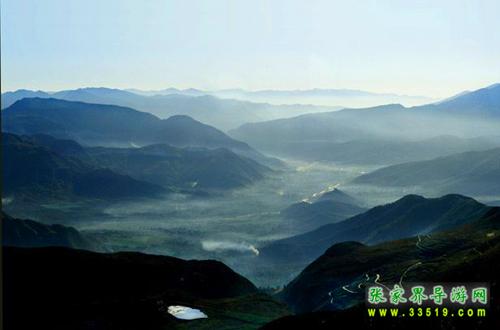
Longjiao Mountain, also known as Yaogu Mountain, belongs to the offshoots of the Mufu Mountains and spans the four counties (cities) of Linxiang, Tongcheng, Chongyang, and Chibi across Hunan and Hubei provinces. Its forest area is 105,000 mu, and the highest peak is 1,261.1 meters above sea level. The mountain is high and steep, with deep ravines and long caves, winding for a hundred li—a secret refuge and a paradise beyond the world. The Yao people left behind breathtaking stone culture relics here.
These colorful ancient stone culture relics, hidden among towering mountains and steep ridges, include stone houses, stone gates, stone bridges, stone caves, stone tombs, stone tools, stone hollows, and stone steps. They are scattered throughout high mountains and dense forests, even in the deep recesses of great mountains rarely visited by humans. Particularly astonishing are those enormous stone blocks, which bear no traces of axe, chisel, or hammer—all were collected and piled up using the most primitive method of wooden wedges and fire. Facing these magnificent works, one cannot help but marvel at the astonishing perseverance and creative spirit of the Yao ancestors. A few are briefly introduced here.
Stone Houses Hidden Among the Ridges: Entering remote mountain areas such as Meichi, Laowu Bay, and Hujia House Site, one can see stone-walled houses built of stone blocks everywhere—some with as few as one room, others with more than ten, generally arranged neatly, mostly single-room, with some having two or three rooms. The interior of each room is about 7–8 square meters. Such structures are even found in the primary secondary forest of Shejia Mountain. This is the most primitive form of dwelling of the Yao ancestors.
Stone Bridges in the "No-Man's Land": In the deep mountains where no one has lived for nearly a hundred years, stone bridges have surprisingly been built everywhere over the streams. The stone bridge construction is also uniquely characteristic: on top of the bridge piers built of stone slabs on both sides, two or three stone slabs protrude toward each other like stacked blocks to arch and support the weight of the bridge body; the bridge deck is paved with two stone slabs about 0.4 meters wide and 6 to 8 meters long. The structure is simple and scientific—truly a great creation of the Yao people.
The Earth-Shaking Bluestone Cave: Both sides of the mountain stream at Majing Harbor in Zhulou Slope are entirely revetted with natural bluestone blocks, fitting perfectly together without any adhesive, reaching 10 meters high in places and 2–3 meters in lower places. The top is covered with more than 4,000 bluestone slabs about 4 to 5 chi long, forming a man-made stone tunnel 1,500 meters long. Along the stone walls beside the tunnel, wharves are built at intervals, normally used by people to go up and down to fetch water and wash clothes, and sealed off in wartime as a defensive work against the enemy's "burning the mountain with fire attacks," to preserve strength and protect the lives and property of the entire clan. This can be corroborated by the remains of a stone gate set inside the arch bridge downstream of the stone tunnel. On both sides above the stone tunnel, many remains of stone houses and stilted buildings are left, which seems to indicate that this place was originally the political center of "Qianjiadong" and was once a bustling market street.
Astonishing Stone Tools: In Lu Family Stockade of Gaochong, villagers have collected many rare stone tools. Stone rollers, stone fists, stone bowls, stone mills, stone incense burners, and stone measuring boxes are a dazzling array, ancient and rustic. Particularly astonishing is that stone vat with a diameter of 0.5 meters and an inner depth of 1 meter, hollowed out from a complete huge boulder. In that era, with a closed economy and backward technology, by what method the Yao ancestors carved it remains baffling to this day.
"Stone Hollows" Were Originally Sacrificial Platforms: Facing the countless stone piles, stone platforms, and stone walls on the opposite mountain, the Liu family villagers of the Laowu Group in Jiangan Mountain, who have lived here for more than 500 years, could not figure out their mystery and habitually called them "stone hollows." In recent years, after experts solved the mystery of Longjiao Mountain, it became known that this was the sacrificial platform where the Yao people worshipped heaven and their ancestors. The altar faces east from the west, with stone piles, stone platforms, and stone walls arranged in order along the mountainside. In the middle clearing stands a stone post with residual rectangular chisel marks, which seems to be a totem pillar base or a stone post for raising sacrificial flags.